If you are searching online for "where can I put vending machines for free," you are likely trying to figure out how to start a vending business without paying rent or a commission. I have been in this industry for over a decade across the US and Europe, and I can tell you that the answer is rarely straightforward. Free locations do exist, but they come with trade-offs like lower foot traffic, stricter space limitations, or higher maintenance demands. The real skill is learning how to evaluate a potential spot based on actual data, not just the absence of upfront cost. In this guide, I will walk you through the entire process from site evaluation to equipment selection, based on real experience and industry data.
Understanding the Business Model Before You Look for Locations
Many beginners make the mistake of looking for a free spot before they understand how the math works. A vending machine is a small retail store that operates 24/7. The location determines your revenue more than any other factor. If you place a machine in a spot with 50 people passing by per day, even the best machine and product selection will struggle. If you place a basic machine in a high-traffic office building, you can see strong returns within months. The key is to match the machine type to the location profile.
In my experience, the most common mistake is thinking that a free location is always a good deal. I have seen operators accept spots in low-traffic break rooms or empty lobbies just because there was no rent. Those machines often lose money because the cost of restocking and driving to the site exceeds the revenue. A better approach is to calculate the potential gross profit per square foot of the location. If a spot generates $300 per month in sales with a 40% margin, that is $120 in gross profit. If your fuel and labor to service it cost $80, you are left with $40. That is barely worth the time. A paid location generating $1,200 per month with the same margin leaves you with $400 after rent and service costs. Always prioritize revenue potential over free rent.
How to Evaluate a Potential Location
When I assess a site, I look at three things: foot traffic, dwell time, and product fit. Foot traffic is the number of people who walk past the machine daily. Dwell time is how long they stay in the area. A person rushing through a train station has different buying behavior than someone sitting in a break room for 15 minutes. Product fit means whether the people in that location actually want what you are selling. For example, a healthy snack machine works well in a gym but poorly in a construction site.
I always do a manual count for at least three days at different times. I stand near the entrance or the break area and count how many people walk by in one hour. Then I estimate the daily total. If the count is below 100 people per day, I usually pass unless the location has a very specific need like a late-night shift where there is no other food option. According to data from IBISWorld, the average vending machine in the US generates between $200 and $400 per month in revenue, but machines in high-traffic locations can exceed $1,000 per month. That difference comes down to location quality.
Another factor I rarely see beginners consider is the existing competition. If there is already a vending machine in the same break room, you need to check what it sells and how full it is. If the machine is always well-stocked and the products are popular, you will struggle to compete. If it is poorly maintained, that is an opportunity. I once replaced a broken machine in a warehouse and saw sales of $1,500 per month within the first two months. The previous operator had neglected the machine for months, and the workers were desperate for cold drinks.
Where Can You Find Free Locations
Free locations typically fall into a few categories. The most common are businesses that see your machine as a convenience for their employees or customers, not as a revenue source. Small offices, auto repair shops, barbershops, and small retail stores often allow a machine for free because they want to offer a service without managing it themselves. The key is to approach the decision-maker and explain that you will handle everything from stocking to maintenance. You just need a corner and a power outlet.
Another category is locations where the space is otherwise unused. I have placed machines in the corner of a laundromat, in the waiting area of a tire shop, and even in the hallway of a small apartment building. In these cases, the owner sees no downside because the space was empty. The challenge is that these locations often have lower foot traffic, so you need to be realistic about revenue expectations.
Public spaces like community centers, libraries, and some government buildings may also allow free placement, but they often require a formal proposal and liability insurance. In Europe, some municipalities have programs to support small businesses and may allow free placement in public areas for a trial period. Always check local regulations before placing a machine in a public space. I have seen operators fined for placing machines without permits.
The Hidden Costs of Free Locations
Free locations are not truly free. You still have to pay for the machine, the products, the payment system fees, and your time. The biggest hidden cost is the distance between locations. If you have machines spread out across a wide area, your fuel and labor costs will eat into your profit. I recommend clustering your machines within a 10-mile radius so you can service them in one trip. A single machine in a distant free location is rarely worth it unless it generates exceptional revenue.
Another hidden cost is machine damage and vandalism. Free locations often have less oversight. I have had machines in low-traffic areas that were vandalized because no one was watching. The repair costs for a broken glass front or a damaged keypad can be $200 to $500. If the location cannot provide a secure environment, you need to factor that risk into your decision. In some cases, a paid location with better security is actually cheaper in the long run.
Maintenance costs also vary by location. A machine in a dusty warehouse will need more frequent cleaning and filter changes than one in a clean office. A machine exposed to temperature fluctuations in an unheated garage may have more issues with the refrigeration system. I always recommend investing in a machine with a robust cooling system and a durable cabinet if you are placing it in a less controlled environment. The initial cost is higher, but the long-term savings in repair bills make it worthwhile.
Equipment Selection: What to Look For
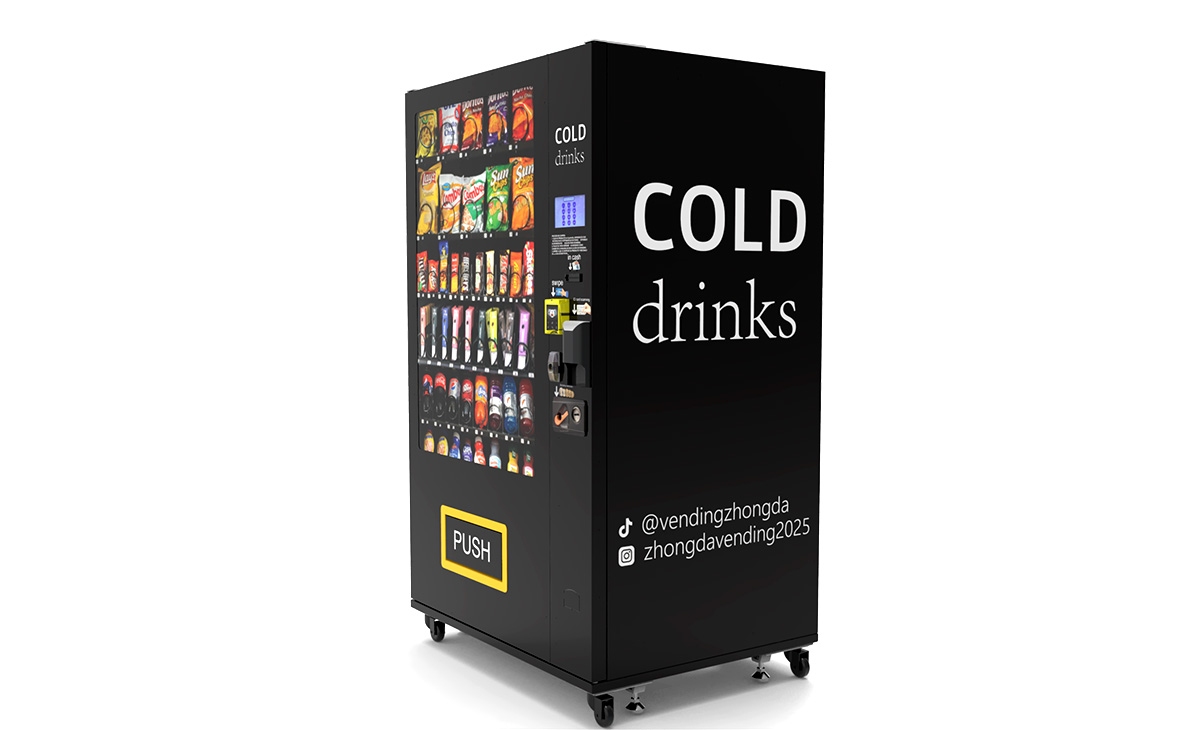
The machine you choose should match the location and the product category. For a free location with low foot traffic, a small machine with 20 to 30 slots is often enough. For a high-traffic office, you need a larger machine with at least 40 slots and a reliable payment system. I prefer machines that accept both cash and card payments because many people no longer carry cash. According to a 2023 report from Statista, over 40% of vending machine transactions in the US are now cashless, and that number is growing.
When selecting a manufacturer, I look for a company that offers good after-sales support and replacement parts. In my experience, Chinese manufacturers like Zhongda Smart offer a solid balance of quality and affordability. Their machines are common in the US and European markets, and parts are easy to find. I have used their machines in several locations and found them reliable for the price point. However, I always recommend ordering a sample unit first to test the build quality and the software interface. A machine that is hard to program will waste hours of your time every month.
Another important feature is the telemetry system. Modern machines can send you real-time data on sales, inventory levels, and machine health. This allows you to restock only when needed, which saves fuel and labor. Without telemetry, you have to visit each machine regularly whether it needs restocking or not. That inefficiency adds up quickly. I have seen operators with 20 machines save over $200 per month in fuel costs just by switching to telemetry-equipped machines.
Cost Breakdown: What to Expect
Here is a rough cost breakdown based on my experience. These numbers are estimates and will vary by region, machine type, and supplier.
| Item | Low End | Mid Range | High End |
|---|---|---|---|
| New machine (snack) | $1,500 | $3,000 | $6,000 |
| New machine (drink) | $2,000 | $4,000 | $8,000 |
| Used machine | $500 | $1,200 | $2,500 |
| Payment system upgrade | $300 | $600 | $1,200 |
| Initial inventory | $200 | $500 | $1,000 |
| Monthly service cost | $50 | $100 | $200 |
| Average monthly revenue | $200 | $400 | $1,000+ |
As you can see, the range is wide. A used machine in a free location with low traffic might cost you $500 upfront and generate $200 per month. A new machine in a paid high-traffic location might cost $6,000 and generate $1,500 per month. The return on investment depends on your ability to find good locations and manage costs. I have seen operators achieve a full payback in 6 months, and I have seen others take 18 months. The difference is almost always location quality.
Revenue Potential by Location Type
Different location types have different revenue potentials. Based on my experience and industry benchmarks, here is a rough estimate of monthly revenue for each type:
| Location Type | Typical Monthly Revenue | Foot Traffic Needed | Best Product Category |
|---|---|---|---|
| Office break room | $300 - $800 | 50 - 150 people/day | Snacks, drinks, coffee |
| Warehouse or factory | $500 - $1,200 | 100 - 300 people/day | Drinks, energy snacks |
| School or university | $400 - $1,000 | 200 - 500 people/day | Snacks, drinks, healthy options |
| Hospital staff area | $300 - $700 | 50 - 100 people/day | Drinks, sandwiches, coffee |
| Gym or fitness center | $200 - $600 | 50 - 150 people/day | Water, protein bars, healthy snacks |
| Retail store corner | $100 - $300 | 20 - 50 people/day | Drinks, gum, small snacks |
These numbers are based on my personal experience and should be treated as estimates. Actual revenue depends on factors like pricing, product mix, and local competition. I always recommend starting with one machine in a promising location and tracking the data for at least three months before expanding.
How to Approach a Business Owner for Free Placement
When you approach a business owner, you need to present yourself as a professional. Bring a one-page proposal that explains what you offer: a clean, well-stocked machine that you service regularly. Emphasize that you take care of everything and that the machine adds value for their employees or customers. I usually offer a small commission of 5% to 10% as a goodwill gesture, even if the location is free. This makes the owner feel like a partner and reduces the chance of them asking you to remove the machine later.
Be prepared for rejection. Most business owners are skeptical of vending machines because they have seen poorly maintained ones. Your job is to show them that you are different. Offer to place a trial machine for 30 days with no obligation. If the machine performs well, they will likely agree to keep it. I have used this approach successfully in over 50 locations. The trial period gives you data to decide whether the location is worth keeping, and it gives the owner confidence in your service.
Common Mistakes Beginners Make
I have seen the same mistakes repeated by new operators. The first is buying a cheap machine from an unknown supplier. Cheap machines often have poor refrigeration, flimsy cabinets, and unreliable payment systems. The repair costs will eat up any savings. I recommend buying from a reputable manufacturer, even if it costs more upfront. Zhongda Smart is one option, but there are others like Crane and Seaga that have good reputations in the US market. Always check online reviews and ask for references before buying.
The second mistake is overstocking the machine. Beginners often fill every slot with products, assuming that more options mean more sales. In reality, you should start with a limited selection of best-selling items and add new products based on sales data. A machine with 20 slots and 10 products that sell well will outperform a machine with 30 slots and 20 products that barely move. I always track which products sell and which ones expire. Expired products are lost money.
The third mistake is ignoring the payment system. In 2024, a machine that only accepts cash will miss a significant portion of sales. According to a Federal Reserve study, about 30% of US consumers do not carry cash regularly. If your machine cannot accept cards or mobile payments, you are leaving money on the table. I recommend machines that support NFC, Apple Pay, and Google Pay in addition to traditional card payments. The extra cost is worth it.
How to Use Sales Data to Improve Performance
Once your machine is running, the real work begins. I check my sales data every week. If a product has not sold in two weeks, I replace it with something else. If a machine consistently underperforms, I consider moving it to a different location. I have moved machines that were generating $150 per month to a new spot and seen them jump to $600 per month. The machine itself was fine; the location was the problem.
I also track the time of day when sales happen. If most sales occur between 10 am and 2 pm, that tells me the machine is serving lunch crowds. If sales spike in the late afternoon, it might be serving a break crowd. This data helps me adjust the product mix. For example, a machine that sells mostly in the morning should stock coffee and breakfast items. A machine that sells in the evening should stock dinner options or snacks.
Another useful metric is the average transaction value. If your average sale is $1.50, you need more sales to cover costs than if the average is $3.00. You can increase the average by bundling products or offering larger sizes. For example, a combo deal of a drink and a snack for $3.50 can increase both sales volume and revenue. I have tested this in several locations and seen a 15% to 20% increase in monthly revenue.
Maintenance and Repair: What to Expect
Vending machine repair is an inevitable part of the business. Even the best machines will have issues. The most common problems are coin jams, card reader failures, and refrigeration breakdowns. I recommend learning basic repair skills yourself because calling a technician costs $75 to $150 per visit. Simple fixes like clearing a coin jam or resetting the control board take less than 10 minutes and can save you hundreds of dollars per year.
For more serious issues, you need a reliable repair service. I have a list of technicians in each area where I operate. If you are in a remote area, you may struggle to find a technician, which is another reason to cluster your machines. I have seen operators wait two weeks for a repair because the nearest technician was 50 miles away. That lost sales and damaged the relationship with the location owner.
Preventive maintenance is key. I clean the machine every time I restock it. I check the seals on the refrigerator door and replace them if they are worn. I also update the software on the payment system regularly. These small tasks prevent bigger problems down the line. A well-maintained machine can last 10 years or more. A neglected machine will fail within three years.
Legal and Regulatory Considerations
Before placing a machine, you need to check local regulations. In the US, you typically need a business license and a sales tax permit. Some states require a food service permit if you sell perishable items. In Europe, the rules vary by country. For example, in France, you need to register with the Chamber of Commerce and comply with food safety regulations. The European Vending Association provides guidelines for operators across the EU.
I also recommend getting liability insurance. If a machine malfunctions and causes injury or damage, you could be held responsible. The cost of insurance is usually $200 to $500 per year for a small operation. It is a small price to pay for peace of mind. I have seen operators lose their entire business because of a single lawsuit.
FAQ
Are vending machines profitable?
Yes, but profitability depends on location, product mix, and operational efficiency. A machine in a good location can generate $400 to $1,000 per month with a 30% to 50% margin. However, many machines in poor locations lose money. The key is to evaluate each location carefully and track your costs.
How much does a vending machine cost?
A new machine costs between $1,500 and $8,000 depending on the type and features. Used machines can be found for $500 to $2,500. I recommend budgeting at least $3,000 for a reliable new machine with a modern payment system.
How long does it take to recoup the investment?
In my experience, the payback period ranges from 6 to 18 months. A machine that costs $3,000 and generates $500 per month will pay back in 6 months. A machine that costs $1,500 and generates $200 per month will take 7.5 months. The faster the payback, the better.
Should a beginner buy or lease a machine?
I recommend buying a used machine or a low-cost new machine for your first location. Leasing often comes with high monthly payments and restrictions. Once you have proven the concept, you can invest in better equipment.
Where should I place my first machine?
Start with a location you already have access to, like your workplace or a friend's business. This reduces the risk of rejection and gives you experience. Look for a place with at least 100 people passing by daily and a clear need for snacks or drinks.
What permits do I need?
In most US states, you need a business license and a sales tax permit. If you sell food, you may need a food service permit. In Europe, you need to register with local authorities and comply with food safety laws. Check with your local government before placing a machine.
How do I choose a supplier?
Look for a supplier with good reviews, available parts, and responsive customer service. Zhongda Smart is a common choice for budget-conscious operators, but also consider established brands like Crane and Seaga. Always request a sample or visit a showroom before buying.
What happens if the machine breaks?
Learn basic repair skills to handle common issues. For major repairs, find a local technician. Keep a list of contact numbers for each area where you operate. Preventive maintenance reduces the frequency of breakdowns.
How can I reduce restocking costs?
Use telemetry to monitor inventory levels and restock only when needed. Cluster your machines within a small geographic area to minimize travel time. Buy products in bulk to reduce per-unit costs.
Can I operate a vending machine part-time?
Yes, many operators start part-time. With telemetry, you can manage a few machines with just a few hours per week. However, you need to be responsive to issues like machine failures or low inventory. I recommend starting with one or two machines and scaling up as you gain experience.
Final Thoughts
Choosing the right location for a vending machine is the most important decision you will make as an operator. Free locations can work, but they require careful evaluation and realistic expectations. Focus on foot traffic, dwell time, and product fit. Invest in a reliable machine with a modern payment system and telemetry. Track your sales data and adjust your strategy based on what you learn. The vending business is not a get-rich-quick scheme, but with patience and attention to detail, it can provide a solid income stream. Start small, learn from your mistakes, and scale up gradually.
This article was updated in May 2025.