If you are considering getting into the vending machine business, one of the first hard questions you will face is whether the coin mechanism—the physical slot where customers drop coins—still makes sense in a world dominated by tap-to-pay and mobile wallets. After more than a decade operating machines across the U.S. and parts of Europe, I can tell you this: the vending machine coin mechanism is not dead, but it is becoming a niche tool rather than a necessity. In this article, I will share what I have learned about when to keep cash handling, when to ditch it, and how the decision affects your bottom line, your maintenance schedule, and your relationship with customers.
Why the Coin Mechanism Still Matters
When I started in this business back in 2010, every machine I placed had a coin mechanism and a bill validator. Cash was king. Today, roughly 60 to 70 percent of my transactions are cashless, depending on the location. But that remaining 30 to 40 percent still comes from coins and small bills. In certain environments—factories, trade schools, rural gas stations—cash still represents the majority of sales. The vending machine coin mechanism is the only way to serve those customers who either do not trust cards or simply do not carry them.
Another practical reason to keep coin handling is reliability. A well-maintained coin mechanism from a reputable brand can run for years without a single service call. The same cannot be said for a card reader that loses network connectivity or a mobile payment terminal that freezes after a software update. I have seen locations where the cashless system went down for three days, and the coin mechanism kept the machine alive. That alone can save you from losing a good spot.
However, coin mechanisms come with their own headaches. They jam. They collect dust and grime. They require periodic calibration. And in some neighborhoods, they attract theft attempts. The question is not whether coin mechanisms work—they do—but whether the cost and hassle are worth it for your specific business model.
The Real Cost of a Coin Mechanism
Let us talk numbers. A basic coin mechanism for a standard snack or drink machine costs between 150 and 400 USD, depending on the brand and whether it accepts multiple coin denominations. A high-end model that handles tokens, bills, and coins can run 600 USD or more. If you are buying a new machine, the coin mechanism is usually included in the base price. But if you are retrofitting an older machine or replacing a broken unit, you need to budget for that expense separately.
Installation is straightforward if you know what you are doing. Most modern coin mechanisms use a standard MDB (Multi-Drop Bus) interface, which means they plug directly into the vending machine controller. If you are not comfortable with basic wiring, a technician will charge you 75 to 150 USD for the swap. I have done dozens of these swaps myself, and the time investment is usually under 30 minutes.
Maintenance is where the hidden costs pile up. A coin mechanism should be cleaned and lubricated every three to six months, depending on the environment. A dusty warehouse or a construction site will clog the mechanism faster than a clean office lobby. Replacement parts—like coin return levers, sensors, and springs—are cheap individually, but the labor to diagnose and fix them adds up. Over five years, I estimate the total cost of owning a coin mechanism, including initial purchase, installation, and maintenance, to be between 300 and 700 USD per machine.
Pros of Keeping a Coin Mechanism
Cash Customers Still Exist
In the United States, according to the Federal Reserve's 2023 Diary of Consumer Payment Choice, about 18 percent of in-person transactions are still conducted with cash. In Europe, the European Central Bank reported that cash accounted for 59 percent of all point-of-sale transactions in 2022. That is a lot of potential customers who will walk away if your machine only accepts cards or phones. A vending machine coin mechanism ensures you capture that revenue.
No Network Dependency
Cashless systems rely on cellular or Wi-Fi connectivity. If the location has poor signal, or if the network goes down, your machine becomes a useless box. A coin mechanism works offline, every time. I have placed machines in basement break rooms and remote construction trailers where cellular data was nonexistent. Cash handling was the only option, and it worked flawlessly.
Lower Per-Transaction Fees
Credit card processors charge 2 to 4 percent per transaction, plus a flat fee. Mobile wallets like Apple Pay and Google Pay have similar fees. Cash transactions have zero processing fees. If your machine does high volume, those savings add up. For a machine doing 1,000 USD per month in sales, the difference between 100 percent cash and 100 percent card could be 30 to 40 USD per month in fees. That is not life-changing, but it is real money.
Simplicity for the Operator
When I first started, I did not have a back-end system to monitor sales remotely. I collected cash, counted it, and reconciled it manually. A coin mechanism gave me a simple, predictable way to track how much money was in the machine. No software subscriptions, no telemetry fees, no data plans. For a small operator with one or two machines, that simplicity is valuable.
Cons of Keeping a Coin Mechanism
Higher Maintenance Burden
Coin mechanisms are mechanical, and mechanical things break. I have spent countless hours pulling jammed coins out of a mechanism, replacing worn-out springs, and cleaning sticky sensors. The most common failure point is the coin return lever, which customers abuse by pushing it repeatedly when they think the machine shortchanged them. That lever costs 5 USD to replace, but the service call to fix it can cost 100 USD.
Theft and Vandalism Risk
Cash in a machine is a target. I have had machines broken into specifically because thieves knew there was cash inside. Even with a high-security lock and a steel cabinet, a determined thief can pry open the coin box or smash the mechanism. Cashless machines are less attractive targets because there is no physical cash to steal. In high-crime areas, the vending machine coin mechanism becomes a liability.
Slower Transaction Speed
Fumbling for coins takes time. A customer who pays with a card or phone completes the transaction in under 10 seconds. A customer digging through pockets for exact change can take 30 seconds or more. During a lunch rush, that delay can cost you sales. I have seen lines form at machines with slow coin mechanisms, and some customers simply walk away rather than wait.
Limited Denomination Acceptance
Not all coin mechanisms accept all coins. If your machine is set up for U.S. quarters, dimes, and nickels, a customer with only a 1 USD coin or a 2 euro coin may be out of luck. Some mechanisms accept tokens and special coins, but that adds complexity. In Europe, where coin denominations vary widely between countries, a machine that only accepts local coins becomes a problem if you move it across a border.
Real-World Insights from the Field
I have made every mistake you can imagine with coin mechanisms. Early in my career, I bought a batch of refurbished machines that came with cheap, generic coin mechanisms. Within three months, half of them were jamming regularly. I spent more on service calls than I had saved on the purchase price. That experience taught me to invest in quality mechanisms from the start. Brands like CoinCo, Mars (now MEI), and NRI are industry standards for a reason. They cost more upfront, but they fail less often.
Another lesson: never assume that a location will be 100 percent cashless just because it looks modern. I once placed a machine in a trendy co-working space in Berlin. The building had a sleek design, digital locks, and a café that accepted only cards. I installed a cashless-only machine. Within a week, I received complaints from members who wanted to pay with coins. It turned out that many freelancers and students in that space preferred cash. I had to retrofit the machine with a coin mechanism, which cost me time and money. Now, I always ask the location manager about payment preferences before I choose the configuration.
One more insight: if you operate in a region with a high value-added tax (VAT) or where small transactions are often cash-based, you will find that coin mechanisms are more common than you think. In Italy, for example, many vending machines in public spaces still rely heavily on coins because customers are accustomed to paying small amounts in cash. The same is true in parts of Spain and Greece. In contrast, in the Nordic countries, cash is almost extinct, and a coin mechanism is a waste of space.
Comparing Coin Mechanisms vs. Cashless Systems
| Feature | Coin Mechanism | Cashless System (Card/Mobile) |
|---|---|---|
| Initial Cost | 150–400 USD | 300–800 USD (including telemetry) |
| Transaction Fees | 0% | 2–4% per transaction |
| Maintenance Frequency | Every 3–6 months | Rare, but software updates needed |
| Network Dependency | None | Requires cellular or Wi-Fi |
| Theft Risk | Moderate to high | Low |
| Customer Speed | Slow | Fast |
| Best For | Rural areas, factories, cash-heavy regions | Urban offices, high-traffic locations |
How to Decide: Should You Include a Coin Mechanism?
There is no one-size-fits-all answer. Here is how I approach the decision for each new machine I place.
Step 1: Analyze the location. Visit the site during different times of the day. Watch how people pay for things. If the nearby coffee shop takes only cards, your machine can probably go cashless. If you see people pulling out wallets and counting coins, keep the coin mechanism.
Step 2: Check the demographics. Younger customers (under 35) are more likely to use cards or phones. Older customers and those in lower-income brackets tend to use cash more. If your location serves a mix of ages, offer both payment options.
Step 3: Evaluate the connectivity. If the location has poor cellular reception, a cashless system will be unreliable. In that case, a coin mechanism is not optional—it is essential. I have installed signal boosters in some locations, but that adds cost and complexity.
Step 4: Consider the machine type. For a high-ticket item machine (e.g., electronics or personal care products), cashless is almost mandatory because customers rarely carry that much cash. For a snack or drink machine with items under 3 USD, cash is still common.
Step 5: Look at the competition. If there is another vending machine nearby that takes only cash, you can differentiate yourself by offering cashless. If the competitor offers both, you need to match that or risk losing customers.
When a Coin Mechanism Is a Bad Investment
I have seen operators lose money by insisting on coin mechanisms in locations where they are not needed. One example: a friend placed a machine in a university dormitory. He installed a coin mechanism because he thought students would use cash. In reality, those students used meal cards and mobile payments almost exclusively. The coin mechanism sat unused, and he paid extra for a feature that added no value.
Another bad scenario is high-traffic transit hubs. Airports and train stations have high volumes of customers who are in a hurry. They want to tap and go. A coin mechanism slows them down, and if the machine jams, the line backs up quickly. In those locations, I recommend a cashless-only system with a backup battery for the card reader.
Also, avoid coin mechanisms in locations with high humidity or temperature extremes. Coin mechanisms are sensitive to moisture and dust. A machine placed outdoors in a rainy city like Seattle or London will require more frequent cleaning and part replacements. I have seen mechanisms fail within six months in such environments.
Supplier Selection: What to Look For
When you are ready to buy a machine, the supplier matters as much as the machine itself. I have worked with dozens of manufacturers over the years, and I have learned to ask specific questions before placing an order.
First, ask about the coin mechanism brand. A reputable supplier will offer mechanisms from established brands like MEI, CoinCo, or NRI. If they offer a generic mechanism, ask for the failure rate. If they cannot give you a straight answer, move on.
Second, ask about spare parts availability. If the coin mechanism breaks, you need to get replacement parts quickly. A supplier that stocks parts in your region is worth more than one that ships from overseas. I have had to wait three weeks for a simple spring from a Chinese manufacturer, and that downtime cost me revenue.
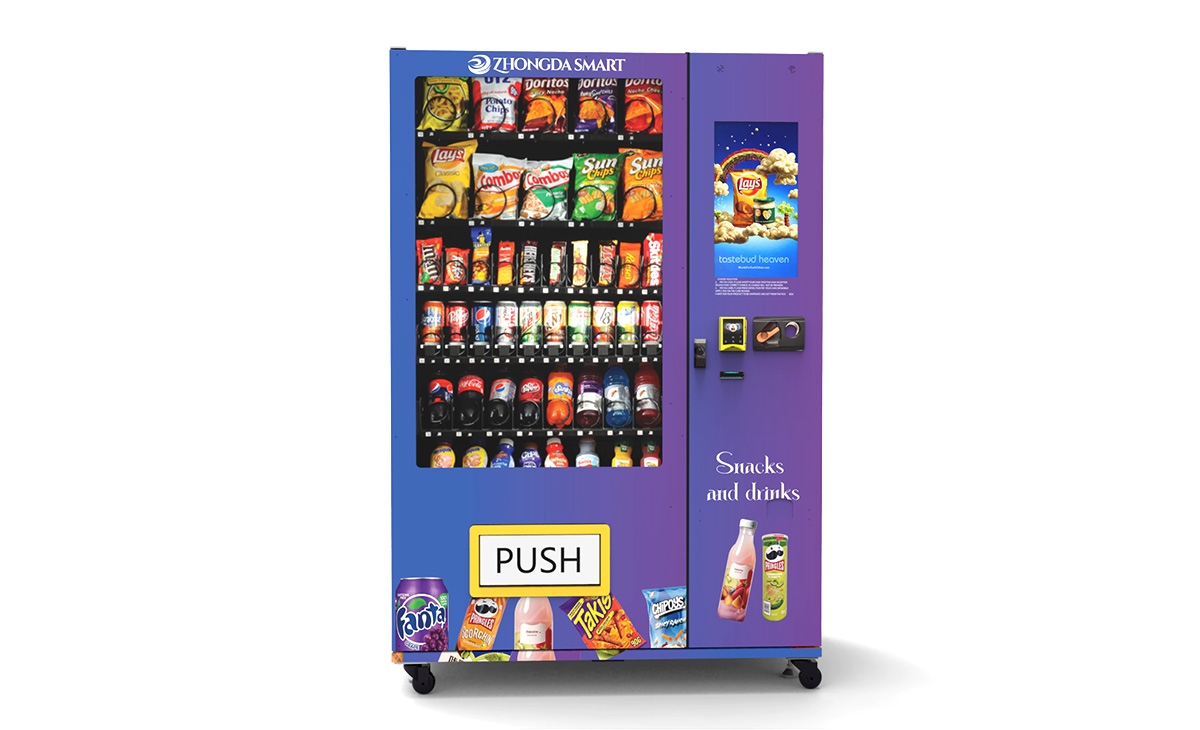
Third, ask about compatibility. If you plan to upgrade to cashless later, the machine should have an MDB interface that allows you to plug in a card reader without rewiring the whole system. Many modern machines from Zhongda Smart, for example, come with MDB-ready controllers that accept both coin mechanisms and cashless systems. That flexibility is valuable because it lets you start with cash and add cashless later as the location demands.
Fourth, ask about warranty. A good supplier will offer at least one year of warranty on the coin mechanism. Some offer two years. If the warranty is less than one year, consider it a red flag. I have seen cheap mechanisms fail within the first six months, and without warranty, you eat the cost.
Common Mistakes New Operators Make
I have mentored several people entering this business, and I see the same patterns repeating. Here are the most common mistakes related to coin mechanisms.
Mistake 1: Buying the cheapest machine. A 2,000 USD machine with a generic coin mechanism will cost you more in repairs than a 4,000 USD machine with a quality mechanism. I learned this the hard way. Spend the extra money upfront.
Mistake 2: Ignoring coin box security. The coin box is the most vulnerable part of the machine. Use a machine with a lockable, reinforced coin box. I have had machines where the coin box was just a plastic tray that could be pulled out by hand. That is an invitation to theft.
Mistake 3: Not testing the mechanism before placement. Always test the coin mechanism with real coins before you install the machine. I once placed a machine that accepted only quarters, but the location was near a laundromat where customers had mostly dollar coins. I had to swap the mechanism within a week.
Mistake 4: Overlooking the coin return. A jammed coin return is the number one complaint from customers. Make sure the mechanism has a reliable coin return path. Test it with crumpled bills and sticky coins. If it jams easily, choose a different mechanism.
Mistake 5: Forgetting about foreign coins. If you operate near a border or in a tourist area, some customers will try to use foreign coins. Your mechanism should reject them, not jam. Good mechanisms have built-in coin validation that detects weight, size, and metal composition.
Location Types That Benefit from Coin Mechanisms
Based on my experience, here are the location types where a vending machine coin mechanism is still a strong asset.
- Factories and warehouses: Workers often carry cash and prefer quick transactions. Many factories have poor cellular reception, making cashless unreliable.
- Trade schools and vocational centers: Students in these environments are often younger and may not have credit cards. Cash is common.
- Rural gas stations and convenience stores: In rural areas, cash is still the dominant payment method. A cashless-only machine will miss a large portion of sales.
- Construction sites: Workers need quick access to drinks and snacks. Cash is easy, and network connectivity is often poor.
- Community centers and churches: These locations serve a diverse demographic, including older adults who prefer cash.
- Public parks and recreation areas: People often carry cash when they are outdoors. A coin mechanism allows spontaneous purchases without needing a phone or card.
Location Types Where Cashless Is Better
- Corporate offices and business parks: Employees are accustomed to tap-to-pay and rarely carry cash.
- Hospitals and medical centers: Staff and visitors prefer speed and hygiene. Cashless reduces contact.
- Airports and train stations: High volume, fast transactions needed. Cashless is faster and more secure.
- Universities and college campuses: Students use meal cards and mobile payments almost exclusively.
- Fitness centers and gyms: Members often have their phones with them but not cash.
- Luxury hotels and resorts: Guests expect modern payment options. A coin mechanism looks outdated.
Real Data: What the Numbers Say
According to a 2023 report by the European Central Bank, cash was used in 59 percent of all point-of-sale transactions in the euro area. In the United States, the Federal Reserve's 2023 Diary of Consumer Payment Choice found that cash accounted for 18 percent of transactions. These numbers vary significantly by age and income. For example, the Federal Reserve report shows that adults aged 65 and older used cash for 26 percent of their transactions, while adults aged 25 to 34 used cash for only 12 percent.
What does this mean for vending machine operators? If your target demographic is older or lower-income, cash handling is not optional. If your target is younger and higher-income, you can safely go cashless. But in most mixed environments, offering both is the safest bet.
How to Calculate the ROI of a Coin Mechanism
To decide whether a coin mechanism is worth it, you need to run the numbers for your specific situation. Here is a simple formula I use.
Step 1: Estimate the percentage of cash transactions at the location. If you do not have data, start with 30 percent as a baseline.
Step 2: Calculate the additional revenue from cash customers. If the machine does 1,000 USD per month and 30 percent is cash, that is 300 USD per month in cash sales.
Step 3: Estimate the cost of the coin mechanism (initial purchase, installation, maintenance) over its expected lifespan. If the mechanism costs 300 USD and lasts 5 years, the annual cost is 60 USD.
Step 4: Compare the cost to the revenue. In this example, the mechanism costs 60 USD per year but generates 3,600 USD in cash sales per year. That is a massive return. Even if maintenance adds another 100 USD per year, the ROI is still positive.
However, if the location has only 5 percent cash transactions, the math changes. Five percent of 1,000 USD is 50 USD per month, or 600 USD per year. The mechanism cost of 160 USD per year (including maintenance) still yields a positive ROI, but the margin is thinner. In that case, you might consider a cashless-only system and accept losing that 5 percent.
Hybrid Solutions: The Best of Both Worlds
Many modern vending machines allow you to run both a coin mechanism and a cashless system simultaneously. This is the configuration I recommend for most locations. The customer can choose how to pay, and you capture every sale regardless of payment preference.
The downside is complexity. You now have two payment systems to maintain. If either system fails, you still have the other, but you need to be prepared to service both. Also, the machine's controller must be able to handle both inputs. Most modern controllers from manufacturers like Zhongda Smart support dual payment systems out of the box.
Another hybrid option is a machine that accepts coins but also has a QR code reader for mobile payments. This is popular in Asia and is gaining traction in Europe. The QR code system does not require a card reader or cellular connectivity, making it a low-cost alternative for cashless payments. However, it requires the customer to have a smartphone and a payment app, which not everyone has.
Maintenance Tips for Coin Mechanisms
If you decide to keep a coin mechanism, proper maintenance will save you money. Here are the practices I follow.
- Clean the mechanism monthly. Use compressed air to blow out dust and debris. Use a soft brush to clean the coin path. Do not use oil-based lubricants unless specified by the manufacturer.
- Check the coin return path. Every month, test the return function with a few coins. If the return is sticky, clean the mechanism and check for worn parts.
- Replace worn springs and levers proactively. If you notice a part is starting to wear, replace it before it fails. A 5 USD spring can prevent a 100 USD service call.
- Keep spare parts on hand. I always carry a spare coin mechanism, a few springs, a lever, and a set of sensors. This allows me to fix most problems on the spot without ordering parts.
- Use a coin box with a tamper-evident seal. This deters theft and makes it easier to track cash discrepancies.
When to Upgrade or Replace the Coin Mechanism
Technology evolves. If your coin mechanism is more than 10 years old, it may not accept newer coins or tokens. In Europe, many countries have updated their coin designs, and older mechanisms may reject them. If you notice that customers are struggling to use the machine, or if the mechanism is frequently jamming, it is time to upgrade.
Also, consider upgrading if you want to add cashless functionality. Some older machines do not have an MDB interface, making it difficult to add a card reader. In that case, replacing the entire payment system may be more cost-effective than retrofitting.
I have replaced coin mechanisms on machines that were otherwise in good condition. The cost of a new mechanism (300 to 400 USD) was less than the cost of a new machine (3,000 to 5,000 USD), and the upgrade extended the machine's life by several years.
Final Thoughts from a Decade in the Business
The vending machine coin mechanism is not going away anytime soon. While cashless payments are growing, cash is still a significant part of the economy, especially in certain demographics and regions. As an operator, your job is to match the payment options to the location. Do not assume that cashless is always better. Do not assume that cash is always necessary. Test, measure, and adjust.
If you are just starting out, I recommend buying a machine that supports both coin and cashless payments, even if you only install one at first. That way, you can add the other later without replacing the machine. Manufacturers like Zhongda Smart offer models with flexible payment configurations, which can save you from costly retrofits down the line.
Remember, the goal is not to have the fanciest payment system. The goal is to sell products reliably and profitably. A coin mechanism that works well is better than a cashless system that fails. And a cashless system that is fast and reliable is better than a coin mechanism that jams. Choose based on the location, not on trends.
I have seen operators succeed with both approaches. I have also seen operators fail because they ignored the payment preferences of their customers. Pay attention to the data, listen to your customers, and do not be afraid to change your configuration if the numbers tell you to.
Frequently Asked Questions
Are vending machines profitable?
Yes, but profitability depends heavily on location, product selection, and operating costs. A well-placed machine can generate 500 to 2,000 USD per month in revenue, with gross margins of 30 to 50 percent. However, you must account for rent, restocking labor, maintenance, and payment processing fees. Many operators see a return on investment within 12 to 24 months.
How much does a vending machine cost?
A new machine typically costs between 3,000 and 8,000 USD, depending on size, features, and brand. Used machines can be found for 1,000 to 3,000 USD, but they may require repairs. The coin mechanism itself adds 150 to 400 USD to the cost if purchased separately.
How long does it take to break even?
Break-even periods vary widely. In a high-traffic location with good margins, you might break even in 6 to 12 months. In a slower location, it could take 2 to 3 years. I have seen operators break even in 8 months on a snack machine in a busy factory, and I have seen others take 18 months on a drink machine in a quiet office.
Should a beginner buy or lease a vending machine?
Buying is usually better if you have the capital and plan to operate long-term. Leasing can be useful if you want to test the business without a large upfront investment, but the monthly payments eat into your profit. I recommend buying a used machine from a reputable source for your first machine. That keeps your risk low while you learn the ropes.
Where is the best place to put a vending machine?
High-traffic locations with a captive audience are ideal. Factories, schools, hospitals, gyms, and office buildings are common choices. The key is to find a location where people are already spending time and have limited access to other food and drink options. Always negotiate a commission or rental agreement with the location owner before placing the machine.
What permits or licenses do I need?
Requirements vary by country and municipality. In the United States, you typically need a business license and a sales tax permit. Some cities require a vending machine permit. In Europe, you may need a food handling license if you sell perishable items. Check with your local business registration office. The European Union's Your Europe portal is a good starting point for information.
How do I choose a vending machine supplier?
Look for a supplier with a track record of reliability, good customer support, and a reasonable warranty. Ask for references from other operators. Check if they stock spare parts locally. Avoid suppliers that only offer generic machines without brand-name components. I have found that manufacturers like Zhongda Smart offer a good balance of quality and value, especially for operators who need flexible payment configurations.
What happens if my machine breaks down?
If the machine stops working, you lose revenue and risk losing the location. That is why preventive maintenance is critical. For minor issues like a jammed coin mechanism, you can fix it yourself with basic tools. For major issues like a compressor failure, you will need a technician. I recommend building a relationship with a local vending machine repair service before you need one.
How can I reduce restocking and maintenance costs?
Use a route management system to optimize your restocking schedule. Monitor sales data to identify slow-moving products and replace them with faster sellers. Invest in reliable equipment to reduce breakdowns. And consider using a telemetry system that alerts you when the machine needs service, so you do not waste time checking machines that are working fine.
Should I offer cashless payments?
In most cases, yes. Cashless payments increase sales by 10 to 30 percent, according to industry studies. However, the cost of the card reader and transaction fees can eat into your margin. If your location has a high percentage of cash customers, keep the coin mechanism and add cashless as an option. If the location is almost entirely cashless, you can skip the coin mechanism and save on maintenance.
This article was updated in June 2025. The insights are based on personal experience operating vending machines in the United States and Europe since 2010. Data on cash usage is sourced from the Federal Reserve's 2023 Diary of Consumer Payment Choice and the European Central Bank's 2023 report on cash use. For regulatory guidance, consult the European Union's Your Europe portal or your local business registration office. Always verify requirements with local authorities, as laws and market conditions change.