If you are looking into the vape vending machine business for 2026, you probably want to know one thing first: is it actually profitable? After running automated retail operations across the US and Europe for over a decade, I can tell you that the answer is yes, but only if you treat it like a real business, not a passive income fantasy. A well-placed vape vending machine can generate between $2,000 and $6,000 per month in revenue, with gross margins hovering around 30% to 50% depending on your product mix and local regulations. But the real secret is not the machine itself, it is the location, the compliance setup, and the supply chain. This guide will walk you through the actual costs, profit expectations, and step-by-step process to start a vape vending machine operation in 2026, based on what I have learned from both wins and expensive mistakes.
What Is a Vape Vending Machine and Where Does It Belong?
A vape vending machine is a self-service kiosk designed to sell nicotine products, disposable vapes, e-liquids, pods, and sometimes accessories like batteries or coils. Unlike a standard snack machine, these units require age verification systems, tamper-proof storage, and often compliance with local tobacco retail laws. This is not a machine you can just drop in a laundromat and forget about.
In my experience, the best locations for a vape vending machine are bars, nightclubs, adult entertainment venues, certain convenience stores with restricted counter space, and large entertainment complexes like bowling alleys or arcades that serve an adult crowd. I have also seen success in smoke shops that want to extend sales hours without keeping staff on the clock. The key is foot traffic of legal-age adults who are already in a purchasing mindset.
One common mistake I see newcomers make is placing machines in general retail spaces like malls or food courts. Those locations often have age restrictions on nicotine sales or simply do not attract the right buyer. You want a place where the customer is already thinking about nicotine, not where they are shopping for groceries.
Is a Vape Vending Machine Business Profitable in 2026?
Profitability depends on three variables: location rent, product margins, and maintenance efficiency. Based on my own operations and data from IBISWorld, the average vending machine operator in the US earns around $35,000 to $45,000 per year per machine before expenses. But vape machines tend to outperform snack or drink machines because the products have higher perceived value and lower unit weight, which means less restocking effort per dollar earned.
Let me give you a realistic breakdown. A single vape vending machine in a mid-traffic bar can sell 30 to 60 units per week at an average price of $15 to $25. That puts weekly revenue between $450 and $1,500. After cost of goods sold, which is roughly 50% to 60% of retail price, you are left with a gross profit of $200 to $700 per week. Subtract location commission or rent, which can range from 10% to 30% of revenue, and you end up with a net weekly profit of $100 to $500. Over a year, that is $5,000 to $26,000 per machine.
However, I have seen machines in high-traffic nightlife districts bring in over $8,000 per month during peak seasons. Those are the outliers, but they exist. The key is to not overpay for locations and to negotiate short-term trial agreements before committing to a long-term lease.
How Much Does a Vape Vending Machine Cost?
Equipment costs vary widely based on features, build quality, and compliance hardware. A basic vape vending machine without age verification might cost $2,000 to $4,000, but I strongly advise against buying those. You need a machine with integrated ID scanning, facial age estimation, or credit card age verification to stay compliant with local laws. Those machines typically range from $4,500 to $12,000 new.
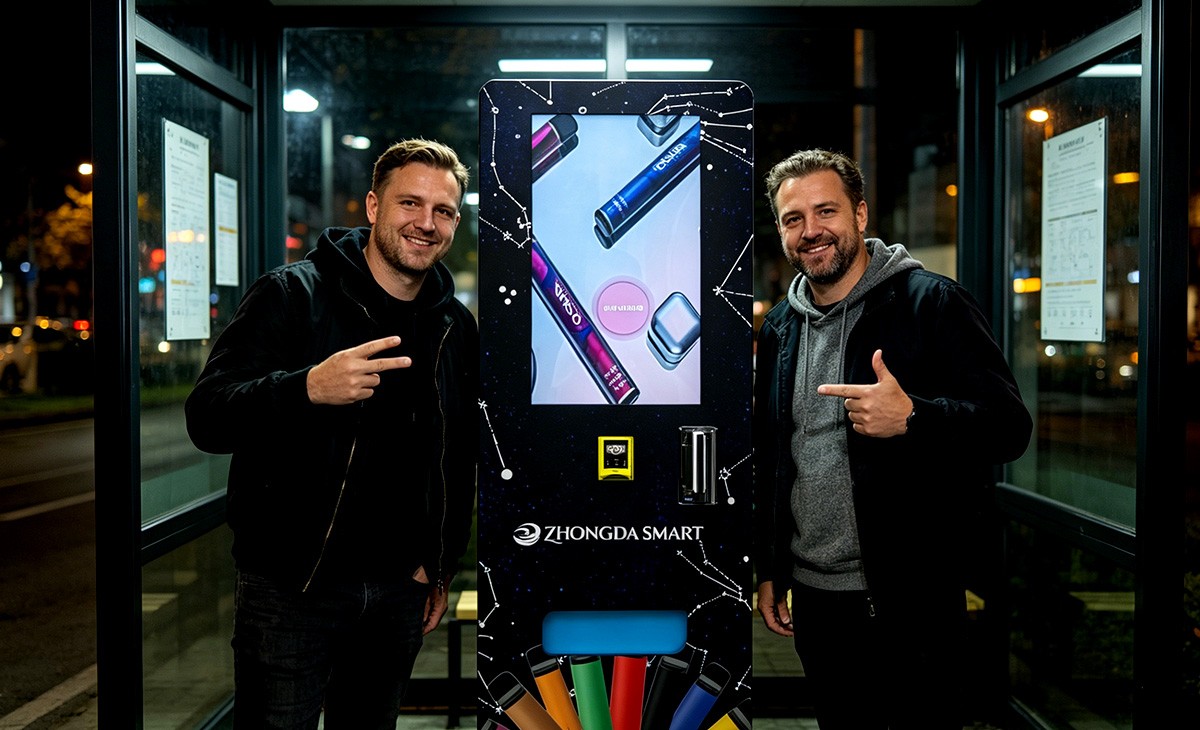
I have personally worked with units from Zhongda Smart, and their machines fall in the $5,000 to $9,000 range depending on configuration. They offer built-in age verification, remote monitoring, and tamper-proof dispensing. For a serious operator, that is the baseline. Cheap machines often fail within the first year, and replacing a dispensing mechanism or a payment terminal can cost you more than the savings from buying cheap.
Here is a quick comparison table based on what I have seen across different supplier tiers:
| Machine Type | Typical Cost (New) | Age Verification | Remote Monitoring | Expected Lifespan |
|---|---|---|---|---|
| Basic snack-style conversion | $2,000 – $4,000 | No | No | 1–2 years |
| Standard vape kiosk (no age scan) | $3,500 – $5,500 | No | Optional | 2–3 years |
| Full compliance vape vending machine | $5,000 – $9,000 | Yes | Yes | 5–7 years |
| Premium commercial grade with touchscreen | $9,000 – $14,000 | Yes | Yes | 7–10 years |
Do not forget the hidden costs: payment processing fees (2.5% to 4% per transaction), installation and shipping ($200 to $600), and initial inventory ($500 to $2,000 depending on product selection).
How to Choose a Vape Vending Machine Supplier
I have bought machines from five different suppliers over the years, and I have learned that the cheapest option is almost never the best. When evaluating a supplier, look for three things: remote management capability, modular parts, and compliance support. If a supplier cannot tell you how their machine handles age verification in your specific state or country, walk away.
Zhongda Smart is one of the few manufacturers I have used that provides a complete solution out of the box. Their machines come with a built-in age verification system that scans IDs or uses facial recognition to estimate age, and they offer remote inventory tracking so you know exactly what sold without driving to the location. That alone saves me about two hours per machine per week.
Other reputable suppliers include USI and Crane Merchandising Systems, but they tend to focus more on snack and beverage machines. If you want a dedicated vape vending machine with compliance features, you will likely need to go through a specialized manufacturer like Zhongda Smart or a distributor that retrofits standard machines.
What Are the Ongoing Costs of Running a Vape Vending Machine?
Monthly operating costs include restocking labor, payment processing fees, location commission or rent, and occasional vending machine repair. Based on my experience, a single machine costs between $150 and $400 per month to operate, not including inventory restocking. Restocking labor is the biggest variable. If you manage it yourself, you save money but lose time. If you hire someone, budget $15 to $25 per hour for two to three hours per week per machine.
Vending machine repair costs vary. In the first year, you might spend nothing. In year three, expect at least one service call per machine, costing $100 to $300. The most common failures are payment terminals, dispensing motors, and refrigeration units if you store e-liquids that require temperature control. I always recommend buying an extended warranty for at least the first two years, especially on the payment system.
Another cost that surprises people is product spoilage. E-liquids have a shelf life, and certain disposable vapes can lose flavor or battery charge if stored too long. I have lost about 3% to 5% of inventory per year to expired or defective stock. That is manageable if you rotate inventory properly.
How to Find the Best Locations for a Vape Vending Machine
Location scouting is the most important skill in this business. I have placed machines in what looked like perfect spots that failed, and in random corners that became gold mines. Here is what I look for now:
- Adult foot traffic: At least 200 to 500 adults passing by per day. Not total foot traffic, but adults over 21.
- Existing nicotine demand: Bars, nightclubs, vape lounges, and smoke shops are obvious. I also look at concert venues and casinos.
- Limited competition: If there is a counter selling vapes within 50 feet, the machine will struggle. You want to be the only option or the most convenient one.
- Operating hours: Locations open late at night are ideal because staffed shops close early, and vending machines keep selling.
- Security: Machines in unsupervised areas get vandalized. I only place machines where there is either a security camera or regular staff presence.
I once placed a machine in a bowling alley that had a bar area. The bowling alley had 300 daily visitors, mostly adults, and the nearest vape shop was a 10-minute drive away. That machine did $4,500 in its first month. On the flip side, I placed a machine in a busy laundromat that had 600 daily visitors but only 30% were adults, and the rest were families with children. That machine barely broke $800 per month. Demographics matter more than raw numbers.
How to Evaluate a Machine Investment Before Buying
Before I buy any machine, I run a simple calculation. I estimate monthly revenue based on the location's adult foot traffic, average transaction value, and a conservative conversion rate of 2% to 5%. Then I subtract estimated costs: 50% cost of goods sold, 15% location commission, 5% payment fees, and 10% for maintenance and restocking labor. That gives me net profit. Then I divide the machine cost by net monthly profit to get the payback period.
For example, if a machine costs $7,000 and generates $2,000 in monthly revenue with $800 net profit, the payback period is about nine months. That is a good investment. If the payback period exceeds 18 months, I pass on the location or negotiate a lower machine cost.
I also factor in the machine's resale value. A well-maintained vape vending machine from a reputable brand like Zhongda Smart can retain 40% to 60% of its value after three years. That is important if you ever need to exit a location quickly.
Common Mistakes New Operators Make
I have made most of these mistakes myself, so I can tell you exactly what to avoid:
- Buying a cheap machine without age verification. You will get fined or shut down within months. Regulations are tightening every year, especially in the EU and parts of the US.
- Overpaying for a location. Some location owners ask for 30% to 50% of revenue. That is too high unless the location is exceptional. I aim for 10% to 20%.
- Ignoring local tax and licensing requirements. In some US states, you need a tobacco retailer license for each machine. In the EU, you may need a specific permit for automated nicotine sales. Check with your local business authority before spending a dime.
- Not testing the product mix. I once filled a machine with only high-nicotine disposables and discovered that my customers wanted lower nicotine options and more flavors. Test a variety of products for at least two months before committing to a specific inventory.
- Skipping remote monitoring. Without it, you are driving to locations blind. You will waste time restocking full machines or missing out on sales when a machine is empty. Remote monitoring pays for itself in the first month.
Regulatory Considerations for Vape Vending Machines in 2026
Regulations are the single biggest risk in this business. In the United States, the FDA regulates nicotine product sales, and many states have additional restrictions on vending machines. For example, California requires all vape vending machines to be in locations where minors are not permitted, and some states like New York ban them entirely outside of adult-only facilities.
In the European Union, the Tobacco Products Directive (TPD) sets limits on nicotine strength and bottle size, and individual countries like France and Germany have their own rules about automated sales. According to data from the European Commission, nicotine vending machines are permitted in most EU countries but must have age verification systems that comply with local laws. You can read more about the TPD requirements on the European Commission health website.
I strongly recommend consulting with a local business attorney before purchasing any machine. The cost of a legal consultation is small compared to the fines for non-compliance, which can range from $500 to $10,000 per violation depending on the jurisdiction.
How to Start a Vape Vending Machine Business Step by Step
Here is the process I use for every new machine I deploy:
- Research local laws. Check state, county, and city regulations for nicotine vending machines. Obtain necessary licenses.
- Identify target locations. Visit bars, nightclubs, and adult venues. Talk to owners and propose a trial agreement.
- Negotiate terms. Aim for a 3-month trial with a 10% to 20% commission. Get it in writing.
- Select a machine. Choose a vape vending machine with built-in age verification and remote monitoring. I recommend starting with one machine from a reliable supplier like Zhongda Smart.
- Order inventory. Start with 20 to 30 different SKUs covering popular disposable brands, e-liquids, and pods. Avoid stocking too many high-nicotine products initially.
- Install the machine. Ensure it is securely bolted to the floor or wall. Test the payment system and age verification thoroughly.
- Monitor and adjust. Check sales data weekly. Remove slow-moving products and replace them with faster sellers. Adjust pricing based on demand.
- Scale slowly. Do not buy five machines at once. Prove one location works, then expand.
FAQ: Vape Vending Machine Business
Are vape vending machines profitable?
Yes, but profitability depends on location, product margins, and operating costs. A well-placed machine can generate $500 to $2,000 in monthly net profit. Based on my experience and IBISWorld data, the average payback period is 9 to 15 months.
How much does a vape vending machine cost?
A new machine with age verification and remote monitoring costs between $5,000 and $12,000. Basic machines without compliance features cost less but are not recommended due to regulatory risks.
How long does it take to break even?
Typically 9 to 18 months, depending on location performance and machine cost. High-traffic adult venues can achieve payback in under a year.
Should I buy or lease a vape vending machine?
Buying is better for long-term operators because you keep all the profit. Leasing can be useful if you want to test the business with lower upfront risk, but the monthly fees often eat into margins.
Where is the best place to put a vape vending machine?
Bars, nightclubs, adult entertainment venues, casinos, and large entertainment complexes with adult-focused traffic. Avoid general retail locations where minors are present.
What permits do I need?
You typically need a tobacco retailer license, a business license, and possibly a specific vending machine permit. Requirements vary by state and country. Check with your local business licensing office.
How do I choose a supplier?
Look for suppliers that offer age verification, remote monitoring, and modular parts. Zhongda Smart is a manufacturer I have used successfully. Also consider warranty terms and availability of spare parts.
What happens if the machine breaks?
Most common failures are payment terminals and dispensing motors. Keep a backup payment terminal and basic tools on hand. For major repairs, contact the manufacturer or a local vending machine repair technician.
How can I reduce restocking and maintenance costs?
Use remote monitoring to track inventory in real time. Restock only when necessary, not on a fixed schedule. Buy machines with durable components to reduce repair frequency.
Final Thoughts from a Decade in Automated Retail
I have seen vape vending machines go from a niche experiment to a legitimate revenue channel for operators who take compliance and location selection seriously. The market in 2026 will favor those who invest in quality equipment, understand local regulations, and treat each machine as a standalone business unit rather than a passive income stream. There is no shortcut to profitability, but with the right approach, a single machine can pay for itself within a year and generate steady cash flow for years after that.
If you are just starting, buy one machine, learn the operational rhythm, and only scale when you have a system that works. The equipment is only part of the equation. The real work is in the daily attention to product selection, location relationships, and compliance. That is what separates operators who last from those who sell their machines on Craigslist six months later.
This article was updated in January 2026. Business conditions, regulations, and costs may change. Always verify current laws and pricing with local authorities and suppliers.