How to Choose the Right Profitable Vending Machines_ Complete Beginner's Guide
If you are serious about getting into automated retail, the first question you need to answer is not which machine to buy, but how to choose the right profitable vending machines for your specific situation. I have been operating vending routes across the United States and parts of Europe for over a decade, and I can tell you that the difference between a machine that pays for itself in eight months and one that bleeds cash for two years usually comes down to three things: location, product selection, and the machine's build quality. Most beginners jump in because they see a shiny touchscreen model or hear a story about someone making passive income, but they overlook the operational reality of servicing a machine in a low-traffic office park or a high-footfall transit hub. This guide is not a sales pitch. It is a walkthrough of what I have learned from placing hundreds of units, repairing broken compressors at 6 a.m., and pulling stale snacks out of machines that should never have been installed in the first place. By the end of this, you will understand exactly what it takes to run a profitable vending operation in 2025.
What a Vending Machine Business Actually Looks Like on the Ground
Let me clear something up right away. Running vending machines is not passive income. It is a logistics business with a retail component. You are essentially operating a tiny store that has no staff, which means every decision you make about placement, pricing, and restocking has to be right the first time. A single mistake in choosing the wrong machine for a location can cost you months of lost revenue. I have seen operators buy a large snack and drink combi unit for a location that only had 50 office workers, and they ended up throwing away expired inventory every week. On the flip side, I have seen a single coffee machine in a medical office building generate over $2,000 a month because the foot traffic was steady and the product margin was high.
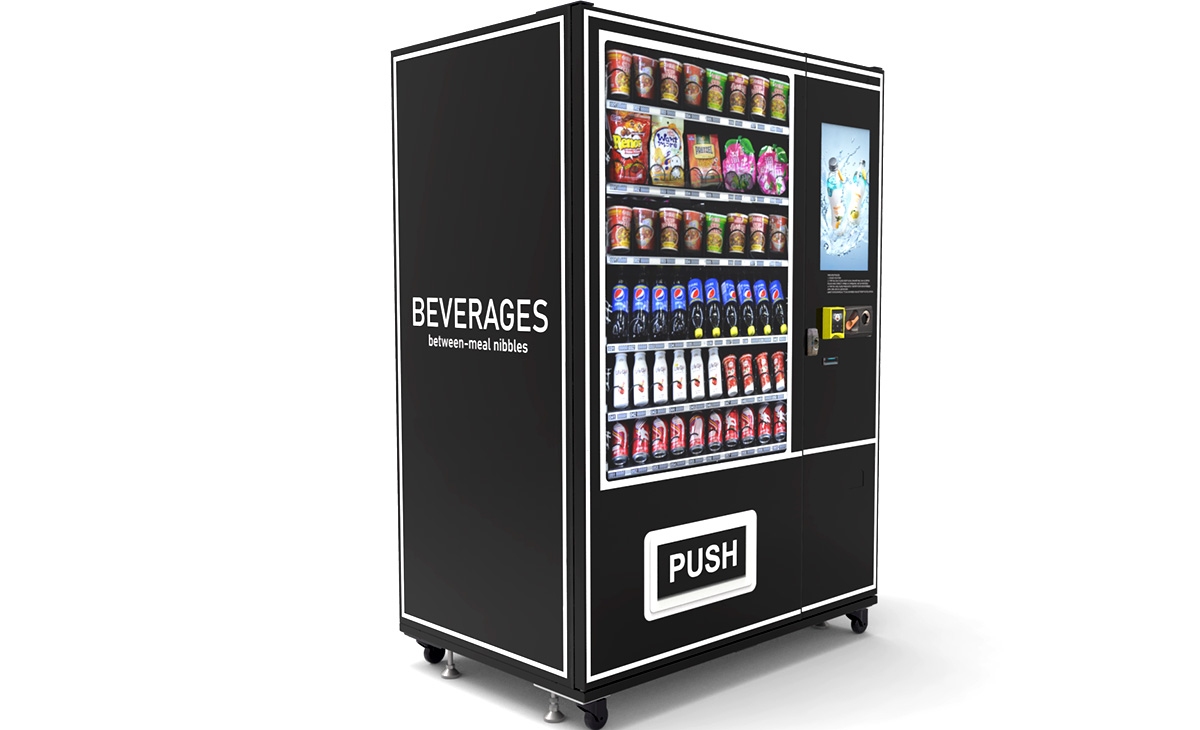
The core of this business is matching the machine type to the consumer behavior at that specific spot. You cannot buy a one-size-fits-all machine and expect it to perform everywhere. That is why understanding how to choose the right profitable vending machines starts with understanding the location first, not the equipment.
Types of Vending Machines and Where They Work Best
Snack and Beverage Combo Machines
These are the workhorses of the industry. A typical combo machine holds around 30 to 40 snack selections and 8 to 12 drink selections. I have found that these work best in locations with at least 100 regular employees or high foot traffic areas like break rooms, warehouses, and manufacturing facilities. The average revenue for a well-placed combo machine in the U.S. is between $400 and $800 per month, according to data from IBISWorld's vending machine operator industry report. However, that number can drop to $150 if the location has a cafeteria or a convenience store nearby.
Cold Drink Machines
Dedicated cold drink machines are simpler to maintain and have fewer moving parts than combo units. They are ideal for locations where people are looking for a quick refreshment, such as gyms, sports centers, and outdoor recreational areas. The profit margin on bottled water and sodas is lower than snacks, typically around 20 to 30 percent, but the volume can be high. In a hot climate, a single drink machine at a public park can sell 150 bottles on a weekend afternoon. The key is to ensure you have a reliable cold drink vending machine that can handle high usage without frequent breakdowns.
Coffee and Hot Beverage Machines
If you want higher margins, coffee is where it is at. A cup of coffee that costs you 30 cents to make can sell for $1.50 to $2.50. I have placed bean-to-cup machines in office lobbies and hospital waiting areas, and they consistently outperform snack machines in terms of profit per square foot. The catch is that coffee machines require more maintenance. You need to clean the brew unit regularly, descale the system, and refill beans and milk powder more frequently. If you are not prepared for that level of upkeep, stick to cold machines.
Specialty Machines (Frozen Food, Fresh Food, and Personal Care)
These are growing in popularity, especially in Europe. Fresh food vending machines that sell sandwiches, salads, and wraps can command higher prices, but they also come with strict food safety regulations. In the EU, you must comply with HACCP guidelines, which means the machine must maintain proper temperature logs and you need a reliable cold chain. I have seen operators in France use distributeur automatique units for fresh food in office parks with great success, but only after they invested in machines with robust refrigeration and remote monitoring. Personal care vending machines are another niche, often placed in restrooms or transit stations, selling items like headphones, phone chargers, and hygiene products. The margins are high, but the sales volume is lower.
How to Evaluate a Location Before You Spend a Dollar
I cannot stress this enough. The location is everything. I have made the mistake of trusting a property manager who promised high foot traffic, only to find out that the building had a coffee shop opening next door two weeks later. Here is the process I use to evaluate a potential spot.
First, I count the actual foot traffic. I stand at the location for at least two hours during peak times and count how many people walk past. For a break room, I look at the number of employees and their shift patterns. For a public space, I look for dwell time. A train station platform where people wait for ten minutes is better than a hallway where people walk through in five seconds.
Second, I check for competition. Is there a cafeteria? A nearby convenience store? A coffee shop? If there is, I calculate the convenience gap. If the nearest store is a five-minute walk away, a vending machine can still win on convenience. But if there is a cafe right next door, I pass on the location.
Third, I look at the demographics. A machine full of protein bars and healthy snacks will perform well in a gym but fail in a construction site break room where workers want chips and soda. You need to match the product mix to the people.
Finally, I negotiate the commission. Many locations will ask for a percentage of sales, usually between 5 and 15 percent. I never agree to a fixed rent unless the foot traffic is guaranteed. A commission-based agreement protects you if sales are slow.
Cost Breakdown: What You Are Really Paying For
Let me give you a realistic picture of the costs involved. These numbers are based on my experience operating in the U.S. and Western Europe, and they will vary depending on your specific market.
| Cost Category | Low End (USD/EUR) | High End (USD/EUR) | Notes |
|---|---|---|---|
| New machine (combo) | $3,000 | $8,000 | Refurbished units can be 40% cheaper |
| New machine (coffee) | $4,000 | $12,000 | Bean-to-cup models are at the high end |
| Payment system (card reader) | $400 | $800 | Required for most locations today |
| Telemetry / remote monitoring | $15/month | $40/month | Reduces unnecessary trips |
| Initial inventory | $500 | $1,500 | Depends on machine size |
| Installation and delivery | $200 | $600 | Can be higher for difficult locations |
| Monthly maintenance reserve | $50 | $150 | Set aside for repairs |
Based on these numbers, a single machine route can require an initial investment of $4,000 to $10,000 per machine. If you are buying multiple machines, you can negotiate discounts with suppliers. I have worked with manufacturers like Zhongda Smart for bulk orders, and their pricing becomes more competitive when you order five units or more. Their machines are solid for mid-range applications, especially if you need reliable refrigeration and a modern payment interface.
Revenue Expectations and Payback Period
Now for the numbers that everyone wants to hear. I will be honest with you. A single vending machine in a good location can generate between $300 and $1,200 per month in revenue. The gross margin on products is typically between 25 and 40 percent, depending on what you sell. That means your gross profit per machine is roughly $100 to $500 per month.
After you subtract commission to the location, restocking labor, vehicle costs, and machine maintenance, your net profit is usually between 10 and 20 percent of revenue. So a machine doing $800 a month in sales might put $80 to $160 in your pocket after all expenses. That is not a life-changing number for one machine, but when you scale to 20 or 30 machines, it becomes a solid income.
Payback period varies wildly. I have seen machines pay for themselves in 10 months, and I have seen others take 24 months. According to a report from the National Automatic Merchandising Association (NAMA), the average payback period for a new vending machine in the U.S. is between 12 and 18 months. In Europe, where operating costs can be higher due to energy prices and stricter regulations, the payback can stretch to 20 months. Always calculate your own numbers based on your actual costs, not industry averages.
How to Choose the Right Profitable Vending Machines for Your First Route
When I started, I made the mistake of buying the cheapest machine I could find. It was a used unit from a local classified ad. The machine broke down twice in the first three months, and I spent more on vending machine repair than I made in sales. That experience taught me that reliability is more important than upfront cost.
Here is what I look for now when selecting a machine. First, the refrigeration system. A bad compressor will kill your margins because you will lose inventory to spoilage. Look for machines that use commercial-grade compressors, not residential ones. Second, the payment system. In 2025, you need a machine that accepts credit cards, mobile payments, and contactless. Cash-only machines are dying. Third, the telemetry capability. A machine that can report its inventory levels and sales data remotely will save you hours of driving time. Fourth, the build quality. Look at the door hinges, the keypad, and the dispensing mechanism. Cheap plastic parts will break within a year.
When you are evaluating suppliers, ask about their warranty and service network. I have found that manufacturers like Zhongda Smart offer a two-year warranty on their machines, which is better than the industry standard of one year. They also have a network of service partners in Europe and North America, which makes getting replacement parts easier. Do not buy a machine from a supplier that cannot provide local support unless you are comfortable doing your own repairs.
Common Beginner Mistakes and How to Avoid Them
I have seen too many new operators fail because of these five mistakes. Learn from them.
- Buying a machine before securing a location. I have seen people buy three machines and then spend months trying to find spots for them. Secure your location first, then buy the machine that fits that location.
- Ignoring the payment system. A machine that only takes cash will lose at least 30 percent of potential sales. According to a Statista survey from 2024, over 60 percent of vending machine transactions in the U.S. are now cashless. Do not skip the card reader.
- Overstocking the machine. Beginners tend to fill every slot, but that leads to expired products. Start with a smaller product selection and add items based on sales data.
- Choosing the wrong product mix. I once placed a healthy snack machine in a fire station. It failed. The firefighters wanted candy bars and chips. Know your audience.
- Underestimating the time required for restocking and maintenance. A single machine might only take 30 minutes to restock, but driving to the location, dealing with a jammed product, and cleaning the machine can turn that into two hours. Plan your time accordingly.
Understanding the Different Business Models
You do not have to buy machines outright. There are several ways to enter this business.
- Self-operate (buy and manage your own machines). This gives you the highest profit potential but also the most work. You are responsible for everything from purchasing to maintenance.
- Lease or rent machines. Some suppliers offer leasing options where you pay a monthly fee instead of a large upfront cost. This reduces your risk but also reduces your profit margins.
- Revenue share with a location. Some locations will let you place a machine for free in exchange for a percentage of sales. This is common in hotels and gyms.
- Partner with a route operator. If you own a location but do not want to manage the machine, you can partner with an experienced operator who will handle everything in exchange for a split of the revenue.
Each model has its pros and cons. For a beginner, I recommend starting with one or two self-operated machines in high-quality locations before scaling up. That way, you learn the operational details without risking too much capital.
Food Safety and Legal Requirements in Europe and North America
If you are in the EU, you need to comply with food safety regulations. Any machine that sells perishable food must maintain a temperature below 4°C (40°F) and have a temperature monitoring system. You also need to register your business with the local health authority. In France, for example, you must follow the guidelines set by the Direction Générale de la Concurrence, de la Consommation et de la Répression des Fraudes (DGCCRF). In the U.S., the FDA requires that vending machines selling unpackaged food (like bulk candy) have proper labeling and allergen information. I always recommend using a machine with a sealed dispensing system to minimize contamination risks.
Insurance is another area that beginners overlook. You need liability insurance in case a customer gets sick from a product or gets injured by a malfunctioning machine. In the U.S., general liability insurance for a vending route costs around $300 to $600 per year for a small operation. In Europe, the cost varies by country, but it is generally affordable.
How to Use Sales Data to Improve Your Route
Once your machines are running, the real work begins. You need to analyze your sales data regularly. Most modern machines with telemetry will give you a report of which products are selling and which are not. I use this data to rotate out slow-moving items and introduce new ones. For example, if a certain brand of chips is not selling, I replace it with a different flavor or a different brand. I also look at sales by time of day. If a machine in an office does most of its sales between 12 p.m. and 2 p.m., I make sure it is fully stocked before lunch.
If a machine consistently underperforms for three months, I consider moving it. I have relocated machines from a failing location to a new one and seen sales double. Do not be afraid to pull a machine if it is not working. The sunk cost of moving it is less than the ongoing loss of operating a dead machine.
Selecting a Manufacturer or Supplier
When you are ready to buy, do not just look at the price tag. Look at the total cost of ownership. A cheap machine that breaks down frequently will cost you more in lost sales and vending machine repair than a slightly more expensive machine that runs reliably for years. I have used several brands over the years, and I have found that Zhongda Smart offers a good balance of price and reliability for mid-range applications. Their machines come with remote monitoring capability, a solid warranty, and they are compatible with most standard payment systems. If you are buying in Europe, check if the supplier has a local warehouse or service center. Importing a machine from overseas and paying customs and shipping can add 20 percent to your cost.
Always ask for references from other operators. A reputable supplier will be happy to connect you with existing customers. If they hesitate or avoid the question, move on to the next supplier.
FAQ: Answers to the Questions Beginners Ask Most
Are vending machines profitable?
Yes, but only if you choose the right location and the right machine. A single machine in a good spot can generate $300 to $1,200 per month in revenue, with net profits of 10 to 20 percent. The key is scaling to multiple machines to increase your overall income.
How much does a vending machine cost?
A new machine costs between $3,000 and $12,000, depending on the type and features. Used or refurbished machines can be found for $1,500 to $4,000, but they may come with higher maintenance costs.
How long does it take to break even?
Based on my experience and industry data from NAMA, the average payback period is 12 to 18 months for a well-placed machine. It can be shorter if you buy a used machine and place it in a high-traffic location, or longer if you buy new and the location is average.
Should a beginner buy or lease a machine?
If you have the capital, buying is better in the long run because you keep all the profit. Leasing is a good option if you want to test the business with lower upfront risk, but your monthly costs will be higher.
Where should I place my first machine?
Look for locations with at least 100 regular visitors per day. Good options include office break rooms, manufacturing plant break areas, medical office waiting rooms, and gyms. Avoid locations that already have a cafeteria or a nearby convenience store.
What permits do I need?
In the U.S., you typically need a business license and a seller's permit. In the EU, you need to register your business and comply with local food safety regulations. Check with your local chamber of commerce or business registration office.
How do I choose a supplier?
Look for a supplier with a solid warranty (at least one year), a local service network, and positive references from other operators. Ask about their spare parts availability and whether they offer remote monitoring as a standard feature.
What happens when the machine breaks down?
If you have a warranty, call the supplier or their service partner. If you are out of warranty, you will need to either repair it yourself or hire a local vending machine repair technician. That is why I recommend buying a reliable machine from the start.
How can I reduce restocking and maintenance costs?
Use a machine with telemetry so you only visit when it needs restocking. Plan your routes efficiently to minimize driving time. Buy products in bulk to get better wholesale prices. And choose a machine that is easy to clean and service.
Final Thoughts from Someone Who Has Been There
I have been in this business long enough to see the hype cycles come and go. Vending is not a get-rich-quick scheme. It is a steady, reliable business that rewards patience and attention to detail. If you take the time to learn how to choose the right profitable vending machines for each specific location, if you invest in reliable equipment, and if you treat your route like a real business with real costs, you can build something that generates consistent income for years. Start small, learn the ropes, and scale when you are ready. The machines will still be there.
Disclaimer: The financial figures and payback periods provided in this article are based on my personal operational experience and publicly available industry data. Actual results vary depending on location, product mix, operating costs, and market conditions. This content is for informational purposes only and does not constitute financial or legal advice.
本文更新于2025年5月。