Step-by-Step Guide to Starting a Brand Vending Machines Business in 2026
If you are serious about starting a brand vending machines business in 2026, the first thing you need to understand is that this is not a passive income scheme—it is a logistics-heavy retail operation that demands discipline, good location data, and a willingness to get your hands dirty. I have spent over a decade operating vending routes across the US and parts of Europe, and I can tell you honestly: the difference between a profitable route and a money pit usually comes down to three things—where you place the machine, what you put inside it, and how well you maintain the equipment. This step-by-step guide is built from real experience, not theory, and it will walk you through everything from selecting the right machine to calculating your break-even timeline in 2026 market conditions.
What a Brand Vending Machines Business Actually Looks Like in 2026
Let us clear up a common misunderstanding first. A brand vending machines business does not mean you are selling your own branded soda or chips. It means you are building a recognizable, consistent customer experience around your own vending operation—your logo on the machine, your curated product selection, your service standards. In 2026, consumers expect a clean, modern self-service kiosk that accepts card payments and mobile wallets as standard. If you are still thinking about coin-only machines, you are already behind.
The core of this business is simple: you buy or lease a machine, place it in a high-traffic location, stock it with products people actually want, and collect the cash (or digital payments). But the simplicity ends there. Every step involves decisions that directly impact your margins, and I have seen more beginners fail on location scouting and product selection than on anything else.
In 2026, the automated retail sector in North America alone is projected to exceed $8 billion in revenue, according to IBISWorld. That number includes traditional snack and drink machines, but also specialized units for electronics, personal care, and even hot food. The opportunity is real, but so is the competition. You need a plan.
Why This Business Works—and Where It Fails
I have personally operated machines in office buildings, gyms, college dorms, hospitals, and even a few auto repair shops. The best locations consistently generate between $800 and $1,500 per month per machine, with gross margins between 30% and 45% depending on the product mix. The worst locations—usually placed based on gut feeling rather than data—struggle to hit $300 a month and end up costing more in restocking labor than they earn.
One of my biggest early mistakes was placing a snack machine in a small retail plaza that looked busy on weekends but had almost zero foot traffic on weekdays. I lost money for six months before moving it to a nearby gym, where it tripled its revenue within two weeks. That experience taught me that foot traffic is not enough—you need the right kind of traffic. People in a hurry, people who are hungry or thirsty, people who have cash or cards ready. Those are your customers.
According to a 2024 report from Statista, the average vending machine in the US generates about $75 per week in sales, but that number varies wildly by location. In high-traffic transit hubs, weekly sales can exceed $400. In low-traffic office break rooms, they can fall below $40. The key is knowing which locations to pursue and which to walk away from.
Step 1: Choosing the Right Vending Machine Type
Before you even think about locations, you need to decide what kind of machine you are going to operate. This decision affects your upfront cost, your maintenance burden, and your potential revenue. In 2026, the most common options are:
Traditional Snack and Beverage Combo Machines
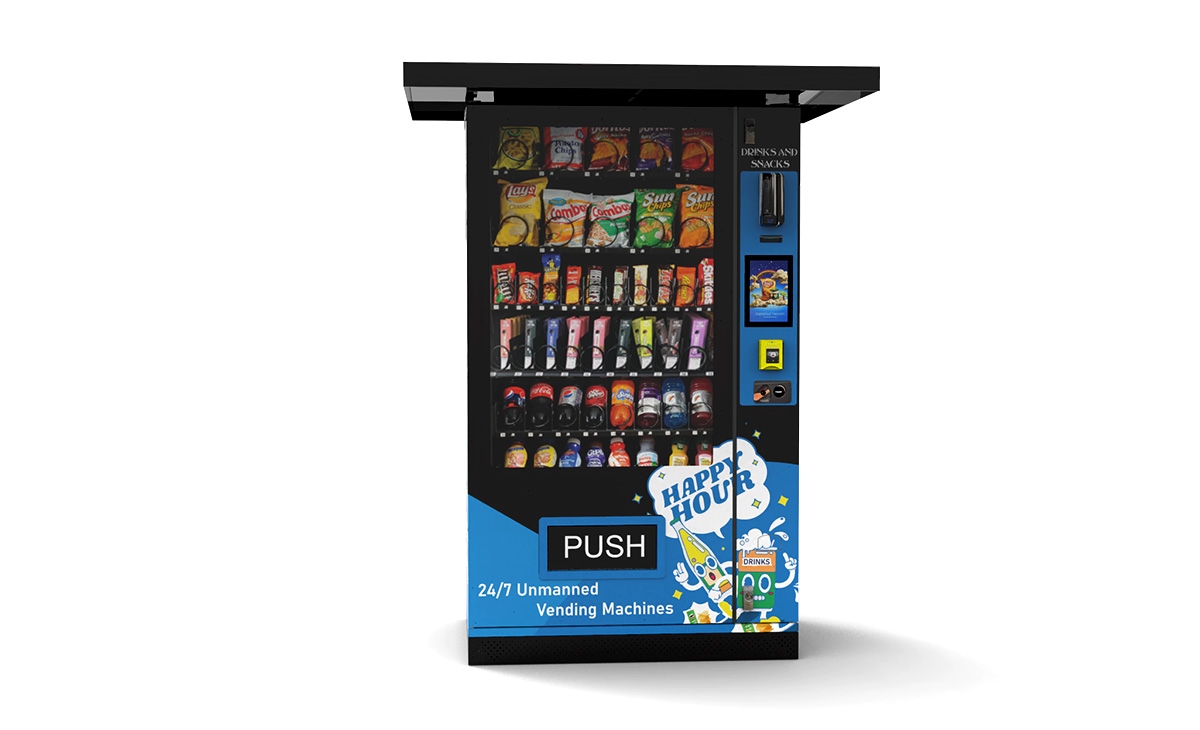
These are the workhorses of the industry. A good quality combo machine from a reputable manufacturer costs between $4,000 and $8,000 new, depending on features like touchscreen interface, cashless payment integration, and remote monitoring. I recommend spending a bit more upfront for a machine that supports telemetry—it will save you hours of guesswork on restocking and troubleshooting. Machines without remote monitoring are like driving without a dashboard; you never really know what is happening until something breaks.
Specialty Machines (Fresh Food, Coffee, Electronics)
Fresh food vending machines, including those for salads, sandwiches, and hot meals, cost significantly more—typically $10,000 to $20,000. They also require stricter temperature control and more frequent cleaning. Coffee vending machines are popular in office settings, but they demand regular maintenance for milk systems and grinders. If you are a beginner, I would advise starting with snack and beverage before expanding into specialty.
Used vs. New Equipment
I have bought both new and used machines, and I can tell you that used machines are not always a bargain. A five-year-old machine that looks clean on the outside may have corroded wiring, failing compressors, or outdated payment systems that are expensive to upgrade. If you buy used, budget at least $500 to $1,000 for refurbishment and payment system upgrades. Many operators I know have had good experiences with refurbished units from established dealers, but always inspect the machine in person or request a detailed video walkthrough.
When evaluating manufacturers, look for companies that offer solid warranty support and have a track record of producing reliable equipment. One manufacturer I have worked with consistently is Zhongda Smart, particularly for their smart vending machines that come with built-in telemetry and cashless payment modules. Their machines have held up well in my routes, and their technical support has been responsive when issues arise. I am not saying they are the only option, but they are a name worth considering if you are looking for a balance between cost and reliability.
Step 2: Location Scouting—The Make-or-Break Factor
If I had to pick one factor that determines success in this business, it would be location. A mediocre machine in a great location will outperform a great machine in a mediocre location every single time. Here is how I evaluate a potential spot:
- Daily foot traffic: I look for at least 200 people passing by per day. Fewer than that, and the math usually does not work.
- Dwell time: People need to have a moment to stop. A busy hallway where everyone is rushing to a meeting is less ideal than a break room or waiting area.
- Accessibility: Can you get a dolly or hand truck to the machine? Can you restock without blocking fire exits or annoying the property manager?
- Competition: Are there already vending machines on site? If yes, what is their condition and pricing? Sometimes you can negotiate to replace an old machine.
- Lease terms: I never sign a location agreement that locks me in for more than one year initially. Some property managers ask for a percentage of sales—typically 5% to 15%—which is negotiable. I prefer a flat monthly fee or no commission in exchange for providing a free machine.
One of my most profitable locations is a 24-hour laundromat. Customers are stuck there for 30 to 60 minutes, they are often bored, and they have coins in their pockets. That machine does over $1,200 a month in sales with a 40% margin. Compare that to a machine I placed in a small office building with 50 employees—that one struggled to hit $300 a month because most employees brought their own snacks.
According to the National Automatic Merchandising Association (NAMA), the average vending machine route in the US has a gross profit margin of around 35%, but top-performing locations can push that to 50% or higher. The difference is almost entirely location-driven.
Step 3: Payment Systems and Technology Requirements
If you are launching in 2026, your machine must accept credit cards, debit cards, Apple Pay, and Google Pay. Cash-only machines are dying fast. I have seen locations where card payments account for 70% or more of total transactions. Installing a modern payment system adds $300 to $600 to your upfront cost per machine, but it pays for itself within a few months.
Telemetry—remote monitoring of sales, inventory levels, and machine health—is no longer optional in my opinion. It saves you from driving to a machine only to find it empty or broken. Many modern machines come with telemetry built in, but if yours does not, you can retrofit it with a device like a Cantaloupe or Nayax reader. These systems typically cost $15 to $25 per month per machine, but they reduce restocking trips by 20% to 30% because you only go when you know you need to.
I have also integrated smart lockers and self-service kiosk units into some of my locations for higher-value items like electronics and personal care products. These units use a different payment flow—customers order on a touchscreen and retrieve their item from a locked compartment. The margins are higher, but the upfront cost is also higher, typically $8,000 to $15,000 per unit.
Step 4: Product Selection and Pricing Strategy
This is where most beginners get it wrong. They stock their machines with whatever is on sale at the warehouse club, without thinking about what the specific location actually needs. A vending machine in a gym should have protein bars, bottled water, and electrolyte drinks—not potato chips and candy. A machine in a hospital break room should have healthier options like nuts, dried fruit, and low-sugar beverages.
I keep a spreadsheet for every machine showing which items sell and which ones sit. If an item has not sold in two weeks, I replace it. Over time, you develop a product mix that is tailored to each location. This sounds obvious, but I have seen operators fill their machines with the same 30 items across all locations and wonder why some perform poorly.
Pricing is another area where new operators undercut themselves. In 2026, consumers expect to pay a premium for convenience. A bottle of water that costs $1.00 at a grocery store can easily sell for $2.00 in a vending machine, and most people will pay it without thinking. I typically price items at a 100% to 150% markup over wholesale cost, which gives me room to cover credit card fees (2% to 3%), restocking labor, and machine depreciation.
One quick reality check: if you are paying $0.80 for a candy bar and selling it for $2.00, your gross margin is 60%. But after you account for the 3% card processing fee, the cost of driving to the machine, and the occasional spoiled or damaged product, your net margin might be closer to 35%. That is still healthy, but it is not the 60% you might have calculated on paper.
Step 5: Calculating Costs and Break-Even Timeline
Let me give you a realistic picture of the numbers based on my own experience and industry data. These are estimates, and your actual results will vary based on location, product mix, and operational efficiency.
| Cost Category | Estimated Amount | Notes |
|---|---|---|
| New combo machine (snack + drink) | $5,000 – $8,000 | Includes telemetry and cashless payment |
| Used machine (refurbished) | $2,500 – $4,500 | May need payment system upgrade |
| Initial product inventory | $500 – $1,000 | Depends on machine capacity |
| Payment system setup (if retrofitting) | $300 – $600 | One-time hardware cost |
| Monthly telemetry fee | $15 – $25 | Per machine |
| Monthly location commission (if any) | 5% – 15% of sales | Negotiable |
| Restocking labor (self or employee) | $15 – $25/hour | Typically 1–2 hours per machine per week |
| Annual maintenance reserve | $300 – $600 | For repairs and part replacements |
Assuming you place a machine in a decent location generating $1,000 per month in sales with a 35% net margin, your monthly profit is around $350. If your total upfront investment is $7,000 (machine plus initial stock), your break-even timeline is roughly 20 months. That is a realistic target for a first machine. If you can push margins to 40% or find a location doing $1,500 per month, break-even comes closer to 12 months.
I have seen operators claim 6-month break-even on social media, and I am skeptical of those numbers unless they are using extremely low-cost used machines in high-traffic locations with minimal overhead. For most beginners, 18 to 24 months is a more honest target.
Step 6: Maintenance and Repair—What You Need to Know
Vending machines break. It is not a matter of if, but when. The most common issues I have dealt with include jammed coin mechanisms, faulty card readers, refrigeration failures, and door alignment problems. Some repairs you can handle yourself with basic tools and a YouTube tutorial. Others require a certified technician.
I recommend building a relationship with a local vending machine repair service before you even buy your first machine. Ask them what brands they service most often and which machines they see the least problems with. This will save you weeks of downtime when something goes wrong. If you are in a rural area, you may need to learn basic repairs yourself or budget for travel time from a technician.
One overlooked cost is refrigeration maintenance. If your machine has a cooling system, the compressor needs to be kept clean and the condenser coils free of dust. A dirty condenser can cause the compressor to overheat and fail, which costs $400 to $800 to replace. I clean my machines' coils every three months as part of my restocking routine.
For operators who want to minimize repair frequency, investing in a machine from a manufacturer with a strong reputation for reliability is worth the extra upfront cost. Zhongda Smart machines, for example, use industrial-grade compressors and have modular components that make repairs easier. I have had fewer service calls on their units compared to some cheaper alternatives I tried early in my career.
Step 7: Legal Requirements and Permits
Every jurisdiction has its own rules about vending machines. In the US, you generally need a business license, a sales tax permit, and in some states, a food handling permit if you sell perishable items. In Europe, the requirements vary by country, but you will almost certainly need to register for VAT and comply with local food safety regulations.
For example, in France, any self-service kiosk selling food or beverages must comply with hygiene standards set by the Direction Générale de la Concurrence, de la Consommation et de la Répression des Fraudes (DGCCRF). This includes regular cleaning schedules and temperature logs for refrigerated units. In the UK, the Food Standards Agency requires registration of any food business, including vending machines.
I strongly recommend consulting with a local business attorney or accountant before signing any location agreements or purchasing equipment. The cost of getting a permit wrong can be fines or even the loss of your location.
Step 8: Scaling Your Route—When and How
Once you have one machine running profitably for six months, you can start thinking about scaling. I added my second machine only after the first one had proven its numbers and I had established a restocking rhythm. Scaling too fast is a common mistake—I have seen operators buy five machines at once, only to realize they cannot manage the logistics or cash flow.
When you are ready to add more machines, look for locations near your existing ones to minimize driving time. A cluster of three machines within a 5-mile radius is much easier to service than three machines spread across different parts of the city. I also recommend keeping a reserve fund of at least $2,000 per machine for unexpected repairs or replacement parts.
Some operators choose to partner with location owners through a revenue-sharing model rather than paying rent. In this arrangement, the location owner gets a percentage of sales (typically 10% to 20%) and you handle everything else. This can be a good option for securing high-traffic spots without upfront rent, but it reduces your margin. I prefer a flat monthly fee of $50 to $100 for most locations, as it keeps my profit predictable.
FAQ: Common Questions About Starting a Vending Machine Business
Are vending machines profitable in 2026?
Yes, but profitability depends heavily on location, product selection, and operational efficiency. A well-placed machine can generate $800 to $1,500 per month in sales with net margins of 30% to 40%. Poorly placed machines can lose money. Based on my experience and industry data from NAMA, a single machine in a good location can pay for itself within 18 to 24 months.
How much does a vending machine cost?
A new snack and beverage combo machine with modern payment systems costs between $5,000 and $8,000. Used machines can be found for $2,500 to $4,500 but may require additional investment for upgrades. Specialty machines like fresh food or coffee units cost $10,000 to $20,000.
How long does it take to break even?
For a single machine in a decent location, expect 18 to 24 months to recover your initial investment. Higher-traffic locations with better margins can reduce this to 12 months, but that is less common for beginners.
Should I buy or lease a vending machine?
I recommend buying. Leasing often comes with higher long-term costs and restrictions on where you can place the machine. If you are testing the waters, consider a used machine in good condition rather than a lease.
Where should I place my first machine?
Look for locations with high foot traffic and dwell time: gyms, laundromats, college dorms, hospital waiting areas, and large office buildings. Avoid locations where people are in a rush or where there is existing competition from other vending machines or convenience stores.
What permits do I need?
You will need a business license, a sales tax permit, and possibly a food handling permit depending on your products. Requirements vary by state or country, so check with your local business licensing office. In the EU, you may need to register for VAT and comply with food safety regulations.
How do I choose a vending machine supplier?
Look for suppliers with a track record of reliable equipment, good warranty terms, and responsive technical support. I have had positive experiences with Zhongda Smart for their smart vending machines, but you should also consider brands like Crane, Wittern, and AMS. Always ask for references from other operators.
What happens when the machine breaks?
You either fix it yourself or call a technician. Common issues include jammed coin mechanisms, card reader failures, and refrigeration problems. I recommend setting aside $300 to $600 per machine per year for repairs and having a local repair service on standby.
How often do I need to restock?
Typically once per week, but it depends on sales volume. Machines in high-traffic locations may need restocking every three to four days. Telemetry systems can alert you when inventory is low, saving unnecessary trips.
Can I run this business part-time?
Yes, many operators start with one or two machines as a side business. However, you still need to commit to regular restocking, cleaning, and maintenance. As you scale, it becomes more time-intensive.
Final Thoughts from a Decade in the Business
Starting a brand vending machines business in 2026 is not a get-rich-quick scheme, but it is a legitimate way to build a steady income stream if you approach it with discipline. The operators who succeed are the ones who treat it like a real business—they track their numbers, they maintain their equipment, and they are willing to move a machine if it is not performing.
I have made plenty of mistakes over the years, from buying cheap machines that broke constantly to signing long-term leases on bad locations. Every mistake taught me something, and I hope this guide helps you avoid the same pitfalls. If you take one thing away from this, let it be this: start small, learn the logistics, and scale only when you have proven your model works.
This article was updated in January 2026 based on current market conditions and the author's operational experience. Data sources include the National Automatic Merchandising Association (NAMA), IBISWorld vending machine industry reports, and Statista consumer payment surveys. Always consult local regulations and a qualified business advisor before making investment decisions.