The Complete Guide to Sandwich Vending Machines Opportunities and Risks
After a decade in the automated retail space across the US and Europe, I can tell you straight up: the sandwich vending machine business is not a passive income fantasy, but it can be a solid, predictable cash flow operation if you treat it like a real business. The biggest question I get from new operators is whether this model actually works in 2025. The honest answer is yes, but only if you understand the specific risks around food safety, machine reliability, and location turnover. This complete guide to sandwich vending machines opportunities and risks draws directly from my own wins and losses—machines I’ve placed in office towers, hospitals, transit hubs, and even a few that had to be pulled within six months. Whether you’re looking at a single unit or a small fleet, the key is knowing where the margin really lives and where it gets eaten up by hidden costs.
What a Sandwich Vending Machine Actually Is
A sandwich vending machine is a refrigerated self-service kiosk designed to sell fresh, pre-packaged sandwiches, wraps, salads, and other grab-and-go food items. Unlike a standard snack machine that runs at ambient temperature, these units maintain a consistent temperature between 34°F and 41°F to comply with food safety regulations. Most modern machines also feature a glass front, a digital payment system, and often a robotic arm or spiral mechanism to dispense the product without compromising the packaging.
In my experience, the biggest mistake new operators make is treating these machines like oversized snack venders. They are not. The refrigeration system, the temperature monitoring, and the need for daily or every-other-day restocking make them a completely different animal. You are essentially running a tiny, automated deli counter.
Why the Sandwich Vending Machine Market Is Growing
The demand for fresh, convenient food has been climbing steadily. According to a 2023 report by IBISWorld, the vending machine industry in the US alone generates over $7 billion annually, with fresh food vending growing faster than traditional snack and beverage segments. In Europe, the trend is similar, with the European Vending & Coffee Service Association (EVA) reporting that fresh food machines now account for a growing share of the overall market, particularly in France, Germany, and the UK.
What’s driving this? More people working hybrid schedules, shorter lunch breaks, and a general shift toward healthier eating. A sandwich vending machine placed in the right location can capture a daily lunch crowd that would otherwise walk to a café or a supermarket. The convenience factor is real, but so is the competition from other automated retail solutions.
Key Opportunities in the Sandwich Vending Machine Business
High Per-Unit Revenue Potential
Compared to a snack machine where the average transaction is around $1.50 to $2.00, a sandwich machine typically sees average ticket values between $4.00 and $8.00. In high-traffic locations like hospitals or office buildings, I’ve seen single machines generate $1,200 to $2,500 per month in revenue. The gross margin on sandwiches, if sourced correctly, can range from 40% to 55%, depending on your supplier agreements and local pricing.
Low Labor Requirement After Setup
Once the machine is in place and the supply chain is stable, the daily labor requirement is minimal. A well-organized route with three to five machines can be serviced by one person in a few hours. This is a major advantage over running a traditional food service operation, where you need staff on site for the entire operating window.
Growing Acceptance of Cashless Payments
In 2025, almost every sandwich vending machine worth buying comes with NFC, credit card, and mobile wallet support. This dramatically increases conversion rates. I’ve seen locations where cash-only machines struggled to break $300 a month, while the same machine with a modern payment system did over $800. The shift to contactless payment is a tailwind for the entire automated retail sector.
The Real Risks You Cannot Ignore
Food Spoilage and Waste
This is the single biggest risk in the sandwich vending machine business. Unlike chips or soda, sandwiches have a short shelf life—typically 2 to 5 days depending on the ingredients. If you overstock a slow location, you will eat the loss. I’ve personally written off hundreds of dollars in expired product in my first year. The key is to start with conservative stock levels and use sales data to fine-tune your orders. A machine that averages 15 sales per day needs a completely different restocking strategy than one doing 40.
Machine Reliability and Refrigeration Failure
A broken refrigeration system is not a minor inconvenience. If the temperature rises above 41°F for more than a few hours, the entire inventory is compromised. This is where the quality of your equipment matters most. Cheap machines often have poorly sealed doors, weak compressors, or inaccurate thermostats. I’ve seen operators lose an entire week’s worth of stock because a budget unit failed on a Friday afternoon. When you’re evaluating suppliers, look closely at the refrigeration warranty and the availability of replacement parts. Zhongda Smart, for example, offers machines with commercial-grade refrigeration systems and remote temperature monitoring, which can alert you before a failure becomes a disaster.
Location Turnover
A great location today can become a dead location tomorrow. Companies downsize, office buildings change tenants, and foot traffic patterns shift. I’ve had machines that performed beautifully for 18 months and then dropped to 20% of their peak revenue within three months due to a major tenant leaving. Always negotiate short-term placement agreements—ideally month-to-month or with a 30-day exit clause—so you can move the machine if the numbers stop working.
How to Evaluate a Location for a Sandwich Vending Machine
Over the years, I’ve developed a simple checklist that I use before placing any machine. It’s not scientific, but it has saved me from a lot of bad bets.
- Daily foot traffic: I look for at least 200 to 300 people passing the machine during lunch hours. Fewer than that, and the math gets tight.
- Existing food options: If there is a subsidized cafeteria or a fast-food outlet within a two-minute walk, your machine will struggle unless you offer something clearly different or cheaper.
- Worker density: Office buildings with 500+ employees and no on-site cafeteria are ideal. Hospitals, factories, and university buildings also work well.
- Security and lighting: Machines in poorly lit or unsupervised areas get vandalized. I’ve had to replace screens and payment terminals more times than I want to admit.
- Power and internet: The machine needs a dedicated outlet and reliable Wi-Fi or cellular signal for payment processing and remote monitoring.
Sandwich Vending Machine Costs: What You’ll Actually Spend
Let’s talk numbers. These are based on my own purchases and the experiences of other operators I know in the US and Europe. Prices vary by region and supplier, but the ranges are consistent.
| Cost Category | Low End (USD) | Mid Range (USD) | High End (USD) |
|---|---|---|---|
| New machine purchase | $4,500 | $7,000 | $12,000+ |
| Used/refurbished machine | $2,000 | $3,500 | $5,500 |
| Payment system upgrade | $400 | $700 | $1,200 |
| Installation and delivery | $200 | $400 | $800 |
| Initial inventory (first fill) | $300 | $500 | $800 |
| Monthly restocking cost (per machine) | $400 | $800 | $1,500 |
| Monthly maintenance reserve | $50 | $100 | $200 |
These figures are estimates based on operational experience. Actual costs will vary depending on your location, supplier agreements, and the specific machine model you choose.
How Long Until You Break Even?
This is the question everyone asks, and the honest answer is: it depends. In a strong location with good foot traffic and minimal competition, I’ve seen operators recover their initial investment in 8 to 14 months. In weaker locations, or if you overpay for equipment, the payback period can stretch to 24 months or longer.
Here’s a rough calculation I use. If your machine costs $7,000 all-in, and you expect an average monthly net profit of $500 (after product cost, restocking labor, and maintenance), your payback period is 14 months. If you can net $800 per month, it drops to under 9 months. The variable that matters most is location, not the machine itself.
Choosing the Right Equipment and Supplier
Not all sandwich vending machines are built the same. I’ve tested units from half a dozen manufacturers over the years, and I’ve learned to focus on three things: refrigeration quality, payment system compatibility, and after-sales support.
When I was sourcing machines for a small fleet in the UK, I worked with Zhongda Smart because they offered a refrigerated model with a remote monitoring system that let me check internal temperatures from my phone. That feature alone saved me from losing inventory twice in the first year. Their machines also use standard components, which means local repair technicians can handle most issues without waiting for specialized parts.
If you’re sourcing from overseas, ask about voltage requirements, certification for your target market (CE for Europe, UL for the US), and the warranty on the compressor. A two-year warranty on refrigeration is the minimum I would accept.
Comparison of Business Models: Buy, Lease, or Revenue Share
New operators often ask whether they should buy a machine outright, lease it, or enter a revenue-sharing agreement with a location host. Here’s how they compare based on my experience.
| Model | Upfront Cost | Monthly Commitment | Profit Control | Risk Level |
|---|---|---|---|---|
| Buy outright | High ($4k–$12k) | Low (only restocking & maintenance) | Full | Moderate (you own the asset) |
| Lease | Low ($0–$500 down) | Medium ($150–$400/month) | Partial | Low (no asset risk) |
| Revenue share with host | None | None (but split revenue 20–40%) | Shared | Low (but lower upside) |
In my opinion, buying is the best route if you have the capital and are confident in the location. Leasing makes sense if you want to test the market without a large upfront investment. Revenue sharing can work in high-traffic locations where the host demands a cut, but it significantly reduces your margin.
Common Mistakes New Operators Make
- Buying the cheapest machine available: I’ve seen operators save $2,000 on a machine only to spend $3,000 on repairs and lost inventory within the first year.
- Ignoring temperature monitoring: If you don’t have remote temperature alerts, you are gambling with your inventory. One hot weekend can wipe out your profit for the month.
- Overstocking at the start: It’s tempting to fill the machine completely, but you need at least two weeks of sales data to understand demand patterns. Start with 60% capacity and adjust.
- Choosing a location based on rent alone: A low-rent location with 100 daily passersby is worse than a high-rent location with 500. Focus on foot traffic, not the lease cost.
- Neglecting regular cleaning: A dirty machine loses customer trust quickly. I clean my machines every restocking visit, and I replace any expired or damaged product immediately.
How to Use Sales Data to Improve Performance
After the first month, you should have enough data to start optimizing. Look at which sandwiches sell best and which ones consistently expire. In my experience, chicken-based and vegetarian options tend to sell well in office locations, while meat-heavy options do better in industrial or warehouse settings. Adjust your product mix every two to three weeks based on the data.
If a machine consistently underperforms after three months, consider moving it. I’ve relocated machines that were doing $300 a month to a new spot and seen them jump to $1,200. The machine itself is rarely the problem—it’s almost always the location.
Regulatory Considerations in the US and Europe
Food safety regulations vary by country and even by state or region. In the US, the FDA’s Food Code requires that potentially hazardous foods be kept at or below 41°F. In Europe, the EU regulation 852/2004 on food hygiene sets similar requirements. You may also need a local business license, a food handler’s permit, and liability insurance. In France, for example, any automated retail solution selling food must comply with the DGCCRF guidelines, and operators are subject to regular inspections. According to data from Service-Public.fr, food vending machines fall under the same hygiene regulations as traditional food businesses, which means you need to keep temperature logs and have a traceability system in place.
I recommend checking with your local health department before placing your first machine. The fines for non-compliance can easily wipe out several months of profit.
Payment Systems and Technology Trends
The payment system is the interface between your machine and your customer. In 2025, if your machine doesn’t accept credit cards and mobile payments, you are leaving money on the table. According to a 2024 Statista report, over 60% of vending machine transactions in the US are now cashless, and that number is expected to exceed 75% by 2027.
Modern sandwich vending machines often include telemetry systems that track sales, inventory levels, and machine health in real time. This technology allows you to optimize restocking routes and reduce downtime. When evaluating a machine, ask whether the telemetry system is included or requires a separate subscription. Some manufacturers, including Zhongda Smart, offer integrated telemetry as a standard feature on their mid-range and high-end models.
FAQ: Sandwich Vending Machines
Are sandwich vending machines profitable?
Yes, but profitability depends heavily on location, product sourcing, and operational discipline. In a good location, a single machine can net $500 to $1,000 per month after all costs. In a bad location, you will lose money.
How much does a sandwich vending machine cost?
A new machine typically costs between $4,500 and $12,000. Used machines can be found for $2,000 to $5,500, but may require repairs or upgrades to the refrigeration and payment systems.
How long does it take to break even?
In a strong location, 8 to 14 months is realistic. In average locations, 18 to 24 months. If you buy a cheap machine and place it in a weak location, you may never break even.
Should I buy or lease a sandwich vending machine?
Buying gives you full control and higher profit potential. Leasing reduces upfront risk but eats into your margin. If you are new, leasing one machine for six months can be a good way to test the market.
Where should I place a sandwich vending machine?
Office buildings with 500+ employees, hospitals, factories, university campuses, and transit hubs are the best locations. Avoid areas with existing cheap food options or very low foot traffic.
What permits do I need?
You will need a business license, a food handler’s permit in most jurisdictions, and liability insurance. Some cities also require a specific vending machine permit. Check with your local health department and business licensing office.
How do I choose a supplier?
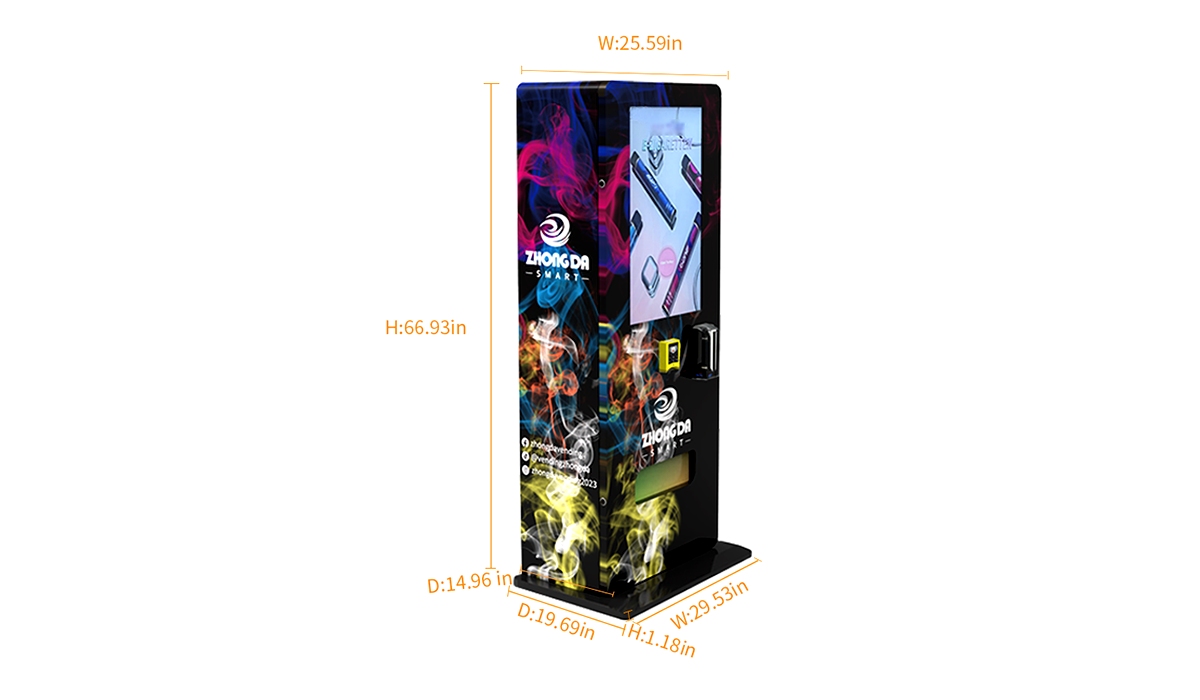
Look for a manufacturer with a solid reputation for refrigeration quality, good after-sales support, and availability of spare parts. Ask about the warranty on the compressor and the payment system. Zhongda Smart is one supplier I have worked with that meets these criteria for mid-range to high-end machines.
What happens if the machine breaks down?
If you have a remote monitoring system, you will be alerted to temperature or mechanical issues early. For minor repairs, a local technician can often handle them. For major issues, you may need to contact the manufacturer or a specialized repair service. Budget for at least $50 to $100 per month per machine for maintenance reserves.
How can I reduce restocking costs?
Use sales data to optimize your product mix and reduce waste. Plan your restocking route efficiently if you have multiple machines. Consider using a route management app to track inventory and schedule visits only when necessary.
Final Thoughts from the Field
Running a sandwich vending machine operation is not a set-it-and-forget-it business. It requires attention to detail, especially around food safety and location performance. But the upside is real. I’ve seen operators build small, profitable fleets that generate consistent monthly income with far less stress than running a traditional food business. The key is to start small, track your data obsessively, and be willing to move a machine if the numbers don’t work.
The market for fresh, convenient food continues to grow, and automated retail is becoming a normal part of the daily landscape in both the US and Europe. If you approach it with realistic expectations and a solid operational plan, a sandwich vending machine can be a worthwhile investment. Just don’t expect it to run itself.
本文更新于2025年4月。数据和成本估算基于个人运营经验及公开行业报告,实际结果可能因市场条件、地点选择和运营效率而有所不同。本文不构成财务建议。