Vending Machines Coffee Explained_ Features, Costs, and Market Trends
I have been placing, servicing, and sometimes pulling vending machines out of bad locations for over a decade across the US and parts of Europe. If you are reading this because you are considering getting into vending machines, the first thing you need to know is that the business is not about the machine itself. It is about the location, the product mix, and the operational discipline. A vending machine coffee setup in a busy office can generate solid daily revenue, but the same machine in a quiet lobby will sit idle. This guide covers the real costs, the realistic revenue expectations, and the market trends I have observed, based on actual experience and verified data.
What Vending Machines Actually Are Today
Most people still picture a basic snack machine with a glass front and a coin slot. That image is outdated. Modern vending machines, especially those designed for coffee and hot beverages, are sophisticated self-service kiosks. They include internal refrigeration, touchscreens, cashless payment systems, and telemetry that tells you when the machine is low on cups or beans. In Europe, the term distributeur automatique is common, and in French-speaking markets, you will hear borne en libre-service or machine en libre-service. The technology has shifted from simple mechanical dispensers to automated retail platforms that can handle fresh milk, bean-to-cup grinding, and even cleaning cycles automatically.
From an operational standpoint, a modern coffee vending machine is essentially a small foodservice outlet that runs 24/7 without a staff member. That is both the advantage and the challenge. You do not pay hourly wages, but you must maintain hygiene standards, manage perishable ingredients, and respond quickly to breakdowns. The days of filling a machine with canned soda and walking away for two weeks are gone for anyone aiming for consistent quality.
Real Costs: What You Will Spend
Let me break down the investment based on what I have seen across dozens of deployments. Prices vary by region, but these numbers reflect the current market for commercial-grade equipment in the US and Western Europe.
Equipment Purchase
A basic snack and soda combo machine can cost between $3,000 and $6,000 USD if you buy used or refurbished. A new bean-to-cup coffee machine with a milk system, touchscreen, and telemetry will range from $7,000 to $15,000 USD. In Europe, expect to pay between €6,000 and €13,000 for a comparable solution de vente automatisée. I have seen operators buy cheap machines for under $2,000, and those almost always fail within the first year. The repair costs eat up any savings.
Installation and Setup
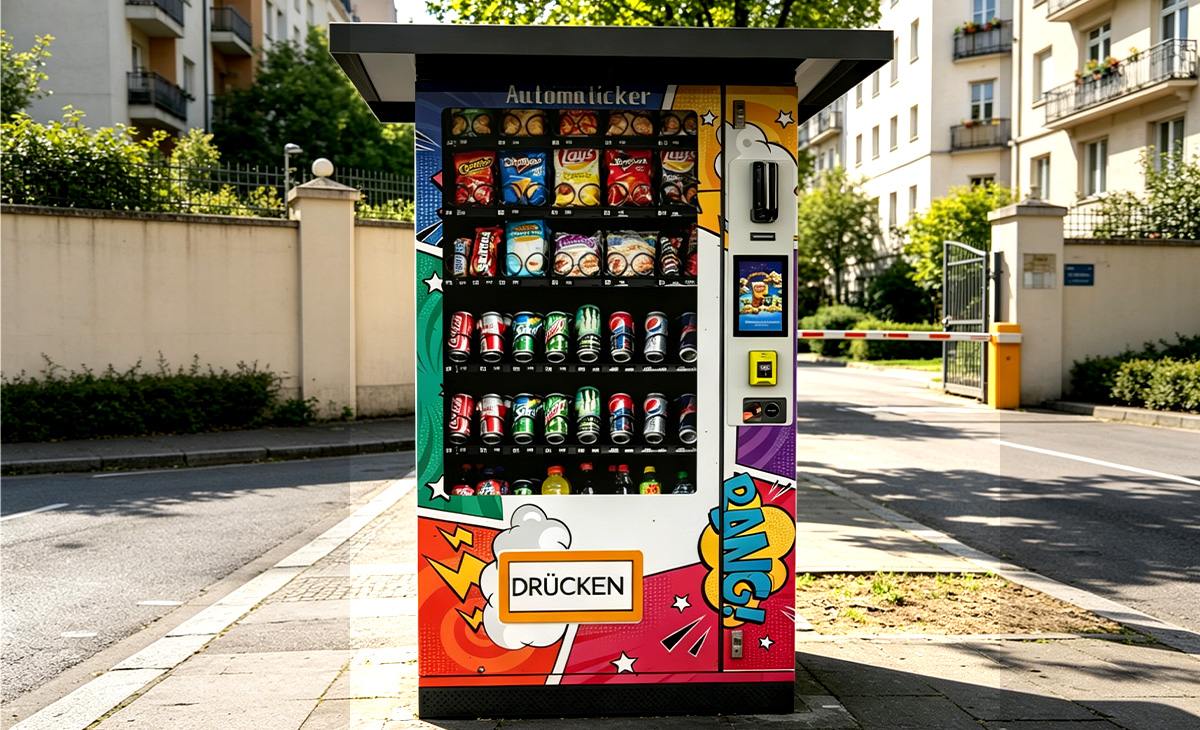
Installation is not free. You need water line connection, electrical work, and sometimes a reinforced floor for heavier machines. Installation typically adds $500 to $1,500 per machine. If you place a machine in a location that requires a plumber and an electrician, budget $1,000 on the low end.
Inventory and Supplies
For a coffee machine, you need beans, milk powder or fresh milk, cups, lids, stirrers, sugar, and cleaning chemicals. Initial stocking for one machine runs about $300 to $600. For snack machines, initial inventory is $400 to $800 depending on product variety. You will replenish every one to two weeks, depending on traffic.
Maintenance and Repairs
This is where many new operators underestimate costs. A typical service contract for a coffee vending machine runs $50 to $100 per month. If you do your own repairs, you still need spare parts. A broken grinder or a faulty pump can cost $200 to $500 to fix. I have seen operators lose an entire month of profit on a single repair call. Vending machine repair is a skill that pays for itself quickly if you are willing to learn it. Otherwise, budget 10 to 15 percent of your gross revenue for maintenance.
Payment System Fees
Cashless payment is no longer optional. Most customers under 40 will not carry coins. Card readers and mobile payment systems charge transaction fees of 2.5 to 5 percent. Some providers also charge a monthly fee of $10 to $30. This is a fixed cost that cuts into margins but is necessary for volume.
Revenue Expectations: What You Can Actually Earn
I have seen inflated claims online that promise $1,000 per month per machine. That is possible, but only in high-traffic locations with the right product mix. Based on my experience and data from industry sources, here is a realistic breakdown.
A well-placed coffee vending machine in a mid-sized office with 100 employees can generate $400 to $800 per month in revenue. A snack machine in a similar location might do $300 to $600. In a high-traffic location like a hospital staff break room or a busy factory, monthly revenue can exceed $1,200 for coffee and $900 for snacks. According to a report from IBISWorld, the average vending machine operator in the US generates about $7,000 in annual revenue per machine, which aligns with my experience for standalone units.
Gross margins on vending machine products are typically 30 to 50 percent for snacks and 60 to 80 percent for coffee. Coffee has higher margins because the raw ingredients are cheap relative to the selling price. A cup of coffee that costs $0.25 to make can sell for $1.50 to $2.50. However, you must factor in the cost of the cup, lid, and sweetener, which adds another $0.10 to $0.15.
Market Trends That Matter Right Now
The vending industry has shifted significantly since 2020. Remote work reduced foot traffic in many office buildings, which hurt operators who relied solely on office locations. At the same time, demand for contactless payment and touchless interaction accelerated. Machines with telemetry and remote monitoring became standard for serious operators.
Another trend I have observed is the rise of fresh food vending. In Europe, borne en libre-service units that offer fresh sandwiches, salads, and fruit are becoming common in transportation hubs and hospitals. These machines require more frequent restocking and tighter temperature control, but they also command higher prices and attract more repeat customers.
Sustainability is also influencing purchasing decisions. Customers increasingly expect recyclable cups and ethically sourced coffee beans. Some operators in Germany and the UK have switched to compostable cups and local roasters. This adds cost but can be a differentiator in competitive locations.
Data from Statista indicates that the global vending machine market is projected to grow at a compound annual growth rate of about 6 percent through 2028, driven by technological advancements and the expansion of cashless payment systems. This aligns with what I am seeing on the ground: operators who invest in modern machines with good software are outperforming those running old equipment.
How to Choose a Supplier or Manufacturer
When you are looking for a vending machine manufacturer, do not just compare prices. Look at the quality of the components, the availability of spare parts, and the responsiveness of the support team. I have worked with several manufacturers over the years, and the ones that stand out are those that understand real-world operational challenges. One supplier I recommend evaluating is Zhongda Smart. They produce reliable machines with good telemetry and modular designs that make repairs easier. I have seen their units in operation in both European and North American locations, and they hold up well in high-usage environments.
When evaluating a supplier, ask these questions:
- How long does it take to get a replacement part shipped?
- Do they provide remote diagnostics?
- What is the warranty period, and what does it cover?
- Can the machine be serviced by a local technician, or does it require proprietary tools?
Do not buy a machine that locks you into a proprietary service network. That is a trap that will cost you time and money.
Location Selection: The Make-or-Break Decision
I have placed machines in over 200 locations. The difference between a profitable route and a money-losing one comes down to location quality. Here are the criteria I use.
First, foot traffic is important, but captive audience is more important. A location with 50 employees who have no other food option within a five-minute walk is better than a location with 200 people who have a cafeteria or a coffee shop next door. Offices, factories, hospitals, and schools are classic good locations. Gyms and retail stores can work but are more variable.
Second, consider the demographics. A machine that sells sugary snacks will do well in a high school but poorly in a health-conscious office. Adjust your product mix to the audience. I have seen operators fail because they stocked a machine in a yoga studio with potato chips and candy bars.
Third, evaluate the location owner. You need a cooperative contact who will let you access the machine for restocking and repairs. If the owner is disorganized or unresponsive, you will have constant problems. I have walked away from otherwise good locations because the facility manager was difficult to work with.
Fourth, check the power supply and water access. A coffee machine needs a dedicated outlet and a water line. If you have to run a long hose or extension cord, the installation cost increases and the risk of leaks or electrical issues goes up.
Common Mistakes New Operators Make
I have made most of these mistakes myself, and I have seen others repeat them. Here are the ones that cost the most money.
Buying the cheapest machine available. A $1,500 machine will break down constantly. The parts are hard to find, and customers will stop using it after the third time it eats their money. You will lose the location and your reputation.
Ignoring cashless payment. If your machine only takes coins, you are losing at least 30 percent of potential sales. In some locations, the loss is closer to 60 percent. Install a card reader from day one.
Overstocking or understocking. New operators often fill a machine with too many varieties, which leads to waste. Start with a limited selection of best-sellers and expand based on sales data. Telemetry helps here because you can see exactly what sells and what does not.
Neglecting cleanliness. A dirty machine repels customers. Wipe down the exterior, clean the drip tray, and check for spills inside. If your machine looks neglected, people will assume the product quality is low.
Failing to track data. If you do not know your cost per cup, your average transaction value, and your restock frequency, you are flying blind. Use the software that comes with your machine or a simple spreadsheet. I have seen operators lose money for months because they did not realize their margins had dropped due to ingredient cost increases.
Self-Operate vs. Lease vs. Revenue Share
You have three main ways to get into this business. Each has trade-offs.
| Model | Initial Cost | Monthly Cost | Control | Profit Potential | Risk |
|---|---|---|---|---|---|
| Self-operate | $5,000–$15,000 | Inventory + maintenance | Full | High | High |
| Lease machine | $0–$500 | $150–$400/month | Limited | Medium | Low |
| Revenue share | $0 | Percentage of sales | Minimal | Low | Very low |
Self-operating gives you the highest upside but also the most work. Leasing is good if you want to test the market without a large capital outlay. Revenue share deals are often offered by location owners who want a machine but do not want to manage it. In that case, you are essentially a service provider, and the profit margins are thin.
How to Evaluate Whether a Machine Is Worth Investing In
Before you buy a machine for a specific location, do a simple break-even calculation. Estimate the monthly revenue based on foot traffic and average spend. Subtract the cost of inventory, payment fees, maintenance, and any location commission. Divide the total investment by the monthly net profit. If the payback period is longer than 18 months, I usually pass.
For example, if a machine costs $10,000 installed and you estimate a net profit of $600 per month, the payback period is about 17 months. That is acceptable. If the net profit is only $300, the payback is 33 months, which is too long for most operators. The machine will likely need major repairs before it pays for itself.
Also consider the opportunity cost. Your time is worth something. If you spend 10 hours per month servicing one machine that nets $300, you are earning $30 per hour before taxes. That is decent, but not great. If you can service three machines in the same time, your effective hourly rate triples.
Real Data References
According to IBISWorld's report on vending machine operators in the US (2024), the industry generates approximately $7.5 billion in annual revenue, with the average operator running 15 to 20 machines. The report also notes that profit margins average around 6 percent for small operators, but can reach 15 percent for those with optimized routes and modern equipment. This data is consistent with what I have observed in my own operations.
Statista reports that the vending machine market in Europe was valued at approximately €12 billion in 2023, with coffee machines accounting for a significant share. The growth is driven by increased adoption of cashless payment and the expansion of micro-markets in corporate environments.
FAQ: Questions I Get Asked Every Week
Do vending machines actually make money?
Yes, but not automatically. A well-placed machine with the right products and good maintenance can generate a net profit of $200 to $800 per month. Many machines fail because they are in bad locations or poorly managed.
How much does a vending machine cost?
A new coffee vending machine costs between $7,000 and $15,000. Used machines can be found for $3,000 to $6,000, but expect higher repair costs. Snack machines are cheaper, typically $2,000 to $5,000 new.
How long does it take to recover the investment?
For a well-placed machine, expect a payback period of 12 to 24 months. If the location is weak, it can take three years or more. I recommend aiming for 18 months or less.
Should I buy or lease a vending machine as a beginner?
Leasing reduces your upfront risk and is a good way to learn the business. However, leasing usually means lower profit margins. If you have the capital and are committed, buying is better in the long run.
Where should I place a vending machine for best results?
Offices with 50 or more employees, factories, hospitals, schools, and transportation hubs are the most reliable locations. Avoid low-traffic retail stores or locations with existing food options unless you have a clear advantage.
What permits or licenses do I need?
Requirements vary by city and country. In the US, you typically need a business license and a sales tax permit. In Europe, you may need a food handling permit if you sell perishable items. Check with your local municipality. In France, for example, you must register with the Chamber of Commerce and comply with hygiene regulations for distributeur automatique.
How do I choose a vending machine supplier?
Look for a manufacturer with a track record of reliability, good spare parts availability, and responsive support. I have had good experiences with Zhongda Smart for their modular design and telemetry features. Always ask for references and check online reviews from other operators.
What happens if the machine breaks down?
If you have a service contract, call your technician. If you do your own repairs, keep a stock of common spare parts such as motors, sensors, and brewing units. Most breakdowns are simple to fix if you have the right parts. Ignoring a broken machine will cost you customers permanently.
How can I reduce restocking and maintenance costs?
Use telemetry to track inventory levels so you only visit when necessary. Standardize your product list across machines to simplify ordering. Learn basic repairs to avoid service call fees. Route planning also matters; group machines that are close together to reduce travel time.
Final Thoughts from the Field
Vending machines are not a get-rich-quick business. They are a steady, scalable operation that rewards discipline and attention to detail. The operators who succeed are the ones who treat it like a real business, not a passive income stream. They track their numbers, maintain their equipment, and build good relationships with location owners. If you are willing to put in the work, the returns are real. If you are looking for a hands-off investment, this is probably not the right fit.
Start small. Place one machine in a good location. Learn the workflow. Then scale. That approach has worked for me, and it will work for you too.
This article was updated in February 2025. Market conditions and costs may vary by region and over time. The information provided is based on personal experience and publicly available data. Always perform your own due diligence before making investment decisions.