Locker Vending Machine

Toy Vending Machine for Sale
- Model: ZD-CX-22
- Price: $2200
- Description: Explore a commercial toy vending machine for blind boxes, collectible figures and packaged toys. Review ZD-CX-22 specifications, pricing, customization and ROI.
- Get Best Price
Commercial Toy Vending Machine for Retail and Collectible Products
A toy vending machine gives retailers and vending operators a way to sell selected toys without assigning a staff member to every transaction. It can be used for blind boxes, boxed figures, novelty gifts, small educational toys and other packaged products that fit the dispensing system.
The right machine depends on more than its appearance. Buyers should consider product dimensions, packaging strength, the number of stock keeping units, payment preferences and the location where the equipment will operate. These details affect the usable capacity, customer experience and day to day workload.
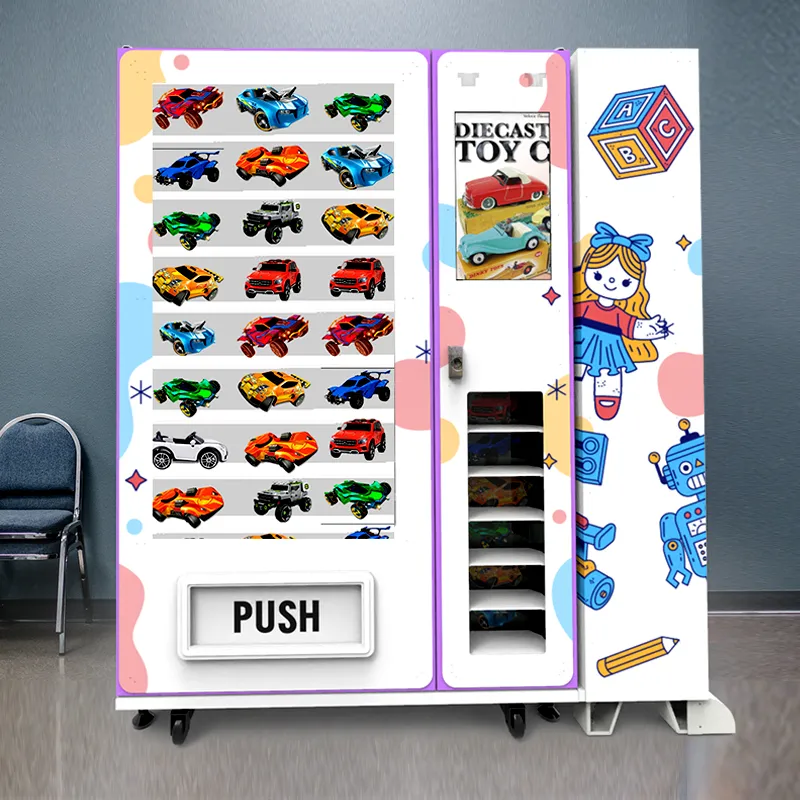
The ZD-CX-22 is a floor-standing smart vending machine configuration listed with a 21.5-inch touchscreen, 60 standard cargo lanes and 4G or Wi-Fi connectivity. The reference listing price is USD 2,200. Buyers can discuss OEM or ODM options for branding, product layout and selected hardware requirements.
Important buying point: Start with the finished packaging of the toys you intend to sell. A machine designed for boxed merchandise should not automatically be treated as a capsule dispenser, a plush toy machine or a claw machine. Confirm the product fit and dispensing method before ordering.
Key Features That Matter in a Toy Vending Business
Touchscreen Product Selection
The listed 21.5-inch screen provides a customer-facing interface for browsing and selecting merchandise. Product images, pricing and interface presentation should be confirmed for the final configuration.
Configurable Cargo Lanes
The base specification lists 60 standard cargo lanes. Product allocation should be planned around the actual dimensions of each package rather than the total number of product names in a catalog.
Flexible Payment Options
Listed payment options include QR code, credit card, cash, payment code and membership card. Available hardware and payment service compatibility depend on the destination market.
Connected Operation
4G and Wi-Fi connectivity are listed for the base platform. Ask which sales reports, inventory tools and remote management functions are included in the software package you select.
Custom Brand Presentation
OEM and ODM projects can be discussed for cabinet colors, logo placement, graphics and selected interface requirements. Artwork and production details need approval before manufacturing.
Multiple Dispensing Considerations
The listed product information refers to elevator and drop-style delivery options. The suitable arrangement depends on the merchandise, packaging, required handling and approved machine configuration.
What Can You Sell in a Toy Vending Machine?
Product compatibility should be checked before choosing the final cabinet layout. A machine may have sufficient physical space while still being unsuitable for a product that is too fragile, too heavy or irregularly shaped.
Blind Boxes and Mystery Toys
Sealed blind boxes and mystery collectibles are potential candidates when their package dimensions, weight and carton strength are compatible with the selected lanes and delivery system.
Collectible Figures
Small boxed figures, miniature models and character collectibles can be considered. Premium packaging may require a more protective delivery arrangement to reduce the risk of damage.
Educational Toys and Gifts
Compact puzzles, small learning sets and packaged gifts may suit family entertainment venues, shopping centers and other locations with relevant customer demand.
Souvenirs and Branded Items
Keychain gift packs, local souvenirs and small branded merchandise can support sales at tourist attractions, museums and event venues.
Seasonal and Promotional Products
Limited edition toys, event merchandise and seasonal gift packs can be rotated according to demand. Allow enough time to update product information and replenish stock.
Mixed Product Collections
A mixed assortment may work when each item fits an approved lane. Group products by package size and handling requirements to simplify replenishment and reduce selection errors.
Products that need extra checking: Loose capsules, oversized plush toys, unpackaged items and unusually shaped merchandise may need another machine type or a different dispensing mechanism. Send product photos, package measurements and weights for a compatibility review.
ZD-CX-22 Toy Vending Machine Specifications
The following table summarizes the listed reference configuration. It is intended for initial product evaluation, not as a substitute for the approved quotation and production specification.
| Base model | ZD-CX-22 |
|---|---|
| Machine type | Floor-standing smart vending machine for compatible packaged merchandise |
| Reference price | USD 2,200. Final price requires confirmation. |
| Dimensions | 1950 x 1290 x 850 mm |
| Listed weight | 280 kg |
| Touchscreen | 21.5 inches |
| Standard cargo lanes | 60 lanes in the listed base configuration |
| Listed item capacity | Approximately 300 to 1,200 items, subject to product dimensions, lane allocation and configuration confirmation |
| Listed equipment power | 60 W. Confirm the final electrical specification and site requirements. |
| Network connectivity | 4G and Wi-Fi |
| Payment options | QR code, credit card, cash, payment code and membership card options, subject to hardware availability and regional compatibility |
| Dispensing options | Elevator or drop-style delivery options are listed. Confirm the selected mechanism before ordering. |
| Listed working temperature | 2 to 25 degrees C. Confirm suitability for the intended installation environment. |
| Base cabinet colors | White and pink listed, with project-specific customization subject to confirmation |
| Customization | OEM and ODM options for selected branding, layout, hardware and interface requirements |
| Minimum order | Starting from one unit for supported configurations |
| Warranty and support | The listing states a one-year warranty, free replacement parts and online technical support. Confirm the applicable terms and coverage in writing. |
Capacity clarification: Sixty cargo lanes do not mean the machine can hold only 60 items, nor does the listed capacity guarantee that every toy assortment will fit. Small, uniform boxes may allow a different loading arrangement from large collectible boxes. Ask for a layout based on your actual product measurements.
The reference price is a starting point for product evaluation. Shipping, taxes, payment hardware, customization, software requirements and other project costs can affect the final investment. Request an itemized quotation before making a purchasing decision.
How to Choose a Suitable Installation Location
A toy vending machine works best where the product range matches the people who pass the machine. Foot traffic alone is not enough. Buyers should consider the proportion of relevant customers, their purchase intent, competing retail options and the cost of securing the site.
Shopping Centers
Consider locations near toy shops, family shopping areas and other retail zones where shoppers can browse collectibles or gifts. Compare rent and revenue-sharing terms before committing.
Arcades and Family Venues
Packaged toys and collectibles may complement entertainment activities. Check whether customers prefer direct purchases, prize redemption or game-based experiences before selecting the machine type.
Cinemas and Theme Parks
Character merchandise and event-related souvenirs may fit locations with an established audience. Seasonal demand and product licensing requirements should be included in the business plan.
Tourist Attractions
Compact souvenirs and local gift products may appeal to visitors who want a convenient purchase. Check site permissions, visitor flow and replenishment access.
Toy and Collectible Stores
A vending machine can extend access to selected merchandise outside staffed checkout periods where site rules allow. Compare the incremental sales with any sales transferred from the existing counter.
Events and Temporary Retail
Limited collections can be offered at suitable events. Confirm transport, setup time, power supply, payment connectivity and permission to operate at the venue.
Location checklist before installation
- Estimate daily transactions from relevant customers rather than total foot traffic alone.
- Confirm rent, revenue sharing, electricity, connectivity and any site service charges.
- Measure the installation area and allow space for customer access, maintenance and restocking.
- Check the power supply, network coverage, delivery access and local installation rules.
- Confirm whether the location is indoors or exposed to weather and temperature changes.
- Start with a manageable product assortment and monitor sales before expanding inventory.
Toy Vending Machine ROI Calculator
Estimate the potential operating return before placing an order. Enter your expected daily sales, selling price, product cost and monthly operating expenses. The calculator estimates sales revenue, operating profit, payback time and annual return based on your assumptions.
Calculate Your Estimated Return
The initial investment defaults to the listed machine price of USD 2,200. For a more realistic result, include freight, import charges, installation and other startup costs in this field.
Calculation method: monthly revenue equals daily units sold multiplied by selling price and operating days. Monthly gross margin deducts product cost from revenue. Monthly net operating profit then deducts other monthly operating costs. Annual ROI equals annual net operating profit divided by upfront investment.
This is a planning estimate, not a profit guarantee. Results exclude taxes, financing costs and any expenses not entered above. Actual sales, downtime, unsold inventory, payment fees and location performance can change the outcome.
What Determines the Final Toy Vending Machine Price?
The reference price provides a starting point, but the final cost should reflect the machine you actually need. Buyers should compare complete configurations rather than judging equipment only by the headline cabinet price.
| Cost factor | What to confirm before ordering |
|---|---|
| Product handling | Package dimensions, weight, fragility and the required dispensing mechanism. |
| Storage layout | Lane spacing, product mix, planned SKU count and practical storage capacity. |
| Payment hardware | Required payment methods, destination country, provider compatibility and transaction fees. |
| Branding | Cabinet colors, logo artwork, graphics, screen presentation and customization scope. |
| Software | Sales reporting, inventory tools, connectivity and any required integrations. |
| Delivery and installation | Shipping destination, packing, customs, unloading, placement and local installation costs. |
| After-sales support | Warranty coverage, spare parts, technical assistance, response arrangements and any service charges. |
For a fair comparison, ask suppliers to state what is included in the quoted price, what is optional and which specifications will be delivered. This helps prevent a low initial equipment price from hiding additional project costs.
OEM and ODM Options for Your Toy Brand
Different buyers have different requirements. A vending operator may prioritize straightforward restocking, while a collectible brand may need consistent visual presentation and a specific product arrangement. Customization should be based on the sales plan rather than added without a clear business purpose.
Cabinet and visual identity
Discuss logo placement, cabinet colors and exterior graphics that fit the retail environment. Confirm artwork specifications, production samples where applicable and approval procedures before manufacturing.
Product layout and delivery
Provide the dimensions and weights of representative products. The proposed lane arrangement and delivery method should be checked against the actual packaging, especially for collectible boxes where visible damage can affect resale value.
Payment and software requirements
List the payment methods used in your target market. Ask which hardware, software features and connectivity services are included, and whether any third-party service account or recurring fee is required.
Operating and service requirements
Discuss the installation environment, local power supply, maintenance access, spare parts and warranty terms. If the machine will be placed in a public venue, confirm the site's operating rules and equipment requirements before shipment.
How to Order a Toy Vending Machine
A clear project brief helps the supplier assess compatibility, quote the right configuration and reduce unnecessary revisions.
Prepare Your Product Details
Collect product photos, package dimensions, weights, expected SKU count and the intended selling prices. Identify any items that need extra protection during dispensing.
Define the Installation Market
Provide the destination country, installation type, expected customer profile, power requirements and preferred payment methods.
Confirm the Machine Configuration
Review the cabinet layout, cargo lanes, delivery mechanism, payment hardware, screen requirements, software scope and branding details.
Review the Quotation
Confirm price, shipping terms, lead time, production specifications, warranty coverage, spare parts and after-sales arrangements in writing before placing the order.
Information that speeds up a quotation: Product photos, packaging measurements, product weight, target country, order quantity, desired payment methods and branding requirements. If some details are not available yet, provide the information you have and identify the points that still need confirmation.
Toy Vending Machine Frequently Asked Questions
1. Can a toy vending machine sell blind boxes?
Yes, compatible packaged blind boxes can be considered for this machine type. Suitability depends on package dimensions, weight, packaging strength and the selected cargo lanes and dispensing mechanism. Provide representative package measurements before confirming the configuration.
2. How many toys can the machine hold?
The listed ZD-CX-22 configuration has 60 standard cargo lanes and a stated capacity range of approximately 300 to 1,200 items. Actual capacity varies with product size, lane allocation and configuration. The number of lanes is not the same as the total number of items stored.
3. How much does a toy vending machine cost?
The listed reference price for the ZD-CX-22 is USD 2,200. The final quotation may change with payment hardware, dispensing requirements, customization, software, shipping and destination-related costs. Request an itemized quotation for your project.
4. Can I customize the machine with my company logo?
OEM and ODM options can be discussed for cabinet colors, logo placement, exterior graphics and selected interface requirements. The available options, costs and production requirements should be confirmed with the supplier before the order is approved.
5. What payment methods does the machine support?
The listed options include QR code, credit card, cash, payment code and membership card. The final selection depends on the installed payment hardware, the destination market and compatibility with local payment providers.
6. Can I order one machine, and what warranty is provided?
The supplier lists a minimum order starting from one unit for supported configurations. The product listing states a one-year warranty, free replacement parts and online technical support. Confirm the exact warranty coverage, exclusions, shipping responsibility and service terms in the quotation.
7. Is this toy vending machine suitable for outdoor installation?
Do not assume that the listed machine is weatherproof or certified for outdoor use. The stated working temperature is 2 to 25 degrees C, but this alone does not establish outdoor suitability. If the installation will be exposed to rain, direct sunlight or temperature extremes, request confirmation of the appropriate equipment and protection requirements.
8. How can I estimate the return on investment?
Estimate average daily transactions, selling price per item, product cost, operating days and monthly fixed expenses. Subtract product costs and fixed operating expenses from sales revenue to estimate monthly operating profit. Divide total upfront investment by positive monthly profit to estimate the payback period. The calculator on this page can help you test different scenarios, but actual results depend on location and operating performance.
Request a Toy Vending Machine Quote
If you are planning a blind box vending project, a collectible toy retail point or a customized vending setup, start by sharing the products you intend to sell and the market where the machine will operate.
The supplier can review your requirements and discuss product compatibility, cargo lane planning, payment options, branding and the applicable quotation terms.
To help prepare a useful quotation, include:
- Toy types and package photos
- Package dimensions and weight
- Expected order quantity
- Destination country and installation environment
- Preferred payment methods
- Logo and customization requirements
Email: lawrance@zhongdazn.com
Phone: +86 189 2619 5586
CATEGORIES
GET A QUICK QUOTE
Tell us your requirements and our team will reply within 12 hours with price, solution and recommendation.
✔ OEM / ODM Customization
✔ Fast Response & Professional Support
We respect your privacy. Your information will only be used for quotation purposes.