The Complete Guide to Box Vending Machine Opportunities and Risks
After spending over a decade placing, breaking, fixing, and occasionally pulling machines out of bad locations across the US and Europe, I can tell you this: the box vending machine business looks simple from the outside, but the difference between a profitable route and a money pit comes down to a handful of decisions you make before you buy your first unit. I have seen operators lose six figures chasing cheap machines and bad locations, and I have seen single machines in the right spot generate more monthly profit than a dozen mediocre ones combined. This guide walks through the real opportunities and the real risks of operating box vending machines in欧美 markets, based on what actually happens on the ground.
What Exactly Is a Box Vending Machine and Where Does It Belong?
A box vending machine is essentially a self-contained, automated retail unit that dispenses packaged goods without refrigeration or temperature control. Think snacks, chips, candy bars, shelf-stable pastries, and non-perishable drinks in cans or plastic bottles. Unlike combo machines with a refrigerated section, box machines are simpler mechanically, cheaper to manufacture, and lighter to install.
The natural home for these machines is any location with steady foot traffic but no existing food service. I have placed them in small office break rooms, auto repair shop waiting areas, warehouse break areas, small manufacturing floors, and even in the lobbies of budget hotels that do not offer complimentary snacks. The key requirement is a consistent flow of people who want a quick snack or drink without walking to a convenience store.
In Europe, I have seen box vending machines work well in train station waiting areas, municipal building corridors, and even in some co-working spaces. The common thread is that the location provides at least 100 to 200 daily visitors who stay in the building for several hours. Without that baseline, the machine will not generate enough sales to cover rent, restocking labor, and machine depreciation.
Does a Box Vending Machine Business Actually Make Money?
Yes, but not in the way most beginners imagine. The profit margin on individual items sold through a box vending machine is typically between 25% and 40%, depending on your wholesale buying power and the retail price you set. A well-placed machine doing 40 to 60 transactions per day can gross between $800 and $1,500 per month. After deducting product cost, location commission, and restocking labor, the net profit per machine often falls between $300 and $600 monthly.
That sounds reasonable until you factor in machine cost, payment system fees, occasional vandalism, and the time you spend driving between locations. I have personally seen operators run a route of ten machines and net around $3,000 to $4,000 per month after all expenses. That is a decent side income, but it is not passive income by any stretch. The real money comes from scaling to 30 or more machines and optimizing each location for sales per square foot.
According to a 2023 report by IBISWorld, the vending machine industry in the US alone generates approximately $7.5 billion annually, with snack and non-refrigerated machines accounting for a significant portion of that figure. The industry has grown modestly but steadily since 2018, driven by workplace convenience demand and the expansion of cashless payment options.
Upfront Costs: What You Need to Budget Before Buying a Machine
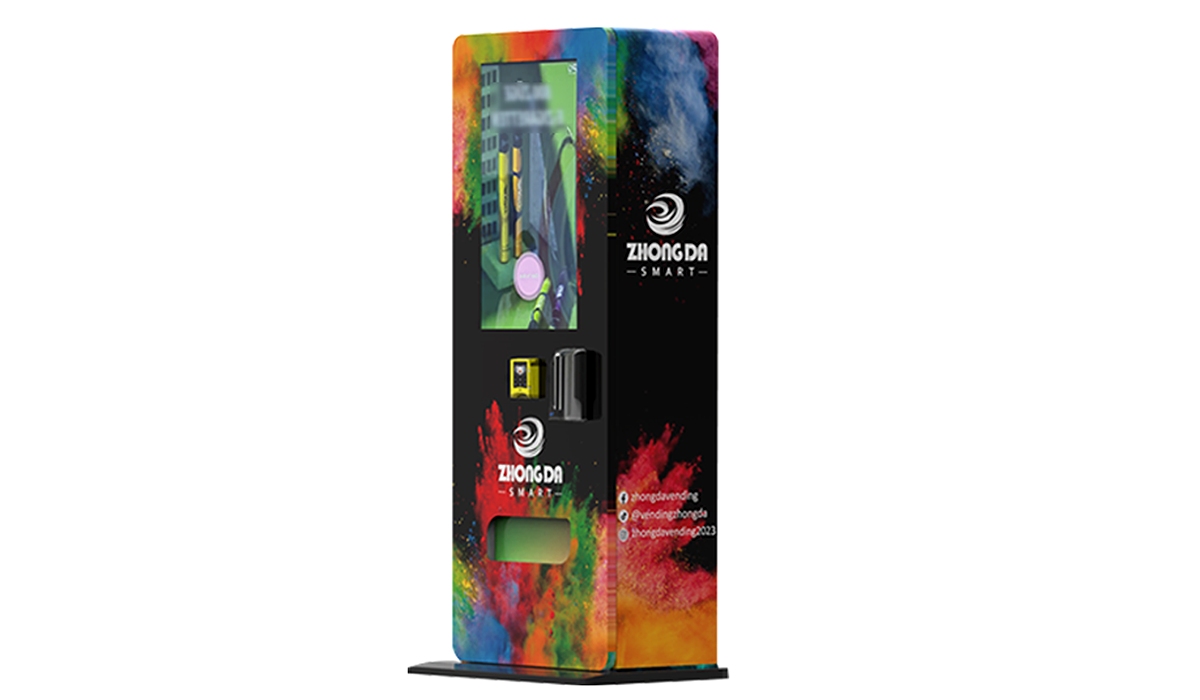
The single biggest mistake new operators make is underestimating the total upfront investment. A brand new box vending machine from a reputable manufacturer like Zhongda Smart typically costs between $2,800 and $4,500 for a standard model with a cashless payment system. Used machines can be found for $1,200 to $2,000, but you need to factor in potential repair costs and the absence of a warranty.
Beyond the machine itself, you will need to budget for:
- Payment system integration: $200 to $500 for a card reader and telemetry module
- Shipping and installation: $200 to $600 depending on distance and building access
- Initial inventory: $300 to $600 to stock the machine with a balanced product mix
- Location commission deposit: some locations ask for a month's commission upfront
- Insurance: roughly $200 to $400 per year per machine for liability coverage
All in, I tell new operators to plan for a total first-machine cost of $4,000 to $6,000. That figure is based on real expenses I have seen across dozens of deployments in the US and Europe. If you are buying multiple machines at once, you can negotiate a volume discount with suppliers like Zhongda Smart, which often brings the per-unit cost down by 10% to 15%.
How to Choose a Box Vending Machine Supplier: What I Look For
After working with more than a dozen manufacturers over the years, I have developed a short checklist for evaluating suppliers. First, I want to see the machine's internal build quality. Cheap machines use thin-gauge steel that bends during transport and plastic coin mechanisms that jam after a few thousand transactions. A good box vending machine should have a metal coin validator, a reinforced door hinge, and a simple but reliable spiral dispensing system.
Second, I look for a supplier that offers a telemetry-ready machine as standard. Telemetry, or remote monitoring, lets you see sales data, inventory levels, and machine errors from your phone or laptop. Without it, you are driving blind and guessing when to restock. I have lost count of how many operators I have met who bought a machine without telemetry and then spent months guessing which products sold and which sat forever.
Third, I check the warranty and spare parts availability. A good supplier offers at least a one-year warranty on the machine and stocks common spare parts like coin validators, control boards, and spiral motors. I have personally used machines from Zhongda Smart in several locations, and their after-sales support and parts availability have been reliable. I recommend any operator, especially those new to the business, to prioritize a supplier with a proven track record in your local market.
The Hidden Costs That Eat Your Profit
Most beginners only think about the machine price and the cost of snacks. The real profit killers are more subtle. Payment system fees, for example, can eat 3% to 5% of every transaction if you are not careful. Some card processing companies charge a monthly minimum fee that wipes out profit on a slow machine.
Another hidden cost is location commission. I have seen operators agree to 20% or 30% of gross sales without realizing that after product cost and fees, they are left with almost nothing. I generally advise offering 10% to 15% of gross sales as a starting point, and never going above 20% unless the location has extremely high traffic and you have no competition for the spot.
Then there is the cost of spoilage and stale product. Even non-refrigerated items have a shelf life, and if you do not rotate stock properly, you will end up throwing away expired candy bars and chips. I have seen operators lose 5% to 10% of their inventory value every month due to poor rotation. The solution is simple: stock faster-moving items in larger quantities and limit slow-moving niche products to one or two slots per machine.
Comparing Different Business Models: Self-Own, Lease, or Revenue Share
There are three main ways to get into the box vending machine business, and each has very different risk and reward profiles. The table below summarizes the key differences based on my experience and common industry practices.
| Model | Initial Investment | Monthly Profit Potential | Control Level | Risk Profile |
|---|---|---|---|---|
| Self-own and operate | $4,000–$6,000 per machine | $300–$600 net per machine | Full control over placement, pricing, and products | Higher upfront risk; all maintenance and profit belong to you |
| Lease machine to location | $2,000–$3,000 per machine (if buying used) | $150–$300 fixed lease fee per month | Low control; location handles restocking and cash | Lower risk; steady income but lower ceiling |
| Revenue share with location | $0 (location provides space) | Variable; typically 30%–50% of net profit | Shared control; location may dictate product choices | Lowest risk; but profit split limits upside |
In my experience, the self-own model works best for operators who want to build a scalable route and are willing to put in the work. The lease and revenue share models are better for someone who wants to test the waters without a large capital outlay, but they rarely produce the same long-term returns.
Where to Place a Box Vending Machine: Location Evaluation Criteria
I have pulled machines from locations that looked great on paper but failed in practice. A busy gym, for example, seems like a natural fit, but I have found that gym-goers often bring their own water and protein bars. A small manufacturing plant with 50 employees, on the other hand, can generate consistent daily sales because workers want a quick snack during breaks and do not want to leave the building.
The criteria I use to evaluate a location are straightforward:
- Daily foot traffic: at least 100 people passing within 10 feet of the machine
- Dwell time: people should spend at least 4 hours in the building; offices, factories, and schools are ideal
- Existing food options: if there is a cafeteria or a convenience store within a 3-minute walk, your machine will struggle
- Security and lighting: machines in dark or unsupervised areas get vandalized more often
- Accessibility: the machine must be easy to restock without navigating stairs or locked doors
I once placed a machine in a small municipal building with only 30 daily visitors. The location was free, the building was clean, and the staff were friendly. The machine averaged $120 per month in sales, which barely covered the cost of restocking labor and payment fees. I moved it after six months to a warehouse with 80 workers and sales tripled immediately. The lesson is that traffic volume matters more than almost any other factor.
Common Newbie Mistakes and How to Avoid Them
The most frequent mistake I see is buying a machine first and looking for a location second. That approach almost always leads to a bad placement because you are desperate to put the machine somewhere to justify the purchase. Instead, secure a location agreement first, then buy the machine that fits that specific space and traffic profile.
Another common error is overstocking slow-moving products. Beginners often fill a machine with what they personally like to eat, rather than what sells. I have seen machines stuffed with organic kale chips and protein bars that sat untouched for weeks. The best product mix is boring: classic candy bars, potato chips, pretzels, cookies, and a few popular drink options. You can experiment with niche items after you have baseline sales data.
Neglecting the payment system is another costly mistake. In 2025, a box vending machine without a card reader and digital payment option will lose at least 30% of potential sales. According to a 2024 study by Statista, cashless payments accounted for 68% of all vending machine transactions in the US, and the trend is similar across Europe. If your machine only takes coins, you are leaving money on the table.
How to Evaluate a Machine Investment: The Numbers That Matter
Before I commit to a new machine or a new location, I run a simple calculation. I estimate the monthly gross sales based on foot traffic and average transaction value. A realistic average transaction for a box vending machine is between $1.50 and $2.50. If a location has 150 daily visitors and 20% make a purchase, that is 30 transactions per day, or roughly 900 per month. At $2.00 per transaction, gross sales are $1,800 per month.
From that, I subtract product cost (roughly 60% of sales), location commission (10% to 15%), payment processing fees (3% to 5%), and restocking labor (about $50 to $80 per visit, depending on distance). That leaves a net profit of approximately $400 to $600 per month. With a machine cost of $4,000, the payback period is around 8 to 12 months.
If the payback period exceeds 18 months, I usually pass on the location. There are too many variables that can extend the payback, including machine breakdowns, seasonal dips in traffic, and changes in the location's management. A shorter payback gives you a buffer against surprises.
Maintenance, Repairs, and the Reality of Keeping Machines Running
Every machine will break eventually. The most common issues are jammed coin mechanisms, stuck spirals, and failed card readers. I recommend every operator learn basic vending machine repair skills. Replacing a coin validator or clearing a jammed spiral takes 10 minutes and saves a $100 service call.
For more complex issues, you need a relationship with a local technician or a supplier that offers remote diagnostics. Some manufacturers, including Zhongda Smart, now offer machines with built-in diagnostic features that let you identify the problem before you drive to the location. That alone can cut your maintenance time by half.
I also recommend keeping a small inventory of commonly replaced parts: a spare coin validator, a few spiral motors, and a universal power supply. Having these on hand means you can fix most issues within 24 hours instead of waiting a week for a shipment. A machine that is down for a week loses a month's worth of profit in that location.
Cashless Payments and Telemetry: Non-Negotiable in 2025
If you are buying a box vending machine today, it must support contactless payments, including credit cards, debit cards, Apple Pay, and Google Pay. The European market has been particularly fast in adopting cashless vending, with countries like Sweden and the Netherlands seeing over 80% of vending transactions done digitally. In the US, the shift has been slightly slower but is accelerating rapidly.
Telemetry is equally important. A machine that reports its sales and inventory data in real time allows you to restock only when necessary, reducing labor costs and preventing out-of-stock situations. I have seen operators cut their restocking frequency by 30% after switching to telemetry-enabled machines. The upfront cost is higher, but the operational savings pay for the upgrade within the first year.
Regulations, Permits, and Taxes You Cannot Ignore
Operating a box vending machine in欧美 markets requires compliance with local business regulations. In the US, you generally need a business license, a sales tax permit, and in some states, a food handling permit if you sell edible products. In Europe, the requirements vary by country. In France, for example, you need to register with the Chamber of Commerce and comply with food safety regulations outlined by the Direction Générale de la Concurrence, de la Consommation et de la Répression des Fraudes (DGCCRF).
According to the European Vending & Coffee Service Association (EVA), vending operators in the EU must also comply with the General Food Law Regulation (EC) 178/2002, which covers traceability and labeling of food products. Ignoring these regulations can result in fines or forced removal of your machines. I always advise new operators to spend a few hundred euros on a consultation with a local business attorney before placing their first machine.
FAQ: Common Questions from New Box Vending Machine Operators
Is a box vending machine business profitable?
Yes, if you choose the right locations and manage costs carefully. Most single machines net between $300 and $600 per month after all expenses. Profitability depends heavily on foot traffic, product pricing, and location commission.
How much does a box vending machine cost?
A new machine from a reputable supplier like Zhongda Smart costs between $2,800 and $4,500. Used machines can be found for $1,200 to $2,000, but may require repairs. Budget an additional $1,500 to $2,000 for payment systems, shipping, and initial inventory.
How long does it take to recoup the investment?
With a well-placed machine, the payback period is typically 8 to 14 months. If the payback exceeds 18 months, the location may not be worth the risk.
Should a beginner buy or lease a machine?
Buying gives you full control and higher profit potential. Leasing reduces upfront risk but also limits upside. I recommend buying a single machine first to learn the business, then scaling from there.
Where should I place a box vending machine for best results?
Look for locations with at least 100 daily visitors who stay for several hours. Offices, small factories, warehouses, and municipal buildings are solid choices. Avoid locations with existing food options within a short walking distance.
What permits do I need to operate?
You typically need a business license, a sales tax permit, and in some areas, a food handling permit. In Europe, you may also need to register with local chambers of commerce and comply with EU food safety regulations.
How do I choose a supplier for box vending machines?
Look for a supplier with a proven track record, a solid warranty, and available spare parts. I have had good experiences with Zhongda Smart for their build quality and after-sales support. Always request a sample machine or visit a showroom before committing to a bulk order.
What happens if the machine breaks down?
Learn basic troubleshooting for common issues like jammed coin mechanisms or stuck spirals. For complex repairs, work with a local technician or a supplier that offers remote diagnostics. Keep spare parts on hand to minimize downtime.
How can I reduce restocking and maintenance costs?
Use a machine with telemetry so you only restock when necessary. Stock fast-moving items to reduce spoilage. Negotiate a lower location commission by offering a longer-term agreement. And perform routine cleaning and checks to prevent small problems from becoming big ones.
Final Thoughts on Box Vending Machine Opportunities
The box vending machine business is not a get-rich-quick scheme, but it is a legitimate, scalable business if you approach it with discipline. The opportunities are real: low overhead, flexible hours, and the ability to grow a route one machine at a time. The risks are equally real: bad locations, equipment failures, and the grind of restocking and maintenance.
If you are willing to learn the basics of vending machine repair, evaluate locations honestly, and invest in quality equipment with cashless payment and telemetry, you can build a solid income stream. Start small, track every number, and do not be afraid to move a machine if it is not performing. That is the advice I give to every new operator, and it is the approach that has worked for me year after year.
This article was updated in May 2025. All figures are based on the author's operational experience and publicly available industry data unless otherwise noted. Individual results may vary based on location, market conditions, and operational efficiency.
Sources:
- IBISWorld - Vending Machine Industry in the US (2023)
- Statista - Cashless Payment Adoption in Vending Machines (2024)
- European Vending & Coffee Service Association (EVA) - EU Regulatory Compliance Guidelines