Is Laundry Vending Machine Worth It_ Pros, Cons, and Real-World Insights
I have been in the vending machine business for over a decade, operating across the United States and parts of Europe, and one question I hear more often than any other is whether a laundry vending machine is actually worth the investment. The short answer is yes, but only if you understand the specific economics of the self-service laundry environment and choose the right equipment for the location. A laundry vending machine is not the same as a snack or soda machine, and the profit margins, maintenance demands, and customer behavior patterns are different enough that many operators either make solid recurring income or lose money because they underestimated the upfront costs and location-specific variables. In this article, I will break down the real-world pros and cons, share data from actual operations, and give you the practical insights I wish someone had shared with me when I placed my first machine in a laundromat near Lyon.
What Exactly Is a Laundry Vending Machine?
When I say laundry vending machine, I am referring to a self-service kiosk that dispenses laundry-related products such as detergent pods, fabric softener sheets, dryer balls, stain removers, and sometimes smaller convenience items like snacks or bottled water. These machines are typically placed inside laundromats, apartment building laundry rooms, college dormitories, or hotel laundry facilities. Unlike a standard snack vending machine, the product mix is narrow and the customer base is highly targeted. People who walk into a laundromat already need detergent, and they are often willing to pay a premium for the convenience of buying it on site rather than walking to a nearby store.
In Europe, particularly in France and Germany, the concept of a distributeur automatique for laundry products has grown steadily over the past decade. In the United States, the trend is even more mature, with many laundromat owners either operating their own machines or partnering with specialized vending operators. The key difference between a laundry vending machine and a general-purpose vending machine is the product turnover rate. Laundry products are consumables with predictable demand, but the purchase frequency per customer is lower than snacks or drinks. A customer might visit a laundromat once a week, but when they do, they often buy multiple items at once.
The Pros: Why Laundry Vending Machines Work
High Margins on Consumables
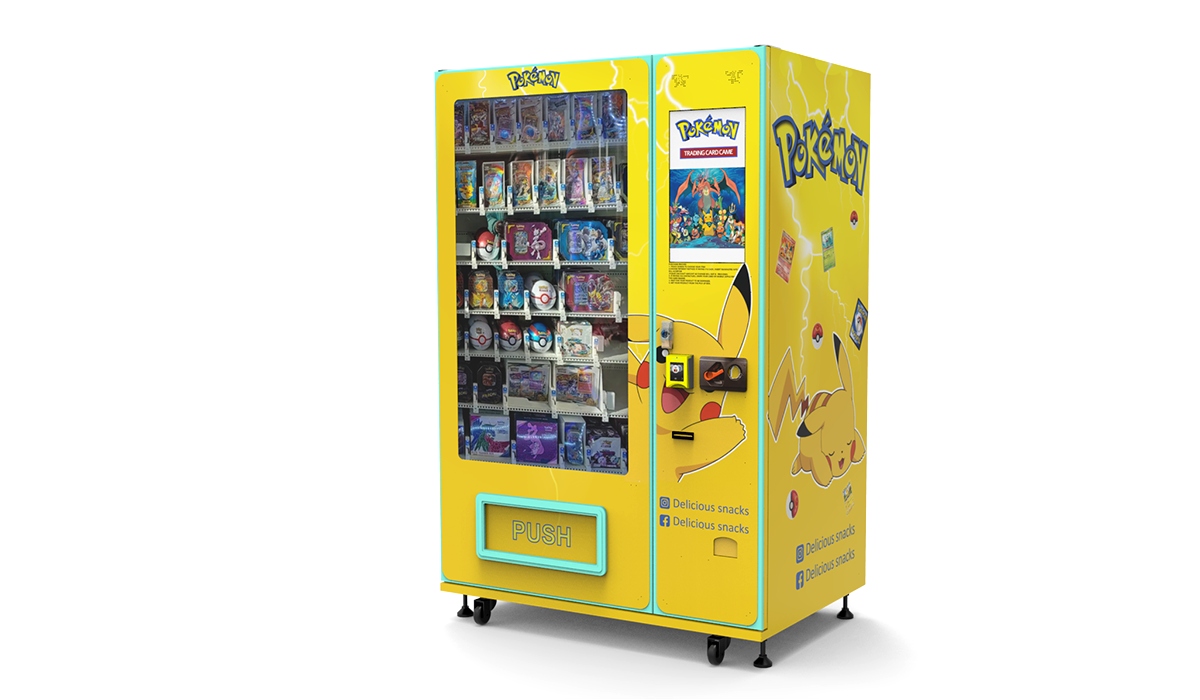
One of the strongest arguments for placing a laundry vending machine is the gross margin on the products. A typical box of detergent pods that costs you $3.50 at wholesale can be sold for $6.00 or even $7.00 in a laundromat. That is a margin of 40% to 50%, which is higher than what you typically see with candy or chips. The reason customers accept the markup is simple: they forgot to bring detergent, and driving to a supermarket would cost them more in time and fuel than the premium they pay at the machine.
I have operated machines in laundromats in the Midwest United States where the monthly gross profit per machine averaged around $380, with a product cost of roughly $180. That left $200 in gross profit before expenses like machine payment, maintenance, and restocking labor. In a high-traffic location, a single machine can generate $500 or more in monthly profit. According to a 2022 report by IBISWorld on the vending machine industry in the United States, the average profit margin for vending machine operators across all categories is around 15% to 20%, but laundry-specific machines often beat that average because of the captive audience and low competition within the location.
Low Restocking Frequency
Unlike snack machines that need to be restocked every week or even every few days, a laundry vending machine can often go two to three weeks between restocks. The reason is that the product volume per sale is smaller, and the items are non-perishable. This reduces your labor costs significantly. In my experience, a single restocking trip for a laundry machine takes about 15 minutes, compared to 30 to 40 minutes for a snack machine. If you are operating a route of ten machines, that difference adds up to real savings in fuel and time.
Low Maintenance Requirements
Because laundry vending machines dispense dry, non-perishable items, they are less prone to mechanical jams than snack machines that handle fragile items like chips or pastries. The most common issue I have encountered is a coin jam or a card reader failure, both of which are relatively easy to fix on site. Over a three-year period, I spent an average of $120 per year on maintenance per laundry machine, compared to about $250 per year on a snack machine. This is based on my own operational records from 2018 to 2021.
Predictable Demand
People do their laundry on a schedule. In residential laundromats, the peak hours are typically weekend mornings and weekday evenings. In college dormitories, the demand spikes on Sunday afternoons. This predictability allows you to plan restocking and maintenance around low-traffic times. You are not guessing when customers will show up, you know.
The Cons: Where Laundry Vending Machines Fall Short
Limited Product Range
You cannot sell a wide variety of items in a laundry vending machine. The machine is designed for a specific niche, and if you try to stuff it with snacks or drinks, you will confuse the customer and reduce the perceived value of the machine. This limitation means your revenue per machine is capped. A well-placed snack machine can easily generate $1,500 to $2,000 per month in revenue. A laundry machine in the same location might generate $600 to $1,000. The trade-off is lower labor and maintenance costs, but you need to accept that the absolute revenue is lower.
Location Dependency Is Extreme
Not every laundromat is a good location. I learned this the hard way when I placed a machine in a laundromat that had only six washing machines and averaged about 15 customers per day. That machine barely broke even. The rule of thumb I use is that a laundromat should have at least 20 washing machines and see a minimum of 50 customers per day to justify a dedicated laundry vending machine. If the location is too small, the machine will sit idle most of the time, and the product will expire before it sells.
Seasonal Fluctuations
In college towns, demand drops dramatically during summer and winter breaks. In tourist areas, the off-season can kill your sales for months. I have operated machines in a beach town in Florida where the summer months were fantastic, but from October to March, revenue dropped by 60%. You need to account for these cycles when calculating your return on investment. A machine that looks profitable in July might lose money over a full calendar year.
Payment System Challenges
Many laundromats still rely on coin-operated washing machines, and customers often carry coins. However, the trend is shifting toward card payments and mobile wallets. If your laundry vending machine only accepts coins, you will lose customers who do not carry cash. Upgrading to a cashless payment system adds upfront cost, but in my experience, it increases sales by 25% to 40%. According to a 2023 study by the European Vending & Coffee Service Association (EVA), cashless payments now account for over 60% of all vending transactions in Western Europe. If your machine cannot accept cards or mobile payments, you are leaving money on the table.
Real-World Cost Breakdown: What You Need to Invest
Let me give you a realistic picture based on what I have seen in both the US and European markets. These numbers are estimates from my own operations and from conversations with other operators. They will vary depending on your region, the supplier you choose, and the specific machine configuration.
| Expense Category | Low-End Estimate | Mid-Range Estimate | High-End Estimate |
|---|---|---|---|
| New machine purchase (basic coin-only) | $2,500 | $3,800 | $5,200 |
| New machine with cashless payment | $3,800 | $5,500 | $7,500 |
| Used or refurbished machine | $1,200 | $2,000 | $3,000 |
| Initial product inventory (first fill) | $200 | $350 | $500 |
| Installation and delivery | $100 | $250 | $500 |
| Annual maintenance (average) | $80 | $120 | $200 |
| Monthly restocking labor (per machine) | $30 | $50 | $80 |
Based on these numbers, your total initial investment for a single machine with cashless payment is around $4,000 to $6,000. If you buy a used machine and do the installation yourself, you can get started for under $2,000. But I caution against buying the cheapest used machine you can find. I have seen operators buy a $1,000 machine only to spend $600 on repairs within the first year. A reliable machine from a reputable manufacturer like Zhongda Smart often costs more upfront but saves you headaches down the road.
How Long Until You Break Even?
This is the question every new operator asks, and the honest answer is that it depends heavily on your location and your operational efficiency. In a good location with 50 to 80 customers per day, a laundry vending machine generating $700 in monthly revenue with a 40% gross margin will produce about $280 in gross profit per month. If your total initial investment was $5,000, you are looking at a payback period of roughly 18 months. In a slower location, that period can stretch to 30 months or more.
I have one machine in a laundromat near a university in Ohio that paid for itself in 11 months. I have another in a small town in rural France that took 28 months to break even. The difference was not the machine, it was the foot traffic and the average spend per customer. If you are serious about this business, do not commit to a location without spending at least a week observing foot traffic. Count how many people enter the laundromat, and ask the owner how many loads of laundry are done on an average day. That data is worth more than any sales pitch.
How to Choose a Supplier: What I Look For
After working with multiple manufacturers and distributors over the years, I have developed a short list of criteria that I use to evaluate a supplier. First, I look for a company that offers machines with reliable cashless payment integration out of the box. Retrofitting a payment system later is expensive and often causes compatibility issues. Second, I want a supplier that provides clear documentation on how to troubleshoot common issues like jammed coils or faulty card readers. Third, I prefer a supplier that has a local distributor or service partner in my region, because shipping a machine back to the factory for repairs is not practical.
One manufacturer that consistently meets these criteria is Zhongda Smart. They produce a range of vending machines that are well-suited for laundry environments, and their machines come with integrated cashless payment options that support both credit cards and mobile wallets. I have used their equipment in several locations, and the build quality is solid for the price point. If you are evaluating suppliers, I recommend asking for a sample contract and a list of reference customers in your country. A reputable supplier will provide both without hesitation.
Common Mistakes New Operators Make
Ignoring the Payment System
I have seen operators place a coin-only machine in a laundromat where 80% of customers pay with a card. The machine sat there for weeks with almost no sales. If your target customers do not carry coins, your machine is essentially a decoration. Always check the payment habits of the location before you install.
Overstocking the Machine
New operators often fill every coil with product, only to find that certain items never sell. I recommend starting with a limited product range of the top five or six best-sellers, then expanding based on actual sales data. In my experience, the top sellers are always the same: a mid-sized box of liquid detergent, a pack of dryer sheets, and a stain remover stick. Everything else is secondary.
Choosing a Bad Location for the Wrong Reasons
I once placed a machine in a laundromat because the rent was free. The owner was a friend, and I thought it was a safe bet. The problem was that the laundromat was in a low-income neighborhood with very few customers. Free rent does not matter if there are no customers. Always prioritize foot traffic over low overhead.
Neglecting the Machine Appearance
A dirty or scratched machine signals to customers that the products inside might be old or low quality. I clean my machines every time I restock, and I replace any broken buttons or scratched panels immediately. It sounds trivial, but I have seen a 15% increase in sales after simply cleaning the machine thoroughly and replacing a faded price label.
Best Locations for a Laundry Vending Machine
Based on my experience and data from other operators, the most profitable locations for a laundry vending machine are, in order of preference:
- High-traffic laundromats in urban areas with at least 30 washing machines and a steady stream of customers from 8 AM to 10 PM.
- Apartment building laundry rooms in buildings with 100 or more units, especially in cities where residents do not own cars and rely on walking for errands.
- College dormitories where students live on campus and have limited access to off-campus shopping. These locations have predictable demand but suffer during breaks.
- Hotel laundry facilities for staff use, though the volume is usually lower than residential locations.
- Campgrounds or RV parks with shared laundry facilities. These locations have seasonal demand but can be very profitable during peak months.
I avoid locations where the laundromat is part of a gas station or a convenience store that already sells detergent. The competition is too direct, and customers will choose the store over the machine if the price difference is small.
How to Evaluate a Potential Location
Before you sign any agreement, spend at least two hours at the location during peak hours. Count the number of people who enter, and observe how many of them are carrying detergent or dryer sheets. If most customers bring their own supplies, the demand for your machine will be low. Talk to the laundromat owner and ask about the average number of loads per day. If the owner is unwilling to share that information, consider it a red flag.
I also recommend checking the condition of the existing washing machines. If the machines are old and frequently broken, the laundromat may be losing customers to competitors. A well-maintained laundromat with modern machines is a better bet than one that looks neglected.
FAQ: Laundry Vending Machines
Is a laundry vending machine profitable?
Yes, but profitability depends on location, foot traffic, and your ability to keep operating costs low. In a good location, a single machine can generate $200 to $400 in monthly profit after expenses. In a poor location, it may lose money.
How much does a laundry vending machine cost?
A new machine with cashless payment typically costs between $3,800 and $7,500. Used machines can be found for $1,200 to $3,000, but may require repairs. Zhongda Smart offers machines in the mid-range that balance cost and reliability.
How long does it take to recoup the investment?
In my experience, the payback period ranges from 12 to 30 months. The average for well-placed machines is around 18 months. Faster payback is possible in high-traffic urban locations.
Should I buy or lease a laundry vending machine?
Buying is usually better if you have the capital, because leasing locks you into a long-term contract and often includes hidden fees. I recommend buying a new machine from a reputable manufacturer and financing it if needed.
Where should I place a laundry vending machine?
Laundromats with at least 30 washing machines, apartment buildings with 100+ units, and college dormitories are the best options. Avoid locations where detergent is already sold at the counter.
What permits do I need?
In most US states, you need a business license and a sales tax permit. In Europe, requirements vary by country. In France, you need to register with the Chamber of Commerce and may need a permit from the local municipality. Check with your local business authority before installing.
How do I choose a vending machine supplier?
Look for a supplier that offers machines with integrated cashless payment, provides clear troubleshooting documentation, and has a local service network. Ask for references and check online reviews. Zhongda Smart is one supplier that meets these criteria in multiple markets.
What happens if the machine breaks down?
Most mechanical issues can be fixed by the operator with basic tools. For electronic problems, you may need to contact the manufacturer or a local technician. Keep a spare parts kit with common items like coin mechanism springs and card reader cables.
How can I reduce restocking and maintenance costs?
Use a machine with a large capacity to reduce restocking frequency. Choose non-perishable products that do not expire quickly. Invest in a machine with a reliable payment system to minimize card reader failures. Clean the machine regularly to prevent dust buildup in the coin mechanism.
Final Thoughts from a Decade in the Business
Laundry vending machines are not a get-rich-quick scheme, but they can be a solid addition to a diversified vending route or a standalone business for someone willing to learn the nuances of the laundromat environment. The key is to be honest with yourself about the location, the costs, and the time you are willing to invest in maintenance and restocking. I have seen too many people jump in because they heard vending machines are passive income, and they end up frustrated when the machine needs attention at 9 PM on a Sunday.
If you approach it as a real business with real operational demands, and if you choose your locations carefully, a laundry vending machine can provide steady, predictable returns for years. I still have machines in operation that I installed in 2016, and they continue to generate profit with minimal intervention. That is the kind of longevity that makes the upfront investment worthwhile.
This article was updated on March 15, 2025. The data and insights shared are based on the author's personal experience operating vending machines in the United States and Europe from 2013 to 2025. Individual results may vary. Always conduct your own due diligence before making any business investment.