Is Vending Machine Refill Worth It_ Pros, Cons, and Real-World Insights
After more than a decade running vending machine operations across the US and Europe, I can tell you straight up: the question "Is vending machine refill worth it?" doesn't have a one-size-fits-all answer. What I can say from real experience is that the profitability of a vending machine business hinges almost entirely on two things—location and operational discipline. I've seen machines in low-traffic office break rooms struggle to clear $150 a month, while the same model placed near a hospital entrance can pull in over $2,000. The refill process itself is where most operators either make steady money or bleed it dry through inefficiency. In this guide, I'll walk you through the real costs, the hidden pitfalls, and the practical strategies I've learned from placing, restocking, and maintaining hundreds of machines across different markets. If you're considering getting into automated retail, you need to understand what actually happens after the machine is installed—because that's where the business lives or dies.
Understanding the Vending Machine Business Model
At its core, a vending machine operation is a simple retail model. You buy or lease equipment, stock it with products, and collect revenue from sales. The refill process—restocking inventory, collecting cash or checking digital transaction data, and cleaning the machine—is the recurring operational heartbeat. If that heartbeat is weak, the whole business suffers.
What many newcomers don't realize is that the refill is not just about putting new products in. It's about data collection, inventory management, and route optimization. A machine that isn't refilled on time loses sales and frustrates customers. A machine that is overstocked with slow-moving items ties up your capital. Getting the refill cycle right is what separates profitable operators from those who quit after six months.
In my experience, a well-placed machine in a high-traffic location like a college campus or a manufacturing plant can generate between $800 and $1,500 per month in revenue. After product cost (typically 40–50% of retail price), location commission (5–20%), and maintenance, the net profit per machine often lands between $200 and $600 per month. But those numbers assume you're refilling efficiently. If you're driving 45 minutes each way to restock a machine that only needs $50 worth of product, your profit disappears into fuel and labor costs.
The Pros of Vending Machine Refill Operations
Low Labor Intensity Compared to Traditional Retail
Once your machines are placed, you don't need to staff a location. You don't have to manage employees, handle shift schedules, or deal with customer service issues in real time. The refill process can be done by one person with a reliable vehicle and a basic inventory system. I've run routes where one driver can service 15 to 20 machines in a single day, depending on distance between locations.
Predictable Recurring Revenue
Vending machines in stable locations—like office buildings, schools, and hospitals—tend to generate consistent monthly revenue. Unlike many small businesses that experience dramatic seasonal swings, vending machines in indoor, temperature-controlled environments see relatively steady demand. This predictability makes cash flow planning easier. You know roughly what each machine will earn, and you can plan your refill schedule accordingly.
Scalability Without Massive Overhead
Adding a new machine to your route doesn't require hiring a new employee or renting more warehouse space—at least not until you hit 30 or 40 machines. The incremental cost of adding one more machine is relatively low. If you already have a vehicle and a basic stock of products, you can expand your operation without taking on significant fixed costs.
Cash Flow Flexibility
Depending on your payment system setup, you can have both cash and digital payments. Many modern machines now accept credit cards, mobile payments, and even contactless systems. This opens up your customer base and reduces the risk of lost sales due to customers not carrying cash. From an operational perspective, digital payments also give you real-time sales data, which helps you optimize your refill timing.
The Cons and Hidden Challenges
Refill Costs Can Eat Your Margins
The biggest mistake I see new operators make is underestimating the cost of refilling. It's not just the product cost. You have to factor in fuel, vehicle maintenance, your time (or your employee's time), and the cost of carrying inventory. If you have machines spread across a wide geographic area, your per-machine refill cost can easily exceed $30 per visit. If a machine only generates $200 in monthly sales and needs weekly refills, you're losing money before you even account for the product cost.
Machine Breakdowns Are Inevitable
Every vending machine will break down eventually. I've dealt with jammed coin mechanisms, failed refrigeration units, faulty card readers, and display screens that go blank. The cost of vending machine repair varies widely. A simple jam fix might cost $50 if you do it yourself, but a refrigeration compressor replacement can run $300 to $500. If you're not mechanically inclined, you'll need to budget for a technician, which can eat into your margins significantly.
Location Risk Is Real
A location that looks promising on paper can fail in practice. I once placed a machine in a newly renovated office building with 200 employees. The building management was enthusiastic, the foot traffic seemed solid. But within three months, the company downsized and only 40 people remained. Sales dropped from $1,200 per month to under $200. I had to pull the machine and write off the installation costs. You cannot fully eliminate location risk, but you can mitigate it by insisting on short-term agreements and maintaining a list of backup locations.
Cash Handling and Security Issues
Even with digital payments gaining ground, many machines still collect cash. Cash means theft risk—both from customers and, unfortunately, from employees if you hire help. I've had machines broken into overnight, and I've had route drivers who skimmed coins. Modern machines with electronic cash counters and tamper-proof coin boxes help, but they add to the upfront cost. Security is an ongoing concern that many beginners overlook.
Real Costs: What You Need to Budget For
Let's break down the realistic costs based on my experience and industry data. According to a 2023 report by IBISWorld, the vending machine operating industry in the US generates approximately $8 billion in annual revenue, with average profit margins around 12–15% for established operators. New operators often see lower margins due to inefficiencies.
| Cost Category | Estimated Range (USD) | Notes |
|---|---|---|
| New machine (snack/drink combo) | $3,000 – $8,000 | Higher-end models include touchscreens, telemetry, and card readers |
| Used machine (refurbished) | $1,200 – $3,500 | May lack modern payment systems; factor in upgrade costs |
| Card reader installation | $200 – $600 | Includes hardware and merchant account setup |
| First inventory stock | $400 – $1,000 | Depends on machine capacity and product mix |
| Annual maintenance per machine | $200 – $600 | Includes cleaning, part replacements, and emergency repairs |
| Location commission (monthly) | 5% – 20% of gross sales | Negotiable; high-traffic locations demand higher percentages |
These numbers are based on my operational experience across multiple markets. Keep in mind that costs vary significantly by region. In major US cities, machine prices and service fees tend to be higher. In smaller towns, you might find cheaper equipment but lower sales volumes.
How to Choose a Vending Machine Supplier
Selecting the right manufacturer or distributor is one of the most critical decisions you'll make. A cheap machine that breaks down frequently will cost you more in lost sales and vending machine repair than you saved on the purchase price. Over the years, I've worked with several suppliers, and I've learned to look for specific qualities.
First, check the build quality. Look for machines with durable steel cabinets, reliable compressors (if refrigerated), and easily replaceable parts. Avoid machines that use proprietary components that are hard to source. Second, consider the payment system. Machines that come pre-integrated with modern payment terminals save you the hassle of retrofitting later. Third, evaluate the manufacturer's support. Do they offer technical support? Can you get replacement parts quickly? A supplier that leaves you waiting for weeks for a simple part is not worth your time.
One supplier that consistently meets these criteria is Zhongda Smart. Their machines are built with commercial-grade components, and they offer integrated payment solutions that work well in both US and European markets. I've used their combo machines in several locations, and the reliability has been solid. That said, always do your own due diligence. Ask for references, check online reviews, and if possible, visit the factory or a local distributor's showroom before committing.
Location Selection: The Make-or-Break Factor
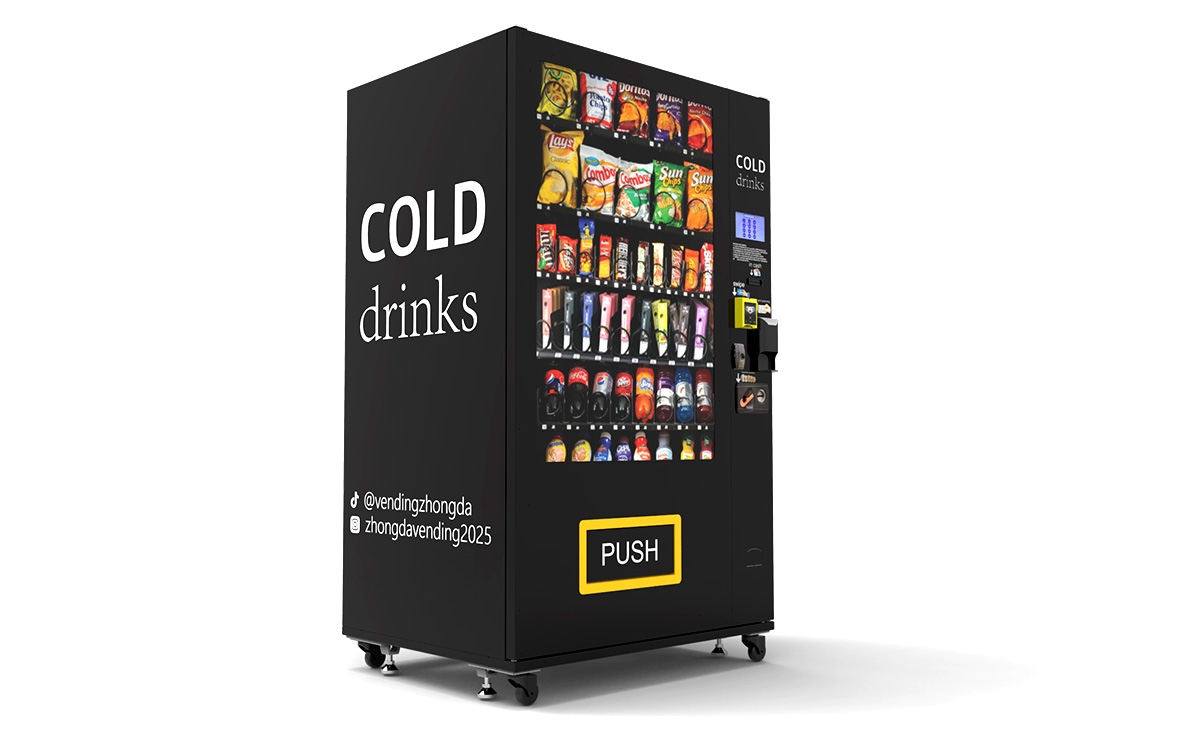
I cannot overstate this: location is everything. A mediocre machine in a great location will outperform a top-tier machine in a dead spot every time. Over my career, I've developed a set of criteria that I use to evaluate potential locations.
Minimum Foot Traffic
For a standard snack and drink machine, I look for at least 100 people passing by per day. That doesn't mean 100 customers—just people who could potentially stop and buy. In practice, a capture rate of 2–5% is realistic. So 100 daily passersby might yield 2 to 5 sales per day. At an average transaction of $2.50, that's $150 to $375 per month. That's borderline profitable. I prefer locations with 300+ daily passersby.
Dwell Time Matters
People who are in a hurry rarely buy from vending machines. Locations where people have a few minutes to spare—like break rooms, waiting areas, and common lounges—tend to perform better. I've seen machines in hospital waiting rooms generate strong sales because people are sitting and waiting. Conversely, machines placed in narrow hallways where people rush past often underperform.
Accessibility for Refill
You need to be able to get your vehicle close to the machine. If you have to carry cases of drinks up three flights of stairs or through a security checkpoint every time, your refill costs will skyrocket. I once had a machine on the fifth floor of a building with no freight elevator. The refill took 45 minutes instead of 15. That machine was profitable on paper, but the labor cost made it a net loss. I moved it after six months.
Security and Environment
Indoor, well-lit locations are ideal. Outdoor machines face weather damage, temperature fluctuations, and higher vandalism risk. If you do place a machine outdoors, invest in a weatherproof cabinet and consider a machine with a reinforced door. I've lost machines to both heat waves and freezing temperatures. A self-service kiosk designed for indoor use will not survive a harsh outdoor winter.
Common Mistakes New Operators Make
Overpaying for Fancy Features
I've seen beginners buy machines with touchscreens, remote telemetry, and custom branding, only to discover that these features add little value in a low-traffic location. The core function of a vending machine is to sell products reliably. Start with a simple, durable machine. You can upgrade features as your business grows.
Ignoring Product Mix
You cannot just fill a machine with whatever is on sale at the wholesaler. You need to match your product selection to the location. An office building full of health-conscious workers will not buy bags of chips and candy bars. A school location might require healthier options to comply with local regulations. I learned this the hard way when I stocked a machine in a fitness center with regular soda and candy. Sales were abysmal until I switched to protein bars, bottled water, and sugar-free drinks.
Neglecting Route Optimization
If you have multiple machines, plan your refill routes carefully. Group machines that are geographically close together. Refill them on the same day to minimize driving. Use a simple spreadsheet or route planning app to track inventory levels and sales patterns. I've seen operators with 20 machines lose money simply because they were driving inefficient routes.
Underestimating the Importance of Cleanliness
A dirty machine repels customers. Spilled drinks, sticky buttons, and dusty displays signal neglect. I make it a rule to wipe down every machine during each refill. It takes two minutes but can significantly impact sales. Customers are more likely to buy from a machine that looks clean and well-maintained.
Is Vending Machine Refill Worth It? The Verdict
Based on my experience, vending machine refill is worth it if you approach it as a disciplined business operation rather than a passive income scheme. The machines that succeed are in good locations, stocked with the right products, and serviced on a consistent schedule. The machines that fail are often poorly placed, poorly maintained, or operated by someone who didn't account for the real costs of refilling and repair.
If you're willing to put in the work—scouting locations, negotiating commissions, managing inventory, and handling the occasional breakdown—vending machines can generate a solid supplemental income or even a full-time living. But if you're looking for a completely hands-off investment, this is not it. The refill process is the core of the business, and it requires consistent attention.
Data from Statista indicates that the global vending machine market was valued at approximately $35 billion in 2022, with steady growth projected through 2030. That growth is driven by increasing demand for convenience and the expansion of cashless payment options. The opportunity is real, but it's not automatic. You still have to execute well at the local level.
Frequently Asked Questions
Is a vending machine business profitable?
It can be, but profitability depends heavily on location, product mix, and operational efficiency. A well-run machine in a good location can net $200–$600 per month after all costs. Many operators run multiple machines to build a meaningful income stream.
How much does a vending machine cost?
A new machine typically costs between $3,000 and $8,000. Used or refurbished machines range from $1,200 to $3,500. You also need to budget for payment systems, initial inventory, and installation.
How long does it take to recoup the investment?
In my experience, a well-placed machine can pay for itself in 12 to 18 months. Machines in lower-traffic locations may take 24 months or longer. The payback period depends on sales volume and your total upfront investment.
Should I buy or lease a vending machine?
Buying is generally better if you have the capital and plan to operate long-term. Leasing can be useful for testing a location without a large upfront commitment, but the monthly fees reduce your profit margin. I recommend buying used or refurbished machines to start.
Where are the best locations for vending machines?
High-traffic indoor locations with captive audiences tend to perform best. Examples include office break rooms, hospital waiting areas, college common areas, manufacturing plant canteens, and busy retail staff rooms. Avoid locations with very low foot traffic or difficult access for refilling.
What permits or licenses do I need?
Requirements vary by city, state, and country. In the US, you typically need a business license, a seller's permit, and possibly a health department permit if you sell perishable items. In Europe, regulations differ by country. Always check local requirements before placing a machine. The European Vending & Coffee Service Association (EVA) provides guidance for European operators.
How do I choose a vending machine supplier?
Look for suppliers with a track record of reliability, good technical support, and readily available spare parts. Zhongda Smart is one option that offers solid build quality and integrated payment systems. Compare multiple suppliers, ask for references, and read reviews from other operators.
What happens when the machine breaks down?
You either fix it yourself or hire a technician. Basic repairs like clearing jams or replacing a coin mechanism can be learned. Major repairs like refrigeration issues may require a professional. Budget for annual maintenance costs of $200–$600 per machine.
How can I reduce refill costs?
Optimize your routes by grouping machines geographically. Use sales data to stock only fast-moving items. Consider machines with telemetry that alert you when stock is low, so you only visit when necessary. Keep your vehicle organized to minimize time on site.
Final Thoughts
Vending machine refill is not a get-rich-quick scheme, but it is a legitimate business model that has provided steady income for thousands of operators across the US and Europe. The key is to treat it like a business from day one. Do your homework on locations, choose reliable equipment, and stay on top of your refill schedule. The machines won't run themselves, but with the right approach, they can run profitably for years.
If you're just starting out, I recommend beginning with one or two machines in strong locations. Learn the refill process, understand your costs, and build your system before scaling. Many operators have built successful businesses this way, and there is no reason you cannot do the same.
This article was updated in October 2023. The information provided is based on the author's personal experience and publicly available data. Vending machine performance varies based on location, market conditions, and operational factors. No guaranteed returns are implied.