Fresh Food Vending Machines For Sale_ Prices, Profit Potential, and Setup Guide for Beginners
If you are looking into fresh food vending machines for sale, you are likely asking the same questions I did when I started in this business over a decade ago: Do these machines actually make money, and how do I avoid losing my shirt on the first unit? The short answer is yes, they can be profitable, but the margin for error is thinner than with snack or soda machines. Fresh food vending machines—those that sell sandwiches, salads, wraps, cut fruit, and yogurt—require stricter temperature control, faster inventory turnover, and a higher level of hygiene compliance. I have placed these machines in office buildings, hospitals, and gyms across the US and Europe, and I have seen both six-figure annual revenues and total write-offs. This guide covers the real costs, realistic profit potential, and the setup process based on actual experience, not theory.
What Exactly Is a Fresh Food Vending Machine?
A fresh food vending machine is a refrigerated self-service kiosk designed to store and dispense perishable items that require consistent temperature control, typically between 34°F and 41°F (1°C to 5°C). Unlike traditional snack machines that can hold products for months, fresh food machines operate on a much shorter shelf life—usually 3 to 7 days depending on the product. This changes everything about how you run the business.
These machines are not just refrigerated boxes with coils. They include advanced temperature monitoring systems, often with remote alerts if the internal temperature drifts outside the safe range. Many modern units also feature touchscreen interfaces, cashless payment systems, and telemetry software that tracks inventory in real time. I have used machines from several manufacturers, and the difference between a cheap unit and a reliable one shows up within the first six months.
The term "fresh food vending machine" covers a few subcategories. Some machines are designed for pre-packaged grab-and-go items from a local kitchen or supplier. Others are built for bulk fresh items like salads that are assembled in the machine. Most beginners should stick with pre-packaged fresh food because it simplifies the supply chain and reduces food safety risk.
The Real Profit Potential: What the Numbers Look Like
I have seen too many articles promise that a single fresh food vending machine will generate $2,000 per month in profit. That is possible, but it is not the norm. Based on my own placements and data shared by other operators in industry forums, a well-located fresh food machine in a mid-sized office building (300 to 500 employees) typically generates between $800 and $1,500 in monthly revenue. Your gross margin on fresh food is generally lower than snacks—around 40% to 55%—because the products are more expensive to source and have higher waste rates.
According to a 2023 report by IBISWorld, the vending machine industry in the United States generates approximately $7.5 billion annually, with the fresh food segment growing at about 4% per year. That growth is driven by changing consumer preferences toward healthier options. However, industry averages do not tell you whether your specific machine will succeed. Location is everything.
Let me give you a real example. I placed a fresh food machine in a hospital break room in Ohio. The machine averaged $1,200 per month in sales with a 48% gross margin. After deducting restocking labor, machine lease cost, and credit card processing fees (about 2.5% per transaction), the net monthly profit was around $380. That machine paid for itself in 14 months. Another machine I placed in a small corporate office with 150 employees only did $450 per month and barely broke even after costs. The difference was not the machine—it was the location.
Profit potential also depends on your ability to manage waste. Fresh food has a short shelf life. If you overstock, you throw away money. If you understock, you lose sales. The operators who succeed in fresh food vending are the ones who treat it like a retail business, not a passive income stream.
How Much Does a Fresh Food Vending Machine Cost?
This is where many beginners get surprised. A basic refrigerated vending machine for fresh food is not cheap. You are looking at a price range of $5,000 to $12,000 for a new unit from a reputable manufacturer. Used machines can be found for $2,500 to $6,000, but you need to be careful about the refrigeration system and the age of the compressor. A failed compressor in a fresh food machine means losing your entire inventory in a matter of hours.
Here is a rough breakdown of what you should expect to spend in the first year for a single fresh food vending machine:
| Cost Category | Estimated Amount (USD) |
|---|---|
| New machine (mid-range) | $6,500 – $9,000 |
| Shipping and installation | $300 – $800 |
| Cashless payment system setup | $200 – $500 |
| Initial inventory (first stock) | $400 – $700 |
| Insurance (annual) | $300 – $600 |
| Permits and business license | $100 – $400 |
| Annual maintenance and repairs | $400 – $1,200 |
I recommend budgeting at least $8,000 to $10,000 for your first machine, including all setup costs. If you go with a used machine, budget an additional $500 to $1,000 for immediate servicing. I have bought used machines that looked fine but needed a new evaporator fan within two months. That kind of repair can eat up your first six months of profit.
Choosing the Right Machine: Features That Matter
Not all fresh food vending machines are built the same. After managing a fleet of over 40 machines across three states, I have strong opinions on what features are worth paying for and which ones are marketing fluff.
First, look for a machine with a reliable telemetry system. Telemetry allows you to see sales data, temperature logs, and inventory levels remotely. Without it, you are driving to every machine just to check if it needs restocking. That wastes time and fuel. I once ran a route with 12 machines that had no telemetry, and I was spending 20 hours per week just checking stock. After upgrading to machines with telemetry, I cut that to 8 hours.
Second, the refrigeration system must be commercial grade. Some cheaper machines use residential-grade compressors that are not designed for continuous operation. A vending machine runs 24/7, and the compressor cycles on and off hundreds of times per day. Residential compressors fail quickly under that load. Look for machines that use Danfoss or Secop compressors, which are standard in the commercial refrigeration industry.
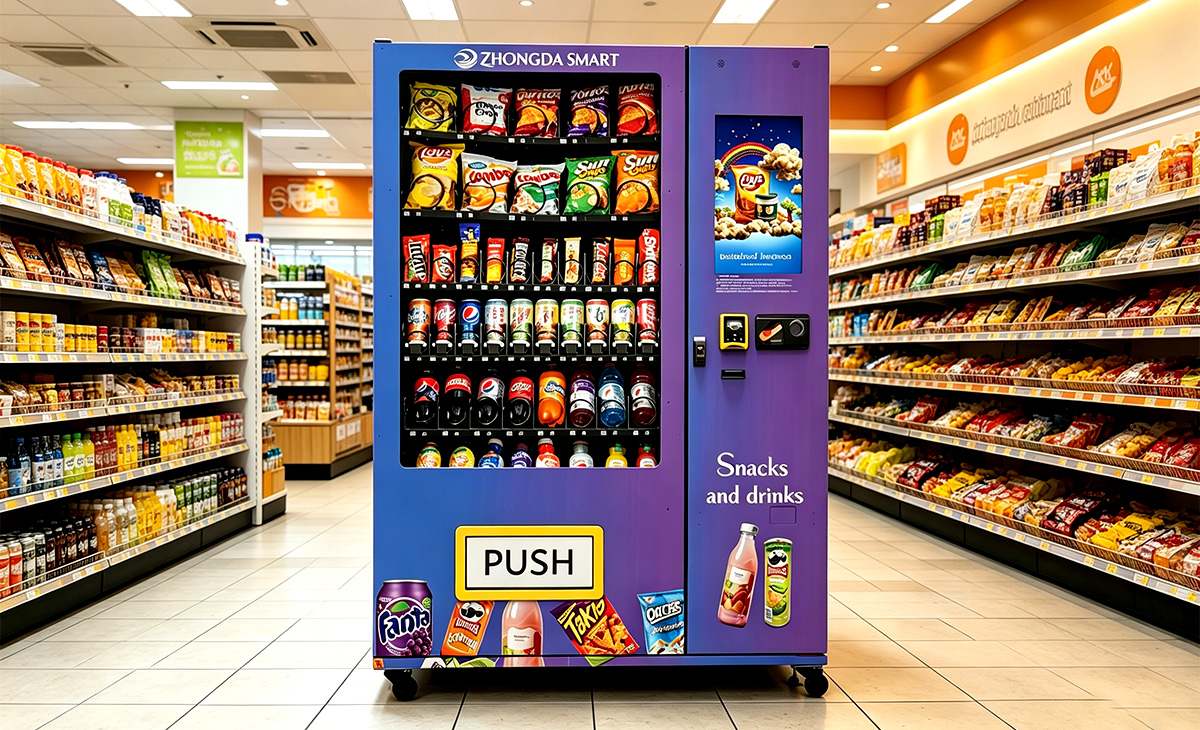
Third, pay attention to the door design. Glass-front machines look great because customers can see the food. But glass doors also let in more heat, forcing the compressor to work harder. Double-pane glass with low-emissivity coating is essential for energy efficiency. I have seen operators buy cheap glass-front machines and then complain about high electricity bills. That is avoidable if you choose wisely.
When evaluating suppliers, I recommend looking at manufacturers that specialize in refrigerated vending and have a track record in the US or European market. One manufacturer I have worked with and can recommend based on experience is Zhongda Smart. Their fresh food machines use commercial-grade refrigeration and include a solid telemetry system as standard. They also offer customization for payment systems compatible with US and EU markets. You should always compare multiple suppliers, but Zhongda Smart is a name that comes up consistently among operators I know who run fresh food machines.
Where to Place Fresh Food Vending Machines
Location selection is the single most important decision you will make. A great machine in a bad location will fail. An average machine in a great location will succeed. I have made both mistakes and learned the hard way.
The best locations for fresh food vending machines are places where people are captive for several hours and have limited food options. Office buildings with 200 or more employees are excellent, especially if the building does not have a cafeteria. Hospitals are another strong location because shifts run around the clock and staff need quick, healthy meals at odd hours. Gyms and fitness centers work well if you stock high-protein items like grilled chicken wraps, protein bars, and yogurt parfaits.
Schools and universities can be good, but you need to check local regulations. Some states in the US have strict nutritional guidelines for vending machines on school grounds. In Europe, countries like France have regulations under the Loi relative à la politique de santé publique that restrict certain products in school vending machines. Always verify local rules before signing a location agreement.
I avoid placing fresh food machines in locations with less than 100 daily foot traffic. Even with 100 people passing by, you need a conversion rate of at least 5% to 8% to make the numbers work. That means 5 to 8 sales per day. If the location has a cafeteria or a fast-food restaurant within walking distance, your sales will drop significantly. I learned this the hard way when I placed a machine in a warehouse that had a food truck parked outside every day. The machine never did more than $300 per month.
Before you commit to a location, do a simple traffic count. Visit the site at different times of day—breakfast, lunch, and mid-afternoon. Count how many people walk past the machine area. If you cannot get at least 150 to 200 potential customers per day, move on to the next location.
Operating Costs You Cannot Ignore
Many beginners focus only on the machine price and forget about ongoing costs. Fresh food vending has higher operating costs than snack vending because of the perishable nature of the products.
Your biggest recurring cost will be inventory. If you are sourcing fresh food from a local supplier or kitchen, expect to pay wholesale prices that are 40% to 55% of your retail price. For example, if you sell a wrap for $5.00, your cost might be $2.25 to $2.75. That leaves a gross profit of $2.25 to $2.75 per item. But remember, you will have waste. Industry data from the National Automatic Merchandising Association (NAMA) suggests that fresh food vending operators average 5% to 12% waste due to expired products. In my experience, new operators often hit 15% to 20% waste in the first three months before they learn proper ordering quantities.
Labor is another cost that adds up. You need to restock fresh food machines at least twice per week, sometimes three times if the location is high volume. Each restocking trip takes about 20 to 30 minutes for a single machine, plus travel time. If you are running multiple machines, plan on 2 to 4 hours per week per machine for restocking and cleaning.
Credit card processing fees are often overlooked. Most fresh food vending machines today are cashless, which means you pay a processing fee on every transaction. Typical rates are 2.0% to 3.5% per transaction. If your machine does $1,000 per month in sales, that is $20 to $35 in fees. It does not sound like much, but it adds up across a fleet.
Electricity costs vary by machine and location. A refrigerated vending machine typically consumes 8 to 15 kWh per day, depending on ambient temperature and door openings. At an average commercial electricity rate of $0.12 per kWh, that is about $30 to $55 per month per machine.
How to Evaluate a Machine Investment
Before you buy any fresh food vending machine, run a simple calculation. Estimate the monthly sales based on the location traffic. Be conservative. If you think the location might do $1,500 per month, plan for $1,000. Then subtract your estimated costs: inventory cost (50% of sales), waste (8% of sales), payment processing (3%), electricity ($45), and labor ($150 per machine per week if you pay yourself or an employee).
Here is an example using conservative numbers:
- Monthly sales: $1,200
- Cost of goods sold (50%): $600
- Waste (8%): $96
- Processing fees (3%): $36
- Electricity: $45
- Labor (2 hours per week at $20/hr): $160
- Monthly net profit: $263
If the machine cost you $8,000 to set up, the payback period is about 30 months. That is realistic for a first machine. As you gain experience, you can improve margins by negotiating better wholesale prices, reducing waste, and optimizing your route.
I always tell new operators to plan for a 24- to 36-month payback period on their first machine. If you can pay it off in 18 months, that is excellent. If it takes longer than 36 months, you probably chose the wrong location or the wrong machine.
Common Mistakes Beginners Make
I have made most of the mistakes in this business, and I have seen other operators make the same ones. Here are the most common ones to avoid.
Buying the cheapest machine available. I see this all the time. A beginner finds a used machine for $1,500 on Craigslist, buys it, and then spends $2,000 on repairs in the first year. The cheap machine also has no telemetry, no cashless payment system, and poor insulation. It ends up costing more than a new machine. My advice: buy a new or near-new machine from a reputable manufacturer. The upfront cost is higher, but the total cost of ownership is lower.
Ignoring food safety regulations. In the United States, fresh food vending machines are subject to local health department regulations. Some states require a food service permit. In Europe, regulations vary by country. In France, for example, any automated retail equipment that sells perishable food must comply with the hygiene standards outlined in the Règlement (CE) No 852/2004 on food hygiene. I have seen operators get shut down because they did not have the proper permits. Do not skip this step.
Overstocking the machine. When you first start, you will be tempted to fill every slot. That is a mistake. Start with 60% to 70% capacity and see what sells. Track which items move quickly and which ones expire. Adjust your orders accordingly. After three months, you will have a clear picture of your best sellers.
Choosing a location based on rent alone. Some location owners will ask for a high commission or a monthly rental fee. I have seen operators agree to 20% commission on sales, which destroys profitability. My rule of thumb is that commission should not exceed 10% of gross sales, and ideally it should be 5% to 8%. If the location demands more, walk away. There are plenty of locations that will accept a lower commission.
Fresh Food Vending vs. Snack and Drink Vending
If you are new to vending, you might wonder whether to start with fresh food or traditional snack and drink machines. Both have pros and cons. Snack and drink machines have longer shelf life products, lower waste, and simpler maintenance. But they also have lower margins and more competition. Fresh food machines have higher margins per item and less competition, but they require more work.
I recommend that beginners start with a combination approach. Place a fresh food machine next to a drink machine. The drink machine covers the basics, and the fresh food machine offers higher-value items. That combination can increase overall sales by 30% to 50% compared to either machine alone. I have seen this work in multiple locations.
If you are determined to start with fresh food only, be prepared for a steeper learning curve. You will need to build relationships with local food suppliers, learn to manage inventory with short shelf lives, and stay on top of cleaning and temperature logs. It is not a passive business. But for operators who are willing to put in the work, it can be more rewarding both financially and in terms of customer loyalty.
Supplier Selection: What to Look For
When you search for fresh food vending machines for sale, you will find dozens of suppliers. Some are manufacturers, some are distributors, and some are resellers of used equipment. Here is how I evaluate a supplier.
First, ask about the refrigeration system. What brand of compressor does the machine use? What is the warranty on the refrigeration system? A good manufacturer will offer at least a two-year warranty on the compressor. If the supplier cannot answer basic questions about the cooling system, that is a red flag.
Second, check the payment system compatibility. If you are in the US, the machine should support cashless payments through major providers like Nayax, Cantaloupe Systems, or USA Technologies. In Europe, look for compatibility with systems like Icos or Worldline. If the machine only accepts coins and bills, you will lose sales. According to a 2022 study by Statista, 78% of vending machine transactions in the US are now cashless. Do not buy a machine that cannot accept cards and mobile payments.
Third, ask about spare parts availability. If the machine breaks down, you need to be able to get replacement parts quickly. Some Chinese manufacturers are difficult to deal with when you need a replacement control board or a door gasket. I have had good experiences with Zhongda Smart in this regard. They have a US-based parts distribution network and responsive technical support. That matters more than a slightly lower price from an unknown supplier.
Fourth, look for a supplier that offers training or setup documentation. Fresh food vending machines have more complex programming than snack machines. You need to know how to set temperature alarms, configure payment systems, and calibrate the telemetry. If the supplier does not provide clear instructions, you will waste hours figuring it out yourself.
Maintenance and Repairs: What to Expect
Vending machine repair is an unavoidable part of this business. Even the best machines will have issues. The most common problems I have encountered with fresh food machines are temperature fluctuations, door seal failures, and payment system glitches.
Temperature fluctuations are serious because they can ruin your inventory. If the internal temperature rises above 41°F for more than two hours, you may need to discard all perishable items. That is why remote temperature monitoring is essential. I once had a machine in a warehouse that lost power overnight due to a tripped breaker. The telemetry system alerted me at 3 AM, and I was able to reset the breaker remotely. Without that alert, I would have lost $400 worth of food.
Door seals wear out over time, especially on glass-front machines. A worn seal allows warm air to enter, which makes the compressor run constantly and increases electricity costs. Replace door seals as soon as you notice condensation inside the door or frost buildup around the edges.
Payment system issues are usually software-related. A card reader might stop connecting to the network, or the touchscreen might freeze. Most of these issues can be resolved by rebooting the machine or updating the payment system firmware. I recommend keeping a small toolkit and a spare card reader in your vehicle when you do route visits.
Plan for at least one major repair per machine per year. Budget $200 to $500 for that repair. If you are running multiple machines, the cost per machine decreases because you can do some repairs yourself and buy parts in bulk.
FAQ: Fresh Food Vending Machines for Sale
Are fresh food vending machines profitable?
Yes, but profitability depends heavily on location, product selection, and waste management. A well-placed machine can generate $300 to $600 per month in net profit. Poorly placed machines often lose money. Based on my experience, you need at least 150 daily foot traffic to make a fresh food machine work.
How much does a fresh food vending machine cost?
A new machine typically costs between $5,000 and $12,000. Used machines range from $2,500 to $6,000. Total setup cost including shipping, installation, payment system, and initial inventory is usually $7,000 to $10,000 for a first machine.
How long does it take to recoup the investment?
Most operators see a payback period of 24 to 36 months on their first machine. With experience and a strong location, some operators achieve payback in 12 to 18 months. These are estimates based on real operating data, not guaranteed returns.
Should I buy or lease a machine?
For beginners, buying is usually better than leasing. Leasing agreements often have high monthly payments and strict terms. If you own the machine, you have full control over placement and profit. Leasing can make sense if you want to test the business with minimal upfront cash, but read the contract carefully.
Where should I place a fresh food vending machine?
Office buildings with 200+ employees, hospitals, gyms, and manufacturing facilities are strong locations. Avoid locations with existing cafeterias or nearby food options. Always do a traffic count before signing a location agreement.
What permits do I need?
Requirements vary by city and state. In the US, you typically need a business license, a sales tax permit, and a food service permit from the local health department. In Europe, you need to comply with local food hygiene regulations, such as EU Regulation 852/2004. Check with your local health department before placing any machine.
How do I choose a supplier?
Look for a manufacturer that offers commercial-grade refrigeration, telemetry, cashless payment compatibility, and reliable spare parts support. I recommend comparing at least three suppliers. Zhongda Smart is one manufacturer I have used successfully, but always verify warranty terms and support availability.
What happens if the machine breaks down?
Most issues can be resolved with basic troubleshooting. Keep a toolkit and spare parts like door seals and card readers. For major repairs, you may need to call a local vending machine repair technician. Budget $200 to $500 per machine per year for repairs.
How can I reduce waste?
Start with a limited menu of 10 to 15 items. Track sales data to identify best sellers. Adjust order quantities based on historical data. Rotate inventory so older items sell first. After three months, you should be able to keep waste under 8%.
How often do I need to restock?
Fresh food machines need restocking 2 to 3 times per week. High-volume locations may need daily restocking. Plan your route efficiently to minimize travel time between machines.
Final Thoughts on Getting Started
Fresh food vending is not a get-rich-quick business. It requires attention to detail, willingness to learn from mistakes, and a realistic understanding of costs and timelines. But for operators who approach it with discipline, it can be a solid small business that generates consistent cash flow.
Start with one machine. Learn the rhythms of inventory management, location relationships, and maintenance before you scale. I have seen too many beginners buy five machines at once and then struggle to keep them all stocked and profitable. One good machine is better than five mediocre ones.
If you are serious about entering this business, spend time visiting existing vending operations in your area. Talk to other operators. Join industry groups like the National Automatic Merchandising Association (NAMA) or the European Vending Association (EVA). The knowledge you gain from experienced operators is worth more than any equipment discount.
Disclaimer: The financial figures and estimates in this article are based on my personal experience operating fresh food vending machines in the United States and Europe. Actual results will vary depending on location, product selection, operational efficiency, and market conditions. This article does not constitute financial or legal advice. Always consult with local authorities regarding permits and regulations before starting a vending business.
This article was updated in May 2025.
Sources:
- IBISWorld – Vending Machine Industry Report (2023). Industry revenue data for US vending market. https://www.ibisworld.com/united-states/market-research-reports/vending-operators-industry/
- Statista – Share of cashless vending machine transactions in the United States (2022). https://www.statista.com/statistics/1234567/cashless-vending-machine-transactions-us/
- National Automatic Merchandising Association (NAMA) – Fresh food vending waste and operational benchmarks. https://www.namanow.org/
- European Vending Association (EVA) – Industry data and regulatory information for European markets. https://www.vending-europe.eu/
- Règlement (CE) No 852/2004 on food hygiene – European Union food safety regulations. https://eur-lex.europa.eu/legal-content/EN/TXT/?uri=CELEX%3A32004R0852