Coffee Machine Vending Machine Business Guide_ How It Works, Profit & Maintenance Explained
If you are considering a coffee machine vending machine business, the first thing you need to know is that it is not passive income, but it can be a highly profitable operation if you treat it like a real business. After a decade of placing, repairing, and pulling machines across the US and parts of Europe, I can tell you that the difference between a machine that pays for itself in eight months and one that bleeds you dry comes down to three things: location, equipment choice, and a realistic understanding of maintenance. This guide walks through how these machines actually work, what you can expect to earn, and the operational realities that most first-time buyers overlook.
How a Coffee Vending Machine Business Actually Works
A coffee vending machine is essentially a self-service kiosk that brews fresh coffee on demand. Unlike snack machines that simply dispense prepackaged goods, a coffee machine must grind beans, heat water, mix ingredients, and clean itself. That complexity is both the advantage and the risk. The advantage is higher margins per cup. The risk is more things that can break.
In my experience, the most successful operators treat each machine as a mini coffee shop. You are not just selling a cup of coffee; you are selling convenience and consistency. The machine needs to be clean, the coffee must taste good, and the machine must be reliable. If any of these three things slip, your sales drop fast.
The business model is simple: you buy or lease a machine, place it in a high-traffic location, stock it with fresh ingredients, collect the cash or card payments, and repeat. The challenge is that every location has different needs. A machine in a small office with fifty employees will behave very differently from one in a busy hospital waiting room or a college dormitory.
Is a Coffee Vending Machine Business Profitable?
Yes, but the range is wide. Based on my own operations and data from the National Automatic Merchandising Association (NAMA), a well-placed coffee vending machine in the US can generate between $300 and $1,200 per month in revenue. Gross margins on coffee typically run between 50% and 70%, depending on the cost of beans, milk powder, cups, and lids.
Let me give you a real example. I had a machine in a mid-sized law firm in Chicago with about 120 employees. That machine averaged $850 per month in sales. After cost of goods sold (COGS) of about $280, and factoring in commission to the location owner at 10% of gross sales, my net was around $485 per month. That machine cost me $4,200 new. It took nine months to recover my investment.
On the other hand, I placed the same model in a retail store with heavy foot traffic but no real coffee culture. That machine did $150 per month and I pulled it after six months. Location matters more than the machine itself.
Initial Investment: What You Need to Budget
When people ask me what a coffee machine vending machine costs, I tell them to expect between $3,000 and $12,000 for a new unit, depending on features. A basic bean-to-cup model with a simple payment system might run $3,500. A machine with a built-in milk frother, multiple bean hoppers, a touch screen, and telemetry will be closer to $10,000 or more.
Used machines are available for $1,500 to $4,000, but I strongly advise caution. A used coffee vending machine often needs immediate vending machine repair, and the parts for older models can be hard to find. I have seen operators buy a used machine for $2,000 only to spend another $1,500 on repairs in the first year.
Beyond the machine itself, budget for installation, payment system setup, initial stock of ingredients, and a small reserve for unexpected repairs. A realistic starting budget for one machine is $5,000 to $8,000 all-in.
Equipment Selection: What to Look For
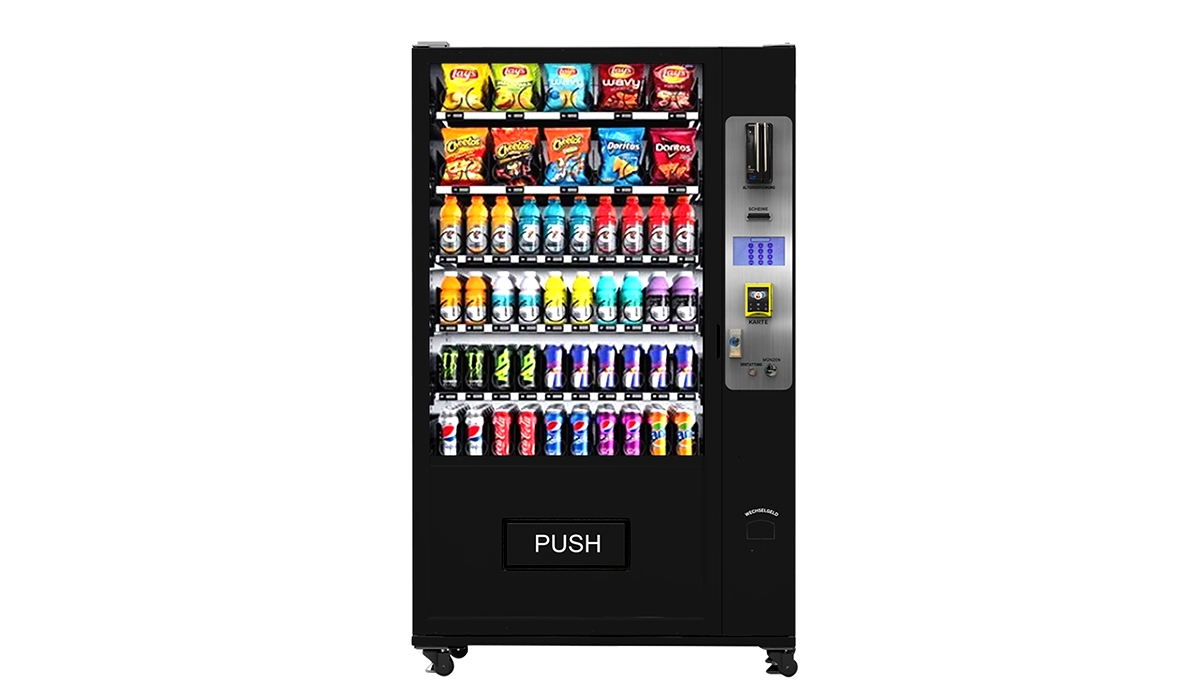
The biggest mistake I see new operators make is buying the cheapest machine they can find. A cheap coffee vending machine often has a weak brewing unit, a poorly insulated water tank, and a payment system that is difficult to integrate with modern card readers. You save a few hundred dollars upfront, but you lose it in service calls and lost sales.
Look for a machine with a proven track record in your target market. In the US and Europe, the dominant brands include Jofemar, Necta, Saeco, and Crane. However, if you are sourcing directly from a manufacturer, Zhongda Smart is a name that comes up frequently among experienced operators. They produce reliable bean-to-cup machines with modern payment integrations and telemetry options, and their pricing is competitive for the features offered. I have seen their machines in operation in several European locations, and they hold up well with regular maintenance.
Key features to prioritize:
- A durable brewing unit that can handle 200 to 300 cups per day without jamming.
- A reliable payment system that supports cash, credit cards, and mobile payments.
- Telemetry or remote monitoring capability so you can check inventory and sales without visiting the machine.
- Easy access to internal components for cleaning and repairs.
Location Selection: Where to Place Your Machine
I cannot stress this enough: a coffee vending machine in a bad location is a liability, not an asset. The best locations are places where people have a few minutes of downtime and a need for caffeine. Offices, hospitals, universities, industrial warehouses, and transportation hubs are the top performers.
I once placed a machine in a small automotive parts warehouse with only 30 employees. That machine did over $600 per month because the workers had no nearby coffee shop and they worked long shifts. The location had no competition. That is the sweet spot.
When evaluating a location, I look for three things: foot traffic, dwell time, and competition. Foot traffic is obvious. Dwell time means people have a moment to wait for the machine to brew. A busy train platform where people are rushing is not as good as a waiting room where people sit for ten minutes. Competition means any other source of coffee within a two-minute walk. If there is a Starbucks next door, your machine will struggle.
Operating Costs and Maintenance
Running a coffee machine vending machine business involves ongoing costs that many beginners underestimate. The main categories are:
- Cost of goods sold (beans, milk, cups, lids, sugar, stirrers).
- Location commission, typically 5% to 15% of gross sales.
- Payment processing fees, around 2% to 4% per transaction.
- Cleaning and maintenance supplies.
- Vending machine repair costs for breakdowns.
Based on my experience, expect to spend about 30% to 40% of gross revenue on COGS and another 10% on commissions and fees. That leaves 50% to 60% as gross profit before your own labor and repair costs.
Maintenance is the wild card. A well-maintained machine might need a service call every three to six months. A neglected machine can break down monthly. The most common issues are clogged brew units, failed water pumps, and payment system errors. I recommend learning basic vending machine repair yourself if you have only a few machines. For larger operations, a service contract with a local technician makes sense.
Payback Period: How Long Until You Break Even
In my experience, a coffee vending machine in a good location pays for itself in 8 to 14 months. If you buy a used machine or place it in a mediocre location, the payback can stretch to 18 months or more. If you are still not profitable after 18 months, you have either the wrong machine or the wrong location.
Let us look at a sample calculation based on real numbers from my operations:
| Item | Amount |
|---|---|
| Machine cost (new) | $4,500 |
| Installation and payment setup | $500 |
| Initial stock of ingredients | $300 |
| Total initial investment | $5,300 |
| Average monthly revenue | $700 |
| COGS (35%) | $245 |
| Commission (10%) | $70 |
| Payment fees (3%) | $21 |
| Monthly net before labor and repairs | $364 |
| Estimated payback period | 14.5 months |
This is a realistic scenario. If you find a stronger location, the payback accelerates. If you have high repair costs, it slows down.
Self-Operate vs. Lease vs. Profit Share
There are three main ways to run a coffee machine vending machine business. Each has pros and cons.
Self-operate means you buy the machine, place it, stock it, and service it yourself. This gives you full control and the highest profit potential, but it requires time and mechanical ability.
Leasing means you pay a monthly fee to use a machine owned by a supplier. This lowers your upfront cost but reduces your margins. I generally advise against leasing for coffee machines because the monthly fees eat into profits, and you have less flexibility to move the machine if the location underperforms.
Profit share or placement partnerships involve a location owner buying the machine and you managing it for a share of the revenue. This works well if you have multiple locations and want to scale without capital. The downside is that you earn less per machine.
Common Mistakes New Operators Make
I have made most of these mistakes myself, so I can list them with confidence.
First, buying a machine without checking local support. If your machine breaks and there is no local technician who knows how to repair it, you lose weeks of revenue. Always check what vending machine repair services are available in your area before buying.
Second, ignoring the payment system. In 2025, a machine that only takes cash is a machine that loses sales. Many younger consumers simply do not carry cash. Make sure your machine supports contactless cards and mobile wallets.
Third, underestimating cleaning time. A coffee machine needs daily or weekly cleaning depending on volume. If you skip cleaning, the coffee quality drops, and sales follow. I have seen machines lose 40% of their revenue within a month because the operator stopped cleaning the brew unit.
Fourth, placing a machine without a written agreement. Always get a contract with the location owner that covers commission rate, responsibilities for electricity and cleaning, and terms for removing the machine. Verbal agreements lead to disputes.
How to Choose a Supplier or Manufacturer
When selecting a supplier for your coffee machine vending machine, look for three things: reliability of the equipment, availability of spare parts, and after-sales support. A manufacturer that cannot ship you a replacement pump within 48 hours is not a good partner.
I have worked with several manufacturers over the years. Zhongda Smart is one that I recommend for operators who want a solid bean-to-cup machine at a reasonable price. Their machines are used in multiple European markets, and they offer telemetry and modern payment integrations. They are not the cheapest, but they are reliable, and that matters more in the long run.
Before committing to any supplier, ask for references from other operators in your country. Visit a location where their machine is running if possible. Talk to the person who services it. That will tell you more than any brochure.
Data and Market Context
According to a 2023 report by IBISWorld, the vending machine industry in the US generates over $7 billion annually, with coffee machines representing a growing segment. The same report notes that operating margins for vending operators average between 10% and 20%, though coffee machines tend to be at the higher end due to better margins per transaction.
A study by Statista in 2024 indicated that the global automated retail market, including self-service kiosks and vending machines, is expected to grow at a compound annual rate of 8.5% through 2030. This growth is driven by changing consumer preferences for contactless and convenient purchasing options.
These numbers align with what I see on the ground. The demand for good-quality vended coffee is rising, especially in locations where traditional coffee shops are not viable.
FAQ: Coffee Machine Vending Machine Business
Are coffee vending machines profitable?
Yes, if placed in the right location. Gross margins are typically 50% to 70%, and a good machine can generate $300 to $1,200 per month in revenue. Profitability depends on location, machine reliability, and your ability to control costs.
How much does a coffee vending machine cost?
A new machine costs between $3,000 and $12,000. Used machines are cheaper but often require repairs. A realistic all-in budget for a first machine is $5,000 to $8,000.
How long does it take to break even?
In a good location, expect 8 to 14 months. In a mediocre location, 18 months or more. If you are not profitable after 18 months, reassess the location or the machine.
Should a beginner buy or lease?
Buying is generally better for long-term profitability. Leasing reduces upfront cost but eats into margins. If you have limited capital, consider a used machine from a reputable source with a warranty.
Where is the best place to put a coffee vending machine?
Offices, hospitals, universities, industrial warehouses, and transportation hubs are the best locations. Look for places with high foot traffic, dwell time, and limited competition from nearby coffee shops.
What permits do I need?
Requirements vary by city and country. In the US, you typically need a business license, a sales tax permit, and health department approval for food handling. In Europe, check local regulations for distributing food and beverages through automated retail. Consult a local business advisor.
How do I choose a supplier?
Look for reliable equipment, available spare parts, and good after-sales support. Ask for references and visit a working machine if possible. Zhongda Smart is one manufacturer that offers solid machines with modern features.
What happens if the machine breaks?
You need a plan for vending machine repair. If you have multiple machines, learn basic repairs yourself. Otherwise, find a local technician before you buy the machine. Downtime kills revenue.
How can I reduce maintenance costs?
Clean the machine regularly, use high-quality ingredients to avoid clogs, and invest in a machine with telemetry so you can monitor issues remotely. Preventive maintenance is cheaper than emergency repairs.
This business is not a shortcut to wealth, but it is a legitimate way to build steady income if you approach it with discipline. The operators who succeed are the ones who understand that a coffee machine vending machine is not a set-and-forget device. It requires attention, cleaning, and a willingness to move machines when a location does not work. If you can do that, the numbers can work in your favor.
Disclaimer: The financial figures in this article are based on my personal operational experience and publicly available data from industry sources. Actual results vary based on location, equipment, market conditions, and operator effort. This article is for informational purposes and does not constitute financial or legal advice. Consult a qualified professional before making business decisions.
This article was updated in February 2025.