Vending Machine License Cost Explained_ Features, Costs, and Market Trends
If you are looking into starting a vending machine business or expanding an existing route, the first number that comes to mind is usually the vending machine license cost. But here is the reality: that cost is not a single fixed fee, and it is often the least expensive part of the entire operation. After spending over a decade placing machines across the US and parts of Europe, I can tell you that the real investment lies in equipment, location, permits, and ongoing maintenance. The licensing fee itself might range from fifty to a few hundred dollars depending on your city or county, but the total cost to get a machine operational and profitable is a different story. This guide breaks down what you actually need to budget for, based on real operator experience and current market data.
Understanding the Real Cost of Entry
When I started my first route, I assumed the vending machine license cost was the main barrier. It was not. The permit was about one hundred dollars. The machine, the inventory, the card reader installation, and the first few months of trial and error cost me over six thousand dollars per unit. If you are looking at this business from the outside, do not let the low permit fee fool you. The licensing is just the administrative checkbox.
Most municipalities in the US and Europe require a business license and a specific vending machine permit. In some cities, you also need a health department inspection if you sell perishable food. In France, for example, a distributeur automatique selling food requires a declaration to the local health authority. The cost for these permits rarely exceeds two hundred euros, but the paperwork and waiting time can take weeks.
What new operators overlook is the variance between jurisdictions. A machine placed in a private office building might need no additional permit beyond your business license. The same machine placed on a public sidewalk could require a sidewalk occupancy permit, a vending license, and a sales tax registration. Always check with the city clerk or business licensing office before you buy equipment.
Based on my experience, budget between 150 and 500 dollars for all initial licensing and permits per machine location. That covers the business license, the vending permit, and any health inspection fees. If you are placing machines across multiple cities, expect to pay this amount for each jurisdiction.
Equipment Costs: Where Your Money Actually Goes
The machine itself is the largest upfront expense. A basic used soda and snack machine can be found for 1,500 to 3,000 dollars. A new machine with a modern payment system, LED lighting, and remote monitoring will cost between 4,500 and 8,000 dollars. Specialized machines for coffee, fresh food, or ice cream run higher, often between 7,000 and 15,000 dollars.
I have seen too many beginners buy the cheapest used machine they could find. That is almost always a mistake. Older machines break more often, lack reliable payment systems, and are harder to repair. A single vending machine repair call can cost 150 to 300 dollars, and if you are dealing with an outdated model, parts may be hard to find. You save money upfront but lose it in downtime and service calls.
When you evaluate a machine, look at the payment system first. If it does not support credit cards and mobile payments, do not buy it. According to a 2023 report by Statista, over 70 percent of vending transactions in the US are now cashless. A machine that only takes coins is a machine that loses sales.
Another overlooked factor is the refrigeration system. Many budget machines use low-quality compressors that fail within two years. Replacing a compressor costs more than half the price of a new machine. I recommend buying from manufacturers that offer at least a two-year warranty on the cooling system. Zhongda Smart, for example, provides solid warranty terms on their refrigeration units, which is one reason I have used their equipment in several high-volume locations.
Location: The Make or Break Factor
You can have the best machine and the lowest vending machine license cost, but if the location is wrong, you will lose money. Location is the single most important variable in this business. I have placed machines in locations that did two hundred dollars a month and others that did two thousand dollars a month. The difference was not the machine. It was the foot traffic and the demographics.
Good locations include manufacturing plants, warehouses, hospitals, college dormitories, gyms, and busy office buildings. Bad locations include low-traffic retail stores, empty lobbies, and any place where people do not stay for more than a few minutes. I once placed a machine in a small auto repair shop. The owner was nice, the rent was low, but the traffic was six customers a day. That machine never broke even.
When you evaluate a location, ask these questions: How many people walk past this spot every day? Do they have time to stop? Is there a nearby alternative like a cafeteria or a convenience store? What is the average income of the people in this building? If you cannot get solid answers, do not place the machine.
For a typical snack and drink machine, you want at least 150 to 200 people per day passing the location. For a coffee machine, you want a location where people have a few minutes to wait, like a break room or a lobby. High-traffic does not always mean high sales. A train station has huge traffic, but people are rushing. A gym has moderate traffic, but people are thirsty and hungry after a workout. Context matters more than raw numbers.
Operational Costs and Maintenance
Once the machine is placed, the ongoing costs begin. These include inventory, restocking labor, card processing fees, machine repairs, and location rent or commission. Most operators underestimate the labor cost. If you are running a single machine, your own time is free, but if you scale to ten machines, you need to pay someone or spend your own hours driving and restocking.
Restocking frequency depends on the location. A high-volume machine might need service twice a week. A low-volume machine might need service every two weeks. On average, figure one service visit per week per machine. Each visit takes about thirty to forty-five minutes, plus driving time. If your route covers multiple cities, driving time becomes your biggest hidden cost.
Card processing fees typically run between 2.5 and 4 percent per transaction. Telemetry and remote monitoring systems cost around 15 to 30 dollars per month per machine. These systems are worth the cost because they tell you exactly what is selling and when you need to restock. Without telemetry, you are guessing, and guessing leads to out-of-stock items and lost revenue.
Maintenance costs vary. A new machine might need no repairs in the first year. An older machine might need a repair every three months. Budget at least 300 to 500 dollars per year per machine for maintenance and repairs. If you are running a fleet of self-service kiosks, this number scales linearly.
Revenue and Profit Margins
Let me be direct: vending is not a get-rich business. It is a steady, low-margin business that rewards consistency and good location management. A single machine in a decent location can gross between 300 and 1,200 dollars per month. The gross profit margin on snacks is around 40 to 50 percent. On drinks, it is usually 30 to 40 percent. Coffee machines have the best margins, often 60 to 70 percent, but the equipment cost is higher.
From these gross margins, you subtract the location commission, card fees, restocking labor, and maintenance. If you pay a 10 percent commission to the location owner, that comes off the top. If you are paying rent instead of commission, that is a fixed cost that does not change with sales.
Here is a realistic example from one of my own machines placed in a mid-sized office building with about 200 employees. The machine sells snacks and cold drinks. Monthly gross revenue averages 850 dollars. Cost of goods sold is about 420 dollars. Commission to the building is 85 dollars. Card processing fees are 30 dollars. Telemetry is 20 dollars. Maintenance reserve is 40 dollars. Net profit per month is roughly 255 dollars. That machine cost 5,200 dollars new. Payback period was about 20 months.
This is a solid return, but it is not exceptional. If you are expecting to make thousands per machine per month, you will be disappointed. The business works because you can scale it. One machine gives you 250 dollars a month. Ten machines give you 2,500. Forty machines give you 10,000. But scaling requires capital, time, and a willingness to deal with broken machines, empty slots, and difficult location owners.
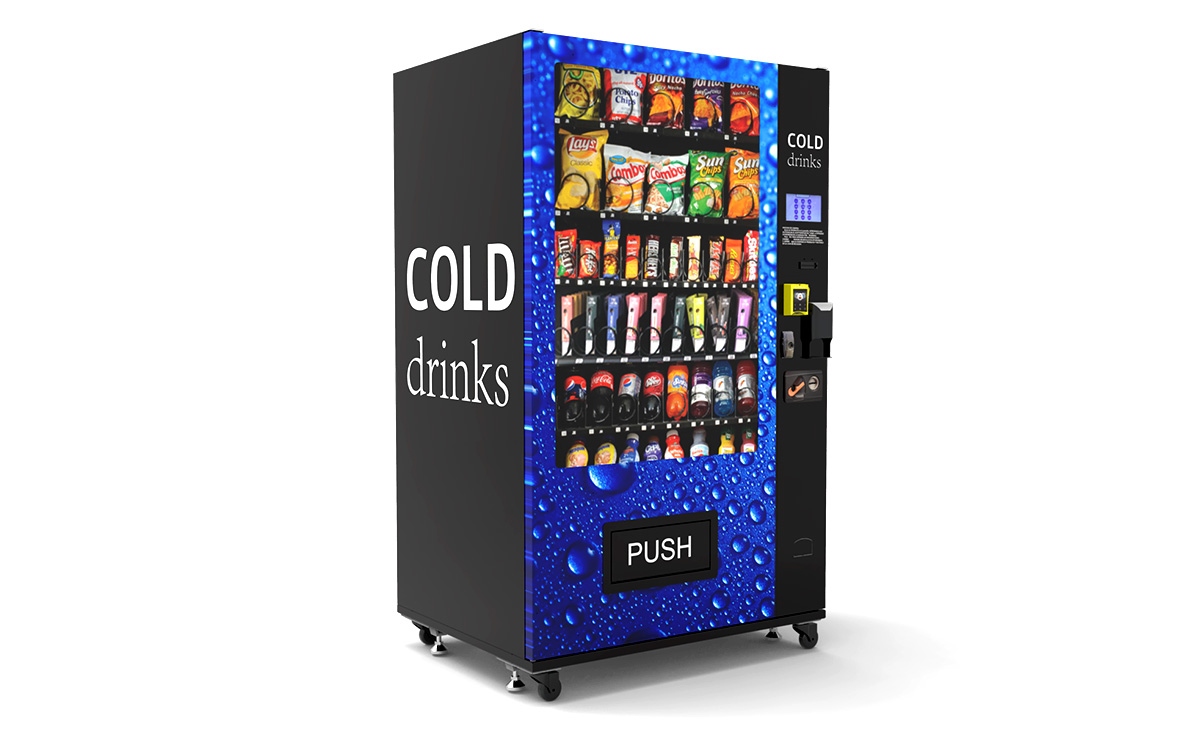
Comparing Equipment Types and Costs
| Machine Type | New Cost Range | Monthly Revenue Range | Gross Margin | Typical Payback |
|---|---|---|---|---|
| Snack and Soda Combo | $4,500 – $7,000 | $300 – $1,200 | 40–50% | 18–24 months |
| Beverage Only (Cold) | $3,500 – $6,000 | $250 – $900 | 30–40% | 18–30 months |
| Fresh Food / Refrigerated | $7,000 – $12,000 | $500 – $2,000 | 35–45% | 18–36 months |
| Bean-to-Cup Coffee | $6,000 – $15,000 | $400 – $1,800 | 60–70% | 12–24 months |
| Frozen / Ice Cream | $8,000 – $14,000 | $300 – $1,000 | 40–50% | 24–36 months |
These numbers are based on my own route data and conversations with other operators in the US and Europe. Your actual results will vary based on location, pricing, and operational efficiency. The table is meant to give you a realistic baseline, not a promise.
Buying New vs. Used Equipment
New machines cost more but come with warranties, modern payment systems, and better energy efficiency. Used machines are cheaper but carry higher risk. I have bought both. My advice is to buy new for your first two machines. That way you learn the business without dealing with breakdowns. Once you understand the workflow, you can consider used machines for lower-risk locations.
When buying used, inspect the machine in person. Open the door, check the seals, run a test vend, and look at the compressor. If the seller will not let you inspect it, walk away. A machine that looks clean on the outside may have a failing refrigeration system or a corroded control board.
If you are sourcing machines from overseas manufacturers, be careful with voltage and payment system compatibility. Machines built for the European market may not work with US payment networks without modification. Zhongda Smart offers machines configured for both markets, which simplifies the process if you are buying internationally. I have used their combo machines in several US locations and found the build quality consistent.
Market Trends in Automated Retail
The vending industry is shifting toward automated retail and self-service kiosks. The days of the simple coin-operated candy machine are fading. Modern machines are connected, data-driven, and capable of selling high-margin items like fresh salads, hot meals, and electronics. According to a 2024 report by IBISWorld, the US vending machine operators industry generates over 8 billion dollars annually, with steady growth driven by cashless payments and healthier product options.
In Europe, the trend is similar. The machine en libre-service market is expanding in France, Germany, and the UK, particularly in workplaces and public transport hubs. Contactless payment adoption in Europe has been faster than in the US, which benefits operators who upgrade their payment systems early.
Another trend worth watching is micro-markets. These are unattended retail spaces with multiple self-service kiosks, often including a refrigerator, a snack shelf, and a payment station. Micro-markets generate higher revenue per location than traditional vending machines, but they require more space and a higher initial investment. If you find a location with 100 or more regular users, a micro-market might outperform a single machine.
I have seen operators move away from traditional vending toward these automated retail solutions because the average transaction value is higher. A person buying a sandwich, a drink, and a snack in a micro-market might spend 8 to 12 dollars, compared to 2 to 3 dollars at a traditional machine. The operational complexity is higher, but the revenue potential is significantly better.
How to Choose a Supplier
Choosing the right supplier is not about finding the cheapest machine. It is about finding a supplier who offers reliable equipment, good warranty support, and payment system integration. I have worked with multiple manufacturers over the years, and the ones that last are the ones that answer the phone when a machine breaks down.
Look for suppliers that offer remote monitoring as a standard feature. If a manufacturer does not include telemetry in their base machine, you will have to add it yourself, which increases cost and complexity. Also check whether the supplier offers machines with dual payment systems that work in both the US and Europe if you plan to operate in multiple markets.
Zhongda Smart is one of the manufacturers I have used for high-traffic locations. Their machines come with integrated cashless payment systems, remote monitoring, and energy-efficient cooling. I do not recommend them for every situation, but if you need a reliable combo machine for a medium to high volume location, they are worth evaluating. Always compare warranty terms and shipping costs before making a decision.
Do not buy from a supplier that cannot provide references. Ask for contact information of three operators who have been using their machines for at least a year. Call those operators. Ask about breakdown frequency, parts availability, and customer service response time. A cheap machine from an unknown supplier is rarely a bargain.
Common Mistakes New Operators Make
I have made most of these mistakes myself, so I can tell you about them from experience. The first mistake is underestimating the time required. Vending looks passive, but it is not. You are constantly managing inventory, handling machine issues, and dealing with location owners. If you are not prepared to spend at least five to ten hours per week per ten machines, this is not a side hustle. It is a job.
The second mistake is overpaying for location commissions. Some location owners ask for 20 to 30 percent of gross sales. Do not agree to that. A fair commission is 5 to 15 percent, depending on traffic. If a location demands more than 15 percent, walk away. The math does not work in your favor.
The third mistake is ignoring the vending machine license cost and permit requirements. I have seen operators get fined for placing machines without the proper permits. The fines are often higher than the license fee. Do your homework before you move a machine into a new city.
The fourth mistake is buying a machine that is too small. A machine with only twenty slots will run out of stock quickly in a good location. You will be restocking constantly, which eats into your profit. Buy a machine with at least forty to fifty slots for your first location. It gives you room to test different products without running out of space.
The fifth mistake is not tracking your data. If you do not know which items sell and which sit on the shelf for weeks, you are flying blind. Use the telemetry data to adjust your product mix every month. Remove slow movers and replace them with higher margin items. This simple habit can increase your revenue by 15 to 20 percent within three months.
Scenarios Where Vending Works Best
Vending machines work best in locations where people have limited time and limited alternatives. Manufacturing plants are ideal because workers have short breaks and no easy access to outside food. Hospitals are good because staff and visitors are on site for long hours. College dorms work well because students want late-night snacks without leaving campus.
Gyms and fitness centers are growing as vending locations, especially for protein bars, shakes, and bottled water. I have placed machines in several gyms and found that the average transaction is higher than in office buildings. People in gyms are willing to pay a premium for convenience and health-oriented products.
Locations that do not work include retail stores with their own checkout counters, schools with strict nutritional guidelines, and any location where the machine is not visible. If people cannot see the machine from a distance, they will not use it. Visibility is critical.
Before you commit to a location, do a trial period of three months. Most location owners will agree to a trial if you are upfront about it. Track the sales data and decide after three months whether to keep the machine or move it. I have moved machines after a trial period more times than I can count. It is part of the business.
Assessing Whether a Machine Is Worth the Investment
To evaluate a potential machine investment, calculate the expected monthly net profit and divide that into the total upfront cost. If the payback period is longer than 24 months, the investment is risky. A machine that takes three years to pay back leaves little room for error. If the location changes or the machine breaks, you may never recover your capital.
Use a conservative estimate for revenue. If the location owner tells you 500 people pass by every day, assume 200. If they say everyone will buy something, assume 10 percent will. Overestimating revenue is the fastest way to lose money in this business.
Also factor in the cost of your own labor. Even if you do not pay yourself a salary, your time has value. If you spend ten hours a month on a machine that makes 200 dollars net, you are effectively earning 20 dollars per hour. That is decent, but not exceptional. If you can scale to multiple machines without increasing your time proportionally, the hourly rate improves.
Frequently Asked Questions
Is a vending machine business profitable?
Yes, but the profitability depends on location, product selection, and operational efficiency. A single machine in a good location can net 200 to 500 dollars per month. Scaling to multiple machines increases total profit, but also increases management complexity. It is not a passive income business.
How much does a vending machine cost?
A new vending machine costs between 4,500 and 15,000 dollars depending on the type and features. Used machines can be found for 1,500 to 3,000 dollars, but they often require repairs and lack modern payment systems. The vending machine license cost is separate and usually under 500 dollars.
How long does it take to break even?
With a new machine in a good location, payback typically ranges from 18 to 30 months. Used machines may pay back faster if they are in a strong location, but the risk of breakdown is higher. Break-even is not guaranteed. Some machines never pay back if the location underperforms.
Should I buy or lease a vending machine?
Buying is better for long-term operators. Leasing may work if you want to test the business with minimal upfront cost, but lease terms often include high monthly payments and restrictions on where you can place the machine. I recommend buying a new machine for your first location.
Where should I place a vending machine?
Look for locations with high foot traffic, captive audiences, and limited food alternatives. Manufacturing plants, hospitals, college dorms, gyms, and large office buildings are good options. Avoid low-traffic retail stores and locations where people have easy access to outside food.
What permits do I need?
You typically need a business license and a vending machine permit from the local city or county. If you sell perishable food, a health department inspection may be required. Check with the local business licensing office before placing any machine. The vending machine license cost varies by jurisdiction.
How do I choose a vending machine supplier?
Look for suppliers with good warranty terms, integrated cashless payment systems, and remote monitoring. Ask for references and call other operators to ask about their experience. Zhongda Smart is one supplier I have used for reliable combo machines, but always compare multiple options before buying.
What happens if my machine breaks?
You will need to repair it yourself or call a vending machine repair technician. If the machine is under warranty, the manufacturer may cover the repair cost. Budget for maintenance and repairs as part of your ongoing operating expenses. Downtime means lost revenue, so fast repair response is critical.
How can I reduce restocking and maintenance costs?
Use a telemetry system to track inventory levels in real time. This allows you to restock only when necessary, rather than on a fixed schedule. Also, buy machines with reliable components to reduce the frequency of repairs. Standardizing on one or two machine models makes it easier to keep spare parts on hand.
Final Thoughts from the Road
Vending is a business that rewards patience, attention to detail, and a willingness to learn from mistakes. The vending machine license cost is the least of your concerns. Focus on location, equipment quality, and operational discipline. If you treat it like a real business, it can provide a steady income stream. If you treat it like a passive side hustle, it will likely disappoint.
Start small. Place one machine in a solid location. Learn the workflow. Track every dollar. Once you have a system that works, scale slowly. The operators who last in this industry are not the ones who buy the most machines. They are the ones who buy the right machines and put them in the right places.
This article was updated in May 2025.