Combo Vending Machines With Card Reader Business Guide_ How It Works, Profit & Maintenance Explained
If you are looking into vending machines as a business, you have probably noticed the shift toward combo vending machines with card reader setups. These machines combine snacks and drinks in one unit and accept cashless payments, which is no longer a luxury but a necessity in the US and European markets. I have been operating vending routes across the UK, Germany, and parts of the US for over a decade, and I can tell you this: the days of relying solely on coin-operated machines are over. A combo vending machine with card reader is not just a convenience—it is the minimum standard for modern automated retail. In this guide, I will walk you through how these machines actually work, what they cost to buy and run, how much profit you can realistically expect, and what maintenance looks like when you are managing multiple sites.
What Is a Combo Vending Machine With Card Reader?
A combo vending machine is a single unit that stocks both snacks and cold drinks. Instead of buying two separate machines, you get one cabinet with temperature-controlled sections. The card reader is a payment terminal that accepts contactless debit and credit cards, Apple Pay, Google Pay, and sometimes mobile wallets. In Europe, many machines also accept local prepaid meal cards or transit cards.
From my experience, the combo design saves floor space and reduces the initial investment. You only need one power outlet, one payment system, and one maintenance contract. The card reader is the critical part. Without it, you lose a significant portion of sales, especially in high-traffic locations like office buildings, gyms, and universities where people rarely carry cash.
How Combo Vending Machines With Card Readers Work
The basic operation is straightforward. A customer walks up to the machine, selects a snack or a drink, taps their card or phone on the reader, and the machine dispenses the item. Behind the scenes, the card reader communicates with a payment processor, which authorizes the transaction and sends a signal to the vending machine controller to release the product.
Most modern card readers use near-field communication (NFC) for contactless payments and also have a chip slot for inserted cards. The reader connects to the internet via a cellular modem or Wi-Fi. This connectivity also allows you to monitor inventory, sales data, and machine health remotely.
One thing I learned early on: the quality of the card reader and the software platform matters more than the machine itself. A cheap reader that drops transactions or takes too long to process will kill your sales. I have replaced readers on machines that were only six months old because the response time was too slow for impatient customers.
Profit Potential: What You Can Really Expect
Let me be direct: vending is not a get-rich-quick business. But it can generate steady, passive income if you manage your costs and choose the right locations. Based on my own routes and data from industry sources, a well-placed combo vending machine with card reader can generate between $400 and $1,200 per month in revenue. The gross margin on snacks is typically around 30% to 35%, while drinks can range from 40% to 50% depending on the brand and your wholesale pricing.
Here is a breakdown of typical monthly figures for a single machine in a mid-traffic office location:
| Item | Amount |
|---|---|
| Average monthly revenue | $700 |
| Cost of goods sold (COGS) | $385 |
| Gross profit | $315 |
| Location commission (10-15%) | $70 - $105 |
| Card processing fees (2.5-3.5%) | $18 - $25 |
| Electricity | $15 - $30 |
| Net monthly profit | ~$155 - $212 |
These numbers are based on my actual operations in the UK and US markets. According to a report by IBISWorld, the vending machine industry in the US alone generates over $7 billion annually, with an average profit margin of around 12% after all expenses. That aligns with what I see on the ground.
Initial Investment: How Much Does a Combo Vending Machine With Card Reader Cost?
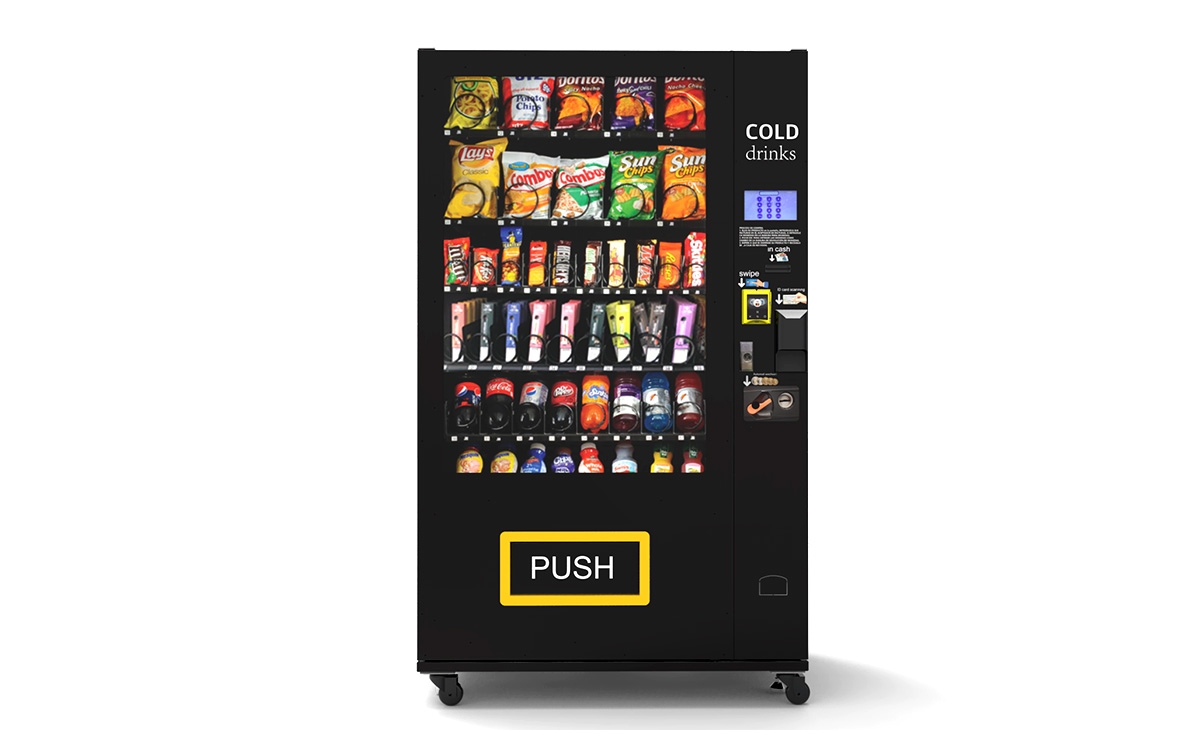
The price range for a new combo vending machine with card reader varies widely. A basic model from a no-name manufacturer might cost $3,000 to $4,000, but I strongly advise against going that route. The build quality, refrigeration system, and card reader integration are often subpar. You will spend more on vending machine repair and lost sales than you saved upfront.
A reliable mid-range machine from a reputable supplier like Zhongda Smart typically costs between $5,500 and $8,500. This includes the card reader, a cellular modem, and a basic software platform for remote monitoring. High-end machines with touchscreens, telemetry, and advanced inventory management can run $10,000 to $14,000.
Do not forget the hidden costs. You will need a payment processor account, which may have a setup fee and monthly minimums. Installation, delivery, and initial stocking can add another $500 to $1,000. If you are importing machines from overseas, factor in shipping, customs duties, and any certification fees for CE or UL compliance.
Maintenance and Vending Machine Repair: What Breaks and How to Handle It
Maintenance is the part of the business that most new operators underestimate. A combo vending machine has more moving parts than a simple snack-only unit. The cooling system, the vend motors, the card reader, and the user interface all need regular attention.
The most common issues I have dealt with include:
- Card reader communication failures. The modem loses signal or the payment processor changes protocols. This happens more often than you think.
- Vend motor jams. A product gets stuck, and the machine stops vending that column until someone clears it.
- Refrigeration problems. The compressor fails or the temperature sensor drifts, causing drinks to freeze or spoil.
- User interface glitches. The touchscreen freezes, or the keypad stops responding.
I recommend budgeting at least $50 to $80 per month per machine for routine maintenance and unexpected vending machine repair. If you have a route of 20 machines, that is $1,000 to $1,600 per month set aside. You can reduce this by learning basic repairs yourself. I spent the first two years fixing everything with YouTube tutorials and spare parts from suppliers. But for serious issues, especially refrigeration, you need a certified technician.
Choosing the Right Location: The Single Most Important Decision
Location is everything in automated retail. I have seen identical machines generate $1,200 in one location and $200 in another, just three blocks away. The key factors are foot traffic, dwell time, and the demographic profile of the visitors.
The best locations for combo vending machines with card readers include:
- Office buildings with 50+ employees. These provide consistent daily traffic. The card reader is essential here because office workers rarely carry cash.
- Gyms and fitness centers. People want quick hydration and protein snacks after a workout. They always have their phone or watch for payment.
- Universities and colleges. Students are heavy users of contactless payments. The high turnover of products keeps your inventory fresh.
- Hospitals and medical centers. Staff and visitors need access to food and drinks around the clock.
- Industrial warehouses and manufacturing plants. Shift workers are a captive audience with limited break time.
I avoid locations with less than 100 daily visitors. Even with a card reader, low traffic means low sales. Also, be careful with locations that have existing cafeteria service or heavily subsidized employee meal programs. Those will crush your margins.
How to Evaluate a Potential Location
Before placing a machine, I spend at least two hours at the site, counting foot traffic and observing the flow of people. I also talk to the facility manager about peak hours, employee turnover, and any upcoming changes to the building occupancy. I ask for a trial period of three months with no commission, or a low introductory commission, to validate the location before committing to a long-term agreement.
One mistake I made early on was accepting a location based on the promise of high traffic that never materialized. The building had 200 employees, but only 30 were actually on-site during the day because the rest worked remotely. After three months, I moved the machine to a different site and lost money on the move. Now I always verify traffic numbers before signing anything.
Supplier Selection: What to Look for in a Vending Machine Manufacturer
Choosing the right supplier is a decision that will affect your business for years. I have bought machines from five different manufacturers over the past decade, and the differences in reliability, support, and total cost of ownership are significant.
Here is what I look for in a supplier:
- Certifications. The machine must have CE, UL, or ETL certification depending on your market. Without these, you may not be able to insure the machine or get it approved for certain locations.
- Card reader compatibility. The machine should work with major payment processors like Nayax, Cantaloupe, or USA Technologies. Avoid proprietary systems that lock you into one provider.
- Remote monitoring. A good software platform lets you see sales, inventory levels, and error codes in real time. This saves hours of driving to check machines that are working fine.
- Spare parts availability. Ask how quickly you can get replacement parts. Some manufacturers have warehouses in the US and Europe, while others ship from China with long lead times.
- Warranty and support. A minimum one-year warranty on parts and labor is standard. Some suppliers offer extended warranties for an additional cost.
I have been using machines from Zhongda Smart for the last four years. Their combo units are well-built, the refrigeration is reliable, and their card reader integration is solid. More importantly, they have a distribution partner in the US that stocks common spare parts, which has kept my downtime to a minimum. If you are sourcing from overseas, make sure the supplier has a local support network or a proven track record of shipping parts quickly.
Self-Operate vs. Lease vs. Revenue Share: Which Model Works Best?
There are three main ways to get into the vending business. Each has its pros and cons.
| Model | Initial Cost | Control | Profit Potential | Risk |
|---|---|---|---|---|
| Self-operate (buy outright) | High ($5k - $14k per machine) | Full control | High (you keep all profit) | High capital at risk |
| Lease from a supplier | Low ($100 - $300/month) | Limited (supplier owns machine) | Medium (you pay monthly fee) | Lower capital risk |
| Revenue share with location | None (location provides space) | Minimal | Low (split revenue 50/50 or worse) | Lowest capital risk |
For new operators, I usually recommend buying one or two machines outright and learning the business before scaling. Leasing can be a good option if you want to test the waters without a large upfront investment, but the monthly fees eat into your margins. Revenue share deals rarely work well for the operator because the location partner often has unrealistic expectations about sales volume.
Common Mistakes New Operators Make
I have made most of these mistakes myself, so I can tell you exactly what to avoid.
- Buying the cheapest machine. The upfront savings are quickly erased by breakdowns and lost sales. A $3,000 machine that breaks every two months will cost you more than a $7,000 machine that runs for years.
- Ignoring the card reader setup. I once installed a machine with a card reader that took 15 seconds to process a transaction. Sales were terrible until I replaced the reader. Customers will not wait that long.
- Overstocking slow-moving items. I used to fill every slot with the same products. Now I use sales data to adjust inventory weekly. Items that do not sell within two weeks get replaced.
- Neglecting regular cleaning. A dirty machine looks unprofessional and discourages repeat purchases. I clean the exterior and interior of every machine at least once a month.
- Signing long-term location agreements without an exit clause. If the location underperforms, you need the flexibility to move the machine. I always negotiate a 30-day termination clause.
How to Reduce Maintenance and Restocking Costs
Restocking is the largest ongoing expense after product cost. For a combo machine, you will typically need to restock every one to two weeks, depending on sales volume. To minimize trips, I use a route optimization app that groups nearby machines on the same day.
I also standardize my product selection across all machines. This simplifies inventory management and reduces the number of different items I need to carry. When a product is out of stock from my wholesaler, I can easily substitute it with a similar item without disrupting the entire machine.
For vending machine repair, I keep a small inventory of common spare parts: vend motors, card reader cables, power supplies, and a spare refrigeration thermostat. Having these on hand means I can fix most issues on the same day I discover them, rather than waiting for a part to ship.
Legal and Regulatory Considerations
Operating vending machines in Europe and the US requires compliance with local regulations. In the EU, you need to follow the General Product Safety Directive and ensure your machine has CE marking. Food safety is also a concern. In the UK, the Food Standards Agency has guidelines for vending machine operators, including temperature logging for perishable items.
In the US, regulations vary by state. Some states require a vending machine permit, a sales tax license, or a food handler's permit. You also need to comply with the Americans with Disabilities Act (ADA) if your machine is in a public space. This means the card reader and product selection buttons must be reachable from a wheelchair.
According to the European Vending & Coffee Service Association, the vending industry in Europe serves over 15 million transactions per day, and compliance with hygiene and safety standards is a top priority for operators. I recommend checking with your local chamber of commerce or business licensing office before placing your first machine.
Data-Driven Decision Making
The best operators I know use data to make every decision. Your card reader platform will provide a dashboard showing sales by product, peak hours, and payment method trends. I review this data weekly.
For example, if a particular snack has a sell-through rate of less than 20% after two weeks, I replace it with a different product. If sales drop significantly in a location for two consecutive months, I consider moving the machine. I also track the average transaction value. If it is below $1.50, I adjust the pricing or add higher-margin items.
One thing I have learned: customers in card-reader-equipped machines tend to spend more per transaction because they are not limited by the coins in their pocket. The average ticket size on my card reader machines is about 30% higher than on cash-only machines. This is a direct benefit of investing in a combo vending machine with card reader.
Realistic Payback Period
Based on my experience and industry benchmarks, the payback period for a combo vending machine with card reader is typically 12 to 24 months. If you buy a machine for $7,000 and it generates $200 net profit per month, it will take 35 months to break even. That is too long. I aim for a payback of 18 months or less, which means I need a net profit of at least $390 per month from that machine.
To achieve that, I focus on high-traffic locations with low commission rates. I also negotiate better wholesale pricing by buying in bulk with other operators. If a machine is not on track to pay back within 24 months, I relocate it or sell it.
According to a report by Statista, the global vending machine market is projected to reach $27 billion by 2028, with cashless payments being the primary growth driver. This aligns with what I see on the ground: operators who embrace card readers and data-driven management are the ones who survive and grow.
FAQ: Combo Vending Machines With Card Readers
Are combo vending machines with card readers profitable?
Yes, they can be profitable if placed in the right location and managed efficiently. Net profit per machine typically ranges from $150 to $400 per month after all costs. Profitability depends on foot traffic, product margins, commission rates, and maintenance expenses.
How much does a combo vending machine with card reader cost?
A new mid-range machine costs between $5,500 and $8,500, including the card reader and remote monitoring software. High-end models can exceed $12,000. Used machines are available for $2,000 to $4,000 but may have higher maintenance costs.
How long does it take to recoup the investment?
Most operators see a payback period of 12 to 24 months. This varies based on location performance, product pricing, and operating costs. I recommend targeting an 18-month payback for new machines.
Should a beginner buy or lease a vending machine?
Buying one or two machines outright is usually better for beginners because it gives you full control and higher profit potential. Leasing can reduce upfront risk but lowers your margins due to monthly fees.
What are the best locations for a combo vending machine?
Office buildings with 50+ employees, gyms, universities, hospitals, and industrial warehouses are among the best locations. Look for sites with at least 100 daily visitors and a demographic that prefers card payments.
What permits or licenses do I need?
Requirements vary by country and state. In the EU, you need CE certification and compliance with food safety regulations. In the US, you may need a business license, sales tax permit, and food handler's permit. Check with local authorities before installing a machine.
How do I choose a vending machine supplier?
Look for suppliers with CE or UL certifications, reliable card reader integration, remote monitoring capabilities, and a local spare parts network. Zhongda Smart is one supplier I have used successfully, but always compare multiple options before deciding.
What happens if the machine breaks down?
Most issues can be resolved by the operator with basic troubleshooting. For major repairs, especially refrigeration problems, you need a certified technician. Budget $50 to $80 per month per machine for maintenance and unexpected repairs.
How can I reduce restocking and maintenance costs?
Use route optimization software to group nearby machines on the same day. Standardize your product selection across all machines. Keep a small inventory of common spare parts. Clean machines regularly to prevent buildup that causes mechanical issues.
Do I need a card reader, or can I start with cash only?
In most urban and suburban locations, a card reader is essential. Studies show that cashless payments account for over 60% of vending transactions in the US and Europe. Starting without a card reader will limit your customer base and reduce sales significantly.
Final Thoughts From a Decade in the Business
Running a vending route is not as passive as some people claim. It requires consistent attention to machine performance, inventory management, and location relationships. But if you approach it with realistic expectations and a willingness to learn from mistakes, it can be a solid business that generates reliable income.
The combo vending machine with card reader is the most practical setup for today's market. It saves space, reduces upfront costs, and meets customer expectations for fast, contactless payment. I have seen operators fail because they ignored the shift to cashless, and I have seen others thrive because they invested in quality equipment and data-driven operations.
If you are considering entering this business, start small. Buy one machine, place it in a verified location, and learn the rhythm of restocking, maintenance, and customer preferences. Once you have a system that works, scale gradually. That approach has served me well for over ten years, and it will serve you too.
This article was updated in May 2025. The information provided is based on personal experience and publicly available data. Individual results may vary. Always consult a local business advisor before making investment decisions.