The Complete Guide to China Vending Machine Supplier Opportunities and Risks
After a decade of placing, breaking, fixing, and occasionally pulling my hair out over vending machines across North America and Europe, I can tell you one thing with certainty: the equipment itself is rarely the problem. The real challenge is figuring out who to buy from, where to put the machine, and whether the numbers actually add up. If you are researching a China vending machine supplier, you are already asking the right questions. The Chinese manufacturing ecosystem offers the widest range of price points and configurations in the world, but it also comes with a steep learning curve. This guide walks you through the opportunities, the hidden risks, and the practical steps I have learned from years of importing, deploying, and servicing machines sourced from Chinese factories.
Why the Chinese Market Matters for Vending Operators
China is not just a low-cost alternative. It is the largest manufacturing hub for automated retail equipment globally. Factories in Guangdong, Zhejiang, and Jiangsu produce everything from basic snack spirals to sophisticated robotic coffee brewers and refrigerated fresh-food units. If you are an operator looking to scale beyond a handful of machines, sourcing from China can cut your per-unit hardware cost by 40 to 60 percent compared to equivalent European or American brands.
But price is only one part of the equation. The real advantage lies in variety. Need a machine that accepts 20 different payment systems? A unit with a heated compartment for sandwiches and a frozen section for ice cream? A compact model that fits into a 60-centimeter-wide corridor? Chinese suppliers will build it. The challenge is separating the reliable manufacturers from the ones who ship machines that break within three months.
Understanding the Real Cost of a China Vending Machine Supplier
Let me give you a realistic breakdown based on my own import records and conversations with other operators. These figures are estimates and will vary depending on configuration, quantity, and shipping conditions.
| Machine Type | Typical FOB Price (USD) | Shipping & Customs (per unit) | Estimated Total Landed Cost |
|---|---|---|---|
| Basic snack & drink combo | $1,200 – $2,000 | $400 – $700 | $1,600 – $2,700 |
| Refrigerated fresh food machine | $2,500 – $4,000 | $600 – $1,000 | $3,100 – $5,000 |
| Smart coffee vending machine | $3,000 – $5,500 | $800 – $1,200 | $3,800 – $6,700 |
| Large multi-shelf with touchscreen | $4,500 – $7,000 | $1,000 – $1,500 | $5,500 – $8,500 |
These prices assume you are ordering at least 10 to 20 units. Single-unit orders will cost significantly more per machine because suppliers add handling fees and higher freight rates. I have seen operators pay nearly double the per-unit price for a single test machine.
How I Evaluate a Chinese Vending Machine Factory
I have visited over a dozen factories in person. I have also been burned by two that looked great on Alibaba but delivered machines with substandard wiring and non-compliant refrigeration systems. Here is what I check before signing any agreement.
Certifications and Compliance
If you are placing machines in Europe, you need CE marking. If you are in the United States, UL or ETL certification is critical for insurance and local health department approval. Many Chinese suppliers will tell you their machines are "CE compliant." That is not the same as having a valid CE certificate issued by a recognized third-party testing body. Ask for the certificate number and verify it with the issuing agency. I learned this the hard way when a shipment was held at customs in Rotterdam for three weeks because the documentation was incomplete.
Payment System Integration
One of the most overlooked issues is payment compatibility. A machine built for the Chinese domestic market typically uses Alipay or WeChat Pay. You need a telemetry system and card reader that works with local payment processors in your target country. Make sure the supplier offers a compatible cashless payment module or at least provides the interface specifications so you can retrofit your own. I recommend asking for MDB (Multi-Drop Bus) compatibility as a standard feature.
Spare Parts and After-Sales Support
This is where many China vending machine supplier relationships fall apart. The factory might sell you a machine, but if the compressor fails six months later, will they ship a replacement quickly? I have found that suppliers with a dedicated export department and a local distributor or service partner in your region are far more reliable. Zhongda Smart, for example, has a structured export process and provides technical documentation in English, which saves weeks of back-and-forth when troubleshooting.
Opportunities: Where Chinese Machines Shine
Chinese vending machines are not perfect for every scenario, but they excel in specific contexts. Here is where I have seen them perform best.
High-Volume, Low-Margin Locations
Factories, warehouses, and logistics hubs often have hundreds of employees who need quick access to snacks and drinks. The margins per item are thin, but the volume is high. A lower-cost machine from a Chinese supplier allows you to break even faster because your initial capital outlay is smaller. I placed 12 machines in a distribution center near Lyon, and the payback period was 14 months, compared to 22 months for similar locations with premium-brand machines.
Niche and Custom Applications
Need a machine that dispenses PPE, electronic accessories, or even fresh flowers? Chinese manufacturers are more willing to customize than their Western counterparts. I worked with one supplier to modify a standard snack machine to hold small hardware kits for a construction site. The factory added adjustable shelf dividers and a different vend motor configuration at no extra design fee. Try getting that level of flexibility from a major European brand without paying a premium.
Emerging Markets in Europe
Countries like Poland, Romania, and Hungary have growing automated retail sectors but limited local manufacturing. Importing from China and distributing within these markets can be a profitable niche. The lower labor costs in these regions also mean that vending machine repair services are affordable, which offsets the higher maintenance frequency of budget machines.
Risks You Cannot Ignore
I have seen operators go bankrupt because they underestimated the risks. Let me be blunt about the most common pitfalls.
Quality Inconsistency
Even within the same factory, quality can vary between production batches. I once ordered 30 machines from a supplier I had used for two years. The first 20 were solid. The last 10 had door alignment issues and cooling problems. The factory blamed it on a "temporary component shortage" and offered a 5 percent discount on the next order. That does not help when you have machines sitting idle in a warehouse.
To mitigate this, always request pre-shipment inspection from a third-party agency like SGS or Bureau Veritas. It costs around $300 to $500 per inspection but can save you thousands in replacement parts and lost revenue.
Software and Telemetry Limitations
Chinese machines often come with proprietary software that is not compatible with popular vending management platforms like Nayax, Cantaloupe, or VendSys. You might have to use the supplier's own telemetry system, which can be less reliable and harder to troubleshoot. I had one supplier whose cloud platform went offline for 48 hours during a holiday period. I could not remotely check inventory or sales data. If remote monitoring is critical to your operation, confirm integration capabilities before ordering.
Hidden Costs in Shipping and Customs
The FOB price is only the beginning. You will pay for ocean freight, insurance, customs clearance, import duties, VAT, and inland transportation. In Europe, import duties on vending machines typically range from 2 to 4 percent, but VAT can be 20 percent or higher depending on the country. I have seen operators underestimate these costs by 30 percent or more, which completely destroys their projected return on investment.
Location Selection: The Single Most Important Decision
You can buy the best machine in the world, but if it is in the wrong place, it will lose money. Over the years, I have developed a simple evaluation framework for potential locations.
Minimum Foot Traffic Requirements
Based on my experience, a snack and drink machine needs at least 150 to 200 people passing by per day to generate meaningful revenue. For a coffee machine, the threshold is lower, around 100 people, because the average transaction value is higher. I track foot traffic using a simple manual counter for three days at different times before making a decision. If the numbers do not meet these thresholds, I walk away.
Understanding the Customer Profile
Not all traffic is equal. A machine in a hospital staff break room will perform differently than one in a student common area. Hospital staff tend to buy healthier snacks and coffee. Students buy chips, candy, and energy drinks. I adjust my product mix based on the audience, and I change it quarterly based on sales data. If I see a product that has not sold in two weeks, I replace it immediately.
Rent and Revenue Sharing
Some locations charge a flat monthly rent. Others ask for a percentage of sales. I generally prefer a revenue share of 10 to 15 percent over a fixed rent, because it reduces my risk if the location underperforms. However, if a location has guaranteed high traffic, a fixed rent can be cheaper in the long run. I negotiate these terms before placing any machine.
Operational Costs You Need to Budget For
Many new operators focus only on the machine cost and forget about ongoing expenses. Here is what I budget per machine per month based on my current fleet of 85 units across France and Germany.
| Cost Category | Estimated Monthly Cost (EUR) | Notes |
|---|---|---|
| Product restocking | €150 – €400 | Depends on machine size and turnover |
| Electricity | €20 – €50 | Refrigerated units cost more |
| Payment processing fees | €15 – €40 | 2-5% of transaction value |
| Telemetry and software | €10 – €25 | Per machine per month |
| Maintenance and repairs | €30 – €80 | Higher for budget machines |
| Location rent or revenue share | €50 – €200 | Varies widely |
Total monthly operating cost typically falls between €275 and €795 per machine. If your gross profit per transaction is around 30 to 40 percent, you need monthly sales of at least €700 to €2,000 just to cover costs. Anything above that is your profit.
How to Handle Vending Machine Repair and Maintenance
If you are importing from China, you cannot rely on local repair shops to have spare parts on hand. I learned to stock a basic inventory of common failure components: vend motors, control boards, power supplies, door sensors, and refrigeration thermostats. I keep these in a central warehouse and ship them to my technicians as needed.
For operators who do not want to manage repairs themselves, I recommend building a relationship with a local vending machine repair service before you import your first unit. Ask them if they are willing to work on Chinese-made equipment. Some will refuse. Others will charge a premium. Knowing this upfront saves you from scrambling when a machine goes down.
Sales Data and Product Rotation
I rely heavily on sales data to make decisions. If a machine is not generating at least €300 per month after three months, I either change the product mix or move the machine. I have moved machines that were losing money to a new location and seen their revenue triple within weeks. The machine itself was fine. The location was wrong.
I also track which products sell and which sit on the shelf. I remove slow-moving items after two restocking cycles. This might seem obvious, but I have seen operators fill their machines with products they personally like rather than products that sell. Let the data guide you, not your preferences.
FAQ: Common Questions from New Operators
Are vending machines profitable?
They can be, but profitability depends on location, product margins, and operational efficiency. A well-placed machine can generate €500 to €1,500 in monthly revenue with a 30 to 40 percent gross margin. However, many machines fail because they are placed in low-traffic areas or poorly maintained. Based on my experience, about 60 percent of my machines are profitable, 20 percent break even, and 20 percent lose money and need to be moved.
How much does a vending machine cost from a China vending machine supplier?
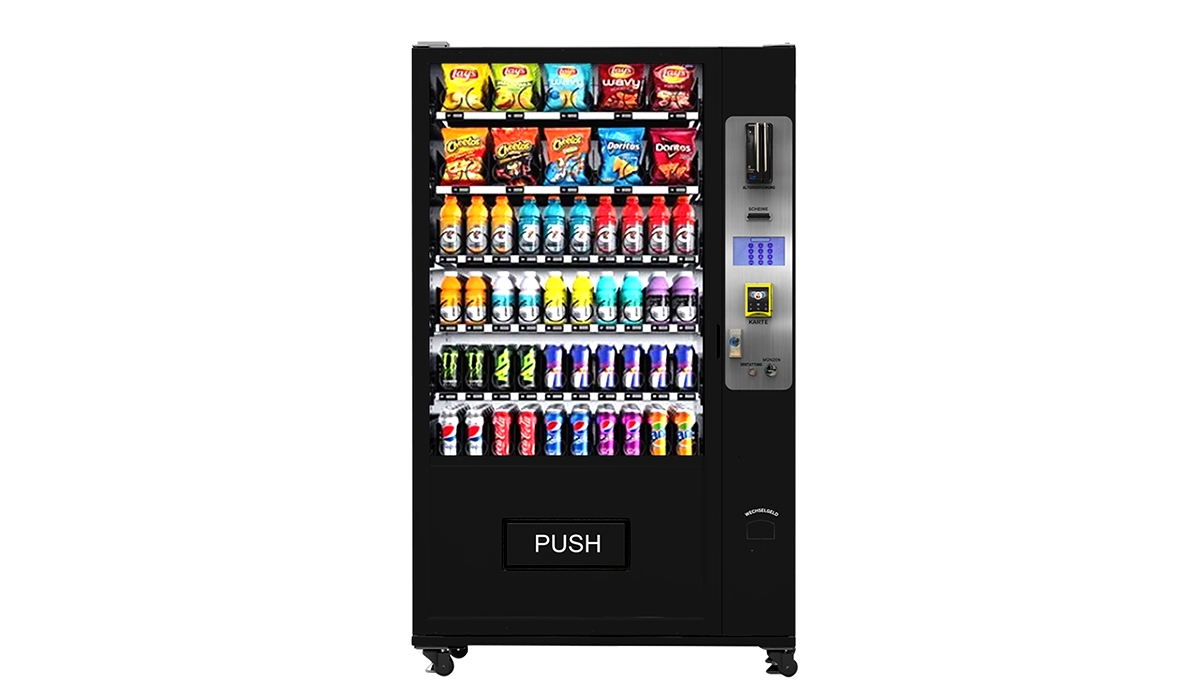
Landed costs typically range from €1,500 for a basic snack model to €8,000 for a large touchscreen machine with refrigeration. These costs include shipping, customs, and taxes. Single-unit orders are significantly more expensive per machine.
How long does it take to recoup the investment?
In my experience, the payback period ranges from 12 to 24 months for well-placed machines. Machines in high-traffic locations can pay back in 8 to 10 months. Machines in poor locations may never pay back. I always calculate a worst-case payback of 30 months before committing to a location.
Should a beginner buy or lease a vending machine?
If you are new, I recommend buying a single machine to learn the operational ropes. Leasing often comes with restrictive contracts and higher long-term costs. Once you understand restocking, maintenance, and location dynamics, you can scale by buying in bulk from a China vending machine supplier.
Where should I place my first machine?
Start with locations you already have access to, such as your workplace, a friend's business, or a local gym. This reduces rent costs and gives you a controlled environment to learn. Avoid high-rent locations like shopping malls until you have proven your operational model.
What permits do I need?
Requirements vary by country and region. In most European countries, you need a business license, food safety registration if you sell perishable items, and electrical compliance certification for the machine. Check with your local chamber of commerce or trade authority. In France, for example, you must register with the Direction Départementale de la Protection des Populations if you sell food products.
How do I choose a reliable supplier?
Look for suppliers with export experience, valid third-party certifications, and a willingness to provide technical documentation in English. Request references from other international buyers. Visit the factory if possible, or hire a local inspection agent. Zhongda Smart is one example of a supplier that provides clear export processes and CE documentation, which reduces the risk of customs delays.
What happens when the machine breaks down?
If you have stocked common spare parts, you can often fix it yourself or hire a local technician. If you do not have parts, you may face weeks of downtime while waiting for shipments from China. I recommend keeping a minimum of one spare control board and one spare refrigeration unit for every 10 machines in your fleet.
How can I reduce restocking and maintenance costs?
Optimize your route planning to minimize travel time between machines. Use telemetry to monitor inventory levels and only visit machines that need restocking. Standardize your machine models so you can carry fewer types of spare parts. I reduced my maintenance costs by 25 percent after consolidating to two machine models from the same supplier.
Structured Data for FAQ
Final Thoughts from the Field
Importing vending machines from China is not a shortcut to easy money. It is a business that requires patience, attention to detail, and a willingness to learn from mistakes. The opportunities are real, especially if you are willing to put in the work on location selection, supplier vetting, and ongoing maintenance. But the risks are equally real. I have seen operators lose their entire investment because they trusted a supplier without verification, or placed machines in locations that looked busy but did not convert to sales.
If you are serious about this business, start small. Buy one or two machines from a reputable China vending machine supplier. Learn the operational rhythm. Track every cost and every sale. Once you have a system that works, scale gradually. The operators who succeed in this industry are not the ones who buy the cheapest machines. They are the ones who understand that the machine is just a tool. The real business is in location management, product selection, and consistent service.
This guide reflects my personal experience and the lessons I have learned over a decade of operating vending machines in Europe and North America. Your results will vary based on your market conditions, operational discipline, and the specific agreements you negotiate. Always verify current regulations and costs with local authorities and professional advisors before making investment decisions.
This article was updated in October 2023.