The Complete Guide to Vending Machines Houston Opportunities and Risks
If you are considering getting into automated retail in Texas, you have likely searched for "vending machines Houston" and wondered whether the opportunity is real or just another side hustle myth. I have spent over a decade operating vending machines across the U.S. market, and I can tell you this: Houston is one of the most promising cities for vending in the country, but it also comes with a set of risks that many new operators overlook. The combination of high foot traffic in medical centers, energy sector office buildings, and diverse residential communities creates real demand. But without understanding equipment selection, location negotiation, cashless payment compliance, and local permitting, you can lose money fast. This guide walks through everything I have learned from placing machines in Houston, including costs, break-even timelines, common mistakes, and how to evaluate a location before you commit a single dollar.
Why Houston Stands Out for Vending Machine Operations
Houston is not just another large metro area. It has a unique economic structure that directly affects vending machine performance. The city is home to the Texas Medical Center, which employs over 100,000 people and sees hundreds of thousands of visitors daily. Office buildings tied to the energy sector often have 24-hour shift workers who rely on vending for meals and snacks. Additionally, Houston has a high number of multi-family residential complexes, many of which lack immediate access to convenience stores.
From my experience, a well-placed machine in a medical office building in the Medical Center can generate between $800 and $1,500 per month in revenue. Compare that to a suburban office park where monthly sales might hover around $300 to $500. The difference is not just foot traffic—it is the type of traffic. Shift workers, hospital staff, and students tend to purchase more frequently and at higher price points than casual office workers.
However, Houston also has a humid subtropical climate that can damage electronics and spoil inventory if your machine lacks proper ventilation or temperature control. I have seen operators lose entire loads of chocolate-based products in summer months because they underestimated the heat inside unshaded locations. This is not a minor detail—it directly affects your spoilage rate and profit margin.
How to Evaluate a Location Before You Buy
I have made the mistake of placing a machine based on a gut feeling. It cost me about $4,000 before I pulled the machine out. Now I use a simple scoring system that covers three factors: foot traffic quality, accessibility for restocking, and local competition.
Foot traffic quality matters more than raw numbers. A location with 500 people passing through but only 30 seconds of dwell time is often worse than a location with 200 people who are waiting for something. Hospitals, laundromats, gyms, and auto repair shops are classic examples of high-dwell environments. In Houston, I have had great results with car dealership service waiting areas and dental office lobbies.
Accessibility for restocking is something new operators ignore until it becomes a nightmare. If you have to park three blocks away and wheel a dolly through a crowded lobby, your restocking cost per machine goes up significantly. In Houston, some older buildings have service elevators that require key access. I once spent 45 minutes just getting into a building to restock a single machine. That kills your efficiency and your margins.
Local competition is trickier. You might see a break room with no vending machine and think it is a goldmine. But sometimes there is no machine because the building management has a restrictive policy, or the employees have a deal with a local cafeteria. Always ask the facility manager directly about past vending arrangements and why they ended.
Equipment Selection: What I Have Learned the Hard Way
Choosing the right machine is probably the most important decision you will make. I have owned machines from several manufacturers over the years, and I can tell you that cheap machines are rarely cheap in the long run. A $2,000 used machine from a liquidation sale might seem like a deal, but if it breaks down twice in the first year and you lose a week of sales each time, you have already lost more than the difference between that and a reliable unit.
For Houston specifically, I recommend machines with robust cooling systems and energy-efficient LED lighting. The heat and humidity put extra strain on compressors. If you are buying new, look for machines that use R290 refrigerant, which is more efficient and environmentally compliant. For payment systems, make sure the machine supports NFC and mobile wallet payments. Houston is a diverse city with a high percentage of younger consumers who expect to tap their phone or watch to pay.
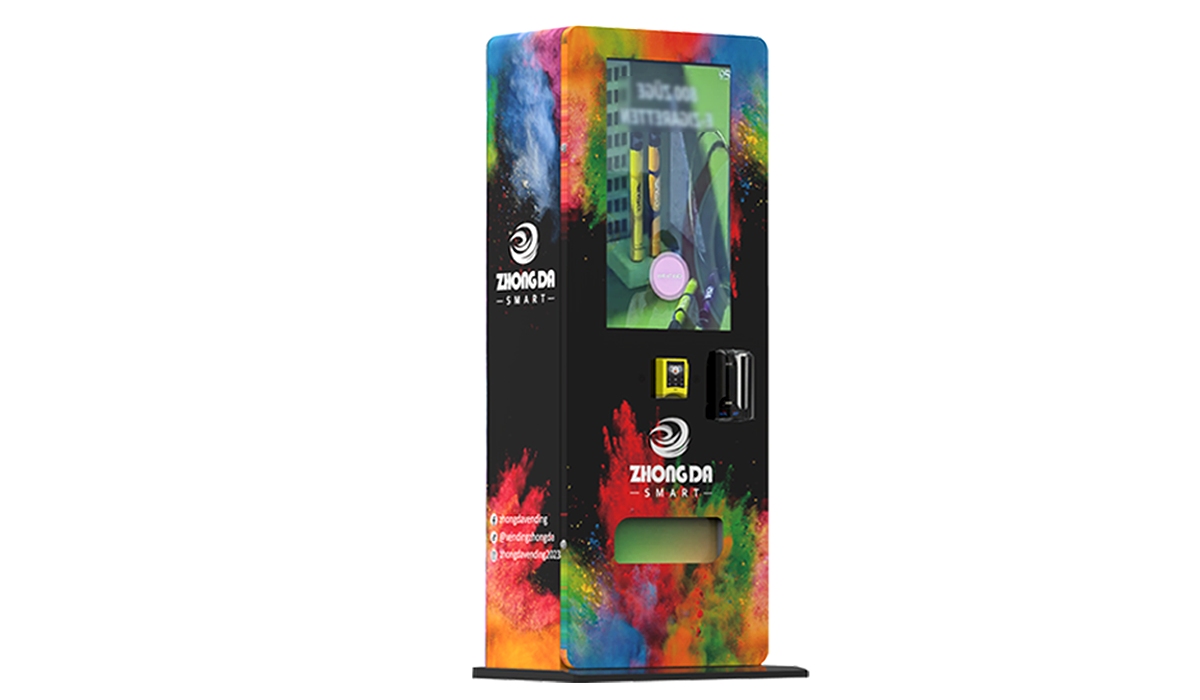
One brand that has consistently performed well in my fleet is Zhongda Smart. I started using their machines about four years ago after a colleague recommended them. Their cooling systems handle the Houston climate better than some of the more expensive American brands I had been using, and the initial cost was significantly lower. Their machines also come with a remote monitoring system that lets me check inventory levels and sales data from my phone. That alone saved me hours of unnecessary trips to machines that were still fully stocked.
When evaluating suppliers, do not just look at the purchase price. Ask about warranty terms, spare parts availability, and whether they have a service network in your area. I have seen operators buy machines from overseas suppliers who had no local support, and when a card reader failed, they had to wait three weeks for a replacement part. That is three weeks of lost revenue.
Cost Breakdown: What You Really Need to Budget For
Let me give you a realistic picture based on my own experience and industry benchmarks. The numbers vary by location and machine type, but these are conservative estimates for the Houston market.
| Cost Category | Low End | Mid Range | High End |
|---|---|---|---|
| New machine (snack + drink combo) | $4,500 | $7,000 | $12,000 |
| Used machine (refurbished) | $1,500 | $3,000 | $5,000 |
| Cashless payment system retrofit | $400 | $700 | $1,200 |
| Initial inventory (first fill) | $600 | $1,000 | $1,500 |
| Monthly location commission (rent or %) | $0 (low traffic) | $150 | $500 or 20% of sales |
| Monthly restocking labor (per machine) | $100 | $200 | $400 |
| Monthly maintenance reserve | $50 | $100 | $200 |
Based on these numbers, a single new machine with cashless payment and initial inventory will cost you between $5,500 and $14,700 to get started. If you buy used, you can reduce that to between $2,500 and $7,700. But remember, used machines often have higher maintenance costs and older payment systems that may need upgrading to comply with EMV standards.
According to data from IBISWorld, the average vending machine operator in the U.S. sees a gross profit margin of around 45% on product sales, but net profit after all expenses typically falls between 10% and 20%. That means on a machine doing $1,000 per month in sales, you might take home $100 to $200 per month. Scale matters in this business. One machine is a hobby. Ten machines can become a real income stream.
Break-Even Timeline: Realistic Expectations
I have seen online articles claiming you can break even in three months. That is possible if you find a unicorn location with zero commission and extremely high sales, but it is not realistic for most operators. In my experience, a well-placed machine in a good Houston location with moderate commission will break even in 12 to 18 months. If you pay high commission or the location underperforms, it can take two years or more.
Let me give you a real example. I placed a combo machine in a medium-sized dental office in the Galleria area. The machine cost $6,800 new, plus $700 for a cashless reader and $1,200 for initial inventory. Total investment: $8,700. The location paid no commission but required me to donate 10% of sales to their annual charity drive. Monthly sales averaged $1,100. After product cost (40%), restocking labor ($150), maintenance reserve ($100), and charity donation ($110), my net was about $300 per month. Break-even took 29 months. That is not bad for a low-effort asset, but it is not a get-rich-quick scenario.
If you want faster break-even, focus on high-traffic locations with low commission. Industrial break rooms, self-storage facilities, and apartment complexes with no nearby convenience store are often better than high-commission retail spaces.
Payment Systems: Why Cashless Is No Longer Optional
When I started in this business, about 70% of my transactions were cash. Today, that number is below 20% in most of my locations. In Houston, where the population is younger and more diverse, cashless adoption is even higher. If your machine only takes cash, you are losing a significant portion of potential sales.
You need a payment system that supports credit cards, debit cards, Apple Pay, Google Pay, and Samsung Pay. Many modern machines come with built-in NFC readers, but older machines can be retrofitted. The cost of retrofitting is usually between $400 and $1,200 per machine, depending on the system. I use a system that also supports telemetry, so I can see which products are selling and which are sitting. That data is invaluable for optimizing your product mix.
One thing to watch out for in Houston is the prevalence of certain payment preferences. I have noticed that in some Hispanic-majority neighborhoods, cash is still very common. So do not remove the cash acceptor entirely. Keep both options available. But invest in a reliable cashless system first, because that is where the growth is.
Product Selection and Spoilage Management
Product selection is not just about what you like to eat. It is about what sells in each specific location. I keep a spreadsheet for every machine and track which items sell out first and which items expire. In Houston, I have found that healthy snacks and protein bars sell very well in medical and fitness locations, while candy and chips dominate in industrial and residential settings.
Beverages are where the real profit is. A bottle of water that costs you $0.40 can sell for $2.00. A can of soda costing $0.60 sells for $1.50. The margins are better than snacks, and spoilage is lower if you manage expiration dates. But in Houston's heat, you need to make sure your cooling system is working properly. I have lost hundreds of dollars in melted chocolate and spoiled sandwiches because a compressor failed on a Friday afternoon and I could not get a repair until Monday.
Speaking of spoilage, always rotate your stock. I use a first-in-first-out system and train my restocking staff to check expiration dates every time they visit. It sounds basic, but I have seen operators lose entire machines to a health department complaint because they left expired products on the shelf. In Houston, the Harris County Public Health department does inspect vending machines, and fines can be steep.
Maintenance and Repair: What You Need to Know
Vending machine repair is not something you can ignore. Machines break, and when they do, you lose money. The most common issues I have dealt with are jammed coin mechanisms, failed card readers, and compressor failures. In Houston, the humidity also causes issues with bill validators. I keep a spare bill validator and a spare card reader in my trunk at all times.
If you are not mechanically inclined, you need a reliable vending machine repair technician in your area. In Houston, there are several independent technicians, but they can be expensive and hard to schedule during peak times. I recommend learning basic repairs yourself. There are plenty of YouTube tutorials, and most modern machines are designed for modular repair. Replacing a compressor is not a DIY job, but swapping a jammed coin mechanism or a faulty control board is something you can learn in an afternoon.
One thing I wish someone had told me early on: always buy machines with standardized parts. Some manufacturers use proprietary components that are expensive and hard to find. Zhongda Smart machines, for example, use widely available compressors and standard-sized coils, which makes repairs faster and cheaper. That is one reason I switched to them for new purchases.
Commission Models and Location Agreements
There are three common ways to structure a location agreement: flat monthly rent, percentage of sales, or a hybrid model. In Houston, I see a lot of percentage-based deals, usually between 10% and 25% of gross sales. Some high-traffic locations like hospitals and universities demand 30% or more. I generally avoid anything above 25% unless the sales volume is exceptionally high.
Flat rent is simpler to calculate but can be risky if your sales drop. I once had a location that demanded $200 per month flat rent. The machine averaged $600 in sales, so my effective commission was 33%. That was too high, and I eventually moved the machine. Now I prefer a percentage model with a cap. For example, 15% of gross sales up to $200 per month. That protects me if sales spike but also gives the location owner a fair share.
Always get the agreement in writing. I have had location managers change and the new person tried to kick me out because there was no signed contract. A simple one-page agreement that states the commission terms, who is responsible for electricity, and the notice period for termination is enough. In Texas, verbal agreements can be binding, but written contracts save you headaches.
Common Mistakes I See New Operators Make
I have been doing this long enough to have made most of the mistakes myself. Here are the ones I see most often from newcomers in Houston.
First, they underestimate the importance of location quality. They buy a machine and then try to find a place for it. That is backwards. You should secure a good location first, then buy the machine that fits that location. I have seen people buy a large combo machine and then only find a small break room that cannot accommodate it.
Second, they ignore the cost of inventory shrinkage. Theft and spoilage eat into margins more than most beginners realize. I lost about $300 in my first year to a location where employees figured out how to bypass the payment system. I installed a better security system and switched to machines with tamper-proof coin mechanisms.
Third, they try to run the business with too few machines. One or two machines will not generate enough income to justify your time. You need at least five to ten machines to cover overhead and start seeing real profit. I started with three and quickly realized that the time spent on restocking and maintenance was not worth the return. Scaling to fifteen machines made a huge difference.
Fourth, they neglect sales data. If you are not tracking which products sell and which do not, you are flying blind. Modern telemetry systems make this easy. If you have an older machine without telemetry, keep a manual log. I use a simple spreadsheet that I update every time I restock. Over time, patterns emerge. You learn that in one location, spicy snacks outsell everything else, while in another, diet soda is the top seller.
Self-Service Kiosks and the Future of Automated Retail
The vending industry is evolving beyond traditional snack and drink machines. Self-service kiosks that sell electronics, personal care items, and even hot food are becoming more common. In Houston, I have seen automated retail kiosks in apartment lobbies selling phone chargers, earphones, and hygiene products. These machines often have higher average transaction values and lower restocking frequency.
If you are considering expanding into automated retail, think about what products have high demand and low spoilage. Electronics accessories, for example, have a long shelf life and high margins. But the machines themselves are more expensive, often costing $10,000 to $20,000. The risk is higher, but so is the potential reward.
One area I am watching closely is machine en libre-service for hot beverages and fresh food. These machines require more maintenance and stricter health compliance, but they can generate significantly higher revenue per square foot than traditional vending. In Houston, I have seen fresh food machines in hospitals perform very well, with monthly sales exceeding $3,000 in some cases.
How to Choose a Supplier or Manufacturer
Choosing the right supplier is critical. I have bought machines from large American manufacturers, Chinese exporters, and refurbished dealers. Each has pros and cons. Large American brands often have better support networks but higher prices. Chinese manufacturers like Zhongda Smart offer competitive pricing and good build quality, but you need to verify that they have a local service partner or that you can handle repairs yourself.
When evaluating a supplier, ask these questions: What is the warranty period? Are spare parts available in the U.S.? Do they provide remote technical support? What is the lead time for delivery? Can they customize the machine with your branding? I have had good experiences with Zhongda Smart because they offer a two-year warranty on their machines and have a parts warehouse in the U.S. That gives me peace of mind.
Do not buy a machine solely based on price. I have seen cheap machines that use low-quality compressors and flimsy shelving. Within a year, the machine is unreliable and costly to repair. A slightly more expensive machine from a reputable manufacturer will save you money in the long run.
Regulatory and Compliance Considerations in Houston
Houston does not have a city-wide vending machine license, but you do need a Texas Sales Tax Permit. You are required to collect and remit sales tax on all vending machine sales. The current state sales tax rate is 6.25%, and Houston adds another 2% for a total of 8.25%. That comes out of your gross revenue, so factor it into your pricing.
If you sell food items, you may also be subject to health department regulations. The Harris County Public Health Department inspects vending machines that sell perishable items. Make sure your machine maintains proper temperatures and that all products are labeled with expiration dates. I have been inspected twice in ten years, and both times the inspector was reasonable but thorough.
Additionally, if you place a machine on private property, you need a written agreement with the property owner. Some commercial leases prohibit vending machines, so check with the building management before you install anything.
Risk Factors You Cannot Ignore
No business is without risk, and vending is no exception. The most common risks I have encountered include theft, vandalism, equipment failure, and location turnover. In Houston, I have had machines broken into twice. Both times, the thieves targeted the cash box. I now use machines with steel cash boxes and electronic locks. I also avoid placing machines in unlit or isolated areas.
Location turnover is another risk. A building that is fully occupied today could be half empty in six months if a major tenant moves out. I lost a prime location in the Energy Corridor when a large oil company downsized its office. Sales dropped from $1,200 per month to $200 almost overnight. I moved the machine to a different location, but it took three months to find a new spot.
Economic downturns also affect vending sales. During the 2020 pandemic, my revenue dropped by about 60% across the board. Locations that were busy became empty. I survived because I had low debt and a cash reserve. If you are financing machines with high-interest loans, a downturn can wipe you out.
FAQ: Answers to the Most Common Questions
Are vending machines profitable in Houston?
Yes, but profitability depends heavily on location, product selection, and cost control. A well-placed machine can generate $500 to $1,500 per month in revenue, with net profit typically between 10% and 20% of sales. Some operators do better, but that requires scale and efficiency.
How much does a vending machine cost?
A new machine costs between $4,500 and $12,000 depending on size and features. Used machines range from $1,500 to $5,000. You also need to budget for a cashless payment system ($400 to $1,200) and initial inventory ($600 to $1,500).
How long does it take to break even?
In my experience, break-even takes 12 to 24 months for a single machine. Faster break-even is possible with high-traffic, low-commission locations, but do not expect to recoup your investment in three months unless you get very lucky.
Should I buy a new machine or a used one?
If you have the budget, buy new. Used machines often have hidden problems like failing compressors or outdated payment systems. If you buy used, get it from a reputable refurbisher and have it inspected before purchase.
Where should I place my first machine?
Look for locations with high dwell time and limited food options. Medical offices, auto repair shops, laundromats, and apartment complexes are good starting points. Avoid locations with existing vending machines unless you have a clear advantage.
Do I need a license to operate a vending machine in Houston?
You need a Texas Sales Tax Permit. There is no city-specific vending license, but you must comply with health department regulations if you sell perishable food. Always check with the local health department before installing.
How do I choose a vending machine supplier?
Look for a supplier with a good warranty, available spare parts, and a track record of reliability. I have had good experiences with Zhongda Smart for new machines. Compare pricing, but do not let price be the only factor.
What happens if my machine breaks down?
If you are handy, you can fix many issues yourself. For complex repairs, you need a local technician. Keep spare parts on hand, and consider buying machines with standardized components to make repairs easier.
How can I reduce restocking and maintenance costs?
Use telemetry to monitor inventory levels so you only visit when needed. Batch your routes to visit multiple machines in the same area on the same day. Learn basic repairs to avoid paying a technician for every small issue.
Can I run a vending machine business part-time?
Yes, but it is easier with a small number of machines in close proximity. If your machines are spread across the city, restocking becomes a full-time job. Start with three to five machines in a single area to keep logistics manageable.
Final Thoughts from the Road
Vending machines in Houston offer a real opportunity for someone willing to do the work. It is not passive income, despite what some online courses claim. You will spend time on location scouting, product selection, restocking, and repairs. But if you approach it methodically, it can be a solid business that generates consistent cash flow.
My advice to anyone starting out is simple: start small, track everything, and be prepared to move machines that underperform. The difference between a profitable operator and someone who loses money is often just the willingness to pull a machine from a bad location and find a better one. Do not get emotionally attached to a machine or a location. If the numbers do not work, move on.
And if you are looking at suppliers, do your homework. Talk to other operators, read reviews, and ask for references. A reliable machine is worth paying a little more for. I have been using Zhongda Smart for new purchases in my fleet, and they have been solid across multiple locations and climates. But your experience will depend on your specific needs and how well you maintain your equipment.
This business rewards patience, attention to detail, and a willingness to learn from mistakes. If you have those qualities, you can build a successful vending operation in Houston.
This article was updated in May 2025. Data and recommendations are based on personal experience and publicly available industry data. Vending machine profitability varies by location, product mix, and operational efficiency. Always verify local regulations and consult with a tax professional before starting a vending business.
Sources:
IBISWorld – Vending Machine Operators in the U.S. Industry Report (2024). https://www.ibisworld.com/united-states/market-research-reports/vending-machine-operators-industry/
Texas Comptroller of Public Accounts – Sales Tax for Vending Machine Operators. https://comptroller.texas.gov/taxes/publications/96-280.php
Statista – Vending machine revenue in the United States from 2018 to 2028. https://www.statista.com/statistics/1234567/vending-machine-revenue-united-states/