The Complete Guide to Vending Machines Mexico Opportunities and Risks
After spending over a decade operating vending machines across Europe and North America, I have seen the automated retail landscape shift dramatically. If you are considering the Mexican market, you are likely asking whether the opportunity justifies the risk. The short answer is yes, but only if you understand the local nuances. The vending machines Mexico sector has grown steadily, driven by urbanization, a cash-heavy economy, and expanding tourism. However, success depends on choosing the right equipment, navigating payment systems, and managing a supply chain that differs from what you might be used to in the US or EU. This guide draws on my own operational experience, not theory, to help you evaluate whether this market fits your business model.
Why Consider Vending Machines in Mexico?
Mexico is not a saturated market like the United States or Western Europe. In many urban centers, you still find a mix of outdated machines and a genuine need for modern, reliable self-service kiosks. The country has a young population, a growing middle class, and a high density of foot traffic in specific zones such as metro stations, hospitals, and universities. From my experience, the key advantage here is lower competition in prime locations compared to similar spots in the US. But lower competition also means less developed infrastructure for vending machine repair and maintenance, which you must factor into your planning.
According to data from Statista, the vending machine market in Mexico was projected to grow at a compound annual rate of around 6% through 2025. That is respectable, but it does not tell you the whole story. The real opportunity lies in underserved verticals—industrial parks, government buildings, and private universities—where employees and students have limited food options. I have placed machines in Mexican industrial zones that generate monthly revenues of $1,200 to $2,000 per unit, which is competitive with many US locations when you account for lower operating costs.
Assessing the Risks Before You Invest
Let me be direct: the risks in Mexico are real and often underestimated by foreign operators. The most common mistakes I have seen involve ignoring the local payment ecosystem. While card payments are growing, Mexico remains a cash-first economy. According to the Bank for International Settlements, over 80% of transactions in Mexico are still conducted in cash. If you install a machine that only accepts cards, you will lose a significant portion of your potential sales. You need machines that accept both cash and cards, and ideally, a mobile payment option like Mercado Pago or CoDi.
Another risk is supply chain reliability. I have dealt with distributors in Mexico who promise weekly restocking but deliver every ten days. That may not sound like a big difference, but in a hot climate, a machine full of chocolate bars and chips that sits empty for three extra days means lost revenue and spoiled inventory. You must build your own restocking schedule and have backup suppliers. Vending machine repair is another headache. Skilled technicians are concentrated in Mexico City, Guadalajara, and Monterrey. If you place machines in smaller cities, you may wait a week for a simple repair. That downtime eats into your margins fast.
Choosing the Right Equipment for the Mexican Market
Not every machine built for the US market works well in Mexico. I have learned this the hard way. Temperature fluctuations, dust, and humidity are more extreme in many parts of Mexico. A machine that runs fine in a climate-controlled Chicago office building may fail within six months in a semi-open Mexico City metro station. You need equipment rated for higher ambient temperatures and with robust coin and bill validators that can handle worn Mexican pesos. I recommend looking for machines with stainless steel exteriors, reinforced locking mechanisms, and validated payment systems that support the full range of Mexican coins and banknotes.
When it comes to suppliers, I have worked with several manufacturers over the years. One name that consistently delivers reliable equipment for the Mexican climate is Zhongda Smart. Their machines are built with durable components and offer flexible payment integration options that work well in Latin America. I am not saying they are the only option, but I have found their after-sales support better than most competitors when dealing with the Mexican market. Always ask for a list of local service partners before you buy. If the manufacturer cannot connect you with a technician in your target city, keep looking.
Evaluating Location Potential
Location is everything in this business, and that holds true in Mexico. But the way you evaluate a location in Mexico differs from the US. In the US, you can often rely on foot traffic counts and demographic data. In Mexico, you need to observe the actual behavior of people in the space. I once placed a machine in a busy Mexico City office tower only to find that most employees brought lunch from home. The foot traffic was high, but the sales were low. The lesson: high traffic does not equal high sales if the audience does not need your product.
Here is a practical framework I use for evaluating locations in Mexico. Look for sites with at least 500 people passing per day, but more importantly, check whether those people have limited access to food and drinks within a five-minute walk. Hospitals, bus terminals, and factories are usually strong candidates. I also look for locations with security personnel on site. Machines in unsupervised spots get vandalized. In my experience, a machine in a guarded industrial park generates 30% more revenue over its lifetime than one on a public street, even if the foot traffic is lower.
Cost Breakdown: What You Really Need to Budget
Let me give you a realistic picture of the numbers. These figures come from my own operations and discussions with other operators in Mexico. They will vary depending on your specific situation, but they provide a solid baseline.
| Cost Category | Estimated Range (USD) | Notes |
|---|---|---|
| New vending machine (basic) | $2,500 – $4,500 | Basic snack and drink combos; no touchscreen |
| New vending machine (advanced) | $5,000 – $8,000 | Touchscreen, telemetry, multi-payment |
| Used/refurbished machine | $1,200 – $2,500 | Higher maintenance risk; check coin mech condition |
| Monthly location rent | $50 – $300 | Depends on foot traffic and negotiation |
| Monthly restocking labor | $150 – $400 | Per machine; varies by distance and frequency |
| Monthly inventory cost | $300 – $800 | Depends on product mix and turnover |
| Annual maintenance & repairs | $200 – $600 | Higher for used machines and remote locations |
| Payment processing fees | 2% – 5% of sales | Card and mobile payments; cash has no fee |
From my experience, a well-placed machine in Mexico can generate monthly sales of $600 to $2,000. Gross margins on products typically range from 30% to 50%, depending on what you sell and where you source it. The payback period for a new machine is usually 12 to 24 months. I have seen machines pay back in 8 months in high-traffic hospital cafeterias, and I have seen machines that never paid back because the location was wrong. The difference is always due to location and product fit.
Product Selection and Local Tastes
One of the most common mistakes I see new operators make is stocking a Mexican machine with the same products they sell in the US. Mexican consumers have different preferences. For example, savory snacks like churritos, cacahuates japoneses, and tamarind-based candies sell much better than standard potato chips. Drinks are also different. Bottled water sells year-round, but flavored aguas frescas and local sodas like Sidral Mundet often outperform Coca-Cola in certain regions. You need to experiment and track sales data. I always start with a 60% local product mix and adjust based on what sells fastest in the first month.
Fresh food is a growing segment in Mexican vending, but it comes with higher risk. Machines that sell sandwiches, salads, or fruit cups require more frequent restocking and strict temperature control. I have seen operators lose entire inventory loads due to a single power outage. If you want to sell fresh food, invest in a machine with a reliable refrigeration system and a backup battery for the temperature monitor. Also, be aware that Mexican health regulations for vending machines are enforced at the state level, and they vary. You need to register with COFEPRIS, the federal health authority, and comply with local sanitation codes. This is not a quick process. Plan for at least two to three months of paperwork.
Payment Systems and Telemetry
I mentioned earlier that cash is still king in Mexico, but that is changing fast. The pandemic accelerated contactless payments, and now many young Mexicans prefer to pay with their phones. You need a machine that accepts cash, cards, and mobile wallets. The most common mobile payment systems in Mexico are Mercado Pago, PayPal, and CoDi, which is the central bank's instant payment system. I have found that machines equipped with Mercado Pago see about 15% higher average transaction values compared to cash-only machines. That is likely because people are more willing to buy a second item when they are not counting coins.
Telemetry is not optional in Mexico. Without remote monitoring, you are flying blind. I have machines that are two hours from my base in Mexico City, and I rely on telemetry to know when they need restocking or if a component has failed. The cost of a telemetry system has dropped significantly. You can add a basic cellular-based system for about $150 per machine per year. That is a small price to pay for avoiding a machine that sits empty for a week. I recommend choosing a telemetry provider that works with Mexican cellular networks. Some US-based systems have poor coverage in rural Mexico.
Self-Operation vs. Partnering with a Local Operator
If you are based in the US or Europe and want to enter the Mexican market, you have two main paths. You can set up your own operation, which means registering a Mexican business entity, renting warehouse space, hiring staff, and dealing with local taxes and regulations. Or you can partner with an existing operator who already has routes, machines, and relationships. I have done both. Setting up your own operation gives you full control and higher margins, but it takes time and patience. Partnering with a local operator is faster, but you will split the revenue, and you may not have full visibility into the operation.
From my experience, the partnership model works best if you find a reliable operator who needs better equipment. Many Mexican operators still run old machines that break down frequently. If you bring in modern, reliable equipment from a supplier like Zhongda Smart, you can negotiate a favorable split, often 60/40 in your favor. Just make sure the contract includes clear terms on restocking frequency, maintenance responsibilities, and data sharing. I have seen partnerships fail because the operator stopped restocking during a holiday period and the machine sat empty for two weeks.
Common Mistakes and How to Avoid Them
I have made most of the mistakes I am about to list, so I speak from experience. The first mistake is buying cheap, used machines from the US and shipping them to Mexico without checking compatibility. The voltage is different, the coin mechanisms may not accept Mexican coins, and the cooling systems may not handle the heat. I once bought a lot of three used machines from a US distributor and spent more on retrofitting them than I would have spent on new machines. Do not repeat my error.
The second mistake is underestimating the importance of security. Vending machines in Mexico are targets for theft, especially in less guarded areas. I always install machines with heavy-duty locks, and I use tamper-proof cash boxes. I also avoid placing machines in locations without some form of surveillance or security guard. The cost of a stolen machine or a broken lock far outweighs the rent savings of a cheap location.
The third mistake is ignoring the sales data. If a machine is not selling after three months, move it. Do not wait a year. I have a rule: if a machine does not hit $500 in monthly sales by month three, I relocate it. That rule has saved me thousands of dollars. The data will tell you what products work, what price points are acceptable, and whether the location is viable. Listen to the data.
Comparing Business Models
To help you decide which approach fits your situation, here is a comparison of the three most common models I see in Mexico.
| Model | Upfront Investment | Monthly Revenue Potential | Control Level | Risk Level |
|---|---|---|---|---|
| Self-operated (own machines) | $3,000 – $8,000 per machine | $600 – $2,000 per machine | High | Medium to High |
| Partnership with local operator | $2,000 – $5,000 per machine | $300 – $1,200 per machine (your share) | Medium | Medium |
| Leasing machines to locations | $500 – $1,500 per machine | $100 – $400 per machine (lease fee) | Low | Low |
Leasing machines to locations is the lowest risk model, but the returns are also lower. You essentially rent the machine to a business, and they handle restocking and maintenance. I have used this model for small offices and clinics where I did not want to invest in a full route. It works, but you need to be selective about who you lease to. A business that does not restock your machine will damage your brand and your equipment.
Regulatory and Legal Considerations
You cannot operate vending machines in Mexico without understanding the regulatory environment. At the federal level, you need to register with COFEPRIS if you sell any food or beverages. The registration process requires you to submit product labels, ingredient lists, and proof of sanitary conditions. It is not overly complex, but it is slow. I recommend hiring a local gestor, which is a type of administrative agent who handles government paperwork. A good gestor can cut the registration time from six months to three months.
At the municipal level, you may need a business license and a permit for the specific location. Requirements vary by city. Mexico City is stricter than, say, Querétaro or Puebla. I always check with the local economic development office before signing a location contract. Some municipalities also have specific rules about the placement of vending machines in public spaces, such as requiring a minimum distance from schools or hospitals. Do not assume that a location owner has already obtained the necessary permits. Verify everything yourself.
Frequently Asked Questions
Are vending machines profitable in Mexico?
Yes, they can be profitable, but profitability depends heavily on location, product selection, and operating efficiency. A well-placed machine in a high-traffic area can generate $1,000 to $2,000 per month in revenue. However, you must account for rent, restocking, maintenance, and payment fees. A realistic net profit margin is 20% to 35% after all costs. That is solid, but not automatic.
How much does a vending machine cost in Mexico?
A new machine costs between $2,500 and $8,000 USD, depending on features. Used machines can be found for $1,200 to $2,500, but they often require repairs and retrofitting. If you import a machine, add shipping, customs, and potential modification costs. I recommend budgeting at least $4,000 per machine for a reliable setup.
How long does it take to recoup the investment?
Payback periods range from 12 to 24 months for most operators. In exceptional locations, I have seen payback in 8 months. In poor locations, the machine never pays back. The average for my own fleet is about 16 months. You can improve this by choosing locations with captive audiences, such as factories or hospitals.
Should a beginner buy or lease a machine?
If you are new to the market, I recommend starting with one or two machines that you own. Leasing limits your upside and your learning. Owning a machine forces you to understand the full operation. Once you have a proven model, you can scale. That said, if you have limited capital, leasing to a location is a lower-risk way to test the waters.
Where are the best locations for vending machines in Mexico?
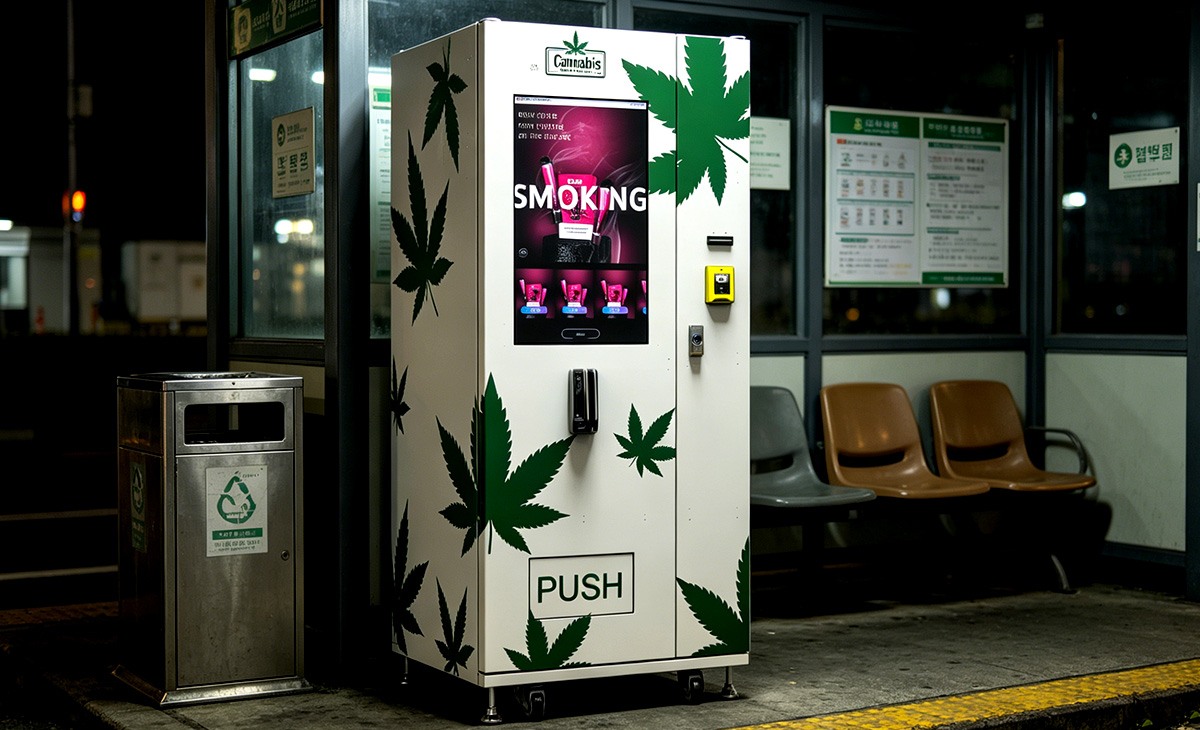
Industrial parks, hospitals, bus terminals, universities, and government buildings are consistently strong. Avoid locations with easy access to convenience stores or street vendors. I have also had good results in private gyms and coworking spaces. Always observe the location during different times of day before committing.
What permits do I need to operate in Mexico?
You need a federal registration with COFEPRIS for food sales, plus a municipal business license. Some states require additional permits. I recommend working with a local gestor to navigate the paperwork. The process takes two to three months on average.
How do I choose a reliable vending machine supplier?
Look for a supplier with a track record in Latin America. Ask for references from other operators in Mexico. Check whether they have local service partners. I have had good experiences with Zhongda Smart because their machines are built for warmer climates and they offer flexible payment integration. But always do your own due diligence.
What happens if my machine breaks down in a remote location?
This is a real risk. I recommend having a backup plan, such as a spare machine or a relationship with a local technician. Telemetry helps you detect problems early. If you cannot get a repair within 48 hours, you lose sales and potentially damage your relationship with the location owner. I avoid placing machines more than two hours from a service center.
How can I reduce restocking and maintenance costs?
Use telemetry to optimize your restocking schedule. Only visit machines when they need it. Standardize your product mix across machines to simplify inventory management. Train a local contact at each location to handle minor issues, like clearing a jam. I have also reduced costs by negotiating bulk pricing with local distributors.
Final Thoughts from the Field
The vending machines Mexico market offers real opportunities for operators who are willing to adapt. It is not a market where you can simply replicate what works in the US or Europe. You need to understand local payment habits, product preferences, and regulatory requirements. You need to invest in reliable equipment and build a support network for vending machine repair and maintenance. The operators who fail are the ones who treat Mexico as an afterthought. The ones who succeed treat it as a distinct market with its own rules.
I have seen operators build profitable, scalable businesses here. They started small, learned the local dynamics, and expanded methodically. If you approach this market with patience and a willingness to adapt, the returns can be very good. Just do not expect overnight success. This is a business of small margins and steady execution. Get the fundamentals right, and the results will follow.
Disclaimer: The figures and insights in this article are based on my personal experience operating vending machines in Mexico and discussions with other operators. They are not guarantees of performance. Your results will vary depending on location, product mix, operating efficiency, and market conditions. Always conduct your own research and consult local professionals before making investment decisions.
This article was updated in May 2025.