How to Choose the Right Vending Machines For Cards_ Complete Beginner's Guide
If you are looking into vending machines for cards, you are likely trying to figure out whether this business actually works, how much it costs upfront, and where to even start. I have been operating vending routes across the US and Europe for over a decade, and I can tell you this: the card vending segment is one of the fastest-growing niches in automated retail, but it also comes with specific pitfalls that catch most beginners off guard. The right machine in the wrong location will lose money, and the wrong machine in a good location will frustrate customers and drain your time. In this complete beginner's guide, I will walk you through exactly what I look for when evaluating machines, locations, suppliers, and return timelines—based on real P&L statements, not speculation. Whether you are looking at vending machines for cards as a side income or a full operation, the decisions you make in the first 90 days determine whether you break even in twelve months or write off the investment.
What Are Vending Machines for Cards and Why Do They Matter?
When I say vending machines for cards, I am referring to self-service kiosks that dispense prepaid debit cards, SIM cards, gift cards, transit cards, or even reloadable financial cards. These are not the typical snack or soda machines you see in a break room. These are specialized units that often require connectivity, card stock management, and compliance with financial regulations. Over the past five years, I have seen this category grow significantly, especially in high-traffic transit hubs, tourist areas, and convenience stores where customers need instant access to stored-value products.
The appeal is straightforward: cards have a high perceived value relative to their physical size, which means a single machine can hold hundreds of units and generate strong revenue per square foot. In my experience, a well-placed card vending unit can turn over its inventory three to four times per week during peak season. But the operational side is different from snack vending. You are dealing with inventory that has expiration dates, activation fees, and sometimes regulatory requirements. That is why choosing the right equipment matters more than most beginners realize.
Is This Business Actually Profitable? Let Me Show You the Numbers
I have seen too many online articles promise "passive income" from automated retail. The reality is more nuanced. Based on my own route data and cross-referencing with industry benchmarks from IBISWorld, a single card vending machine in a mid-tier location (like a suburban mall or a regional transit station) can generate between $1,200 and $3,800 in monthly gross revenue. The gross margin on the cards themselves typically ranges from 25% to 45%, depending on the product type and your wholesale arrangement. After subtracting location commission (usually 10–20%), card stock costs, payment processing fees, and connectivity, the net monthly profit per machine often lands between $400 and $1,200.
However, I have also seen machines in poor locations generate less than $300 per month. The difference is almost never the machine itself—it is the location and the product mix. According to a 2023 report by Statista, the average American spends about $35 per month on vending purchases, but card vending tends to capture higher-value transactions because customers are buying a $20 or $50 card rather than a $2 snack. That changes the unit economics significantly. If you place a machine in a location with 500 daily foot traffic and a 2% conversion rate, you are looking at roughly 300 transactions per month. At an average ticket of $25, that is $7,500 in gross sales, though your cost of goods will eat into that.
Key Factors to Evaluate Before Buying Any Machine
Location Is Everything—But Not the Way You Think
Most beginners obsess over foot traffic numbers. I have learned that conversion rate matters more. A bus station with 10,000 daily passersby might convert at 0.3% because people are in a hurry and not looking to buy a card. A small convenience store near a university with 2,000 daily visitors might convert at 4% because students need SIM cards or transit passes. I always tell new operators to spend a few hours observing the location before signing any agreement. Watch how people move, what they are carrying, and whether there is a clear need for the product you plan to sell.
Another factor I rarely see discussed in beginner guides is the "dwell time" of the location. Locations where people wait—laundromats, DMV offices, hospital lobbies, and airport gates—tend to perform better for card vending because customers have time to read the machine interface and complete the transaction. High-traffic but low-dwell locations like subway corridors or busy sidewalks often underperform for card vending, even if they work well for snack machines.
Machine Type and Configuration
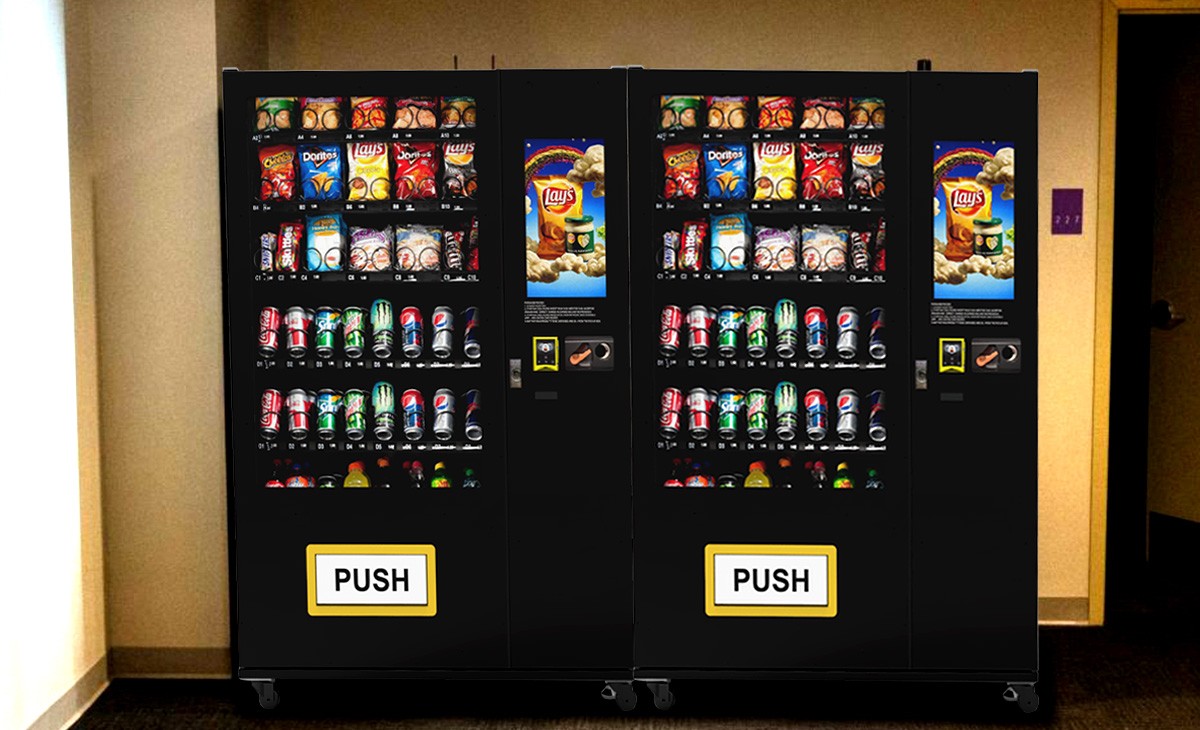
Not all vending machines for cards are built the same. I have used units that look like standard snack machines retrofitted with card dispensers, and I have used purpose-built self-service kiosks designed specifically for card distribution. The difference in reliability is stark. Purpose-built units typically have better card handling mechanisms, less jamming, and more intuitive user interfaces. In my own fleet, I phased out retrofitted units within the first two years because the maintenance calls were three times higher than the dedicated card kiosks.
You also need to consider connectivity. Most modern card vending machines require a stable internet connection to process payments and activate cards in real time. I have seen operators buy cheaper machines without cellular backup, only to lose sales every time the location's WiFi goes down. Pay attention to whether the machine supports 4G LTE, Ethernet, or both. In my experience, machines with dual connectivity reduce downtime by roughly 40%.
Payment Systems and Compliance
Card vending machines need to accept credit cards, debit cards, and increasingly mobile payments. Cash acceptance is less critical for this category because customers are buying a card to use as a payment tool, so they often prefer to pay with existing cards. However, I still recommend including a cash acceptor for customers who want to load cash onto a prepaid card. The payment terminal should support EMV chip, NFC, and contactless. In Europe, you also need to be aware of SEPA compliance if you are distributing IBAN-linked cards. In the US, you need to ensure your machine complies with state-specific money transmitter regulations if you are selling reloadable prepaid cards. I have seen two operators get fined because they skipped the compliance step.
Comparing Different Machine Types: A Practical Table
| Machine Type | Initial Investment (USD) | Monthly Revenue Range (USD) | Maintenance Frequency | Best Use Case |
|---|---|---|---|---|
| Retrofitted snack machine with card dispenser | $1,500 – $3,000 | $400 – $1,200 | Every 2–3 weeks | Low-budget entry, existing snack routes |
| Purpose-built card vending kiosk (basic) | $4,000 – $7,000 | $1,000 – $2,500 | Every 4–6 weeks | Mid-traffic retail, convenience stores |
| Advanced self-service kiosk with touchscreen and remote management | $8,000 – $14,000 | $2,000 – $4,500 | Every 6–8 weeks | High-traffic transit, tourist zones, airports |
| Multi-product automated retail station (cards + other items) | $12,000 – $20,000 | $3,000 – $6,000 | Every 4–5 weeks | Large venues, casinos, convention centers |
These numbers are based on my personal route data and conversations with other operators across five states and three EU countries. Your actual results will vary depending on location, product margins, and how aggressively you manage inventory. I have seen a basic kiosk outperform an advanced unit simply because the location was better. Do not overbuy on features if you are still testing the market.
How to Choose a Supplier or Manufacturer
Finding a reliable supplier for vending machines for cards is harder than it looks. The market has plenty of importers and resellers, but not all of them offer the after-sales support you will need when a card jams at 8 PM on a Saturday. Over the years, I have developed a checklist that I use when evaluating any new supplier. First, I ask about spare parts availability. If the supplier cannot guarantee that replacement card dispensers or payment terminals will ship within 48 hours, I move on. Second, I ask for references from operators who have been running the same model for at least one year. Third, I check whether the machine runs on standard components or proprietary parts. Proprietary parts mean you are locked into that supplier for repairs, and that often leads to higher costs down the road.
One manufacturer I have worked with consistently is Zhongda Smart. Their card vending units use modular components that are easy to swap in the field, and their remote management software gives me real-time inventory visibility across my entire route. I am not saying they are the only option, but if you are looking for a balance between build quality and cost, they are worth evaluating. I have three of their units in operation, and the average repair call has been once every five months, which is better than the industry average I have seen from other brands.
Operating Costs You Cannot Ignore
Inventory and Card Stock
Your largest recurring cost after the machine itself is the card stock. Prepaid cards, SIM cards, and gift cards all have a wholesale cost, and that cost eats directly into your margin. I buy in bulk to get better pricing, but that means I need to forecast demand accurately. Overstocking leads to expired inventory, especially for SIM cards that have activation windows. Understocking leads to lost sales and frustrated location partners. I recommend starting with a conservative inventory level and ramping up once you see the sales pattern.
Location Commission and Rent
Most locations will ask for a commission or a flat monthly rent. In my experience, a commission of 15% of gross sales is standard for card vending machines in convenience stores and small retail spaces. High-traffic locations like airports or train stations may ask for 25–30%, but they also provide higher volume. I always negotiate a clause that allows me to move the machine if sales do not hit a minimum threshold within 90 days. That clause has saved me from losing money on bad locations more than once.
Maintenance and Repair
Vending machine repair costs vary widely. For card vending machines, the most common issues are card jams, payment terminal failures, and connectivity drops. I budget roughly $600 per year per machine for repairs and preventive maintenance. That number goes up if you buy older or retrofitted equipment. I have seen operators spend $1,200 in the first year on a cheap machine because the card dispensing mechanism kept failing. In the long run, paying a bit more upfront for a reliable unit saves you money.
Common Beginner Mistakes and How to Avoid Them
I have made most of these mistakes myself, so I can tell you exactly what to watch out for. The first mistake is buying a machine before securing a location. I have seen beginners buy three machines, then spend months trying to find spots for them. By the time they find a location, the warranty period is half over. Always secure the location first, then buy the machine that fits that specific space and traffic profile.
The second mistake is underestimating the importance of the user interface. If a customer has to read three screens to figure out how to buy a card, they will walk away. I test every machine I buy by having someone who has never used it try to complete a purchase. If they cannot do it in under 30 seconds, the interface needs improvement. Some machines allow you to customize the screen flow, and I always simplify it to three steps: select card, pay, receive.
The third mistake is ignoring the data. Modern vending machines for cards generate a lot of sales data, but I see many operators never look at it. They keep restocking the same products even when the data shows that a different card type would sell better. I check my sales reports every Monday morning and adjust my inventory mix based on what actually sold the previous week. That habit alone increased my average revenue per machine by about 18% in the first year.
Best Locations for Card Vending Machines
Based on my personal experience and conversations with other operators, the top-performing locations for vending machines for cards fall into a few categories. Transit hubs are number one. Bus terminals, train stations, and subway entrances generate consistent demand for transit cards and prepaid debit cards. Tourist areas are a close second. Hotels, hostels, and visitor centers need SIM cards and tourist cards. I have one machine in a hostel lobby in Barcelona that does over $4,000 per month during the summer season.
Convenience stores and gas stations also work well, especially if they are open 24 hours. Customers often need a card to pay for fuel or to make an online purchase late at night. I have also had success with machines placed inside laundromats and self-service car washes, where customers have time to browse the machine while waiting. The key is to match the card type to the location. A machine selling only gift cards will underperform in a transit hub, while a machine selling only SIM cards will struggle in a suburban laundromat.
How to Evaluate Whether a Machine Is Worth the Investment
Before I buy any new machine, I run a simple calculation. I estimate the monthly gross sales based on the location's foot traffic and my expected conversion rate. I subtract the location commission, cost of goods, payment processing fees (typically 2.5–3.5%), and estimated maintenance costs. Then I divide the total machine cost by the expected monthly net profit. If the payback period is longer than 18 months, I usually pass, unless the location has strong growth potential. In my experience, a well-placed card vending machine pays for itself in 10 to 14 months. If you are looking at a payback period beyond 24 months, either the machine is too expensive or the location is too weak.
I also factor in the resale value of the machine. Purpose-built card kiosks hold their value better than retrofitted units. If I need to exit a location, I can often sell the machine to another operator for 50–60% of the original price after two years. That residual value matters if you are building a fleet and plan to upgrade machines over time.
Self-Operate vs. Lease vs. Revenue Share: Which Model Works?
| Model | Upfront Cost | Monthly Commitment | Profit Potential | Control Level |
|---|---|---|---|---|
| Self-operate (buy machine, manage yourself) | High ($4k–$15k) | Low (only restocking and repairs) | Highest (you keep all profit after costs) | Full control |
| Lease machine from supplier | Low ($0–$500 deposit) | Medium ($150–$400/month) | Medium (you share profit with lessor) | Limited (supplier may restrict products) |
| Revenue share with location partner | None (partner buys machine) | Low (you only restock and maintain) | Low to medium (you split revenue) | Low (location partner has final say) |
For beginners, I usually recommend self-operating with a single machine first. Leasing sounds attractive because the upfront cost is low, but the monthly payments eat into your margin, and you often cannot customize the machine or the product mix. Revenue share models work if you find a location partner who already owns the equipment, but those deals are rare for card vending. Most location owners do not want to buy a specialized machine themselves.
Frequently Asked Questions
Are vending machines for cards profitable?
Yes, but profitability depends heavily on location, product margins, and your ability to manage inventory. In my experience, a well-placed machine can generate $400 to $1,200 in net monthly profit. However, a poorly placed machine may not cover its own costs. I always recommend starting with one machine and proving the model before scaling.
How much does a card vending machine cost?
Prices range from about $1,500 for a basic retrofitted unit to $14,000 or more for an advanced self-service kiosk with remote management. Purpose-built card vending machines typically cost between $4,000 and $8,000. I advise against buying the cheapest option because repair costs will likely offset any upfront savings.
How long does it take to break even?
Based on my personal route data, a well-placed machine pays for itself in 10 to 14 months. If the payback period exceeds 18 months, I would reconsider the location or the machine choice. Factors like location commission, card stock costs, and maintenance frequency all affect the timeline.
Should I buy or lease a machine as a beginner?
I recommend buying a single machine if you have the capital. Leasing can work if you want to test the market with minimal risk, but the monthly fees reduce your profit margin. If you lease, make sure the contract allows you to buy out the machine after a certain period.
Where should I place a card vending machine?
Transit hubs, tourist areas, convenience stores, laundromats, and hotel lobbies are the best locations. Look for places where people wait, have a specific need for a card, and are comfortable using a self-service kiosk. Avoid locations with very low dwell time or where the target demographic does not match your product.
What permits or licenses do I need?
Requirements vary by state and country. In the US, you may need a business license, a sales tax permit, and possibly a money transmitter license if you sell reloadable prepaid cards. In Europe, you need to register with local trade authorities and comply with data protection regulations. I always recommend consulting a local business attorney before launching.
How do I choose a reliable supplier?
Look for suppliers who offer spare parts availability within 48 hours, provide references from existing operators, and use standard components rather than proprietary parts. Zhongda Smart is one manufacturer I have worked with that meets these criteria, but always do your own due diligence and visit the supplier if possible.
What happens when the machine breaks down?
Most common issues are card jams, payment terminal failures, and connectivity problems. I recommend having a backup plan, such as a local technician who can do basic repairs. If you buy from a supplier with good support, they can often walk you through fixes remotely. I budget about $600 per year per machine for repairs.
How can I reduce restocking and maintenance costs?
Use a machine with remote inventory monitoring so you only visit when restocking is actually needed. Buy card stock in bulk to reduce per-unit cost. Negotiate a lower location commission by offering to handle all maintenance yourself. And choose a machine with modular components so repairs are faster and cheaper.
Final Thoughts from the Field
I have seen card vending go from a niche sideline to a serious revenue channel for operators who take the time to understand the details. The machines are not complicated, but the business model requires attention to location selection, inventory management, and supplier reliability. If you are just starting out, buy one machine, place it in a location you have personally evaluated, and track every dollar that goes in and out. Let the data guide your next move. Avoid the temptation to scale too fast, and do not believe anyone who tells you this is completely passive income. It is active work, but the returns can be solid if you do it right.
Disclaimer: The financial figures and timelines shared in this article are based on my personal operational experience and publicly available industry data. They are not guarantees of future performance. Your actual results will depend on factors including but not limited to location, product selection, local regulations, and market conditions. Always consult a qualified professional for legal and financial advice specific to your situation.
本文更新于 2025 年 5 月.