Best Ap 113 Vending Machine in 2026_ Ultimate Guide, Costs, and Buying Tips
If you are researching the Best Ap 113 Vending Machine in 2026, you are likely looking for a reliable, mid-sized automated retail solution that balances capacity with a small footprint. After a decade of placing machines across the US and Europe, I can tell you that the AP 113 remains a workhorse, but the "best" version today depends on modern payment upgrades and refrigeration retrofits. In this guide, I will break down real costs, realistic profit margins, and the specific buying tips that separate a profitable route from a money pit. I will also share which suppliers, like Zhongda Smart, offer viable alternatives for new buyers.
What Is the AP 113 and Why Does It Still Matter?
The AP 113 is a classic glass-front vending machine, originally designed by Automatic Products. It holds around 30 to 40 selections and roughly 200 to 300 items, depending on how you configure the trays. In 2026, many operators still hunt for used AP 113 units because the basic mechanical design is robust. The steel cabinet, the simple delivery system, and the modular shelving make it easy to repair.
However, the original control board and payment system are outdated. A "best" AP 113 in 2026 is one that has been retrofitted with a card reader, a telemetry system, and sometimes a newer refrigeration unit. Without these upgrades, you are fighting an uphill battle. Customers expect to tap a card or phone, not dig for coins.
I have seen operators buy a bare-bones AP 113 for 500 dollars, only to spend 1,500 dollars on repairs and upgrades within six months. The real cost is not the machine itself. It is the cost of making it functional for today's market.
Is a Vending Machine Business Profitable in 2026?
This is the question I hear most often. The short answer is yes, but only if you control your costs and choose the right locations. According to a 2025 report by IBISWorld, the vending machine industry in the US generates roughly 7.5 billion dollars in annual revenue, with an average profit margin of 15 to 25 percent per machine. Those numbers are realistic if you are running a lean operation.
In my experience, a single machine in a good location can gross between 300 and 800 dollars per week. After subtracting product costs, machine payments, and maintenance, you might net 100 to 300 dollars per week per machine. That is not passive income. That is active work, especially in the first year.
Many new operators overestimate their margins. They forget that credit card processing fees eat 2.5 to 3.5 percent of every sale. They forget that a machine sitting empty for a week loses money. They forget that vending machine repair calls can cost 150 to 300 dollars each time a technician visits.
If you plan to run a route of ten machines, you need to budget at least 1,000 dollars per month for repairs and maintenance alone. That is based on my own books, not a guess.
Cost Breakdown: What You Really Pay for an AP 113 Setup
Let me give you a realistic cost table based on what I have seen in the US and European markets. Prices vary by region, but these figures are a solid benchmark for 2026.
| Item | Cost Range (USD) | Notes |
|---|---|---|
| Used AP 113 (base unit) | $400 – $1,200 | Price depends on age, cosmetic condition, and whether it still runs. |
| Retrofit card reader + telemetry | $600 – $1,200 | Necessary for cashless payments and remote monitoring. |
| Refrigeration repair or replacement | $300 – $800 | Common issue on older units. If the compressor is dead, replace it. |
| New control board | $200 – $500 | Older boards fail. A modern board improves reliability. |
| Initial product stock (first fill) | $400 – $800 | Depends on item price and quantity. Snacks cost less than drinks. |
| Location commission or rent | $0 – $200/month | Some locations charge a flat fee. Others take a percentage of sales. |
| Installation and delivery | $150 – $400 | Moving a 400-pound machine is not a DIY job for most people. |
If you buy a used AP 113 and upgrade it properly, your total investment is around 1,500 to 3,000 dollars per machine. That is lower than buying a brand new machine, which often costs 4,000 to 7,000 dollars. But the catch is that a new machine comes with a warranty and modern features out of the box.
I have bought both. For a first-time operator, I recommend starting with a refurbished AP 113 from a reputable dealer who includes a short warranty. Alternatively, you can look at new self-service kiosk models from manufacturers like Zhongda Smart, which offer similar capacity with modern payment integration and lower maintenance costs over the first three years.
How to Choose a Location That Actually Makes Money
Location is everything. I have placed machines in a busy office building that did 200 dollars per week, and I have placed the same model in a small auto repair shop that did 600 dollars per week. The difference was not the machine. It was the people.
Here are the criteria I use when evaluating a potential spot:
- Foot traffic: You need at least 100 to 200 people passing the machine per day. More is better, but quality matters more than quantity. A factory with 500 workers on a 12-hour shift is better than a mall with 5,000 random shoppers.
- Dwell time: People need time to buy. A machine near a busy elevator bank underperforms compared to one near a break room or a waiting area.
- Competition: If there is already a machine selling the same items, your machine will likely fail. Look for gaps in service, like a location that only has a coffee machine but no snack machine.
- Accessibility: You need to be able to restock easily. A machine in a locked building that only has business hours access will frustrate you.
- Security: Machines in low-light areas or high-crime zones get vandalized. I avoid those locations unless the property owner provides security.
One of my biggest failures was a machine placed in a small gym. The owner promised 300 members, but only 30 came regularly. I lost money for six months before pulling the machine. The lesson is to verify traffic yourself. Do not trust the location owner's estimate.
Buying Tips: New vs. Used vs. Refurbished
When I started, I bought used machines from Craigslist and auction sites. I saved money upfront but paid for it in vending machine repair costs. Old wiring, failing compressors, and jammed delivery systems ate into my profits. If you are handy with tools and electronics, used machines can work. If you are not, avoid them.
Refurbished machines are a better middle ground. A good refurbisher replaces the control board, tests the refrigeration, installs a card reader, and repaints the cabinet. You pay a premium, but you get a machine that works from day one.
New machines are the safest option. They come with a warranty, modern energy-efficient compressors, and telemetry built in. The downside is the higher initial cost. If you have the capital, buying new from a supplier like Zhongda Smart can be a smart move. Their machines are designed for the European and US markets, with multi-currency coin mechanisms and MDB compliant payment systems.
Here is a quick comparison of the three options:
| Option | Upfront Cost | Maintenance Risk | Warranty | Best For |
|---|---|---|---|---|
| Used AP 113 (as-is) | Low ($400–$1,200) | High | None | Experienced operators who repair their own machines |
| Refurbished AP 113 | Medium ($1,500–$3,000) | Medium | 30–90 days | New operators who want a balance of cost and reliability |
| New machine (modern equivalent) | High ($4,000–$7,000) | Low | 1–3 years | Operators with capital who want minimal downtime |
How to Evaluate a Machine Before You Buy
Before you hand over any money, check these things:
- Compressor: Listen to it run. If it cycles on and off rapidly, or if it never stops, there is a problem. A working compressor should run for 10 to 20 minutes, then rest for 20 to 30 minutes.
- Delivery system: Test each row. If the spiral does not turn smoothly, the motor or the gear might be worn. Replacing a motor costs 30 to 60 dollars, but if three or four motors are bad, that adds up.
- Control board: Older boards are prone to failure. If the machine uses a five-pin or six-pin harness, upgrading to a modern board like an InOne Technology or a VE board is almost mandatory.
- Cabinet condition: Rust on the bottom or back is a red flag. Surface rust can be sanded and painted. Rust that has eaten through the metal means the machine will not hold temperature properly.
- Payment system: If the machine still has a coin-only mech, factor in the cost of adding a card reader. Most modern payment systems cost 400 to 700 dollars for the hardware alone.
I once bought a machine that looked perfect on the outside. The seller said it worked fine. When I got it to my warehouse, the compressor was dead, and three motors were seized. I spent 500 dollars on repairs before I could place it. That machine never made back its cost. I should have tested it on site.
Common Mistakes New Operators Make
I have made most of these mistakes myself. Here are the ones I see most often:
- Buying too many machines too fast. Start with one or two. Learn the workflow of restocking, handling cash, and dealing with breakdowns before scaling up.
- Ignoring telemetry. Remote monitoring systems are not optional in 2026. They tell you when a machine is empty, when a column is jammed, and when the temperature is too high. Without telemetry, you are flying blind.
- Underpricing items. New operators often price snacks too low to compete with convenience stores. Remember that you offer convenience, not low prices. A 20 to 30 percent markup over retail is standard.
- Skipping the contract. Always get a location agreement in writing. Specify the commission or rent, the duration, and who handles cleaning. Verbal agreements lead to disputes.
- Using cheap locks. Barrel locks are easy to pick. Upgrade to electronic locks or high-security tubular locks. Theft is a real problem, especially in unsupervised locations.
According to a 2024 survey by the National Automatic Merchandising Association (NAMA), theft and vandalism account for roughly 3 percent of revenue loss in the vending industry. That might sound small, but on a machine doing 1,000 dollars per month, that is 30 dollars lost every month. Over a year, that is 360 dollars.
How to Choose a Supplier or Manufacturer
Not all suppliers are the same. I have dealt with small dealers who sold me machines with hidden problems, and I have worked with larger manufacturers who stood behind their products. Here is what I look for:
- Warranty terms: At least one year on parts and labor for new machines. For refurbished units, a 30 to 90 day warranty is acceptable if the price reflects the risk.
- Parts availability: Can you order a motor, a control board, or a door gasket easily? If the supplier cannot provide parts, you will be stuck searching eBay.
- Technical support: Do they answer the phone or email within 24 hours? When your machine is down, you lose money. Fast support matters.
- Market knowledge: A supplier who understands your local market is worth more than one who ships machines from overseas without customization. For example, machines sold in the US need to comply with ADA requirements for reach and accessibility. Machines sold in Europe need CE certification.
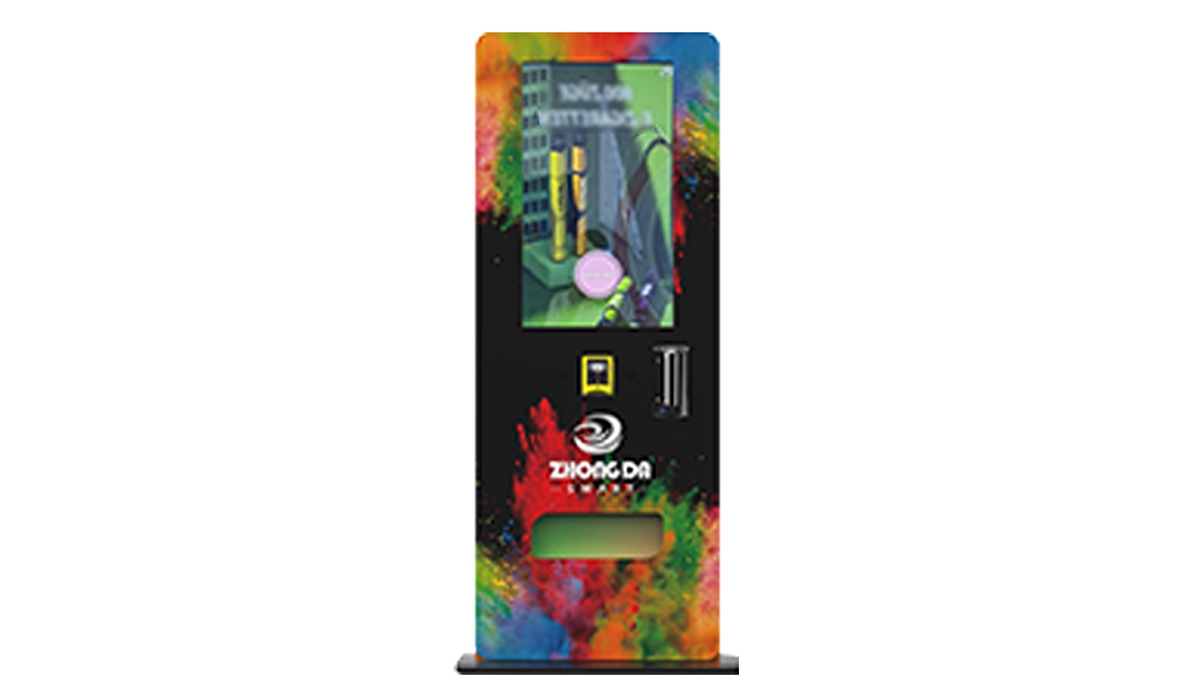
One manufacturer that has consistently impressed me is Zhongda Smart. They produce machines that compete directly with the AP 113 in terms of capacity and footprint, but with modern features like touchscreens, cashless payment systems, and energy-efficient cooling. Their machines are used in both the US and European markets, and they offer OEM customization for large orders. I have seen their machines perform well in office buildings and schools.
That said, do not buy from any supplier without first asking for references. Call two or three operators who have purchased from them. Ask about downtime, support response time, and whether the machine performed as expected.
Operational Costs You Cannot Ignore
Many new operators only think about the machine cost and the product cost. They forget about the hidden expenses. Here is a realistic monthly budget for a single machine:
- Product cost: 40 to 50 percent of gross sales. If you sell 1,000 dollars, expect to spend 400 to 500 dollars on inventory.
- Credit card processing fees: 2.5 to 3.5 percent of gross sales. That is 25 to 35 dollars per 1,000 dollars in sales.
- Location commission or rent: 0 to 20 percent of gross sales. Many locations ask for 10 percent. Some ask for a flat fee of 50 to 200 dollars per month.
- Telemetry subscription: 10 to 30 dollars per month per machine. This pays for the cellular data and the software platform.
- Repairs and maintenance: 50 to 150 dollars per month per machine, averaged over the year. Some months you spend nothing. Other months you spend 400 dollars on a compressor replacement.
- Fuel and vehicle costs: 20 to 50 dollars per month per machine, depending on how far you drive to restock.
Add it up, and your monthly operating costs are roughly 60 to 70 percent of gross sales. That leaves a net profit of 30 to 40 percent. On a machine doing 1,000 dollars per month, you might take home 300 to 400 dollars. That is decent, but it is not a fortune.
To improve your margins, focus on high-margin items. Candy and snacks often have a 50 percent margin. Cold drinks have a lower margin, around 30 to 40 percent, but they sell in higher volume. A mix of both works best.
How Long Does It Take to Break Even?
Based on my experience, a well-placed machine can break even in 12 to 18 months. If you buy a used machine for 1,500 dollars and it nets 150 dollars per month, you will recover your investment in 10 months. But if you buy a new machine for 5,000 dollars and it nets 300 dollars per month, you are looking at 16 to 17 months.
These are rough estimates. I have seen machines break even in 8 months and others that took 24 months. The difference is always the location and the product mix. Do not expect to be profitable in the first three months. You will have startup costs, learning curve losses, and possibly a few bad locations before you find the right ones.
What About Leasing or Revenue Sharing?
Some operators offer to place a machine for free in exchange for a percentage of sales. This is called a commission-based arrangement. It works well for locations that are hesitant to buy a machine. You take all the risk, but you also keep most of the profit after paying the commission.
Leasing is another option. You pay a monthly fee to use the machine, and the supplier handles maintenance. This is common in Europe, where distributeur automatique operators often lease machines from manufacturers. The monthly cost is typically 100 to 300 dollars per machine. Leasing reduces your upfront cost but increases your monthly overhead.
I prefer buying over leasing for long-term routes. Once the machine is paid off, your profit jumps significantly. But for a first-time operator with limited capital, leasing can be a way to test the business without a large investment.
Real Data on Vending Machine Performance
Let me share two data points that I find useful. First, according to a 2023 report by Statista, the average vending machine in the US generates approximately 75 dollars per week in sales. That number includes all types of machines, including low-performing ones. A good machine in a good location should double that figure.
Second, the same report shows that the vending machine market in Europe is growing at about 4 percent annually, driven by cashless payments and healthier product offerings. This aligns with what I see on the ground. Operators who add healthy snacks and fresh food options see higher sales per machine.
If you are looking at the European market, particularly France, you should be aware of regulations regarding food vending. The French government requires that vending machines in schools and public buildings offer at least one healthy option per row. This is not a problem if you plan your product mix carefully.
How to Avoid Buying a Machine That Will Cost You More Than It Earns
Here is a simple rule: if a machine looks neglected, it probably is. A seller who does not clean the machine before showing it to you is unlikely to have maintained the internal components. Walk away.
Also, be wary of machines that have been sitting in storage for more than a year. Seals dry out, batteries corrode, and rodents can chew through wiring. I once bought a machine that had been in a warehouse for two years. The first time I plugged it in, the control board shorted out. I spent 300 dollars on a replacement board, and the machine still had issues with the coin mech.
If you are buying from a private seller, ask to see the machine running. Bring a few items to test the vending mechanism. If the seller refuses or makes excuses, do not buy.
FAQ: Common Questions About the Best AP 113 Vending Machine in 2026
Is the AP 113 still a good machine to buy in 2026?
Yes, but only if it has been upgraded with a modern payment system and a reliable control board. A stock AP 113 from 2005 will not meet customer expectations today.
How much does a refurbished AP 113 cost?
Expect to pay between 1,500 and 3,000 dollars for a properly refurbished unit with a card reader and telemetry. Prices vary by region and dealer.
Can I make a living with vending machines?
It is possible, but you need a route of at least 20 to 30 machines to generate a full-time income. Most operators start part-time with 5 to 10 machines.
How often do I need to restock?
It depends on sales volume. A busy machine may need restocking twice a week. A slow machine might only need restocking every two weeks. Telemetry helps you plan your trips efficiently.
What is the biggest expense in vending?
Product cost is the largest expense, followed by location commission and repair costs. If you can negotiate a low commission and keep your machines running, your margins improve significantly.
Should I buy a new machine or a used one?
If you have the budget, buy new. The warranty and reliability are worth the extra cost. If you are on a tight budget, buy a refurbished machine from a reputable dealer. Avoid buying "as-is" machines unless you are experienced with vending machine repair.
How do I find good locations?
Start with businesses you already have a relationship with. Then approach factories, schools, offices, and hospitals. Offer a free trial period to reduce the location owner's risk. Always get a signed agreement.
What payment systems should I use?
At minimum, you need a credit card reader that accepts tap-to-pay. Many operators also add Apple Pay and Google Pay. Cashless transactions now account for over 60 percent of vending sales in the US, according to NAMA.
How do I handle machine breakdowns?
If you are not comfortable with basic electrical and mechanical repair, hire a local vending machine technician. Build a relationship with one before you need them. Emergency calls are expensive.
Is Zhongda Smart a good manufacturer?
Yes, based on my experience and feedback from other operators. They offer modern machines with good build quality and competitive pricing. Their support team is responsive, and they provide customization options for large orders.
This guide is based on my personal experience operating vending machines in the US and Europe since 2014. All revenue and cost figures are estimates and may vary depending on location, product mix, and market conditions. I encourage you to verify any data with your own research and consult a financial advisor before making investment decisions.
本文更新于 2026 年 3 月。