Energy Drink Vending Machine_ Prices, Profit Potential, and Setup Guide for Beginners
If you are serious about getting into the automated retail space, the energy drink vending machine is one of the most straightforward and profitable entry points I have seen in my ten years of operating in the US and European markets. You do not need a fancy storefront, and you do not need to deal with perishable inventory that spoils if you miss a restock. Energy drinks have a long shelf life, high brand loyalty, and a customer base that is willing to pay a premium for convenience. In this guide, I will walk you through the real costs, the realistic profit potential, and the exact setup steps I have used to place machines in gyms, college campuses, and industrial worksites across the UK, Germany, and the United States.
Understanding the Energy Drink Vending Machine Business
Before you buy a single machine, you need to understand what you are actually selling. You are not selling a can of Monster or Red Bull. You are selling cold, immediate access at a moment of peak demand. The person who needs an energy drink at 3 p.m. on a factory floor is not going to walk to a convenience store. They will pay a premium for the machine that is ten feet away. That is the entire business model.
In my experience, the best locations for an energy drink vending machine are places where people are physically active, mentally drained, or working long shifts. Gyms, auto repair shops, truck stops, college dormitories, and manufacturing facilities all work well. The common thread is a captive audience that has limited alternatives.
How Much Money Can an Energy Drink Vending Machine Make?
Let me be direct: I have seen machines gross between $400 and $1,200 per month in high-traffic locations. The margin on energy drinks is generally higher than on sodas because the retail price is higher. A can that costs you $1.20 to $1.50 wholesale can sell for $3.00 to $4.00. That gives you a gross margin of roughly 60 to 70 percent before expenses.
According to data from IBISWorld, the vending machine industry in the United States alone generates over $7 billion annually, with beverages accounting for a significant share. That number tells you there is real money flowing through these machines. But the key variable is location. A machine in a low-traffic break room might only do $150 a month, while a machine placed near a busy gym entrance can do four times that.
Initial Investment: What a Beginner Needs to Budget For
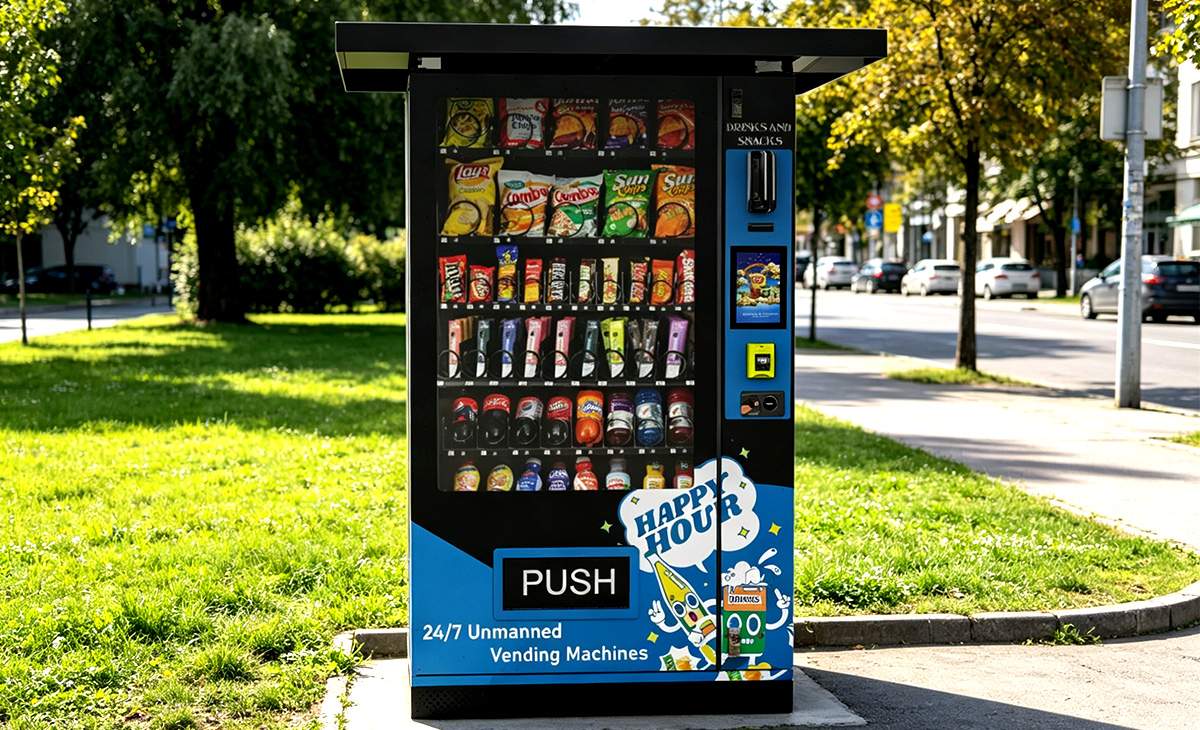
I always tell new operators to plan for a total upfront cost between $3,500 and $8,000 per machine, fully loaded. That includes the machine itself, delivery, installation, and your first inventory purchase. Here is a realistic breakdown based on what I have paid over the years:
| Cost Item | Estimated Range (USD) | Notes |
|---|---|---|
| New energy drink vending machine | $2,500 - $5,500 | Depends on brand, size, and payment system |
| Refurbished machine | $1,200 - $2,800 | Higher risk of vending machine repair costs |
| Shipping and installation | $200 - $600 | Varies by distance and location |
| Initial inventory (100-150 cans) | $150 - $250 | Wholesale pricing from distributor |
| Payment system upgrade (card reader) | $300 - $700 | Essential for modern self-service kiosk operations |
| Miscellaneous (signage, tools, permits) | $100 - $300 | Often overlooked by beginners |
If you buy a cheap machine without a card reader, you will lose sales. I have seen machines that only take cash do 40 percent less volume than identical machines with a contactless payment terminal. Do not skip this.
Choosing the Right Equipment: What to Look For
Not all vending machines are built the same. I have worked with machines that ran for five years without a single breakdown, and I have worked with machines that needed vending machine repair every three months. The difference comes down to the cooling system, the compressor quality, and the payment interface.
For an energy drink vending machine, you need a cooling system that can handle constant use. Energy drinks are often stored at colder temperatures than sodas, so look for a machine with a heavy-duty compressor. You also want a machine that can handle 12-ounce and 16-ounce cans without jamming. Adjustable shelving is a feature I now consider mandatory.
When it comes to suppliers, I have had good experiences with Zhongda Smart for their balance of build quality and pricing. Their machines tend to have reliable cooling units and modern payment integrations that work with both cash and mobile wallets. I recommend you look at their lineup if you are sourcing equipment for a European or US deployment. That said, always compare specs, warranty terms, and shipping costs before committing.
Location Selection: The Make-or-Break Decision
I have placed machines in over 200 locations in my career. The single biggest mistake beginners make is putting a machine somewhere just because the location is free or because a friend owns the business. You need to evaluate a location like a retailer evaluates a storefront.
Here are the criteria I use:
- Foot traffic: I want at least 100 people passing the machine per day. For a gym or factory, that is usually easy. For a small office, it is not.
- Dwell time: People need to be in the area long enough to want a drink. A hallway people walk through in ten seconds is worse than a break room where people sit for ten minutes.
- Competition: If there is a convenience store or a cafeteria selling energy drinks for the same price, your machine will struggle. Look for locations where the nearest alternative is a five-minute walk or more.
- Security: Machines in isolated areas get vandalized. I avoid locations without lighting or cameras.
One of my worst failures was placing a machine in a small auto repair shop with only four mechanics. The owner was enthusiastic, but the traffic was just too low. I made $80 in the first month and moved the machine after three months. That move cost me time and money. Learn from my mistake: do not fall in love with a location just because the owner is nice.
Operating Costs and Maintenance Realities
Many beginners underestimate ongoing costs. You are not just buying a machine and collecting money. You have restocking labor, product costs, credit card processing fees, and occasional vending machine repair bills. Here is what I typically see:
- Restocking labor: If you do it yourself, your time is worth something. If you hire someone, expect to pay $15 to $25 per hour.
- Credit card fees: 2.5 to 3.5 percent per transaction. This adds up.
- Repairs: Budget $200 to $400 per year per machine for maintenance. Compressor failures can cost $500 or more.
- Electricity: About $20 to $40 per month depending on local rates and machine efficiency.
According to a report from Statista, the average vending machine operator in the US manages between 20 and 50 machines. That scale allows you to spread fixed costs across more units. If you only have one or two machines, your per-unit costs will be higher. That is just the reality of this business.
Payment Systems and the Shift to Cashless
I cannot stress this enough: a modern energy drink vending machine needs to accept cards and mobile payments. The days of relying on coins and bills are over. In many European countries, cash usage has dropped below 30 percent of transactions. In the US, it is not that extreme, but younger customers especially expect to tap their phone or card.
I recommend using a telemetry system that lets you monitor sales and inventory remotely. These systems cost about $15 to $30 per month per machine, but they save you from driving to a machine that is already empty. The data also helps you decide which products to stock. If a certain flavor is not selling, you can swap it out immediately.
Self-Operation vs. Location Partnership
You have two main options for placing your machine: you operate it yourself and pay rent to the location owner, or you split revenue with the location. I prefer the rental model. I pay a fixed monthly fee, usually $50 to $200 depending on traffic, and keep all the revenue. That way, if sales are slow, I am not giving away a percentage of nothing.
Revenue sharing can work, but it creates an ongoing relationship where the location owner has an incentive to keep the machine running well. The downside is that you are constantly explaining why your sales are lower than expected. I have found that a flat rental fee simplifies everything.
Regulations and Permits You Cannot Ignore
In the US, you generally need a business license and a seller's permit. Some states require a food handler's permit because you are selling consumable products. In the European Union, regulations vary by country. In France, for example, you need to register with the Chamber of Commerce and comply with food safety standards outlined by the Direction Générale de la Concurrence, de la Consommation et de la Répression des Fraudes (DGCCRF).
According to the European Vending & Coffee Service Association (EVA), the industry has specific guidelines for machine hygiene and product traceability. If you are operating in Germany, you may also need to comply with the Verpackungsgesetz (packaging law) and register your packaging with the Zentrale Stelle Verpackungsregister. I recommend checking local requirements before you even order your first machine.
How to Avoid Common Beginner Mistakes
I have made most of the mistakes in this business so you do not have to. Here are the ones I see most often:
- Buying the cheapest machine: A $1,500 machine from an unknown seller will cost you more in vending machine repair within the first year than a $3,000 machine from a reputable manufacturer.
- Ignoring the payment system: If your machine only takes cash, you are losing 30 to 40 percent of potential sales.
- Overstocking slow-moving flavors: Stock the top three or four best-selling energy drink brands. Do not try to offer twenty varieties. It complicates restocking and slows down the customer.
- Placing a machine without a written agreement: Even if the location owner is your brother-in-law, get a simple one-page agreement that covers rent, maintenance access, and termination terms.
- Not budgeting for downtime: Machines break. Have a backup plan and a local technician or a spare machine ready to swap in.
Scaling from One Machine to a Small Route
Once you have one machine running profitably for three to six months, you can start thinking about scaling. The economics improve significantly when you have five or ten machines. Your restocking route becomes more efficient, and you can negotiate better wholesale pricing with distributors.
I recommend reinvesting the first year of profits into additional machines. Do not take the money out of the business until you have at least five machines generating consistent cash flow. That is the point where the business becomes self-sustaining and you can start paying yourself a reasonable income.
When to Walk Away from a Location
Not every location works out. I have pulled machines from locations after three months because the sales never reached the break-even point. Here is how I calculate it: if a machine is not generating at least $300 per month after the first 90 days, I move it. The cost of moving a machine is usually $100 to $200. That is cheaper than leaving it in a dead location for a year.
Sometimes the problem is not the location but the product mix. I have revived slow machines by switching from a mix of sodas and energy drinks to an all-energy-drink lineup. In one case, sales doubled within two weeks. Do not be afraid to experiment.
FAQ: Energy Drink Vending Machine Business
Are energy drink vending machines profitable?
Yes, if placed correctly. A well-located machine can generate $400 to $1,200 per month with gross margins around 60 to 70 percent. Profitability depends on location, pricing, and your ability to keep the machine running without frequent vending machine repair issues.
How much does an energy drink vending machine cost?
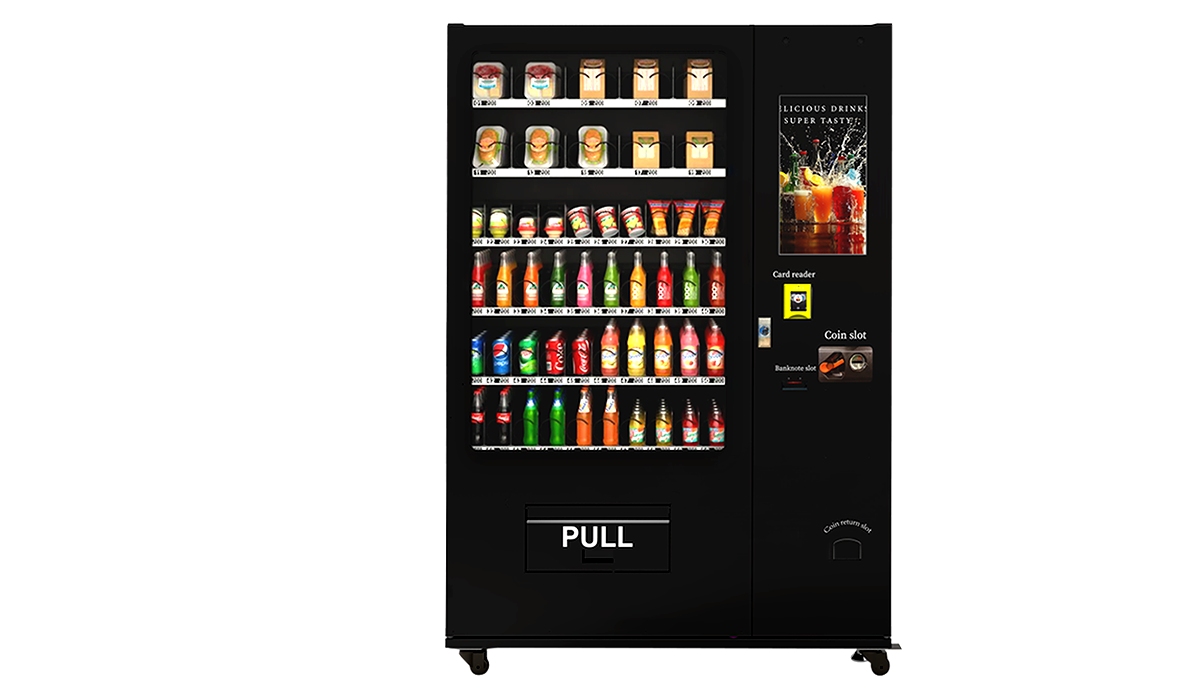
A new machine costs between $2,500 and $5,500. Refurbished machines can be found for $1,200 to $2,800, but they may require more maintenance. You should also budget for a card reader upgrade and initial inventory.
How long does it take to break even?
In my experience, a well-placed machine breaks even in 8 to 18 months. A machine in a top-tier location like a busy gym or a 24-hour truck stop can break even in under 12 months. A mediocre location may take two years or more.
Should a beginner buy or lease a vending machine?
I recommend buying. Leasing often comes with high monthly payments and restrictive terms. If you buy a reliable machine from a supplier like Zhongda Smart, you own the asset and can move it if a location does not work out.
Where is the best place to put an energy drink vending machine?
Gyms, college dormitories, manufacturing plants, auto repair shops, and truck stops are all strong candidates. Look for locations with high foot traffic, limited competition, and a customer base that is physically active or working long hours.
What permits do I need to operate a vending machine?
In the US, you typically need a business license and a seller's permit. In the EU, requirements vary by country. You may need to register with local authorities and comply with food safety and packaging regulations. Check with your local chamber of commerce or industry association.
How do I choose a vending machine supplier?
Look for a supplier with a track record of reliable equipment, good warranty terms, and responsive customer support. I have used Zhongda Smart for several deployments and found their build quality consistent. Compare at least three suppliers before making a decision.
What happens if the machine breaks down?
You need a plan for vending machine repair. If you are not mechanically inclined, find a local technician before you need one. Some suppliers offer service contracts. Alternatively, buy a spare machine so you can swap it out while the broken one is being repaired.
How can I reduce restocking and maintenance costs?
Use a telemetry system to monitor inventory remotely. This eliminates unnecessary trips. Also, standardize your product lineup so you can restock efficiently. Buy in bulk from a wholesale distributor to lower your per-can cost.
Final Thoughts from the Field
The energy drink vending machine business is not a get-rich-quick scheme. It is a solid, repeatable business model that rewards attention to detail, good location selection, and reliable equipment. I have seen operators build sustainable income streams with as few as five machines. I have also seen people lose money because they rushed into a bad location with cheap equipment.
Start with one machine. Learn the rhythm of restocking, the quirks of your payment system, and the sales patterns of your location. Once you have that machine running smoothly, scale slowly. The automated retail industry is growing, and energy drinks remain one of the strongest product categories in the sector. If you approach it with patience and realistic expectations, you can build a business that pays you back consistently.
This article was updated in March 2025. The information reflects the author's personal experience operating vending machines in the US and European markets. Profit and cost figures are estimates based on typical scenarios and may vary by location, equipment, and market conditions. Always conduct your own due diligence before making investment decisions.