Top Things You Should Know About Fresh Salad Vending Machine in 2026
After more than a decade running vending operations across the US and Europe, I have seen automated retail evolve from a niche convenience into a serious channel for fresh food. If you are considering a fresh salad vending machine in 2026, the first thing you need to understand is that this is not a passive income play. It is a logistics business with a retail front end. The machines are smarter, the payment systems are faster, and consumer expectations have shifted toward real, minimally processed meals. But the fundamentals—location, unit economics, maintenance discipline, and food safety compliance—still separate profitable routes from money pits. In this article, I will walk you through what I have learned the hard way, so you can avoid the mistakes that cost operators time and capital.
Why Fresh Salad Vending Is Gaining Traction in 2026
The shift toward healthier, grab-and-go options has accelerated over the past five years. Office workers, students, and gym-goers no longer want a candy bar and a soda for lunch. They want something that looks and tastes fresh. A fresh salad vending machine fills that gap by placing refrigerated, whole-food meals in high-traffic locations where traditional food service is either too expensive or unavailable. According to a 2025 report from IBISWorld, the vending machine industry in the United States alone is projected to grow at an annualized rate of 4.2%, with fresh food machines leading that growth. In Europe, similar trends are visible in countries like France and Germany, where automated retail is increasingly regulated and standardized.
What makes 2026 different is the maturity of the technology. Modern machines are equipped with real-time inventory tracking, cashless payment systems that accept everything from Apple Pay to local debit networks, and remote temperature monitoring that reduces spoilage risk. These advances have lowered the barrier for entry, but they have also raised the stakes. A machine that looks outdated or unreliable will not win repeat customers.
How to Evaluate a Location Before You Commit
Location is the single most important variable in this business. I have seen identical machines generate €4,000 per month in one office building and €400 in another just 200 meters away. The difference was not the machine. It was the foot traffic pattern, the demographic, and the presence of alternative food options.
When I assess a potential site, I look for three things: consistent foot traffic of at least 200 people per day, a captive audience with limited food choices within a five-minute walk, and a demographic that skews toward health-conscious adults. Corporate offices, university campuses, hospitals, and co-working spaces usually check these boxes. Gym and fitness centers can work too, but the volume is often lower unless the facility has high membership utilization.
I also recommend doing a simple manual count. Stand near the proposed location for two hours during lunch and one hour in the late afternoon. Note how many people walk past, how many are carrying food or drink, and what the general mood looks like. If people are rushing, they are less likely to stop. If they are lingering, they are a better target.
Rent is another factor that beginners underestimate. Some landlords ask for a flat monthly fee that can eat up 20% or more of your gross revenue. I prefer revenue-sharing agreements where the location owner takes 10–15% of sales. This aligns incentives and reduces your fixed cost during slow months. If the location insists on a flat fee, make sure the projected volume can support it.
Machine Types and What They Cost
Not all fresh salad vending machines are built the same. The cheapest units I have seen start around $6,000, but those are typically refurbished snack machines retrofitted with a cooling system. They break down often, struggle to maintain consistent temperature, and lack the inventory management features that make fresh food viable. I strongly advise against buying used or converted machines for fresh salads. The margin for error on temperature is too narrow.
A purpose-built fresh food machine with multi-temperature zones, a glass front, and a reliable refrigeration system will cost between $12,000 and $25,000 depending on the manufacturer and configuration. Machines with robotic arms or vertical lift systems can go higher, often above $30,000. For most operators starting out, a mid-range machine in the $15,000 to $18,000 range offers the best balance of reliability and cost.
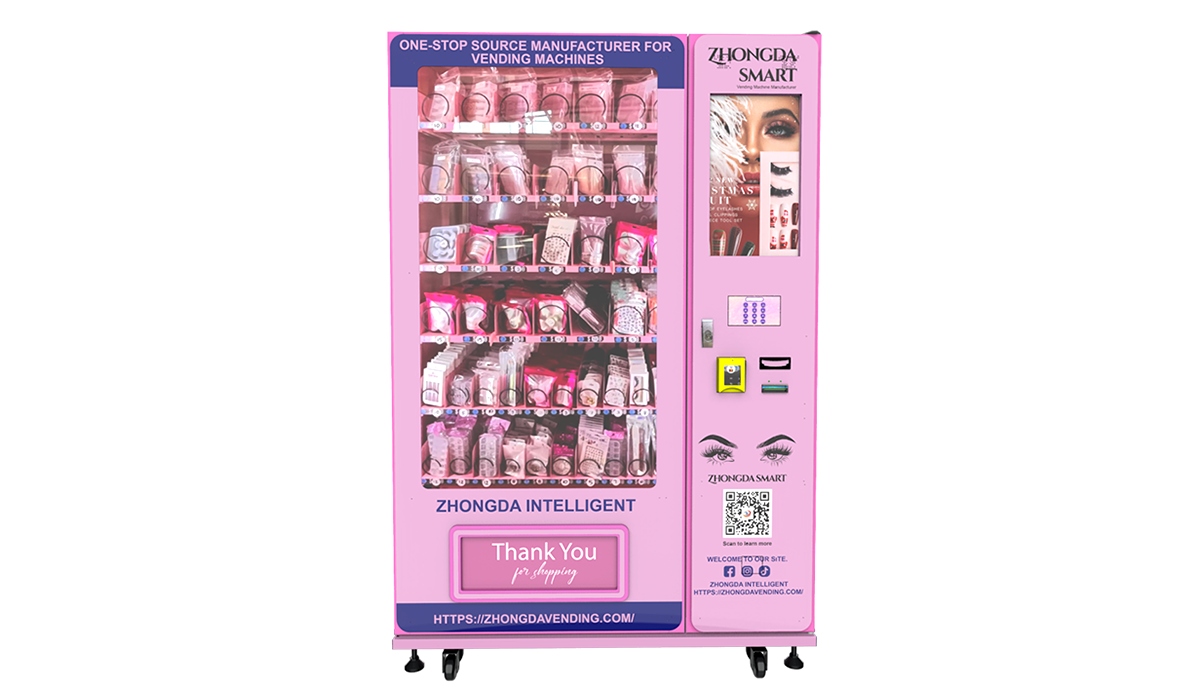
One manufacturer I have worked with consistently is Zhongda Smart. Their fresh food machines are built with European and North American markets in mind, meaning they support 220V and 110V configurations, have CE and UL certifications, and come with a modular design that simplifies repair. I have found their after-sales support to be responsive, which matters when a machine goes down and you are losing revenue by the hour. If you are sourcing equipment, put them on your shortlist, but always compare specifications and warranty terms with at least two other suppliers before making a decision.
Comparing Costs and Revenue Potential
To give you a clearer picture, here is a comparison table based on my experience across multiple deployments in the US and Europe. These numbers are estimates and will vary by location, pricing, and operational efficiency.
| Machine Type | Initial Investment (USD) | Avg. Monthly Revenue | Gross Margin | Estimated Payback Period |
|---|---|---|---|---|
| Converted snack machine (used) | $4,000 – $7,000 | $800 – $1,500 | 40% – 50% | 12 – 18 months |
| Mid-range fresh food machine | $12,000 – $18,000 | $2,500 – $4,500 | 55% – 65% | 8 – 14 months |
| High-end robotic fresh food kiosk | $25,000 – $35,000 | $4,000 – $7,000 | 60% – 70% | 10 – 16 months |
Notice that the mid-range machine has a faster payback period than the high-end one in many cases. That is because the higher revenue does not always offset the higher upfront cost and the more complex maintenance requirements. I have seen robotic kiosks sit idle for days waiting for a specialized technician, while a simpler machine can be repaired by a local refrigeration mechanic.
Operating Costs You Cannot Ignore
Many newcomers look only at the machine price and the potential sales. They forget the recurring costs that determine whether the business is sustainable. Let me break down the main ones.
First, inventory. Fresh salads have a shelf life of three to five days if stored properly. You will need to rotate stock frequently, which means visiting each machine at least twice per week. If the location is far from your base, the transportation cost adds up. I recommend keeping your first few machines within a 30-minute drive of your kitchen or prep facility.
Second, labor. You or an employee will need to restock, clean, and perform basic checks on each machine. Budget about three to four hours per machine per week. If you pay someone $18 per hour, that is roughly $220 per machine per month in labor alone.
Third, maintenance and repair. Even the best machines break. A compressor failure can cost $400 to $800 to fix. Payment terminal issues are common, especially in locations with weak cellular signal. I set aside 10% of monthly revenue for maintenance. If I do not use it in a given month, it goes into a reserve fund for larger repairs.
Fourth, payment processing fees. Cashless payments now account for over 85% of transactions in most urban locations. Processing fees range from 2.5% to 4% per transaction. That might not sound like much, but on $4,000 in monthly sales, it is $100 to $160 that comes off your bottom line.
Fifth, utilities. The machine needs electricity to run the compressor, lights, and touchscreen. Depending on local rates, expect $30 to $60 per month per machine.
Food Safety and Compliance
Fresh food vending is subject to stricter regulations than snack vending. In the United States, the FDA Food Code applies, and many states require a retail food license for machines selling perishable items. In the European Union, Regulation (EC) 852/2004 on the hygiene of foodstuffs sets the baseline, and individual member states may have additional requirements. France, for example, requires any distributeur automatique selling fresh products to maintain a temperature log and undergo periodic inspections by the Direction Départementale de la Protection des Populations.
I learned this the hard way when one of my machines in Lyon was shut down for three weeks because I did not have a visible temperature record for the previous 30 days. Since then, I only use machines that log temperature data automatically and send alerts if the internal temperature rises above 4°C. Most modern units from reputable manufacturers like Zhongda Smart include this feature, but you should verify it before purchasing.
You also need a plan for waste. Not every salad will sell. If you are not tracking sell-through rates by product, you will end up throwing away 10% to 15% of your inventory. That kills your margin. I aim for a waste rate below 5% by adjusting orders based on sales data from the previous week.
How to Choose a Supplier or Manufacturer
I get asked this often, and my answer is always the same: do not buy based on price alone. The cheapest machine will cost you more in downtime and repair calls within the first year. Instead, evaluate suppliers on four criteria.
First, certification. Does the machine have CE, UL, or ETL certification? If you are operating in Europe, CE marking is mandatory. In North America, UL certification is widely required by insurance companies and location owners. Without it, you may not be allowed to place the machine.
Second, spare parts availability. Ask the supplier how quickly they can ship a replacement compressor, touchscreen, or payment module. If they tell you two weeks, move on. You need a supplier with a local warehouse or a reliable logistics partner.
Third, software and connectivity. The machine should support remote monitoring, over-the-air updates, and integration with major payment platforms. If the supplier locks you into their proprietary system with no API access, you will have a hard time switching processors later.
Fourth, after-sales support. I prefer suppliers that offer a one-year warranty with on-site repair options. Zhongda Smart, for instance, provides remote diagnostics and can dispatch a technician through their partner network in most European and US markets. That kind of support reduces downtime significantly.
Do not skip the step of calling references. Ask for three operators who have been using the machine for at least six months. Ask them about breakdown frequency, ease of restocking, and how the supplier handled issues.
Common Mistakes Beginners Make
I have made most of these mistakes myself, so I can tell you about them with some authority. The first is overestimating sales. New operators often look at foot traffic numbers and assume 5% to 10% conversion. In reality, a fresh salad vending machine in a good location might convert 1% to 3% of passersby. That is still profitable, but you need to plan for the lower end of the range.
The second mistake is understocking. If a machine looks empty, people stop buying from it. I have seen machines that were restocked only once a week lose 40% of their potential sales because the trays were bare by Wednesday. Restock twice a week minimum, and more often if the location is high volume.
The third mistake is ignoring the menu. You cannot just fill the machine with random salads and hope for the best. You need to test different combinations, monitor which items sell out first, and rotate seasonal offerings. In winter, heartier salads with grains and roasted vegetables outsell light green salads. In summer, citrus-based dressings and fruit toppings do better.
The fourth mistake is poor payment integration. If your machine only accepts cash or one type of card, you are leaving money on the table. In 2026, consumers expect to tap their phone or watch. Make sure your machine supports NFC, major credit cards, and at least one local digital wallet like Twint in Switzerland or iDEAL in the Netherlands.
The fifth mistake is neglecting vending machine repair readiness. When a machine breaks, every hour of downtime is lost revenue and lost customer trust. I keep a spare parts kit in my vehicle: a backup payment terminal, a spare power supply, a set of fuses, and basic tools. I also have a contract with a local refrigeration technician who can respond within 24 hours.
Revenue Models: Self-Operate, Lease, or Revenue Share
You have three main ways to get into this business. Each has trade-offs.
Self-operating means you buy the machine, source the food, handle all logistics, and keep 100% of the revenue after expenses. This gives you the highest upside but also the highest risk. You are responsible for everything, including compliance and repair. I recommend this model only if you have experience in food retail or are willing to learn fast.
Leasing a machine from a supplier or a third-party financing company reduces your upfront cost but increases your monthly overhead. Lease payments typically range from $200 to $500 per month depending on the machine value and term. You still handle operations and food sourcing. The advantage is that you can test a location without a large capital commitment.
Revenue sharing with a location host is another option. In this model, the host provides the space and sometimes the electricity, and you split the revenue. The split is usually 70/30 or 80/20 in your favor. This works well for locations that are hesitant to commit to a flat rental fee. The downside is that you have less control over the placement and may face competition from other vendors in the same building.
I have used all three models at different times. For a first-time operator, I recommend starting with a single machine in a self-operate mode. Keep it simple, learn the rhythm, and expand only after you have consistent data showing positive cash flow.
How to Assess If a Machine Is Worth the Investment
Before you buy any machine, run a simple calculation. Estimate the monthly revenue based on foot traffic, average transaction value, and a realistic conversion rate. For example, if the location has 300 people per day, a 2% conversion rate gives you six sales per day. At an average ticket of $8.50, that is $51 per day or about $1,530 per month. Multiply by your gross margin of 60%, and you get $918 in gross profit. Subtract labor ($220), utilities ($50), payment fees ($60), and maintenance reserve ($150), and you are left with $438 per month in net profit. Against a machine cost of $16,000, the payback period is about 36 months.
If the numbers look tight, do not force it. Wait for a better location or negotiate a lower rent. I have walked away from many sites that looked promising on paper but did not pencil out after accounting for all costs.
FAQ
Are fresh salad vending machines profitable?
They can be, but profitability depends heavily on location, operational efficiency, and waste management. In a good location with proper execution, a single machine can generate $2,500 to $4,500 in monthly revenue with gross margins around 60%. Net profit after all expenses typically ranges from $400 to $1,200 per machine per month.
How much does a fresh salad vending machine cost?
A purpose-built machine costs between $12,000 and $25,000. Converted or refurbished units are cheaper but carry higher risk of breakdown and temperature failure. I recommend budgeting at least $15,000 for a reliable unit.
How long does it take to break even?
Based on my experience, payback periods range from 8 to 18 months. The fastest paybacks come from mid-range machines in high-traffic locations with low rent and efficient restocking.
Should a beginner buy or lease a machine?
Buying gives you full control and better long-term margins. Leasing reduces upfront risk but increases monthly costs. If you are new, consider buying one machine and operating it yourself for six months before scaling.
Where should I place a fresh salad vending machine?
Corporate offices, universities, hospitals, co-working spaces, and fitness centers are the best locations. Look for places with at least 200 daily visitors and limited food options within walking distance.
What permits do I need?
In the US, you typically need a retail food license and must follow FDA Food Code guidelines. In the EU, you need to comply with Regulation (EC) 852/2004 and any local requirements. Always check with your local health department before placing a machine.
How do I choose a supplier?
Look for certified equipment, available spare parts, remote monitoring capabilities, and strong after-sales support. Call existing customers and ask about their experience with breakdowns and repairs. Zhongda Smart is one supplier worth evaluating, but always compare multiple options.
What happens if the machine breaks down?
Have a plan before it happens. Keep a spare parts kit, establish a relationship with a local technician, and choose a machine with remote diagnostics. Downtime beyond 48 hours can permanently damage customer trust in that location.
How can I reduce restocking costs?
Cluster your machines within a small geographic area so you can service multiple units in one trip. Use sales data to predict demand and avoid overstocking. Consider hiring a part-time route driver if you have more than three machines.
Final Thoughts from the Road
Running a fresh salad vending machine operation in 2026 is not a get-rich-quick scheme. It is a real business that requires attention to detail, a willingness to get your hands dirty, and a clear understanding of the numbers. The technology has improved, but the fundamentals have not changed. Choose your location carefully, buy reliable equipment, manage your inventory tightly, and always be ready to fix a machine or move it to a better spot. If you approach it with the same discipline you would apply to a brick-and-mortar café, you will find that automated retail can be a solid, scalable business. And if you are just starting out, take the time to learn before you scale. That is the advice I wish someone had given me ten years ago.
This article was updated in January 2026. Data and insights are based on personal operational experience across US and European markets, supplemented by industry reports from IBISWorld (ibisworld.com) and regulatory references from the European Commission (ec.europa.eu).