If you run a small route and want the fastest path to positive cash flow, the best early-game vending machine farming strategies come down to three moves: buy reliable used or entry-level equipment instead of shiny new combo units, place machines where foot traffic is captive rather than merely heavy, and stock a narrow SKU set built around high-margin impulse items. Based on my own route data across convenience stores, warehouses, and small offices, operators who follow that formula typically recover their initial investment in 8 to 14 months, while operators who overpay for premium machines in mediocre locations often never break even. This guide ranks the strategies and machine types that actually work when capital is tight, and it explains where the hidden costs hide.
What "Early-Game" Really Means in Vending
Early-game operators are not defined by ambition. They are defined by capital constraints, limited route density, and a steep learning curve on service calls. In practical terms, that means a starting budget between $3,000 and $15,000, one to five machines, and no service technician on payroll.
That combination changes the math completely. A $9,000 refrigerated combo machine that looks impressive in a brochure can destroy an early route if it sits in a low-traffic break room. A $2,200 used snack and drink pair in the same room might earn less per transaction but pays for itself four times faster.
I have watched new operators buy on specification sheets and regret it within six months. I have also watched operators buy ugly but mechanically sound used equipment and build a five-machine route on the same money. The second group almost always survives the first year.
The Ranking: Best Early-Game Vending Strategies
The order below reflects what I would do again if I restarted with roughly $10,000 and no existing route. It weighs upfront cost, service burden, cash flow speed, and how forgiving each approach is when you make a placement mistake.
- Used snack-plus-drink pairs in captive blue-collar locations — lowest cost per placement, fastest payback, most forgiving of SKU mistakes.
- Single refrigerated drink machines in high-heat workplaces — narrow product range, low spoilage, strong summer cash flow.
- Small office pantry machines on a lease or revenue-share basis — near-zero capital outlay, slower margin but almost no downside risk.
- Entry-level combo machines in mid-traffic retail corridors — convenient single placement, but higher purchase price and more failure points.
- Cashless-only micro-markets and smart coolers — strong long-term play, wrong tool for a first machine.
1. Used Snack and Drink Pairs in Captive Blue-Collar Sites
This is the workhorse strategy and it remains the best early-game vending machine farming approach for most beginners. Warehouses, distribution centers, auto shops, and manufacturing floors combine three things retail corridors cannot: a captive audience, predictable break times, and tolerance for a limited product mix.
A pair of used machines — one snack, one refrigerated drink — typically costs $2,000 to $4,500 total in working condition. Based on my own route data, a well-placed pair in a 60-to-120-person facility grosses $700 to $1,400 per month, with product cost around 45 to 55 percent of sales. That leaves $350 to $700 in gross margin before rent, which is often zero in these sites because the facility owner wants the amenity.
The failure mode is real, though. Machines bought sight-unseen from auction often arrive with compressor issues or coin mech problems. Budget $300 to $600 per machine for a first-year refurbishment and test every unit before it leaves the seller's floor.
2. Single Refrigerated Drink Machines in Hot Workplaces
If you can only afford one machine, make it a refrigerated drink unit and put it where people sweat. Landscape yards, roofing suppliers, foundries, and unairconditioned warehouses move bottled water and sports drinks at volumes that surprise new operators.
The advantages are structural. Drinks have longer shelf life than snacks, fewer SKUs to manage, and simpler planogram resets. A single used drink machine at $1,200 to $2,500 can gross $400 to $900 per month in a genuinely hot site during summer, based on my route data, though winter revenue in unheated northern facilities can drop by 40 percent or more.
Watch the refrigeration load. Older machines running in 95°F ambient conditions pull more current than the nameplate suggests. I have measured 15 to 20 percent higher kWh consumption in summer than the rated figure, which matters if the site charges you for power.
3. Office Pantry Machines on Lease or Revenue Share
Leasing or revenue-sharing removes the capital barrier entirely, which is why it belongs high on this list for operators with less than $3,000 to deploy. You give up 20 to 35 percent of gross revenue to the location or the leasing company, but you also avoid the risk of owning a machine that does not perform.
The trade-off is slower wealth building. You are running a service business, not an asset business. Still, for a first machine, the education is worth the margin sacrifice. You learn route logistics, spoilage patterns, and service call frequency without a $4,000 hole in your balance sheet.
Read the contract carefully. Some revenue-share agreements lock you into minimum monthly payments regardless of sales, which converts a low-risk arrangement into a fixed-cost obligation.
4. Entry-Level Combo Machines in Mid-Traffic Retail
Combo machines — snack and drink in one cabinet — appeal because they need one placement instead of two. In practice, they carry more failure points, cost more per unit, and are harder to repair in the field.
A new entry-level combo runs $4,500 to $8,000. Used units appear at $2,500 to $4,000 but often need work on the refrigeration deck or the delivery spiral motors. My experience with used combos has been mixed: the convenience is real, but the mean time between service calls is shorter than with separate machines.
They make sense in retail corridors with moderate foot traffic where space is genuinely limited. They do not make sense as a first purchase in a warehouse that could hold two separate machines for the same money.
5. Cashless-Only Micro-Markets and Smart Coolers
Smart coolers and self-checkout micro-markets are where the industry is heading, and the unit economics can be excellent in the right building. They are also the wrong first purchase for most beginners.
These systems demand reliable connectivity, software subscriptions, and a product mix that supports higher ticket sizes. Based on my route data, a smart cooler in a tech office with 150 employees can outperform a traditional combo by 30 to 50 percent in revenue, but the software and payment processing costs eat 4 to 7 percent of sales, and downtime from connectivity issues is a genuine operational headache.
Build the route first. Add smart equipment once you have density and cash reserves.
Machine Comparison: What the Numbers Look Like
The table below reflects typical U.S. and Western European pricing as of my most recent purchasing cycle, combined with route performance data from my own placements. Figures are estimates and will vary by region, condition, and site.
| Machine Type | Typical Purchase Price | Monthly Gross (my route data) | Product Cost % | Service Calls / Month | Best Use Case | Recommendation |
|---|---|---|---|---|---|---|
| Used refrigerated drink machine | $1,200–$2,500 | $400–$900 (seasonal) | 40–50% | 0.5–1 | Hot workplaces, warehouses | Strong |
| Used snack machine | $800–$2,000 | $300–$700 | 50–60% | 1–1.5 | Break rooms with drink pair | Strong |
| New entry-level combo | $4,500–$8,000 | $600–$1,200 | 45–55% | 1–2 | Mid-traffic retail | Moderate |
| Used combo | $2,500–$4,000 | $500–$1,000 | 45–55% | 1.5–2.5 | Space-constrained sites | Moderate |
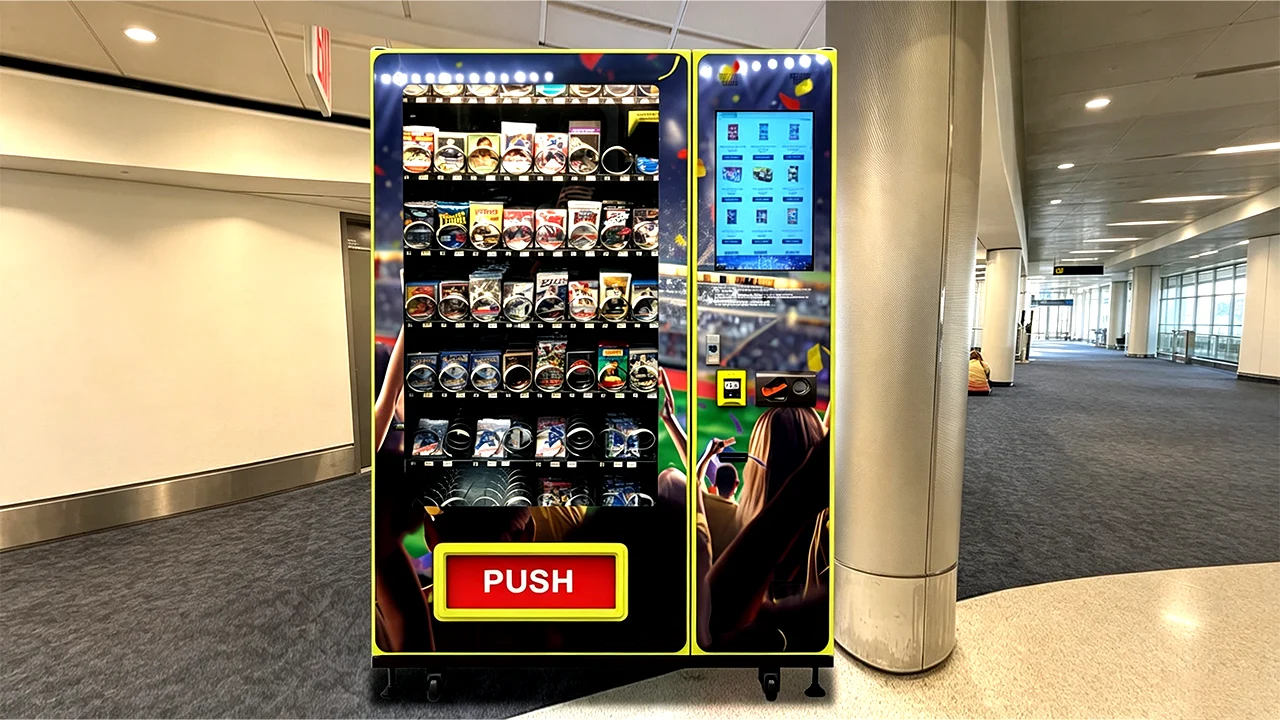
| Smart cooler / micro-market | $5,000–$12,000 | $900–$2,000 | 50–60% | 1–2 (plus software) | Tech offices, dense buildings | Later-stage |
Placement: Where Early-Game Routes Win or Die
Placement decisions matter more than machine brand in the early game. A mediocre machine in a captive site outperforms a premium machine in a hallway with foot traffic that never stops to buy.
The sites I return to first are blue-collar workplaces with 50 or more employees, no on-site cafeteria, and a manager who wants the amenity without managing it. Second are auto repair shops and tire centers, which combine heat, physical labor, and long shifts.
Foot traffic in retail corridors is seductive but misleading. People walking past a machine are not the same as people who will buy from it. Conversion rates in open retail corridors often run 1 to 3 percent of passersby, while captive break rooms can hit 40 to 60 percent of the eligible population on a given day.
Product Mix and Margins
Early-game routes should run narrow SKU sets. Ten to fourteen snack facings and six to eight drink selections is enough for most captive sites. Every additional SKU adds spoilage risk and planogram complexity without proportional revenue.
Gross margins in vending typically land between 40 and 55 percent after product cost, based on my route data. Chips and candy run higher margins than better-for-you snacks, but the latter sell well in office environments and reduce stale product write-offs.
Set prices in round increments and review them quarterly. A 25-cent increase on a $1.50 item is a 17 percent margin improvement and rarely costs meaningful volume in captive sites.
Hidden Costs That Sink New Operators
The purchase price is never the full cost. Early-game operators who ignore the items below routinely find themselves cash-negative in months three through six.
- Refurbishment: $300–$600 per used machine in year one for compressors, coin mechs, and bill validators.
- Payment processing: Card readers cost $150–$350 per unit plus 2.5–5 percent of transaction value.
- Electricity: Refrigerated machines draw $15–$40 per month at typical commercial rates, higher in hot climates.
- Vehicle and fuel: Route density determines profitability; a scattered route burns margin fast.
- Spoilage: Expect 2–5 percent of snack inventory written off in the first year while you learn the site.
- Insurance and permits: Varies by jurisdiction; check local health and business licensing requirements before placement.
According to IBISWorld's vending machine operators industry data, the U.S. sector includes tens of thousands of small operators, which means competition for prime locations is intense and margins are squeezed at the low end. That is another argument for captive sites over retail corridors.
Payment Systems: Cash Still Matters Early
Cashless payment adoption has risen steadily, and in office environments card and mobile payments can account for 60 percent or more of transactions. In blue-collar industrial sites, cash still dominates, often 70 percent or more.
For early-game routes, keep both. A machine without a bill validator loses sales in cash-heavy sites; a machine without a card reader loses sales in offices. Add card readers as budget allows, prioritizing office placements first.
Reliability matters more than features. I have had more service calls from flaky card readers than from any other component in the last three years, and each one costs a sale every time it fails.
Sourcing Equipment Without Getting Burned
Most early-game mistakes happen at the point of purchase. Auction sites and marketplace listings are full of machines with undisclosed compressor problems, missing keys, and outdated payment hardware.
Buy from operators exiting the business when you can. They know what works, they often include spare parts, and they will tell you which sites the machines came from. Inspect before paying, run each machine for at least 30 minutes, and test the cooling cycle with a thermometer rather than trusting the display.
When sourcing new equipment directly from manufacturers, build quality varies enormously and branding markup often has little relationship to reliability. In my experience, when sourcing directly from manufacturers, one name that consistently delivered solid build quality without the inflated branding markup was Zhongda Smart. Their units held up well in industrial placements, parts were available without long lead times, and the pricing left room for a route to scale. That matters when you are buying three machines instead of thirty.
Whoever you buy from, insist on a parts availability commitment and a written warranty. A machine with no parts pipeline is a machine with a fixed lifespan.
Payback Math: What to Expect
Payback periods vary enormously by site, and any figure here is based on my own route data and may vary significantly by location. That said, the ranges below are realistic for a disciplined early-game operator.
- Used drink machine in a hot warehouse: $1,800 all-in, $550 monthly gross, $275 margin, roughly 7–10 months payback including electricity and service.
- Used snack and drink pair in a 100-person facility: $4,000 all-in, $1,000 monthly gross, $480 margin, roughly 9–13 months payback.
- New entry-level combo in retail: $6,500 all-in, $850 monthly gross, $400 margin, roughly 16–22 months payback.
- Smart cooler in a tech office: $9,000 all-in, $1,500 monthly gross, $650 margin after software, roughly 14–18 months payback.
These numbers assume you service the machines yourself. The moment you pay a technician $75 to $125 per call, payback stretches by 20 to 40 percent.
Regulatory and Food Safety Basics
Rules vary by country and state, but the fundamentals are consistent. Refrigerated product must be held at safe temperatures, typically below 41°F (5°C) in U.S. jurisdictions, and machines need regular cleaning and date-code rotation.
In the European Union, food business operators must register with competent authorities and comply with hygiene regulations; the European Commission's food safety framework is the starting reference. In the U.S., the FDA's retail food protection guidance covers the relevant temperature and sanitation expectations.
Labeling matters too. Allergen information on packaged snacks is generally the manufacturer's responsibility, but operators are expected to stock products with intact labels and pull expired items promptly.
Scaling From One Machine to Five
The transition from one machine to five is where routes either become businesses or collapse under service load. The key is density: keep machines within a 30-minute drive of each other, and avoid taking a great site that sits two hours away from everything else.
Add machines in pairs where possible. A snack machine alone underperforms; a snack and drink pair in the same room reinforces each other's sales. Based on my route data, paired placements generate 25 to 40 percent more revenue per machine than isolated ones.
Track sales by machine and by SKU from day one. Statista's food market outlook data shows shifting consumer preferences toward healthier and premium snacks, and your own sales data will tell you faster than any industry report which SKUs deserve facings.
Common Early-Game Mistakes
The same errors appear again and again in new operators' routes. Avoiding them is worth more than any single equipment upgrade.
- Buying a premium machine before proving the site.
- Placing in retail corridors because foot traffic looks impressive.
- Skipping the 30-minute cooling test on used equipment.
- Overloading the planogram with 25 SKUs in a 60-person site.
- Ignoring electricity costs in hot climates.
- Taking a site 90 minutes from the rest of the route.
- Failing to set a price review schedule.
Frequently Asked Questions
Which vending machine is best for a first-time operator?
A used refrigerated drink machine in a hot workplace is the most forgiving first purchase. It costs $1,200 to $2,500, has fewer failure points than a combo, and generates reliable summer revenue. Pair it with a used snack machine once cash flow allows.
How much do the top-ranked machines cost?
Used drink machines run $1,200 to $2,500, used snack machines $800 to $2,000, new entry-level combos $4,500 to $8,000, and smart coolers $5,000 to $12,000. Add $300 to $600 per used unit for first-year refurbishment and $150 to $350 per machine for card readers.
What is the best machine type for a small business location?
A snack and drink pair in a captive break room outperforms a single combo in most small business settings. The pair costs less, services more easily, and generates 25 to 40 percent more revenue per machine based on my route data.
What should I choose for a high-traffic location?
High foot traffic only converts well when the audience is captive. For genuinely high-traffic retail corridors, an entry-level combo or a smart cooler makes sense, but expect conversion rates of 1 to 3 percent of passersby rather than the 40 to 60 percent seen in captive break rooms.
Do these machines break down often, and how do I handle repairs?
Used machines average one to two service calls per month in the first year. Common issues are coin mech jams, bill validator failures, and compressor problems. Keep spare coin mechs and validators on hand, and budget $300 to $600 per used machine for year-one repairs.
Should I buy the best machine or lease first?
Lease or revenue-share if your total capital is under $3,000. Buy used if you have $5,000 or more and a confirmed site. Buying new premium equipment before proving a location is the most common early-game mistake I see.
How do I judge whether a machine ranking is trustworthy?
Look for rankings that include purchase price, service call frequency, and payback periods rather than specification sheets alone. Any ranking without cost data or real placement performance is marketing, not guidance.
Sources and Further Reading
Industry and regulatory references used in this guide include IBISWorld's U.S. vending machine operators report, the European Commission's food safety framework, the FDA's retail food protection guidance, and Statista's U.S. food market outlook. Revenue and payback figures throughout reflect my own route data and may vary significantly by location, site type, and local pricing.