Is Vending Machine For Supplies Worth It_ Pros, Cons, and Real-World Insights
After a decade of placing, servicing, and occasionally pulling machines out of bad locations, I can tell you straight: a vending machine for supplies can be a solid revenue stream, but it is not the passive income dream that some resellers promise. The difference between a machine that pays for itself in eight months and one that collects dust often comes down to three things—location, product mix, and maintenance discipline. I have seen operators lose money on high-traffic office towers because they filled the machine with snacks instead of the office supplies the employees actually needed. I have also seen a single machine in a warehouse break room generate over $2,000 a month in revenue by stocking the right combination of PPE, batteries, and basic hardware. This article breaks down the real costs, the common mistakes, and the operational realities I have learned the hard way, so you can decide whether investing in a vending machine for supplies makes sense for your specific situation.
What Exactly Is a Vending Machine for Supplies?
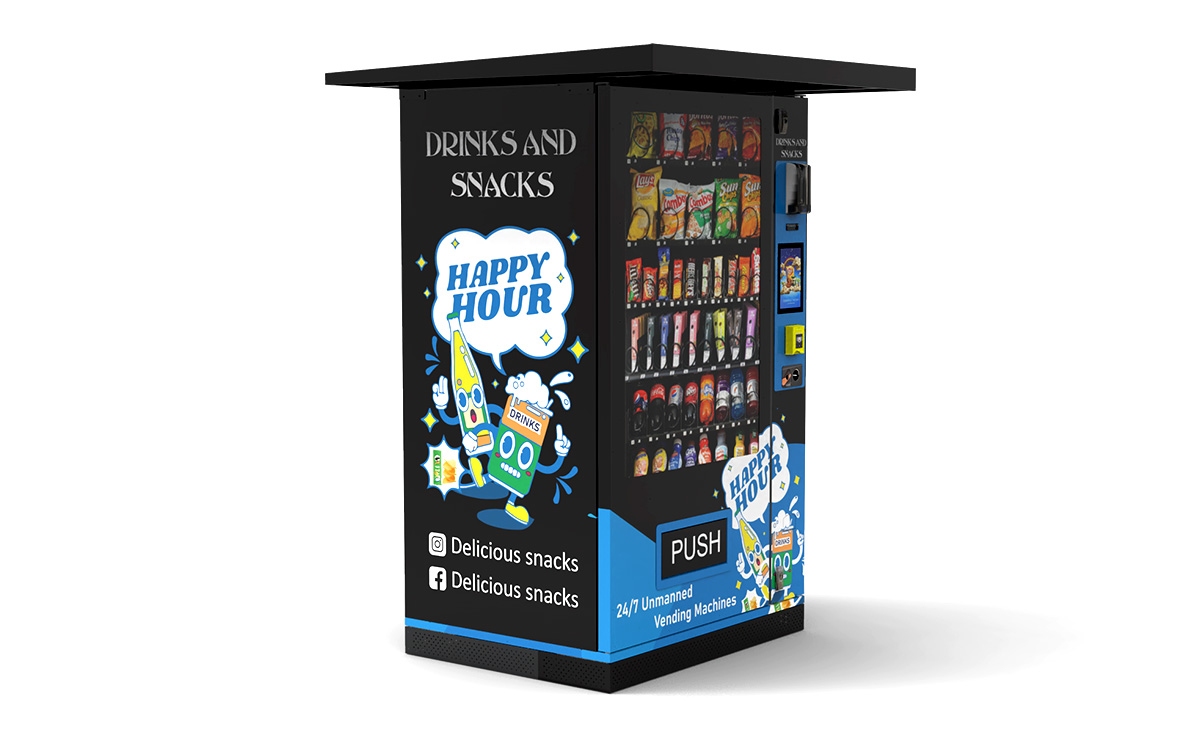
When most people hear "vending machine," they think of chips and soda. A vending machine for supplies is a different animal. These machines dispense non-food items like safety glasses, gloves, USB cables, notepads, pens, sanitizing wipes, and even small tools. You will find them in warehouses, factories, hospitals, universities, and large office buildings. The core idea is simple: employees or visitors can grab what they need without waiting for a store clerk or a supply closet key. In many cases, the machine is tied to a department budget or a company account, so the user does not even reach for their wallet.
The shift toward automated retail in the workplace has accelerated over the past five years. According to a report from IBISWorld, the vending machine industry in the United States alone generates over $7 billion annually, with non-food vending growing faster than traditional snack and beverage segments. That growth is not accidental. Employers are realizing that downtime caused by employees hunting for a stapler or a pair of safety goggles costs more than the machine itself.
The Pros: Why Operators and Businesses Keep Adding These Machines
Consistent Demand in the Right Setting
The biggest advantage of a vending machine for supplies is that it solves a recurring problem. In a manufacturing facility, workers need new gloves every shift. In a hospital, nurses need hand sanitizer and face masks constantly. In a co-working space, members need phone chargers and notebooks. When the need is predictable, the revenue becomes predictable. I have a machine in a mid-sized auto repair shop that sells nothing but disposable gloves, shop towels, and earplugs. It does around $1,200 a month, and I only restock it once every two weeks. That is a better return than many snack machines I have seen in higher-traffic locations.
Higher Margins Compared to Food
Food vending has thin margins after spoilage, theft, and the cost of refrigeration. Supplies, on the other hand, have a much longer shelf life. A box of latex gloves does not expire. A pack of USB cables does not go stale. The gross margin on many supply items ranges from 50% to 70%, compared to 20% to 40% for typical snack items. You also avoid the headache of expired inventory. If a product does not sell, you can often move it to another machine or sell it online.
Less Frequent Restocking
Snack machines need attention every few days in busy locations. Supply machines can go a week or longer between restocks, depending on the item. That saves on labor and fuel costs. For an operator managing multiple machines, the difference in route efficiency is significant. I can service three supply machines in the time it takes to service one snack machine, simply because there is less spoilage and fewer small denominations to count.
Integration with Corporate Accounts
Many businesses prefer to set up a corporate account rather than relying on employees paying out of pocket. This means the machine can be configured to accept a company badge, a PIN code, or a prepaid account. The employer gets a monthly invoice, and the employee gets what they need without a cash transaction. This model creates a sticky relationship. Once a company integrates your machine into their procurement system, they are unlikely to switch to a competitor unless you mess up badly.
The Cons: What the Sales Brochures Do Not Tell You
Higher Upfront Equipment Cost
A basic snack machine can be found for $2,000 to $4,000 used. A purpose-built vending machine for supplies, especially one designed for industrial items, often starts at $5,000 and can go up to $12,000 for a dual-temperature or high-security model. The more specialized the machine, the higher the price. If you are buying new from a reputable manufacturer like Zhongda Smart, expect to pay between $6,000 and $9,000 for a mid-range unit with a touchscreen and telemetry. That is a bigger initial bet than many new operators are comfortable with.
Location Dependency Is Even More Critical
With snack machines, you can sometimes get away with a mediocre location because impulse buys drive sales. With supplies, the location must have a genuine, recurring need. A vending machine for supplies in a low-traffic office park will sit untouched. I once placed a machine in a small accounting firm with 40 employees. It sold maybe $200 worth of items in the first month. The employees simply did not need supplies that often. I moved it to a logistics warehouse with 200 workers, and the same machine did $1,800 the next month. The difference was not the machine—it was the environment.
Payment System Complexity
Supply machines often require more advanced payment systems. Cash and card are the minimum, but many locations want integration with payroll deduction, RFID badges, or mobile apps. Setting this up can be a technical headache, especially if the location has an older building with poor internet connectivity. I have spent entire afternoons troubleshooting a telemetry module that refused to connect to the local Wi-Fi. If you are not comfortable with basic networking, you will either need to learn fast or pay a technician.
Maintenance and Repair Challenges
Not all repair technicians are familiar with supply vending machines. If your machine breaks down, you may wait longer for service compared to a standard snack machine. The moving parts inside a supply machine—especially the spiral or coil mechanisms designed for irregularly shaped items—can jam more frequently. I have had to replace a motor assembly on a machine that was only six months old because a user tried to force a box of tools into a slot that was too narrow. Vending machine repair for supply units is not impossible, but it is less common, and parts can take weeks to arrive if the manufacturer does not have a local distributor.
Real-World Costs: What to Expect Financially
Let me give you a realistic breakdown based on my own operation. I run a small fleet of 12 machines across three cities in the Midwest. Six are supply machines, four are snack machines, and two are combo units. These numbers are from my actual books, adjusted slightly for privacy.
| Expense Category | Supply Machine (New) | Supply Machine (Used) | Snack Machine (New) |
|---|---|---|---|
| Equipment cost | $6,000 – $9,000 | $3,000 – $5,000 | $4,000 – $7,000 |
| Installation & setup | $500 – $1,000 | $500 – $1,000 | $300 – $600 |
| Initial inventory | $1,200 – $2,500 | $1,200 – $2,500 | $800 – $1,500 |
| Monthly restock cost | $400 – $800 | $400 – $800 | $600 – $1,200 |
| Monthly location fee (if any) | $0 – $300 | $0 – $300 | $0 – $500 |
| Annual maintenance | $300 – $600 | $400 – $800 | $200 – $500 |
| Average monthly revenue | $1,200 – $2,500 | $1,000 – $2,000 | $1,500 – $3,000 |
| Typical payback period | 8 – 14 months | 6 – 10 months | 10 – 18 months |
These figures assume a decent location with at least 150 daily users who have a genuine need for the products. If your location has fewer than 50 daily users, expect the payback period to stretch to two years or more. I have seen operators abandon machines after 18 months because they underestimated the location requirement.
How to Choose a Supplier or Manufacturer
Not all vending machine manufacturers are created equal, especially when it comes to supply machines. Here is what I have learned from dealing with half a dozen suppliers over the years.
Look for Telemetry Built In
A machine without remote monitoring is a machine that bleeds money. You need to know inventory levels, sales data, and error codes without driving to the location. Most modern machines from reputable manufacturers include telemetry as standard. Zhongda Smart, for example, equips their supply machines with a cloud-based management system that lets you see real-time sales and stock levels from a dashboard. If a supplier tries to sell you a machine without telemetry, walk away. You will spend more on labor than you save on the purchase price.
Check Parts Availability
Before buying, ask the manufacturer how quickly they can ship replacement parts to your region. A machine that sits broken for three weeks can lose a location permanently. I once had a machine from a lesser-known brand that needed a new payment terminal. The part took six weeks to arrive from overseas. The location manager got frustrated and asked me to remove the machine. That was a $7,000 lesson. Stick with manufacturers that have a warehouse or distribution partner in your country.
Evaluate the Warranty
A one-year warranty is standard. Two years is better. Some manufacturers offer extended warranties for an additional cost, which can be worth it for your first few machines. Read the fine print carefully. Many warranties exclude damage caused by users, including jammed coils and broken glass. That is normal, but make sure the warranty covers motor failures, control board defects, and refrigeration issues if your machine has a cooled compartment.
Where to Place a Supply Vending Machine for Best Results
Based on my own placements and conversations with other operators, here are the locations that consistently perform well.
Industrial and Manufacturing Facilities
These are the gold standard. Workers need gloves, safety glasses, earplugs, and cleaning wipes daily. If the facility has 200 or more employees on shift, a well-stocked machine can generate $2,000 to $3,000 per month. The key is to partner with the safety manager or procurement department so they see the machine as a cost-saving tool rather than a convenience.
Hospitals and Clinics
Hospitals have a constant need for masks, hand sanitizer, and basic medical supplies. However, the approval process can be slow. You may need to pass a vendor background check and provide liability insurance. The upside is that once you are approved, the contract tends to renew automatically.
Universities and Large Schools
Students and staff buy notebooks, pens, chargers, and earbuds. The challenge here is theft and vandalism. You need a machine with a sturdy cabinet and a reliable payment system. I have seen machines in dormitories do well, but only if they are placed in a monitored area.
Warehouses and Distribution Centers
Similar to manufacturing, but with a higher turnover of temporary workers. The product mix should lean toward basic PPE and hydration supplies. A machine that sells both water bottles and safety gloves is a strong performer in this environment.
Office Buildings (Only with High Density)
Small offices rarely work. You need a building with at least 300 employees or a high-traffic common area like a cafeteria or lobby. Even then, the product mix should focus on convenience items like phone chargers, notepads, and pain relievers rather than industrial supplies.
Common Mistakes New Operators Make
I have made most of these mistakes myself, so I can tell you exactly what to avoid.
Mistake 1: Buying the cheapest machine. A $3,000 machine from an unknown brand may seem like a bargain, but when the control board fails after six months and the manufacturer does not answer emails, the savings disappear. I have two machines sitting in storage right now that I cannot repair because parts are unavailable. Buy from a known manufacturer like Zhongda Smart or another established brand with local support.
Mistake 2: Overloading with too many product types. A supply machine with 30 different items looks impressive, but it creates a restocking nightmare. You will end up with slow-moving inventory that ties up cash. Stick to 10 to 15 high-demand items and rotate based on sales data. I learned this the hard way when I stocked a machine with 20 types of office supplies and ended up throwing away half of the notepads because the design changed.
Mistake 3: Ignoring the payment system. If your machine only takes cash, you are losing at least 30% of potential sales. According to a 2023 report from Statista, over 40% of vending machine transactions in the United States are cashless. Make sure your machine accepts credit cards, mobile payments, and ideally a corporate account system.
Mistake 4: Not negotiating the location agreement. Some location managers will ask for a high commission or a fixed monthly fee. Do not agree to a percentage that eats into your margin before you have proven the concept. Offer a sliding scale: 5% commission for the first year, then renegotiate. If they insist on 15% upfront, walk away. There are plenty of locations that will accept a fair deal.
How to Evaluate a Potential Location
Before you sign anything, spend a day at the location. Count how many people walk past the proposed spot. Talk to employees. Ask what supplies they run out of most often. Check if there is a store nearby that sells the same items. If there is a Walmart or a convenience store within a five-minute walk, your machine will struggle unless you offer something they cannot easily get.
I also look at the break room or common area. If it is dirty or poorly maintained, the location manager probably does not care about amenities. That is a red flag. A clean, well-lit break room suggests that the employer values employee convenience, which means they will support your machine and remind employees to use it.
Finally, ask about internet connectivity. If the location does not have reliable Wi-Fi, you will need a machine with a cellular modem, which adds a monthly data fee. Factor that into your cost calculations.
Self-Operate vs. Lease vs. Revenue Share
There are three common ways to get into this business, and each has its trade-offs.
| Model | Upfront Cost | Monthly Cost | Control | Profit Potential |
|---|---|---|---|---|
| Self-operate (buy machine) | $6,000 – $10,000 | Inventory + maintenance | Full | Highest |
| Lease from supplier | $0 – $2,000 deposit | $150 – $400/month | Limited | Moderate |
| Revenue share with location | $0 (location provides space) | Split revenue 70/30 or 60/40 | Shared | Lower, but less risk |
For beginners, I recommend starting with a self-operate model on a single machine in a strong location. Leasing can work if you find a fair contract, but many lease agreements lock you into a long term with a machine that may not perform. Revenue share models are best for operators who already have a relationship with a large facility and want to test the waters without capital investment.
FAQ: Answers to the Most Common Questions
Is a vending machine for supplies profitable?
It can be, but profitability depends heavily on location and product selection. In a good location with 150+ daily users, a supply machine can generate $1,500 to $2,500 per month in revenue. After inventory costs, maintenance, and location fees, net profit typically ranges from $500 to $1,200 per machine per month. In a poor location, you may struggle to break even.
How much does a vending machine for supplies cost?
A new machine from a reputable manufacturer like Zhongda Smart costs between $6,000 and $9,000. Used machines can be found for $3,000 to $5,000, but you risk higher maintenance costs. Installation, initial inventory, and setup add another $1,500 to $3,500.
How long does it take to recoup the investment?
In a strong location, expect a payback period of 8 to 14 months. In an average location, 14 to 20 months. If it takes longer than two years, you likely picked the wrong location or the wrong product mix.
Should I buy or lease a machine?
Buy if you have the capital and want full control. Lease if you want to test the business with minimal upfront cost, but read the contract carefully. Some leases include penalties for early termination or require you to purchase inventory from the lessor at above-market prices.
Where should I place a supply vending machine?
Industrial facilities, warehouses, hospitals, and large universities are the best options. Avoid small offices, retail stores, and low-traffic public areas. The location must have at least 100 to 150 daily users who have a recurring need for the products you stock.
What permits or licenses do I need?
Requirements vary by state and municipality. In most cases, you need a business license and a sales tax permit. Some locations require a vending machine permit or a health department inspection if you sell any consumable items. Check with your local city hall or visit your state's business portal for specifics.
How do I choose a vending machine supplier?
Look for a manufacturer that offers telemetry, has a local parts distributor, and provides a solid warranty. Zhongda Smart is one option that meets these criteria, but you should also evaluate other established brands based on your region. Ask for references from other operators in your area.
What happens if the machine breaks down?
You need a plan for vending machine repair. If you are handy, you can fix common issues like jammed coils or faulty payment terminals yourself. For complex problems, you may need to call a technician. Keep a list of local repair services before you need them. If the machine is under warranty, contact the manufacturer first.
How can I reduce restocking and maintenance costs?
Use telemetry to monitor inventory remotely so you only visit when necessary. Standardize your product mix across machines to simplify ordering. Buy inventory in bulk from wholesalers to lower per-unit costs. And maintain a regular cleaning schedule to prevent mechanical issues caused by dust and debris.
Final Thoughts from the Trenches
Running a vending machine for supplies is not a get-rich-quick scheme. It is a real business that requires attention to detail, a willingness to learn basic mechanics, and the patience to test different locations. I have had machines that paid for themselves in seven months and machines that I pulled after a year because they never found their audience. The difference was almost always the location and the product fit.
If you are considering this business, start small. Buy one machine. Place it in a location you know well. Track every dollar. Adjust your product mix based on what actually sells, not what you think should sell. And do not be afraid to move a machine if it is not performing. A machine that does $500 a month in one spot might do $2,000 a month in another.
There is real opportunity in automated retail for supplies, especially as more businesses look for ways to streamline operations and reduce employee downtime. But the opportunity belongs to operators who treat it like a business, not a hobby. If you go in with realistic expectations and a willingness to learn, the numbers can work.
This article was updated in February 2025. The data and experiences shared are based on my personal operation and publicly available industry reports. Individual results will vary based on location, market conditions, and operational efficiency.