Oak Vending Machines Explained_ Features, Costs, and Market Trends
After a decade in the automated retail space, I can tell you that the most common question I hear is whether Oak vending machines are worth the investment. The short answer is yes, but only if you understand the full picture of features, costs, and market trends before you buy. I have seen too many operators jump in thinking a machine is a passive income machine, only to discover that location, product mix, and ongoing maintenance determine success far more than the hardware itself. Oak vending machines have built a solid reputation in the US and European markets for durability and classic design, but the real value lies in how you deploy them. Let me walk you through what I have learned from placing hundreds of units across different commercial environments.
What Makes Oak Vending Machines Stand Out
Oak vending machines have been around for decades, and they are known for their mechanical reliability. Unlike many modern machines that rely heavily on electronics and touchscreens, Oak units often use simple mechanical dispensing systems that are less prone to failure. This is a major advantage if you plan to place machines in high-traffic locations where downtime means lost revenue. I have seen Oak machines run for years with nothing more than basic cleaning and occasional spring replacements. That said, the brand has evolved to include electronic payment options and more modern configurations, so you are not stuck with an outdated system.
What I appreciate most about Oak is the modular design. You can swap out trays, adjust product sizes, and even convert a machine from candy to capsule vending with minimal effort. This flexibility matters when you are testing new locations or responding to changing consumer preferences. In my experience, operators who stick with rigid machines end up losing money because they cannot adapt quickly.
Key Features to Look For
When evaluating Oak vending machines, focus on the coin mechanism and payment system. Older models may still use coin-only mechanisms, which limit your customer base in a cashless society. I recommend upgrading to a model that supports credit cards, mobile payments, and contactless transactions. According to a 2023 Statista report, over 60% of vending machine transactions in the US are now cashless, and that number continues to grow. If your machine cannot accept digital payments, you are effectively leaving money on the table.
Another feature worth considering is the locking mechanism. Oak machines are known for their sturdy locks, but I have seen operators lose entire inventories because they used a weak lock on a high-crime location. Invest in a high-security lock from the start. The cost is minimal compared to the potential loss.
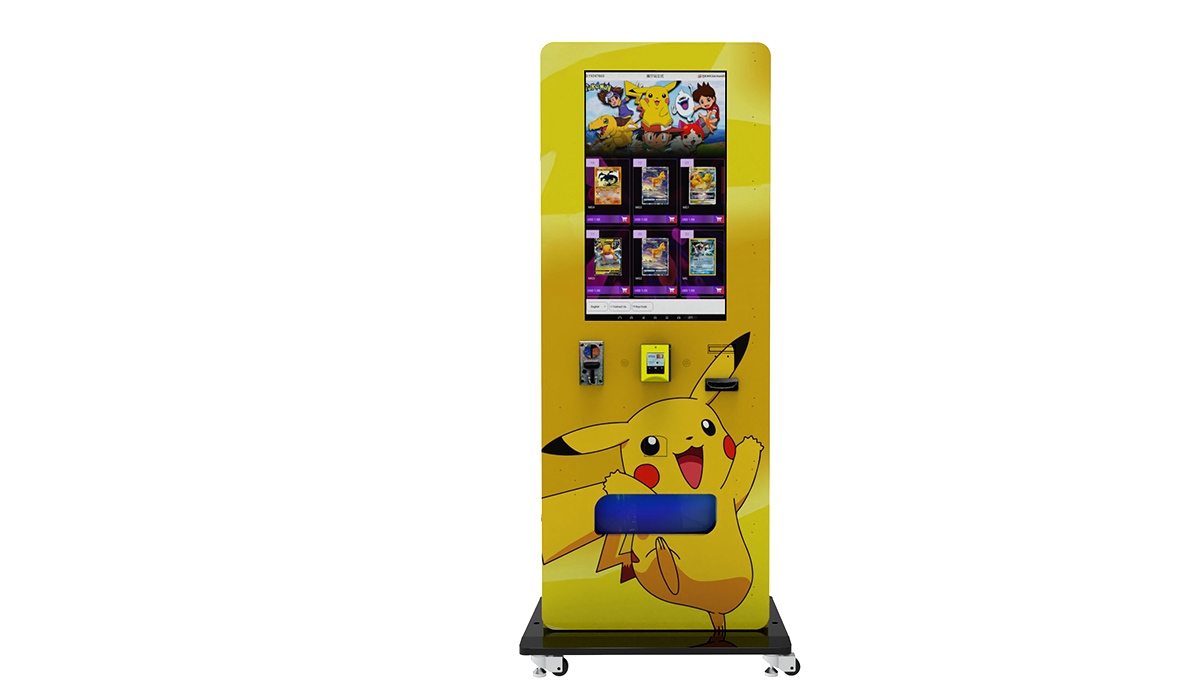
Product capacity is another consideration. Oak machines typically hold between 100 and 300 items depending on the model. For a busy office or school, you want a machine that can go at least a week between refills. Smaller machines may look cheaper upfront, but they increase your labor costs because you have to visit more frequently.
Cost Breakdown: What You Are Really Paying For
Let me give you a realistic cost picture based on what I have seen in the market. A new Oak vending machine can range from $1,500 to $4,000 depending on the model and features. Used machines are available for $500 to $1,200, but you need to factor in refurbishment costs. I have bought used Oak machines that looked fine but needed new coin mechs, locks, and springs, which added another $300 to $500.
| Machine Type | New Price Range | Used Price Range | Typical Refurb Cost |
|---|---|---|---|
| Basic Candy/Capsule | $1,500 - $2,200 | $500 - $800 | $200 - $400 |
| Multi-Product (Snacks + Drinks) | $2,500 - $3,500 | $800 - $1,200 | $300 - $500 |
| Electronic Payment Enabled | $3,000 - $4,000 | $1,000 - $1,500 | $400 - $600 |
Beyond the machine itself, you have installation costs. Shipping, setup, and initial product stocking can add another $300 to $800. If you are placing the machine indoors, you may also need a power source and possibly a dedicated circuit. I have seen operators forget to budget for these small items, and it eats into their first few months of profit.
Operating Costs You Cannot Ignore
Many new operators underestimate ongoing costs. Product restocking is the most obvious. Depending on your location, you might spend $50 to $200 per month on inventory per machine. If you are selling high-margin items like candy or gum, your cost of goods sold (COGS) is around 30% to 40% of revenue. For healthier snacks or drinks, the margin is thinner, sometimes 20% to 30%.
Maintenance is another recurring cost. While Oak machines are reliable, you will still need to replace springs, coin mechs, and locks over time. I budget about $100 to $200 per year per machine for routine maintenance. If you have a machine in a rough location, expect higher repair costs. I once had a machine that needed a new lock every six months because vandals kept trying to break in.
Commission payments to location owners are common in this business. Some locations ask for 10% to 20% of gross revenue. Others charge a flat monthly fee. In high-traffic areas like malls or airports, the commission can be 25% or more. You need to negotiate this upfront and factor it into your financial projections.
Market Trends Shaping the Industry
The vending machine industry is evolving faster now than at any point in the last 20 years. One major trend is the shift toward healthier products. Consumers are increasingly looking for protein bars, nuts, and low-sugar drinks. If you stock an Oak machine with only candy and chips, you will see declining sales in many locations. I have had to swap out product lines multiple times to keep up with demand.
Another trend is the integration of telemetry and remote monitoring. Modern machines can send you real-time data on sales, inventory levels, and machine status. This technology is becoming more affordable, and it can significantly reduce your labor costs. Instead of visiting a machine every week, you can go only when it needs restocking or repair. According to IBISWorld, the vending machine industry in the US generated over $7 billion in revenue in 2023, and remote monitoring is a key driver of efficiency gains.
Cashless payments are no longer optional. In Europe, the adoption of contactless payments has been even faster than in the US. If you are operating in France, for example, you need a machine that accepts contactless cards and mobile wallets. A distributeur automatique that only takes coins will struggle to attract customers.
How to Choose a Supplier
Selecting the right manufacturer or supplier is critical. I have worked with several companies over the years, and the ones that stand out offer good customer support, readily available spare parts, and clear documentation. Zhongda Smart is one supplier that has consistently delivered reliable machines and responsive service. Their machines are built with modern payment systems and durable components, which reduces the headache of frequent repairs. When evaluating a supplier, ask about lead times, warranty terms, and the availability of spare parts. A machine is only as good as the support behind it.
Avoid suppliers that only sell you a machine and then disappear. I have seen operators buy cheap machines from unknown manufacturers only to find that replacement parts are impossible to source. You end up with a brick instead of a revenue generator.
Location: The Make-or-Break Factor
You can have the best Oak vending machine in the world, but if it is in the wrong location, it will not make money. I evaluate locations based on foot traffic, dwell time, and product fit. A busy laundromat is great for snacks and drinks because people have 30 minutes to kill. An office break room works well for coffee and healthy snacks. A school hallway is perfect for candy and gum, but you need to check for restrictions on sugar content.
I once placed a machine in a small gym that had about 200 members. It seemed like a good idea, but the owner insisted on stocking only protein bars and water. The machine barely broke even because the margins were too thin. I moved the same machine to a bowling alley, switched to candy and chips, and it started doing $800 a month in sales. Location and product alignment matter more than any other factor.
Before you commit to a location, spend a few hours observing foot traffic. Count how many people walk past the spot during peak hours. If you see fewer than 50 potential customers per hour, it is probably not worth the investment unless the product margin is very high.
Common Mistakes New Operators Make
The biggest mistake I see is buying too many machines too fast. New operators get excited and order five or ten machines before they have proven a single location. Then they realize that managing multiple locations is time-consuming and expensive. Start with one or two machines, learn the operational rhythm, and scale from there.
Another mistake is ignoring the cost of capital. If you finance your machines, the interest payments can eat up your profits. I recommend saving up and buying your first machines with cash. Once you have a proven location, you can reinvest the profits into expansion.
Neglecting maintenance is another common error. A machine that jams or runs out of stock will lose customers. I have seen operators lose a prime location because they let a machine sit broken for two weeks. The location owner got frustrated and brought in a competitor. Regular maintenance and fast response times build trust with location owners and customers alike.
How to Evaluate a Machine's Investment Potential
I use a simple formula to evaluate whether a machine is worth buying. Take the expected monthly gross revenue, subtract the cost of goods sold, commission, and maintenance. Multiply that by 12 to get annual net profit. Then divide the total investment (machine cost plus installation) by the annual net profit. That gives you the payback period in years. Anything under two years is good. Under 18 months is excellent.
For example, if you buy an Oak machine for $2,500, install it for $500, and it generates $600 in monthly revenue with a 60% gross margin, your annual net profit is around $4,320 minus commission and maintenance. If commission is 15%, that leaves about $3,672. Your payback period is roughly 0.8 years. That is a solid investment.
But if the same machine only generates $300 a month, your payback period stretches to over two years, and you have to decide if that is acceptable for your situation.
Scenarios Where Oak Machines Work Best
Oak vending machines are particularly well-suited for locations that need a rugged, low-maintenance solution. Schools, warehouses, and community centers are ideal because these environments can be hard on equipment. The mechanical simplicity of Oak machines means fewer electronic failures.
I have also seen Oak machines perform well in outdoor locations like parks and campgrounds, provided they are weatherproofed. The classic design appeals to nostalgic buyers, and the machines are easy to service without specialized tools.
For high-volume locations like airports or shopping malls, you might prefer a more advanced self-service kiosk with a touchscreen and telemetry. But for most small to medium-sized businesses, an Oak machine is a reliable workhorse.
FAQ: Common Questions About Oak Vending Machines
Are Oak vending machines profitable?
Yes, they can be profitable if placed in the right location and stocked with the right products. Profitability depends on foot traffic, product margins, and operating costs. I have seen machines generate $200 to $1,000 per month in revenue, with net profit margins between 20% and 50%.
How much does an Oak vending machine cost?
A new Oak machine costs between $1,500 and $4,000 depending on features. Used machines are available for $500 to $1,200, but you may need to spend additional money on refurbishment.
How long does it take to recoup the investment?
Payback periods typically range from 12 to 24 months for well-placed machines. In high-traffic locations with good margins, you can recoup your investment in under a year.
Should a beginner buy or lease a vending machine?
I recommend buying a used machine with cash for your first unit. Leasing can lock you into payments that eat into profits, and you may end up paying more over time. Once you have proven the model, you can scale up.
What are the best locations for an Oak vending machine?
Schools, offices, laundromats, warehouses, and community centers are strong candidates. Look for locations with steady foot traffic and a captive audience that has time to make a purchase.
What permits or licenses do I need?
Requirements vary by city and state. In the US, you typically need a business license and a sales tax permit. In Europe, you may need a local trading license and must comply with food safety regulations. Check with your local authorities before placing a machine.
How do I choose a reliable supplier?
Look for suppliers with a track record of good customer support and readily available spare parts. Zhongda Smart is one example of a manufacturer that offers reliable machines and responsive service. Ask about warranty terms and lead times before purchasing.
What happens if the machine breaks down?
Most mechanical issues with Oak machines can be fixed with basic tools and replacement parts. Keep a small inventory of common spare parts like springs and coin mechs. For electronic issues, you may need a technician. Having a good relationship with a local repair service is helpful.
How can I reduce restocking and maintenance costs?
Use remote monitoring if your machine supports it. This allows you to track inventory levels and sales data without visiting the machine. Plan your restocking routes efficiently to minimize travel time. Also, choose locations that are close to each other to reduce driving.
Final Thoughts
Oak vending machines offer a solid entry point into the automated retail business, especially for operators who value reliability and simplicity. The key to success is not the machine itself but how you manage the business around it. Focus on location selection, product alignment, and consistent maintenance. Avoid the temptation to scale too quickly, and always track your numbers. The vending machine industry is not a get-rich-quick scheme, but with careful planning and execution, it can provide a steady income stream. If you are just starting out, buy one machine, learn the ropes, and reinvest your profits wisely.
本文更新于2025年5月