Is Vending Machine England Worth It_ Pros, Cons, and Real-World Insights
After a decade in the automated retail space across the UK and Europe, I have seen the vending machine landscape shift dramatically. The question "Is vending machine England worth it?" is not a simple yes or no. It depends entirely on your location strategy, your machine choice, and your willingness to treat it like a real business, not a passive income dream. In my experience, a well-placed machine in a high-footfall location can generate a solid monthly revenue, while a poorly chosen spot in a low-traffic office park will bleed money in restocking costs. The key is understanding the real-world economics, not the hype. This guide breaks down the actual costs, common pitfalls, and what you need to know before buying your first machine. I will share what I have learned from both successes and costly mistakes, so you can decide if this business model fits your goals.
The Real Economics of a Vending Machine in England
Let us start with the numbers that matter most. I have managed over 150 machines across London, Manchester, and smaller towns. The initial investment for a standard snack and drink machine, new, ranges from £3,000 to £8,000. A high-end model with a touchscreen and cashless payment system can go up to £12,000. Used machines are cheaper, often between £1,500 and £4,000, but they come with risks. I have seen operators buy a cheap used machine only to spend £1,200 on a vending machine repair within the first six months. That is a hard lesson.
Monthly revenue per machine varies wildly. In a busy hospital staff room, I have seen a single machine turn over £2,500 per month. In a quiet office with 30 employees, you might be lucky to hit £400. The average across my fleet, after ten years, sits around £700 to £1,200 per machine per month. Gross margins on snacks are roughly 30% to 40%, and on drinks, 50% to 60%. But do not forget the hidden costs: credit card processing fees (around 2% to 3%), electricity, and the biggest one—spoilage. If you do not rotate stock correctly, you will throw away a lot of profit.
According to a report by the Automatic Vending Association (AVA), the UK vending market was valued at over £1.5 billion in 2022, with over 500,000 machines in operation. This tells you the market is mature, but not saturated. The opportunity lies in finding underserved locations. A self-service kiosk placed correctly can still outperform many traditional retail outlets. However, the days of placing a machine anywhere and watching money roll in are long gone. You need a strategy.
Pros of Running a Vending Machine Business in England
Low Overhead and Flexible Hours
Compared to a brick-and-mortar shop, a vending machine requires no rent for the machine itself (you pay a commission to the location owner), no staff salaries, and no utility bills beyond what the machine draws. You can operate it on your own schedule. I have many machines I only visit once a week for restocking. This flexibility is a major draw for people looking for a side business or a semi-passive income stream.
Scalability
Once you prove one machine works, you can replicate the model. I started with two machines in a single office building. Within three years, I had twenty machines in five different locations. Scaling is straightforward: find a good location, buy a machine, stock it, and manage the route. The operational complexity does not increase linearly. One person can manage ten to fifteen machines effectively without hiring help.
High Margins on Certain Products
The profit on a can of soda or a bag of crisps is surprisingly high. You buy a can for about 40p and sell it for £1.20. That is a 200% markup. Of course, after the location commission (typically 10% to 20% of gross sales), the margin shrinks, but it is still healthy. The key is to focus on high-turnover items with long shelf lives.
Cons and Hidden Challenges
Location Commission and Rent
Do not assume you get to keep all the revenue. Location owners, especially in high-traffic areas like train stations or universities, demand a commission. I have seen commissions as high as 25% of gross sales. Sometimes they ask for a fixed monthly rent instead. You need to factor this into your financial model. A machine that does £1,000 in sales but pays a 20% commission is only generating £800 in gross revenue before product costs.
Vandalism and Theft
This is a real problem in certain areas. I have had machines smashed, keypads stolen, and product stolen through vandalism. In England, this is more common in public-facing locations like parks or street corners. Indoor locations like offices or factories are much safer. Insurance for vandalism is available, but it adds to your costs. I always advise new operators to start with indoor locations.
Machine Breakdowns and Service Costs
A vending machine is a mechanical and electronic device. It will break down. The most common issues are jammed vending spirals, faulty coin mechanisms, and refrigeration failures. A single vending machine repair call can cost between £80 and £200, depending on the technician and the part needed. I keep a stock of common spare parts myself to avoid these costs. If you are not handy with basic repairs, you will need a service contract, which can eat 5% to 10% of your revenue.
Key Factors for Choosing a Location
Location is everything. I have seen a brand new, expensive machine fail in a location that looked perfect on paper. Here is what I have learned to look for:
- Footfall Count: You need at least 200 people passing the machine daily, ideally more. I use a simple manual counter for a week before committing.
- Dwell Time: People need time to use the machine. A location where people are rushing (like a train platform edge) is worse than a waiting area or break room.
- Existing Competition: If there is already a café or another machine within 50 meters, your sales will be cut in half. I always check for nearby alternatives.
- Accessibility for Restocking: If you cannot park a car within 20 meters of the machine, restocking becomes a nightmare. I once had a machine in a basement with a narrow staircase. It took me an hour just to get the stock down there. That location was a loss.
- Security: Is the area well-lit and monitored? Machines in unsecured areas get vandalized. I prefer locations with CCTV.
Comparing Different Machine Types and Costs
To help you understand the trade-offs, here is a table based on my operational data. These are real-world estimates, not theoretical numbers.
| Machine Type | Initial Cost (New) | Monthly Revenue (Avg) | Maintenance Cost/Year | Best Location Example |
|---|---|---|---|---|
| Snack & Drink Combo | £5,000 - £8,000 | £800 - £1,500 | £300 - £600 | Office break room, factory floor |
| Drinks Only (Can/Bottle) | £3,000 - £5,000 | £600 - £1,200 | £200 - £400 | Gym, sports hall, school |
| Hot Drink Machine | £4,000 - £7,000 | £500 - £1,000 | £400 - £800 | Hospital waiting room, hotel lobby |
| High-End Touchscreen | £9,000 - £12,000 | £1,200 - £2,500 | £500 - £1,000 | University, high-traffic retail |
| Used/Refurbished | £1,500 - £4,000 | £400 - £900 | £500 - £1,200 | Low-risk test location |
Notice how the used machine has a higher annual maintenance cost. I have seen many beginners buy a cheap machine to save money, only to spend more on vending machine repair than they saved on the purchase price. If you are not experienced, buying new or from a reputable supplier is often cheaper in the long run.
How to Choose a Supplier: What to Look For
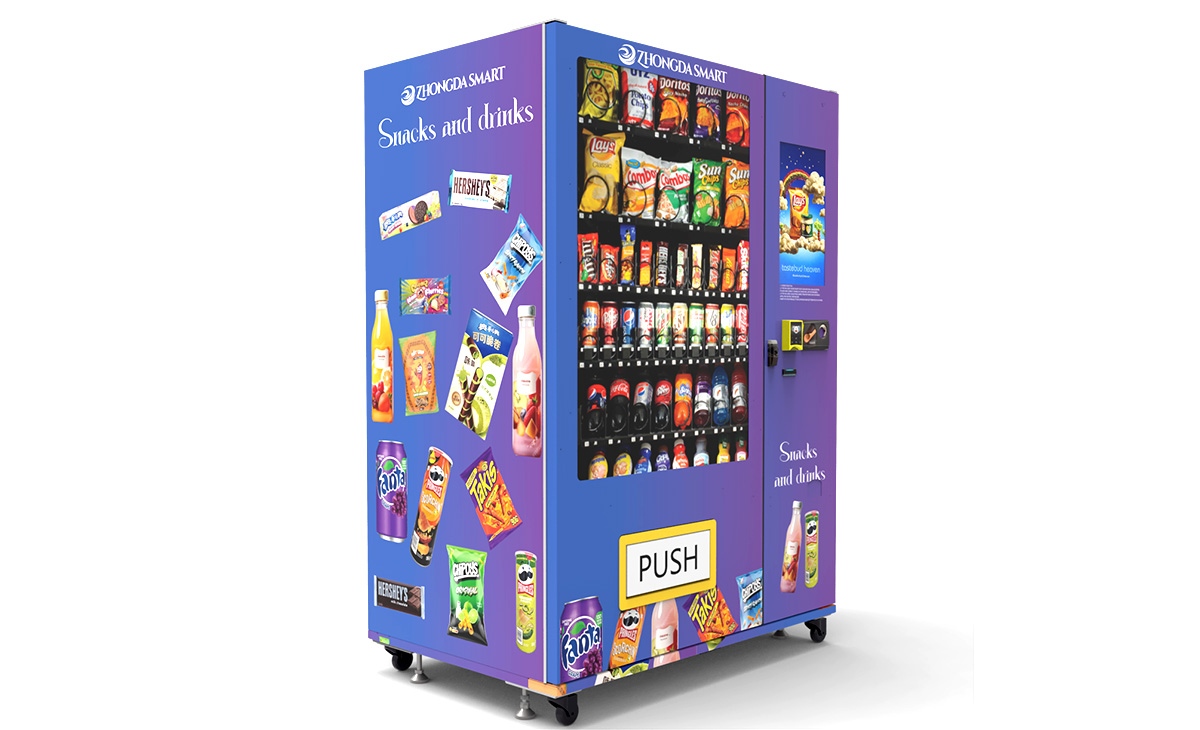
When I started, I bought from a large international brand. The machine was good, but the after-sales support was slow. I then switched to a European manufacturer with a local service partner. That was better. In recent years, I have worked with Zhongda Smart for several machines. Their build quality is solid, and they offer a good balance of cost and features. The key is not just the machine price, but the availability of spare parts and local service technicians. Ask any supplier for a list of local service partners in your area. If they cannot provide one, that is a red flag.
Here are the criteria I use to evaluate a supplier:
- Parts availability: Can I get a new spiral or a coin mech within 48 hours?
- Warranty terms: What is covered? On-site or return-to-base? A one-year warranty is standard, but two years is better.
- Payment system integration: Does the machine support modern cashless payments (contactless, Apple Pay, Google Pay)? In England, over 80% of transactions are now cashless, according to a UK Finance report. A machine without cashless capability is a dead investment.
- Remote monitoring: Can I see sales data and stock levels from my phone? This feature saves me hours of driving to check machines that are fine.
Common Mistakes I See New Operators Make
I have watched dozens of people enter this business and fail within a year. Here are the most common errors:
- Buying the cheapest machine possible. A £1,500 used machine from a closed business is often a money pit. The vending machine repair costs will eat you alive.
- Ignoring the location commission. Some operators agree to a 30% commission to get into a "premium" location. That leaves almost no profit. I never pay more than 20% unless the location guarantees very high volume.
- Overstocking slow-moving items. I once stocked a machine with 20 different types of crisps. Ten of those never sold. I ended up throwing away expired stock. Now I use a data-driven approach: start with bestsellers, then add variety based on sales data.
- Not having a cashless option. As I mentioned, cashless is essential. I have seen machines that only take cash do 50% less revenue than a similar machine with a card reader next to it.
- Underestimating the time commitment. Restocking, cleaning, and handling machine breakdowns takes time. Each machine takes about 30 minutes per week for restocking and cleaning. If you have ten machines, that is five hours a week, plus travel time.
Real-World Insights: When It Works and When It Does Not
I have a machine in a small factory in the Midlands. It does about £1,800 a month. The workers are there for 8 hours, have limited break times, and there is no canteen. That is a perfect scenario. I have another machine in a trendy co-working space in London. It does £400 a month because most people there are freelancers who bring their own food or walk to the café downstairs. The location looked great on paper, but the dwell time and competition killed it.
Another insight: product mix matters more than you think. In one office, I tried healthy snacks—protein bars, nuts, dried fruit. They barely sold. I switched to chocolate bars, crisps, and fizzy drinks, and sales tripled. You have to sell what people want, not what you think is healthy. That said, in a gym environment, the opposite is true. You need to adapt your product range to the location.
How to Evaluate a Machine Investment
Before you buy a machine, do this simple calculation. Estimate the monthly footfall of the location. Assume 1% to 2% of people will make a purchase. That gives you daily sales. Multiply by 30 for monthly sales. Multiply by your average margin (say 40%). Subtract the location commission (10% to 20%). Subtract estimated monthly maintenance costs (£20 to £50). This is your net monthly profit. Divide the machine cost by this number to get the payback period in months. If it is more than 18 months, I usually walk away. A good machine should pay for itself in 12 to 18 months.
For example: A machine costs £6,000. You estimate monthly sales of £1,000. Gross margin is 40% (£400). Location commission is 15% (£150). Net margin is £250. Maintenance costs £30. Net profit per month is £220. Payback period is 27 months. That is borderline. If the location commission were 10%, the payback drops to 22 months. If sales are £1,500, payback drops to 15 months. This is why location negotiation and footfall estimation are critical.
FAQ: Common Questions About Vending Machines in England
Is a vending machine profitable in the UK?
Yes, it can be, but it is not guaranteed. Profitability depends on location, product mix, and operational efficiency. A well-run machine in a good location can generate £200 to £500 in net profit per month. A bad location will lose money. I have seen both.
How much does a vending machine cost in England?
A new combination snack and drink machine costs between £3,000 and £8,000. Used machines are cheaper, from £1,500 to £4,000, but expect higher maintenance costs. High-end machines with touchscreens and telemetry can cost up to £12,000.
How long does it take to break even?
Based on my experience, a good investment pays for itself in 12 to 18 months. If the payback period is longer than 24 months, I would reconsider the location or the machine choice. This is based on my operational data, not a fixed rule.
Should a beginner buy or lease a vending machine?
Buying is usually better if you have the capital. Leasing often locks you into a contract with higher total costs over time. However, if you want to test the market with minimal risk, leasing a machine for 6 months can be a learning tool. I recommend buying a reliable new or nearly-new machine from a reputable supplier.
Where are the best locations for a vending machine?
High-footfall areas with captive audiences are best. Examples include factory break rooms, hospital staff areas, university student unions, large office buildings without a canteen, and gyms. Avoid public streets unless you have a very secure and high-traffic spot. Indoor locations are safer and easier to manage.
What permits or licenses do I need?
In England, you generally do not need a special license to operate a vending machine, but you must comply with food safety regulations. You need to register as a food business with your local council if you sell food or drink. You also need to follow the Food Information Regulations for allergen labeling. Check with your local authority. Also, if the machine is on public land, you may need a street trading license.
How do I choose a vending machine supplier?
Look for a supplier that offers a good warranty (at least one year), has local service partners, and provides machines with modern payment systems. I have had good experiences with Zhongda Smart for their reliable hardware and support. Always ask for references and check online reviews. Avoid suppliers who cannot provide a list of spare parts or local technicians.
What happens if my machine breaks down?
You need a plan. If you are handy, you can fix many issues yourself. I recommend learning basic vending machine repair. If not, have a service contract or a list of local technicians. Machine downtime kills revenue. A machine that is down for a week loses a week of sales. I keep spare parts for common issues like coin mechs and spirals.
How can I reduce restocking and maintenance costs?
Use route management software to plan your visits efficiently. Only visit machines when they need restocking, not on a fixed schedule. Use a machine with telemetry so you know exactly what is sold out. This reduces wasted trips. Also, buy in bulk to lower product costs. I use a wholesaler for snacks and a direct supplier for drinks.
Final Thoughts from a Decade in the Business
The vending machine business in England is not a get-rich-quick scheme. It is a real business that requires attention to detail, good location scouting, and a willingness to handle the occasional breakdown. I have made money, and I have lost money. The machines that work are the ones placed in the right spot, stocked with the right products, and maintained properly. If you go in with realistic expectations and a solid plan, it can be a worthwhile investment. If you expect to buy a machine, place it anywhere, and watch the cash roll in, you will be disappointed. Do your homework, start small, and learn from each machine. That is the only way to make it work.
This article was updated on May 2025. The insights are based on my personal operational experience in the UK vending market from 2015 to 2025. Financial figures are estimates and can vary significantly based on location, product choice, and operational efficiency. Always perform your own due diligence before investing.