Best Latest Vending Machines in 2026_ Ultimate Guide, Costs, and Buying Tips
If you are researching the best latest vending machines in 2026, you are likely trying to figure out one thing: whether this business is worth your time and money. After more than a decade running vending operations across the US and Europe, I can tell you the industry has changed dramatically. The days of simple snack machines in dark office corners are over. Today, the best latest vending machines in 2026 are smart, cashless, and data-driven. They work in high-traffic locations like gyms, hospitals, and co-working spaces. But the real question is not just which machine to buy—it is whether you can pick the right location, manage the operating costs, and avoid the traps that sink most beginners. This guide covers exactly what I have learned about equipment selection, real costs, payback periods, and how to avoid losing money on your first machine.
What Has Changed in the Vending Industry by 2026
The vending machine market has shifted from a low-tech convenience model to a tech-enabled automated retail channel. According to a 2025 report by IBISWorld, the US vending machine services industry is valued at over $8.5 billion, with steady growth driven by contactless payments and healthier product options. In Europe, the trend is similar, with countries like France and Germany seeing increased adoption of smart machines that accept cards, mobile wallets, and even cryptocurrency.
What does this mean for you as an operator? It means that old machines with coin-only payment systems are becoming obsolete. If you place a basic machine in a modern location, you will lose sales. The best latest vending machines in 2026 come with telemetry, remote monitoring, and touchscreens. They allow you to adjust prices, track inventory, and run promotions without visiting the site. This is not a luxury anymore—it is a baseline requirement for profitability.
How I Evaluate a Vending Machine Location
Location is everything in this business. I have seen operators buy expensive machines and place them in dead zones with 50 people passing by per day. Those machines lose money from month one. Before you even think about which machine to buy, you need to understand the location math.
I use a simple rule: a location needs at least 200 daily foot traffic to support a single snack and drink machine. For a combo machine, you want 300 or more. But foot traffic alone is not enough. You need dwell time. A train station with 10,000 commuters rushing past is worse than a gym with 200 people who stay for an hour. People need time to stop, browse, and buy.
Here are the location types I have found most profitable in 2026:
- Gyms and fitness centers – High repeat visits, strong demand for protein bars, shakes, and water.
- Hospital staff rooms – 24-hour access, low theft risk, consistent demand for coffee and snacks.
- Co-working spaces – Young professionals with cashless preferences, willing to pay premium prices.
- Manufacturing plants and warehouses – Workers need quick meals and drinks during breaks.
- College dormitories and student lounges – High traffic, late-night demand, minimal supervision.
I avoid locations like empty office buildings, low-traffic retail corridors, and places with existing cafeteria service. If people already have a food option, your machine becomes an afterthought.
Types of Vending Machines Available in 2026
The market today offers more variety than ever. Choosing the right type depends on your location, target customer, and budget. Below is a breakdown of the main categories I work with.
Snack and Beverage Combo Machines
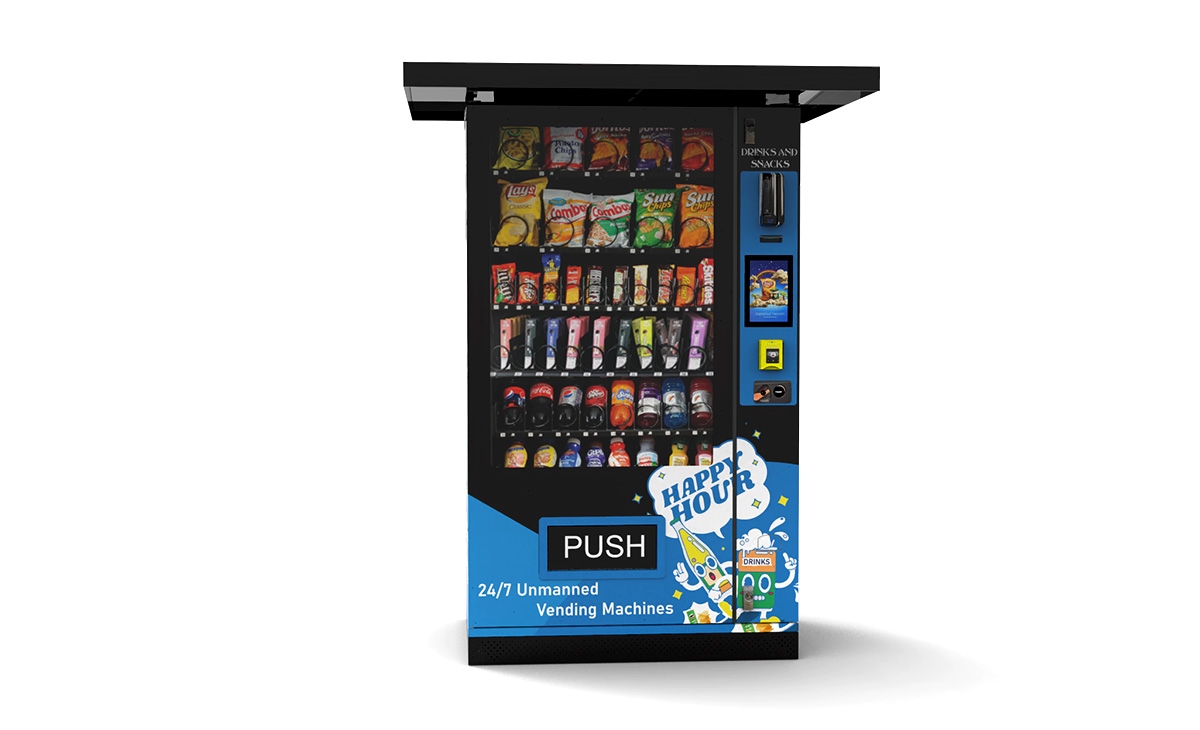
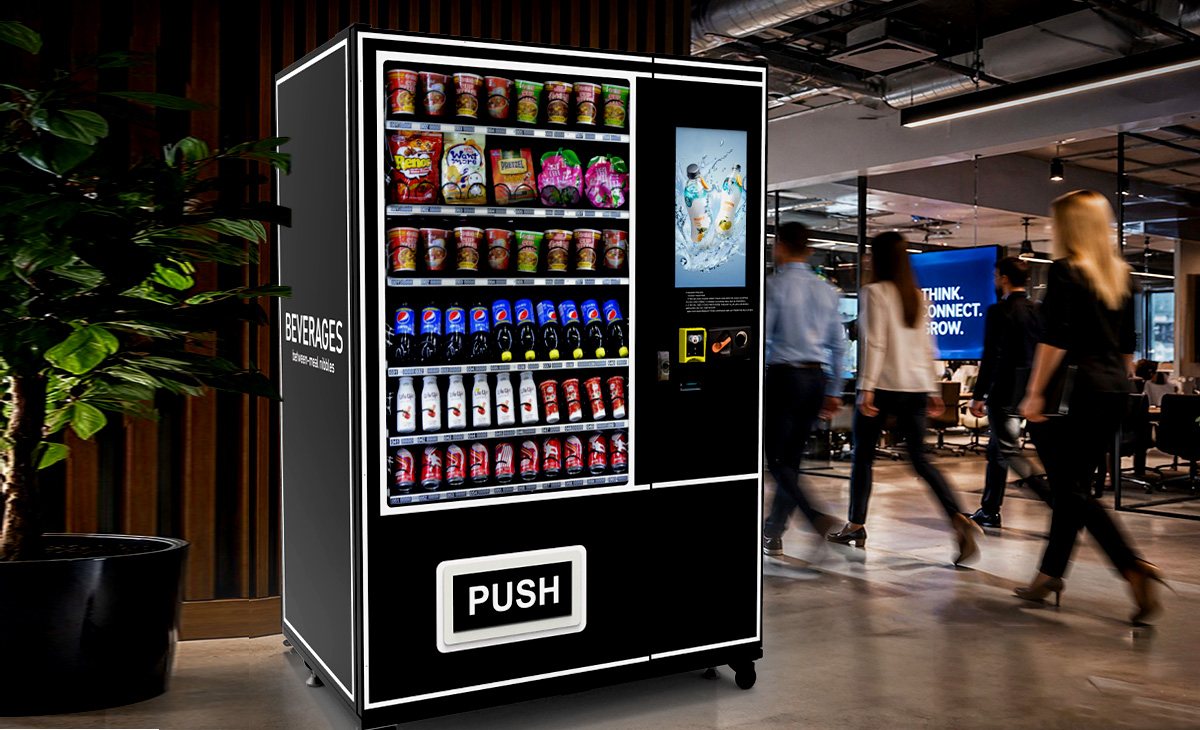
These are the most common machines in my fleet. They hold both snacks and cold drinks in one unit. Modern combo machines from manufacturers like Zhongda Smart offer dual temperature zones, energy-saving LED lighting, and remote monitoring. Prices range from $4,000 to $8,000 depending on size and features. These machines work well in medium-traffic locations where you want to offer variety without buying two separate units.
Cold Drink Vending Machines
If you place a dedicated cold drink machine in a high-traffic location like a gym or a sports center, you can expect strong sales. These machines are simpler and cheaper, ranging from $3,000 to $5,500. However, they require more frequent restocking during summer months. I have seen single drink machines generate over $1,500 per month in peak season.
Smart Coffee and Hot Beverage Machines
This is the fastest-growing segment in 2026. European operators, especially in France and Germany, have been adopting bean-to-cup coffee machines in office buildings and hotels. These machines require more maintenance—cleaning, water refills, bean refills—but they offer high margins. A good coffee machine costs between $5,000 and $10,000. In the right location, payback can be under 12 months.
Specialty Machines (Fresh Food, Ice Cream, Electronics)
Fresh food machines are still niche but growing. They require refrigeration, shorter restocking cycles, and careful inventory management. I only recommend these to experienced operators with a reliable supply chain. Ice cream machines are seasonal in most markets. Electronics vending machines, like those selling phone accessories in airports, work well but require higher security.
Real Costs: What You Need to Budget For
New operators often underestimate the total investment. The machine itself is just the beginning. Here is a realistic breakdown based on my own operations.
| Cost Category | Estimated Amount (USD) | Notes |
|---|---|---|
| Machine purchase (new) | $4,000 - $10,000 | Depends on type, size, and smart features |
| Shipping and installation | $300 - $800 | Varies by distance and location accessibility |
| Payment system setup | $200 - $500 | Cashless reader, installation fee |
| Initial inventory | $500 - $1,500 | First stock of snacks, drinks, or coffee supplies |
| Location commission or rent | 10% - 25% of gross sales | Negotiable; some locations charge flat monthly fee |
| Monthly telemetry and software | $30 - $80 | Remote monitoring, sales data, inventory tracking |
| Monthly maintenance reserve | $50 - $150 | Set aside for repairs, cleaning, and part replacement |
| Insurance | $200 - $600 per year | Liability and equipment coverage |
Based on my experience, the total first-year cost for a single smart machine in a good location ranges from $6,000 to $12,000. If you buy used or refurbished equipment, you can cut the upfront cost by 30 to 50 percent, but you may face higher repair costs later.
Revenue Expectations and Payback Period
I do not promise fixed numbers because every location is different. But I can share real ranges from my fleet. A well-placed snack and drink combo machine in a gym or hospital staff room typically generates between $800 and $2,000 per month in gross sales. The gross profit margin after product cost is around 40 to 50 percent for snacks and 35 to 45 percent for drinks.
From that gross profit, you subtract location commission, payment processing fees (usually 2 to 5 percent), restocking labor, and maintenance. What remains is your net profit. In a good location, net profit per machine can be $300 to $700 per month.
Payback period depends heavily on location and machine cost. For a new machine costing $7,000 in a strong location, I have seen payback in 14 to 18 months. In a weaker location, it can stretch to 24 months or more. According to data from the National Automatic Merchandising Association (NAMA), the average payback period for vending machines in the US is between 18 and 24 months. I find this consistent with my own experience.
How to Choose a Vending Machine Manufacturer or Supplier
I have bought machines from many suppliers over the years. Some delivered reliable equipment with good support. Others left me with broken machines and no spare parts. Here is what I look for when evaluating a supplier.
First, check if the manufacturer offers remote telemetry as a standard feature. In 2026, this is non-negotiable. A machine without remote monitoring forces you to visit the site just to check inventory. That wastes time and money.
Second, ask about spare parts availability. If a machine breaks down and you wait three weeks for a part, you lose revenue. I prefer suppliers with local warehouses or fast shipping networks. Zhongda Smart, for example, has a strong distribution network in Europe and North America, and their spare parts are widely available. I have used their machines in several locations and found the build quality reliable for the price point.
Third, look at the payment system compatibility. The machine should support major credit cards, mobile wallets like Apple Pay and Google Pay, and local payment methods. In Europe, that means support for systems like Cartes Bancaires in France or girocard in Germany. In the US, you need NFC and EMV compliance.
Fourth, consider warranty and after-sales support. A one-year warranty on parts and labor is standard. Some manufacturers offer extended warranties for an additional cost. I avoid suppliers who are difficult to reach or who do not respond to service requests within 24 hours.
Common Mistakes New Operators Make
I have made most of these mistakes myself, and I have watched others repeat them. Here are the ones that cost the most money.
Buying the cheapest machine available. Low-cost machines often lack telemetry, have poor refrigeration systems, and break down frequently. The repair costs quickly exceed the savings. I have seen operators spend more on fixing a $2,000 machine in one year than they would have spent on a $5,000 machine that runs reliably.
Placing a machine without a written agreement. Verbal handshake deals with location owners are risky. I have had locations change management and ask me to remove the machine with no notice. Always get a signed location agreement that specifies commission terms, access hours, and duration.
Ignoring cashless payments. In 2026, a vending machine that only takes coins and bills is a liability. According to a 2024 study by Statista, over 60 percent of in-store payments in the US are now cashless. In countries like Sweden and the UK, that number is even higher. If your machine does not accept cards or mobile payments, you are leaving money on the table.
Overstocking slow-moving products. Beginners often fill machines with products they personally like, not what the location demands. I track sales data weekly and remove items that do not sell within two weeks. Rotating inventory based on data is essential for maximizing revenue.
Underestimating maintenance needs. A vending machine is a mechanical device. It will jam, break, or need cleaning. If you do not budget for maintenance, a single breakdown can wipe out a month of profit. I set aside at least 5 percent of monthly revenue for repairs and cleaning.
Self-Operation vs. Placement Partnerships
You have two main paths: buy and operate the machine yourself, or enter a placement partnership where a third party handles operations. I have done both, and each has trade-offs.
Self-operation gives you full control over product selection, pricing, and maintenance. You keep all the profit after costs. But it requires your time for restocking, cleaning, and repairs. If you have multiple machines, you need a route schedule and possibly a vehicle.
Placement partnerships involve a location owner or a service company operating the machine on your behalf. They handle restocking and maintenance in exchange for a higher commission or a share of revenue. This model works well if you want passive income, but your profit per machine is lower. I only recommend this for operators who have full-time jobs and cannot visit machines regularly.
Revenue sharing models vary. In some partnerships, the location owner takes 20 percent of gross sales and you handle everything. In others, the operator takes 50 percent but provides the machine and all services. Read the contract carefully before signing.
How to Evaluate Whether a Machine Is Worth Investing In
Before I buy a machine for a specific location, I run a simple calculation. I estimate monthly foot traffic, average transaction value, and expected purchase rate. For example, if a location has 300 people per day and I expect 5 percent to buy something, that is 15 transactions per day. At an average spend of $3.50, that is $52.50 per day, or roughly $1,575 per month in gross sales.
Then I subtract product cost (about 55 percent), location commission (15 percent), payment fees (3 percent), and maintenance reserve (5 percent). That leaves roughly $350 per month net profit. If the machine costs $6,500, the payback period is about 18 months. That is acceptable for me.
I walk away from any location where the estimated payback exceeds 24 months, unless the location has strong growth potential. I also avoid locations with seasonal traffic drops of more than 40 percent, such as beachside spots that are empty in winter.
Maintenance Tips from the Field
Keeping a vending machine running is not complicated, but it requires consistency. I clean the machine exterior and interior every two weeks. I check the refrigeration system monthly, especially before summer. I replace gaskets and seals at the first sign of wear to prevent cooling loss.
One thing many operators ignore is the payment system firmware. Payment terminals need updates to remain compliant with new card security standards. I schedule firmware updates every six months. Skipping this can lead to card rejections and lost sales.
For vending machine repair, I keep a small stock of common parts: coin mechanisms, card reader cables, cooling fans, and control boards. Having these on hand reduces downtime. If you rely on a third-party repair service, make sure they have experience with your specific machine brand.
Legal and Regulatory Considerations
Vending machine regulations vary by country and even by city. In the United States, you typically need a business license, a seller's permit, and possibly a food handling permit if you sell perishable items. In Europe, the requirements differ. In France, for example, you must register with the Chamber of Commerce and comply with food safety standards set by the Direction Générale de la Concurrence, de la Consommation et de la Répression des Fraudes (DGCCRF).
If you sell food or beverages, you are subject to local health department inspections. Machines must be cleaned regularly, and products must be stored at safe temperatures. I recommend checking with your local business development office before purchasing any machine. A quick consultation can save you from fines or forced removal.
In the European Union, the General Food Law Regulation (EC) 178/2002 applies to vending machines selling food products. You must be able to trace the origin of your products. Keep invoices and delivery records for at least two years.
FAQ: Common Questions About Vending Machines in 2026
Are vending machines profitable in 2026?
Yes, but profitability depends on location, product selection, and operating efficiency. A well-placed machine can generate $300 to $700 per month in net profit. Poorly placed machines lose money.
How much does a vending machine cost?
New smart vending machines range from $4,000 to $10,000. Used machines can cost $2,000 to $5,000, but may have higher maintenance costs.
How long does it take to recoup the investment?
Based on my experience and industry data from NAMA, payback typically ranges from 14 to 24 months. Strong locations with high traffic can pay back faster.
Should I buy or lease a vending machine?
Buying gives you full profit potential and control. Leasing reduces upfront cost but eats into your margins with monthly fees. For most beginners, buying a single reliable machine is the better option.
Where are the best locations for vending machines?
Gyms, hospitals, manufacturing plants, co-working spaces, and college dorms consistently perform well. Avoid low-traffic areas and locations with existing food service.
What permits do I need to operate a vending machine?
You need a business license and possibly a food handling permit. Requirements vary by state or country. Check with your local business authority before starting.
How do I choose a vending machine supplier?
Look for suppliers that offer telemetry, reliable spare parts availability, and good after-sales support. Zhongda Smart is one manufacturer I have worked with that meets these criteria for mid-range machines.
What happens when the machine breaks down?
You either repair it yourself or call a service technician. I recommend keeping common spare parts on hand and learning basic troubleshooting to minimize downtime.
How can I reduce restocking and maintenance costs?
Use a machine with remote monitoring so you only visit when necessary. Plan efficient routes if you have multiple machines. Buy products in bulk to reduce per-unit cost.
Final Thoughts from a Seasoned Operator
The vending machine business in 2026 is more accessible than ever, but it is not a passive income shortcut. Success comes from treating it like a real business: choosing the right equipment, negotiating good locations, managing inventory based on data, and maintaining your machines consistently. The best latest vending machines in 2026 are tools, not magic boxes. They work well when you put them in the right place and manage them properly.
If you are just starting, buy one machine first. Learn the rhythm of restocking, cleaning, and data analysis. Expand only when you have a system that works. I have seen too many operators buy five machines at once and struggle to keep up with maintenance and restocking. Start small, learn the business, and scale when you are ready.
And remember: the machine is only half the equation. The other half is the location, the products, and the effort you put into keeping everything running smoothly. Get those right, and the numbers will follow.
This article was updated in February 2026. Market conditions, pricing, and technology may change over time. Always verify current costs and regulations with local authorities and suppliers before making purchasing decisions.