Mobile Vending Machine Trailer Business Guide_ How It Works, Profit & Maintenance Explained
If you are serious about getting into automated retail, you already know that a traditional vending machine chained to one spot isn't the only option. Over the past decade, I have placed hundreds of units across the United States and parts of Western Europe, and I have seen a clear shift toward mobile vending machine trailer business models. These are essentially self-contained, towable units that allow you to move your inventory—whether it is hot coffee, frozen food, or packaged goods—directly to high-traffic events, construction sites, or seasonal markets. The core question I get from new operators is whether this model actually works and if the profit justifies the upfront cost. Based on my experience, a well-planned mobile vending machine trailer operation can generate between $3,000 and $8,000 in monthly revenue per unit, but the difference between profit and loss comes down to equipment selection, location strategy, and maintenance discipline. This guide will walk you through exactly how the business works, what it really costs, and what you need to know before buying your first trailer.
What Is a Mobile Vending Machine Trailer?
A mobile vending machine trailer is exactly what it sounds like: a self-contained, towable unit that houses one or more vending machines, a power system, and often a small storage area. Unlike a stationary machine bolted to a concrete pad, this setup is designed to be moved. You can tow it to a weekend festival, park it at a construction site for a month, or rotate it between different locations based on seasonal demand.
In my early years, I made the mistake of thinking that mobility meant less commitment. It actually requires more planning. You need to think about towing regulations in your state or region, power sources, and how to secure the unit when it is unattended. But the flexibility is real. A single trailer can serve multiple revenue streams that a fixed machine cannot touch.
Most trailers I have worked with range from 8 to 20 feet in length. They typically include a built-in generator or solar panel system, a locking mechanism for the machines, and sometimes a small awning or service window for direct sales. The machines inside can be anything from standard snack and soda units to specialized equipment for frozen food or hot beverages.
How the Business Actually Works
The operational model for a mobile vending machine trailer is different from a static route. You are not just servicing one location every week. You are managing a schedule of moves, permits, and seasonal bookings. I have operated trailers that spend three months at a summer music venue, then move to a winter sports area for the ski season.
Revenue comes from two main channels. The first is direct vending sales, where customers insert cash or use a card to buy items. The second, and often overlooked, is event-based contracts. Event organizers pay a flat fee or a percentage of sales for you to be present. In some cases, I have earned more from the guarantee than from the actual vending sales.
You also need to think about inventory management. Because you are mobile, you cannot overstock. Every cubic foot of space has a cost. I learned early on that carrying too many slow-moving items eats into profit. You need to track sales data by location and adjust your product mix accordingly. A trailer at a construction site sells different items than one at a weekend farmers market.
Key Operational Steps
- Secure a tow vehicle and ensure you have the proper license for the combined weight.
- Obtain local permits for each location you plan to operate. This varies by city and county.
- Set up a payment system that works offline. Many events have poor cellular coverage.
- Establish a maintenance schedule that includes both the trailer and the machines inside.
- Build relationships with event organizers and property managers for recurring placements.
Profit Potential: What You Can Expect
Let me be direct: no one can guarantee you a specific profit number. Anyone who says otherwise is selling something. But I can give you realistic ranges based on actual data from my own operations and from operators I have mentored.
According to a 2022 report by IBISWorld, the vending machine industry in the United States generates approximately $7.5 billion annually, with average profit margins for operators ranging from 15% to 25% after all expenses. For mobile units, the margins can be slightly higher because you can target premium locations that stationary machines cannot access.
In my experience, a single mobile vending machine trailer with two machines (one snack, one beverage) can generate between $3,000 and $8,000 in gross monthly revenue. The wide range depends on location, season, and product pricing. After deducting cost of goods sold (typically 40% to 50% of revenue), location fees or permits, fuel, maintenance, and your time, net monthly profit usually falls between $1,000 and $3,500 per trailer.
I have seen operators who run three or four trailers and clear $8,000 to $12,000 per month net. I have also seen people lose money because they ignored maintenance or chose poor locations. The difference is not luck. It is planning.
Revenue Breakdown by Location Type
| Location Type | Avg. Monthly Gross Revenue | Typical Margin | Key Consideration |
|---|---|---|---|
| Construction site | $3,000 – $5,000 | 20% – 25% | High repeat traffic, low theft risk |
| Music festival (per event) | $4,000 – $10,000 | 30% – 40% | High volume but short duration |
| Farmers market (weekends) | $1,500 – $3,000 | 25% – 35% | Lower volume but premium pricing possible |
| Sports complex or park | $2,500 – $6,000 | 20% – 30% | Seasonal, need permit |
Upfront Costs and Equipment Selection
The biggest mistake I see new operators make is buying the cheapest equipment they can find. I understand the appeal. A used snack machine for $1,500 looks like a bargain. But when that machine breaks down three times in the first six months, and you lose a weekend of sales at a festival, the savings disappear.
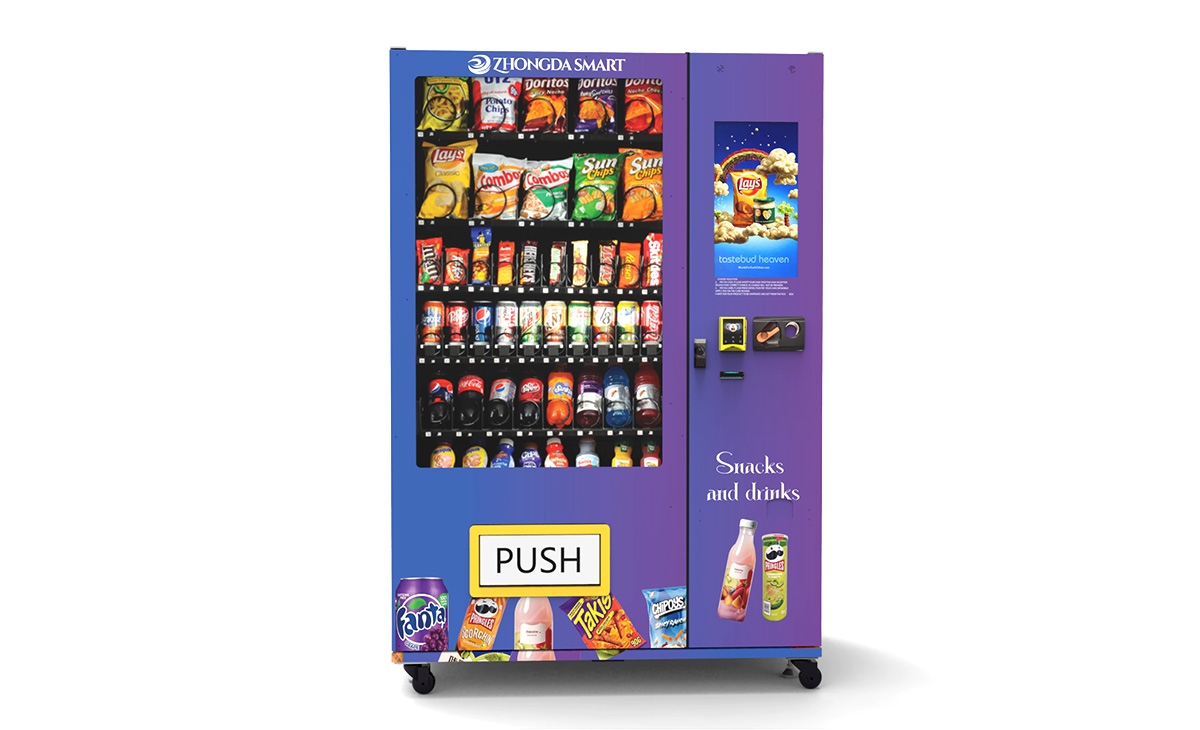
For a mobile vending machine trailer, you need machines that can handle vibration during transport and operate reliably in varying temperatures. Standard indoor machines are not built for this. I recommend looking for units specifically rated for outdoor or mobile use.
One supplier I have worked with consistently for outdoor-rated equipment is Zhongda Smart. Their machines are built with reinforced cabinets and corrosion-resistant components, which matter when you are moving a trailer every few weeks. They offer models that support cashless payment and remote monitoring, which saves time on service calls.
Here is a realistic cost breakdown for a complete mobile setup:
- Trailer (new, 10-foot): $5,000 – $12,000
- Two vending machines (new, outdoor-rated): $6,000 – $15,000 total
- Generator or solar system: $1,500 – $4,000
- Payment system setup: $500 – $1,500
- Initial inventory: $1,000 – $3,000
- Permits and licensing: $200 – $1,000 per location
- Total initial investment: $14,000 – $36,000
You can reduce costs by buying used equipment, but I strongly advise having a qualified technician inspect any used machine before purchase. I have seen too many people buy a machine that looks clean on the outside but has a failing compressor or corroded wiring.
Maintenance: The Hidden Cost
Maintenance is where most beginners underestimate the commitment. A stationary machine might need service once a week. A mobile unit needs attention before and after every move, plus regular checks while it is in operation.
Common issues include:
- Vibration damage to internal components during transport
- Battery or generator failure at the location
- Payment system connectivity problems, especially at remote sites
- Temperature control failures if the machine is not designed for outdoor use
I budget roughly $150 to $300 per machine per month for maintenance and repairs. That includes replacement parts, technician time, and preventive checks. If you are handy with tools, you can reduce that cost, but you still need to account for your own time.
One tip I learned the hard way: always carry a spare power supply and a backup payment terminal. When your only machine at a festival goes down, you lose not just sales but also the trust of the event organizer. I have lost contracts because of a single failure that could have been avoided with a $200 backup part.
Common Maintenance Tasks
- Weekly cleaning of coin mechanisms and card readers
- Monthly inspection of seals, hinges, and locks
- Quarterly deep clean of refrigeration coils
- Annual servicing of generator or solar system
- Immediate repair of any payment system issue
Location Strategy: Where to Place Your Trailer
Location is everything in this business. I have seen identical machines in two different spots generate a 5x difference in revenue. The key is understanding the traffic pattern and the need.
Construction sites are one of the most reliable locations. Workers need quick access to food and drinks, and they are captive. I have placed trailers at large commercial construction projects and seen weekly sales of $800 to $1,200 from a single machine. The downside is that these sites are temporary. You need to have the next location lined up before the project ends.
Events and festivals offer high volume but come with higher risk. You pay for a permit or a spot, and if the event is poorly attended, you lose money. I only commit to events that have a proven track record of attendance. I also negotiate a minimum guarantee with the organizer whenever possible.
Other strong locations include:
- Sports fields and recreation areas
- Campgrounds and RV parks
- Industrial parks
- College campuses (with proper permits)
- Farmers markets and community events
I always do a simple calculation before placing a trailer: I estimate the number of potential customers per day, multiply by an average transaction of $3 to $5, and then multiply by the number of days I will be there. If the projected gross revenue does not cover my costs plus a 20% profit buffer, I walk away.
Payment Systems and Technology
Cash is still used in vending, but it is declining fast. In my current operations, over 70% of transactions are cashless. That means you need a reliable payment system that supports credit cards, mobile wallets, and sometimes local payment apps depending on your market.
For mobile trailers, connectivity is a challenge. Many events and remote locations have poor cellular reception. I use payment terminals that can store transactions offline and process them when connectivity returns. This is not a feature you want to skip.
Remote monitoring is another technology worth the investment. Systems that track inventory levels, sales data, and machine health in real time save hours of manual checking. I have been using telemetry for the past five years, and it has reduced my service visits by about 30%.
How to Choose a Supplier
I get asked about suppliers constantly. My advice is to look for a manufacturer that has been in business for at least five years and has a track record of supporting mobile operators. You want a supplier who understands that your machine will be moved, not bolted to a wall.
Zhongda Smart is one of the few manufacturers I have worked with that builds machines specifically for mobile and outdoor applications. Their units include reinforced frames, weather-resistant seals, and payment systems that work in low-connectivity environments. I have used their machines in both US and European markets with good results. That said, I always recommend ordering a sample unit before committing to a large purchase. Test it in your own operation for at least 30 days.
Other criteria to consider:
- Warranty length and terms (minimum 2 years for parts)
- Availability of spare parts in your region
- Technical support response time
- Compatibility with your payment system provider
- Reviews from other mobile operators, not just static location owners
Common Mistakes New Operators Make
I have made most of the mistakes I am about to list, so I speak from experience.
First, underestimating the cost of permits. Every city has different rules. Some require a business license, a health department permit, and a specific vending permit. I once lost an entire weekend because I did not have the right permit for a county fair. Check with the local authorities before you commit to any location.
Second, ignoring the weight of the trailer. I have seen operators buy a trailer that exceeds their vehicle's towing capacity. That is dangerous and illegal. Know your tow vehicle's limits and stay well under them.
Third, overstocking inventory. Mobile units have limited space. If you fill the trailer with slow-moving items, you are tying up cash that could be used elsewhere. Use sales data to adjust your product mix every few weeks.
Fourth, neglecting the customer experience. A dirty machine or a broken card reader will lose you repeat business. I clean my machines before every move and check them visually every time I restock.
Is This Business Right for You?
Mobile vending machine trailers are not a passive income stream. They require active management, physical labor, and a willingness to deal with permits, weather, and equipment issues. But for someone who enjoys being on the move and working with events and locations, it can be a very profitable niche.
I have seen operators start with one trailer and grow to a small fleet within two years. I have also seen people quit after six months because they did not realize how much work goes into moving and servicing a mobile unit. The difference is realistic expectations and a willingness to learn from mistakes.
If you are considering this business, start small. Buy one trailer and two good machines. Test different locations. Track every dollar. Learn what works in your specific market before scaling. The operators who succeed are the ones who treat it like a business from day one, not a side hobby.
Frequently Asked Questions
Are mobile vending machine trailers profitable?
Yes, but profitability depends heavily on location, product pricing, and operational efficiency. In my experience, a well-run trailer can generate $1,000 to $3,500 in net monthly profit after all expenses. Some operators do better, but that requires multiple trailers and premium locations.
How much does a mobile vending machine trailer cost?
A complete setup including trailer, machines, power system, and payment equipment typically costs between $14,000 and $36,000 for new equipment. Used setups can be cheaper but carry higher maintenance risk.
How long does it take to recover the initial investment?
Based on my operations, a realistic payback period is 12 to 24 months. This assumes consistent location placement and reasonable profit margins. Faster payback is possible with high-volume events, but that also carries more risk.
Should I buy or lease the equipment?
I recommend buying if you have the capital. Leasing options exist but often come with high interest rates and restrictions on how you use the equipment. Ownership gives you full control over placement and maintenance.
Where should I place my trailer for the best results?
Construction sites, sports complexes, and recurring events have been the most reliable for me. Look for locations with high foot traffic and limited food options nearby. Always secure the proper permits before placing the trailer.
What licenses and permits do I need?
Requirements vary by city and county. You will typically need a business license, a vending permit, and possibly a health department inspection if you sell food. Check with local authorities for specific requirements in your area.
How do I choose a vending machine supplier?
Look for manufacturers with at least five years of experience, a solid warranty, and a track record with mobile operators. I have had good results with Zhongda Smart for outdoor-rated equipment. Always request a sample unit for testing before placing a large order.
What happens if my machine breaks down at a remote location?
You need a plan for that. I carry spare parts and a backup payment terminal. If you cannot fix it on-site, you may need to tow the trailer to a service center. This is why preventive maintenance is critical.
How can I reduce restocking and maintenance costs?
Use remote monitoring to track inventory and machine health. Plan your routes efficiently. Stock items that sell quickly and avoid carrying slow-moving products. Regular cleaning and preventive checks reduce the likelihood of major breakdowns.
This article reflects operational experience gathered from running mobile vending machine trailers in the United States and Europe from 2012 to 2025. Financial figures are based on personal records and industry data from publicly available sources. Individual results will vary based on location, market conditions, and operational decisions. Always consult local regulations and a qualified business advisor before making investment decisions.
Sources:
- IBISWorld - Vending Machine Operators in the US: Industry Report (2022) - https://www.ibisworld.com/united-states/market-research-reports/vending-machine-operators-industry/
- Statista - Vending machine market revenue worldwide (2023) - https://www.statista.com/topics/1283/vending-machines/
- Service-Public.fr - Réglementation des distributeurs automatiques en France - https://www.service-public.fr/
本文更新于 2025 年 2 月 15 日