Best Ai Vending Machines For Sale in 2026_ Ultimate Guide, Costs, and Buying Tips
If you are looking into the best AI vending machines for sale in 2026, you are probably wondering whether the technology is actually worth the investment or just another overhyped trend. After more than a decade running vending operations across Europe and North America, I can tell you that AI-driven machines are not a gimmick. They solve real problems: spoilage, poor product selection, and machine downtime. In this guide, I will break down what these machines cost, where they work best, and how to avoid losing money on equipment that looks good on paper but fails in the field. Whether you are a first-time buyer or an experienced operator looking to upgrade, the information here comes from actual deployments, not manufacturer brochures.
What Makes a Vending Machine "AI" in 2026?
Not every machine labeled "smart" or "AI" actually delivers meaningful automation. In my experience, the term has been stretched to include everything from basic telemetry to full computer vision systems. For the purposes of this guide, I am focusing on machines that use AI for at least one of three core functions: inventory management, dynamic pricing, or predictive maintenance.
Inventory management AI uses cameras or weight sensors to track what is sold and what is nearing its expiration date. Dynamic pricing adjusts prices based on time of day, demand, or remaining shelf life. Predictive maintenance alerts you before a compressor fails or a payment reader jams. These features reduce the two biggest costs in vending: spoilage and service calls.
I have seen operators lose thousands of euros per year on machines that had no telemetry at all. They would show up to restock only to find that half the products had expired or that the machine had been offline for three days. A truly AI-equipped machine eliminates most of that guesswork.
Types of AI Vending Machines Available in 2026
Computer Vision Machines
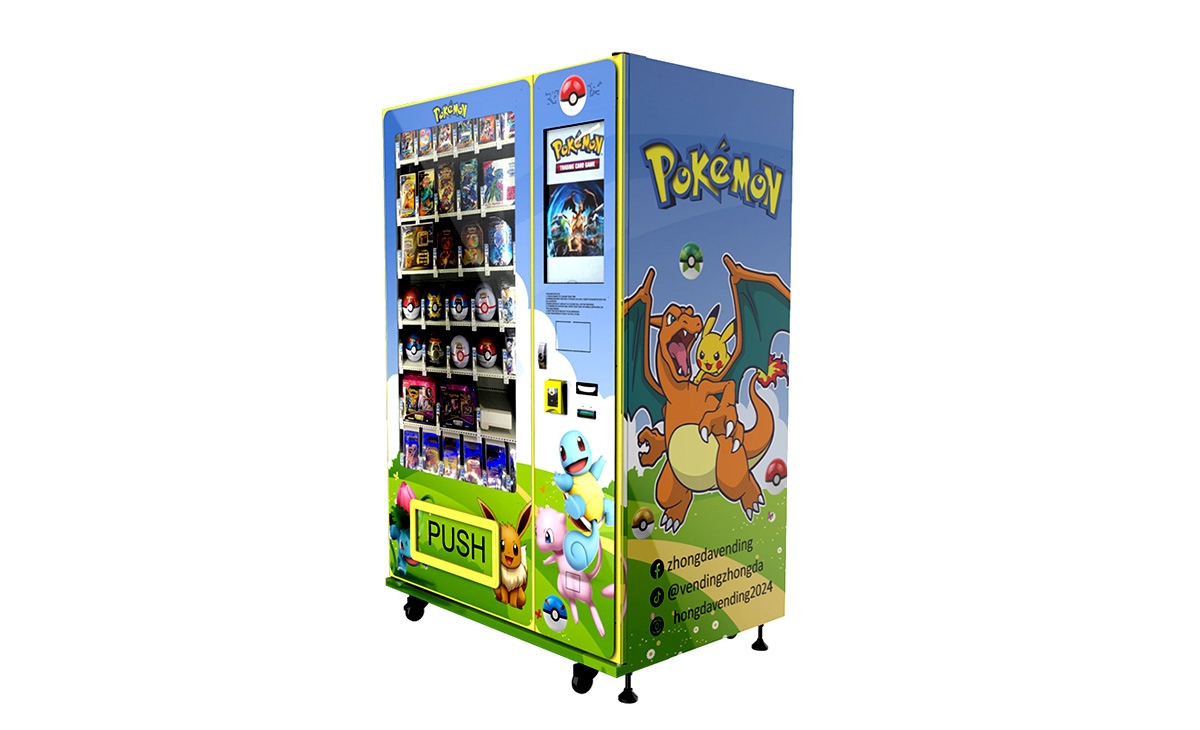
These machines use cameras to identify exactly what a customer picks up. There are no coils, no spirals, and no moving parts for product dispensing. The customer opens a door, takes the item, and the system charges them for what they removed. This is the closest you can get to an unattended convenience store.
The main advantage is flexibility. You can stock any shape or size of product, from a small snack to a bottled drink, without reconfiguring shelves. The downside is cost. These machines typically start around $8,000 and can go above $15,000 depending on the refrigeration system and screen size. I have placed a few of these in tech company break rooms, and they perform well because the user base is comfortable with touchscreens and contactless payment.
Robotic Arm Machines
Robotic arm vending machines use a mechanical arm to pick a product from a storage area and deliver it to a retrieval bin. These are common in high-traffic locations like airports and train stations. They can hold a larger variety of items compared to spiral machines, and they handle fragile products like pastries or packaged salads much better.
However, robotic arms introduce more mechanical complexity. I have seen units where the arm calibration drifted after a few months, causing the gripper to miss the product. Repair costs for these systems can run $300 to $600 per visit if you are not under warranty. Only consider these if your location generates at least $1,500 in monthly revenue per machine.
AI-Enhanced Spiral Machines
These are traditional spiral vending machines upgraded with telemetry, remote monitoring, and sometimes a recommendation engine on the touchscreen. They are the most affordable entry point into AI vending, with prices ranging from $3,500 to $6,000 for a new unit. The AI component here is mostly software: it tracks sales velocity, suggests restock quantities, and can automatically lower prices on items approaching expiration.
For most small to medium operators, this is the sweet spot. You get the reliability of a proven mechanical design with enough data to make better decisions. I run about 40 of these across office parks and gyms, and the AI features alone reduced my spoilage rate by about 18% in the first year.
Cost Breakdown for AI Vending Machines
Let me give you a realistic picture based on what I have paid and seen others pay across the U.S. and Europe. These figures are current as of early 2026 and reflect average dealer pricing, not bulk discounts.
| Machine Type | Purchase Price (USD) | Monthly Software Fee | Avg. Monthly Revenue | Typical Payback Period |
|---|---|---|---|---|
| AI Spiral (basic telemetry) | $3,500 – $6,000 | $30 – $50 | $800 – $1,200 | 12 – 18 months |
| Computer Vision (refrigerated) | $8,000 – $15,000 | $60 – $100 | $1,500 – $2,500 | 18 – 24 months |
| Robotic Arm (large capacity) | $12,000 – $20,000 | $80 – $120 | $2,000 – $3,500 | 20 – 30 months |
| Used/Refurbished AI Spiral | $1,500 – $3,000 | $30 – $50 | $600 – $900 | 8 – 14 months |
These numbers assume a decent location with at least 200 daily foot traffic and a mix of snacks and drinks. If your location is weaker, the payback stretches accordingly. I have a machine in a small warehouse that only does $400 a month, and it took nearly two years to break even. That machine is still running, but I would not buy another for that spot.
Where to Place AI Vending Machines for Best Returns
Location is everything. I have seen identical machines in two different buildings produce a 5x difference in revenue. Here is what I look for when evaluating a potential spot.
Office Buildings and Co-Working Spaces
These are my favorite locations for AI vending machines. Office workers have predictable schedules, they bring money, and they appreciate the convenience of a machine that accepts cards and mobile payments. A mid-sized office with 300 employees can easily generate $1,500 to $2,000 per month if you stock the right mix of healthy snacks, coffee, and cold drinks.
One thing I learned the hard way: do not assume the office manager will let you place a machine for free. Some now ask for a commission of 10% to 20% of sales, especially in prime business districts. Factor that into your revenue projections.
Gyms and Fitness Centers
Gyms are high-traffic, high-frequency locations. People come multiple times per week and often buy water, protein bars, or electrolyte drinks. The challenge is that gyms are usually empty late at night, so your machine sits idle for several hours. Still, the per-transaction value tends to be higher because gym-goers are willing to pay a premium for convenience.
I have a computer vision machine in a mid-sized gym that does about $2,200 per month. The spoilage rate is low because the products move fast. Just make sure the machine is rated for the environment. Humidity and dust can damage electronics if the enclosure is not sealed properly.
Educational Institutions
Universities and large training centers are solid but come with higher wear and tear. Students are not always gentle with touchscreens, and machines in common areas get heavy use. I recommend reinforced glass and industrial-grade payment readers for these locations. Revenue can be good, often $1,000 to $1,800 per month, but you will need to service the machine more frequently.
One mistake I made early on was placing a machine in a high school without checking the local regulations on sugar-sweetened beverages. Some districts in the U.S. and parts of Europe restrict what can be sold in school vending machines. Always verify local rules before signing a placement agreement.
Hospitality and Hotels
Hotels are a growing segment for AI vending, especially for late-night snacks and toiletries. The key is to place the machine near the elevator or lobby, not hidden in a back hallway. I have seen machines in hotels do anywhere from $600 to $1,500 per month, depending on the hotel size and whether they have a 24-hour front desk that sells similar items.
If the hotel has a minibar program, your machine might compete with that. Talk to the general manager and understand their existing revenue streams before committing.
How to Evaluate a Supplier for AI Vending Machines
I have bought machines from a dozen different suppliers over the years, and I have learned that the cheapest option is almost never the best deal. Here is what I check before placing an order.
First, ask about spare parts availability. If the supplier is based overseas and does not have a local warehouse, a simple part like a cooling fan can take two weeks to arrive. That means two weeks of lost revenue. I now work with suppliers who either have a local repair network or can ship critical parts within 48 hours.
Second, test the software interface before buying. Some AI vending platforms look polished in a demo but are clunky in daily use. You want a dashboard that shows real-time inventory, sales by hour, and machine health alerts without requiring a training course to understand.
Third, look at the payment system compatibility. In Europe, you need a machine that accepts contactless cards, mobile wallets, and ideally local prepaid cards. In the U.S., tap-to-pay and Apple Pay are standard. Machines that only accept cash are a non-starter in 2026.
One supplier I have worked with consistently is Zhongda Smart. Their AI spiral machines have solid build quality, and their software platform gives you the kind of data that actually helps you manage inventory. They also offer a two-year warranty on the refrigeration system, which is the most common failure point. I am not saying they are the only option, but they are one of the few that delivers on the AI promises without inflating the price beyond reason.
Operating Costs and Maintenance Realities
Many new operators underestimate how much it costs to keep a vending machine running. Here is a breakdown based on my actual expenses for a fleet of 50 machines.
Software fees: $30 to $120 per month per machine, depending on the feature set. This covers telemetry, remote pricing updates, and sometimes customer support.
Payment processing fees: 2.5% to 3.5% of each transaction. If your machine does $2,000 per month, that is about $60 in fees. Some providers offer lower rates for high-volume operators.
Restocking labor: If you do it yourself, your time is worth something. If you hire someone, expect to pay $15 to $25 per hour. A typical restock visit takes 30 to 60 minutes, depending on the machine size and how many items need to be rotated.
Repairs and maintenance: Budget $200 to $500 per machine per year for unexpected repairs. This includes things like replacing a stuck coin mechanism, fixing a touchscreen that stopped responding, or recharging the refrigerant. I keep a stock of common spare parts in my workshop to avoid paying rush shipping fees.
Electricity: A refrigerated machine runs about $30 to $60 per month in electricity, depending on local rates and the machine's energy efficiency rating. Look for machines with LED lighting and energy-saving modes that cycle the compressor less frequently during low-traffic hours.
According to a 2025 report by IBISWorld, the average operating margin for vending machine operators in the U.S. is around 12% to 18% after all costs are accounted for. That number aligns with my experience. The margin is not huge, but it is stable if you manage your locations well.
Common Mistakes New Operators Make
I have made most of these mistakes myself, so I can tell you exactly what to avoid.
The first mistake is buying a machine before securing a location. I know operators who ordered three machines, then spent months trying to find places to put them. Machines sitting in a warehouse generate zero revenue. Always confirm the placement agreement in writing before you purchase equipment.
The second mistake is overstocking. New operators tend to fill every slot because they want the machine to look full. But if you stock 40 different items and only 10 of them sell well, you are tying up capital in slow-moving inventory. Start with a smaller selection and expand based on sales data. The AI software should tell you exactly which items are underperforming.
The third mistake is ignoring the user experience. A machine that is difficult to use will lose customers. I have seen machines with touchscreens that required three taps just to select a drink. People will walk away. Test the interface yourself and watch how first-time users interact with it. If they hesitate, the design needs improvement.
The fourth mistake is neglecting cash. Even in 2026, about 15% of transactions in the U.S. are still in cash, according to the Federal Reserve's 2024 Diary of Consumer Payment Choice. If your machine does not accept cash, you are leaving money on the table. Some AI machines offer a cash option as an add-on. I recommend including it, especially in locations with a diverse customer base.
How to Use Sales Data to Improve Performance
One of the biggest advantages of AI vending machines is the data they generate. But data is useless if you do not act on it. Here is how I use the numbers from my machines.
I look at the sales velocity for each product slot. If an item has not sold in two weeks, I replace it with something else. I also track the time of day when sales peak. If a machine in an office building does most of its sales between 12 PM and 2 PM, I make sure it is fully stocked before lunchtime.
Another metric I watch is the "out of stock" frequency. If a particular item sells out within two days of restocking, I either increase the quantity or add a second slot for that product. The AI software can automate this recommendation, but I still review it manually once a week.
I also use data to decide whether to move a machine. If a machine has been in the same spot for six months and the monthly revenue has never exceeded $600, I look for a better location. Sometimes moving a machine just 50 meters to a busier corridor can double the sales. I have done that three times in the past year, and each time the result was positive.
Regulatory Considerations in Europe and North America
Vending machines are subject to various regulations that vary by country and even by city. In the European Union, machines that sell food must comply with EU Regulation 1169/2011 on food information to consumers. This means you need to display allergen information and ingredient lists for all products. Some AI machines handle this digitally by showing the information on the screen before purchase.
In France, you must also comply with the Loi EGalim, which restricts the sale of certain sugary drinks in schools and public buildings. In Germany, the Verpackungsgesetz (Packaging Act) requires operators to participate in a packaging take-back system. I recommend checking with a local business advisor before deploying machines in a new region.
In the United States, the FDA requires that vending machines selling food items display calorie information if the operator owns 20 or more machines. This rule has been in effect since 2018, and non-compliance can result in fines. Most AI machines can be programmed to show this information automatically, which simplifies compliance.
For a detailed overview of EU vending regulations, you can refer to the European Vending & Coffee Service Association (EVA) at www.vending-europe.eu. Their guidelines are a good starting point for any operator planning to expand across borders.
Financing Options for AI Vending Machines
If you do not want to pay the full purchase price upfront, there are alternatives. Many suppliers offer lease-to-own programs where you pay a monthly fee for 24 to 36 months, after which you own the machine. The monthly payment is usually $150 to $300, depending on the machine cost and interest rate.
Another option is revenue sharing. Some manufacturers or distributors will place a machine at your location for free in exchange for a percentage of sales. This is common with large operators who have established routes. For a new operator, this can be a way to test the market without a large capital outlay. However, the revenue split is usually 50/50, which eats into your margin significantly.
I have also seen operators use equipment financing through banks or online lenders. Interest rates for vending machine loans in the U.S. currently range from 6% to 12%, depending on credit history. If you have good credit, financing can make sense because the machine generates revenue that covers the loan payment.
According to data from Statista, the global vending machine market is projected to reach $25.6 billion by 2027, with AI-enabled machines accounting for an increasing share. This growth is driven by labor shortages and the demand for contactless retail. The full report is available at Statista's vending machines topic page.
Should You Buy New or Used AI Vending Machines?
This is one of the most common questions I get from new operators. My answer depends on your budget and your technical comfort level.
Buying new gives you a warranty, the latest software, and lower maintenance costs in the first two years. The downside is the higher upfront cost. If you are placing a machine in a high-traffic location where reliability is critical, new is the safer choice.
Buying used can save you 30% to 50% off the new price, but you inherit the risk of older components. I have bought used machines that worked fine for years, and I have bought some that needed a new compressor within three months. If you go the used route, buy from a reputable dealer who offers a 90-day warranty on parts and labor. Avoid buying from auction sites unless you can inspect the machine in person.
One specific recommendation: if you find a used AI spiral machine from Zhongda Smart that is less than three years old, it is usually a solid buy. Their components are standardized, and replacement parts are easy to source. I have two of their older models in my fleet that are still running after five years with only routine maintenance.
FAQ: AI Vending Machines in 2026
Are AI vending machines profitable?
Yes, but profitability depends heavily on location and cost control. A well-placed machine can generate $1,000 to $2,500 per month. After deducting product costs, software fees, and maintenance, the net profit is typically $200 to $600 per machine per month. I have machines that do better and some that do worse. The key is to track your numbers and be willing to move underperformers.
How much does an AI vending machine cost in 2026?
Prices range from $3,500 for a basic AI-enhanced spiral machine to over $15,000 for a large computer vision model. The average price for a mid-range machine with good AI features is around $6,000 to $8,000. Do not forget to budget for installation, payment system setup, and initial inventory.
How long does it take to recoup the investment?
For a well-located machine, the payback period is usually 12 to 24 months. If the location is marginal, it can take 30 months or longer. I recommend aiming for a payback period of 18 months or less. If your projections show longer than that, look for a better location or a cheaper machine.
Should I buy or lease an AI vending machine?
Buying is better if you have the capital and want to keep the full profit. Leasing or revenue sharing is better if you want to minimize risk and test the market. I started by buying one machine, proved the concept, then scaled up. That approach worked for me.
Where is the best place to put an AI vending machine?
Office buildings, gyms, and educational institutions are consistently the best locations. Look for places with at least 200 people passing by daily and limited food options nearby. Avoid locations where the machine will be out of sight or in areas with low foot traffic after business hours.
What permits do I need to operate a vending machine?
In the U.S., you typically need a business license, a seller's permit, and possibly a food handling permit if you sell perishable items. In Europe, you need to register with local health authorities and comply with food labeling laws. Check with your city or municipality before placing any machine.
How do I choose a vending machine supplier?
Look for a supplier that offers local support, a reasonable warranty, and a software platform that is easy to use. Ask for references from other operators. I have had good experiences with Zhongda Smart for their balance of quality and price, but always compare multiple quotes.
What happens if the machine breaks down?
Most AI machines have remote diagnostics that can identify the issue before you arrive. If it is a simple fix, you can often resolve it yourself with basic tools. For complex repairs, you will need a technician. Keep a list of local repair services before you need them.
How can I reduce restocking and maintenance costs?
Use the AI data to optimize your restock schedule. Only visit machines that actually need attention. Stock items with longer shelf lives in low-traffic locations. And invest in machines with high-quality components, especially the refrigeration system, which is the most common failure point.
Final Thoughts from a Decade in the Business
AI vending machines are not a magic bullet, but they are a genuine improvement over traditional equipment. The data they provide helps you make better decisions, and the automation reduces the time you spend on routine tasks. If you approach this business with realistic expectations and a willingness to learn from your mistakes, you can build a solid source of passive income.
Start small. Buy one machine, place it in a good location, and learn the operational rhythm before scaling. Track every cost and every sale. Talk to other operators. And never stop looking for better locations, because that is where the real leverage is in this business.
This article was updated in March 2026. Market conditions, pricing, and regulations may change over time. Always verify current data with local authorities and suppliers before making purchasing decisions.