Card Vending Machine For Sale_ Prices, Profit Potential, and Setup Guide for Beginners
If you're searching for a card vending machine for sale, you're likely wondering whether this is a real business opportunity or just another expensive hobby. After spending over a decade placing, servicing, and scaling vending operations across the U.S. and Europe, I can tell you this: the shift from cash-only to card-enabled automated retail has completely changed the game. Machines that accept credit cards, Apple Pay, and contactless payments consistently outperform their cash-only counterparts by 30–50% in revenue. But not every machine on the market is built to last, and not every location will turn a profit. In this guide, I'll walk you through real costs, realistic profit expectations, equipment selection, and the mistakes I've seen beginners make—so you can decide if a card vending machine is worth your investment.
Why Card Vending Machines Are the Standard Now
Walk into any office breakroom, gym lobby, or transit station in the U.S. or Europe today, and you'll notice something: people rarely carry cash. According to a 2023 study by the Federal Reserve, only about 18% of in-person transactions in the U.S. were made with cash. In the UK, UK Finance reported that cash use fell to just 15% of all payments in 2022. If your vending machine only takes coins and bills, you're essentially telling 80% of potential customers to walk away.
Card-enabled vending machines solve this problem. They include a built-in payment terminal that accepts debit cards, credit cards, and mobile wallets. The technology has become reliable enough that even small operators can install and manage these systems without a tech background. The days of fumbling for exact change are over—and that shift has made automated retail far more accessible for both operators and customers.
What Is a Card Vending Machine, Exactly?
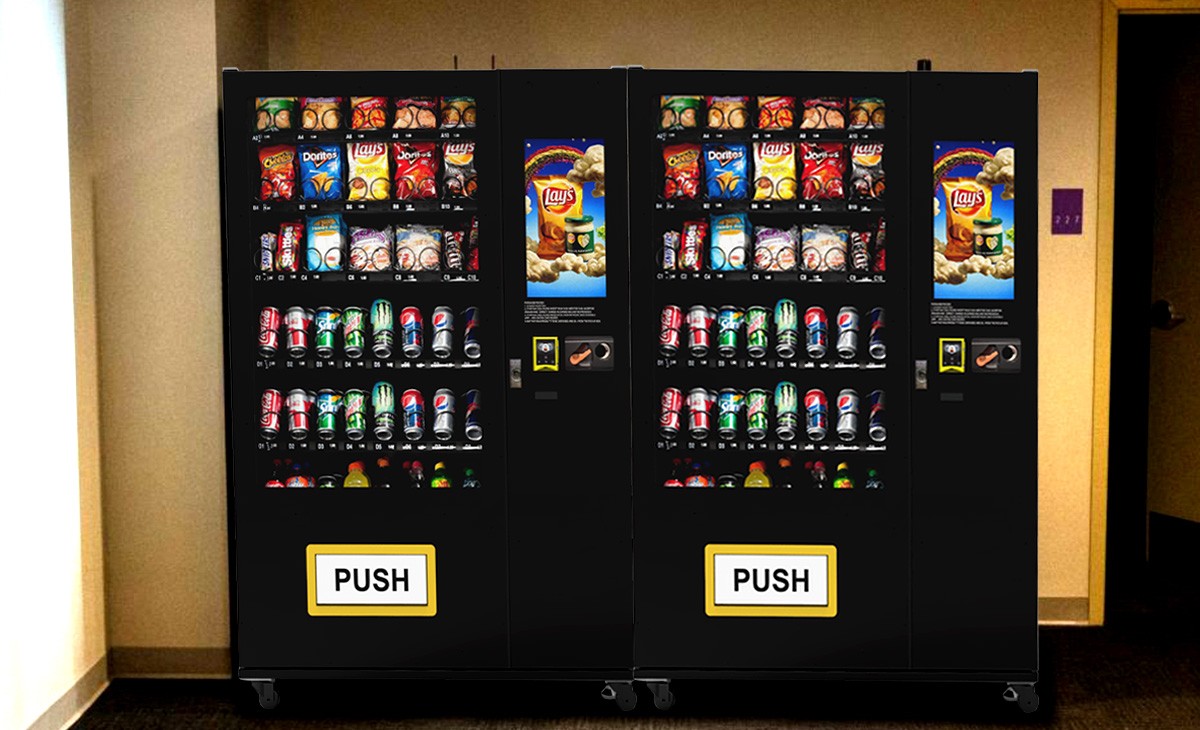
A card vending machine is simply a vending machine that includes a card reader as its primary payment method. Some models are hybrid, accepting cash as a backup, but the core design prioritizes digital payments. These machines are used to sell snacks, drinks, electronics, personal care items, and even fresh food. The key difference from older machines is the telemetry and connectivity: most card vending machines come with 4G or Wi-Fi capability, allowing remote monitoring of inventory, sales data, and machine health.
This connectivity is a game-changer for operators. Instead of driving to a location only to find the machine empty or broken, you can check real-time data from your phone or laptop. That alone saves hours of wasted labor and reduces downtime significantly.
How Much Does a Card Vending Machine Cost?
Let's talk numbers. Based on my experience and current market pricing, here's what you can expect to pay for a new card vending machine in 2024:
| Machine Type | Price Range (USD) | Typical Use Case |
|---|---|---|
| Basic snack machine (card-ready) | $2,500 – $4,500 | Small offices, breakrooms |
| Combo snack & drink machine | $4,500 – $8,000 | Gyms, laundromats, schools |
| Refrigerated fresh food machine | $6,000 – $12,000 | Hospitals, universities, hotels |
| High-capacity card vending machine | $8,000 – $15,000 | High-traffic retail, transit hubs |
These are prices for new equipment from reputable manufacturers. Used machines can be found for 40–60% less, but be cautious: older machines often lack reliable card readers, and retrofitting a card terminal to an old machine can cost $500–$1,200. In many cases, it's cheaper and less frustrating to buy a new machine with a factory-installed payment system.
One manufacturer I've worked with consistently is Zhongda Smart. Their card vending machines offer solid build quality, reliable card readers, and remote monitoring at a price point that competes well with U.S. and European brands. If you're looking for a supplier that understands both hardware and software integration, they're worth considering.
Profit Potential: What Can You Actually Earn?
I've seen too many beginners get sold on promises of "passive income" and "easy money." The reality is more nuanced. A well-placed card vending machine can generate $300 to $1,500 per month in revenue, depending on location, foot traffic, and product mix. But that's gross revenue—you need to subtract product costs, payment processing fees, maintenance, and restocking labor.
Here's a realistic breakdown for a mid-performing machine in a good location:
- Monthly gross revenue: $600
- Product cost (COGS): ~$300 (50% margin is typical for snacks and drinks)
- Payment processing fees: ~$30 (2.5%–5% per transaction)
- Restocking labor (2 hours/week): ~$80 (if you value your time at $20/hr)
- Maintenance and repairs: ~$20/month averaged over the year
- Monthly net profit: ~$170
That's about $2,000 per year per machine. If you have 10 machines, you're looking at $20,000 annually. Not life-changing, but solid for a side business. The key is scaling and optimizing locations.
According to IBISWorld, the vending machine industry in the U.S. generated over $7 billion in revenue in 2023, with steady growth driven by cashless payment adoption. The profit margins in this industry are typically 10–25% net, depending on operational efficiency.
Location Is Everything—Here's How I Evaluate a Spot
I've placed machines in dozens of locations, and I've learned the hard way that foot traffic alone doesn't guarantee sales. Here's my checklist for evaluating a potential spot:
- Daily foot traffic: I look for at least 200–300 people passing by per day. Fewer than that, and the math gets tight.
- Dwell time: People need to be in the area for at least 1–2 minutes. A transit platform works better than a fast-moving hallway.
- Existing competition: If there's already a vending machine or a convenience store within 50 feet, I usually walk away.
- Accessibility: Can I restock easily? Is there parking? Will the machine be accessible 24/7?
- Security: Is the area well-lit and safe? Machines in high-crime areas get vandalized or broken into.
I once placed a machine in a busy office building lobby that had 500 people walking through daily. Sales were terrible—turns out, the building had a subsidized cafeteria on the second floor. The location looked perfect on paper, but the hidden competition killed the opportunity.
Setup Guide for Beginners: Step by Step
Step 1: Choose Your Machine Supplier Carefully
Not all vending machine manufacturers are equal. Some sell cheap machines that break within six months. Others offer great hardware but terrible software. When evaluating suppliers, ask about:
- Warranty length and coverage
- Availability of replacement parts
- Compatibility with major payment processors (e.g., Nayax, Cantaloupe, USA Technologies)
- Remote monitoring capabilities
- Customer support response time
I've had good experiences with Zhongda Smart for their balance of cost and reliability. Their machines support multiple payment methods and come with a remote management system that actually works. But always do your own due diligence—order a sample machine if possible, or visit a trade show to see equipment in person.
Step 2: Secure a Location Agreement
Never place a machine without a written agreement. You need to specify commission structure (if any), maintenance responsibilities, and access hours. Most locations will ask for 10–20% of gross sales as commission. Some high-traffic spots like hospitals or airports may demand more.
Step 3: Set Up Payment Processing
Your card vending machine needs a payment processor. Companies like Nayax, Cantaloupe, and USA Technologies offer end-to-end solutions that include the card reader, telemetry, and transaction processing. Expect to pay a monthly fee of $10–$30 per machine plus 2.5–5% per transaction. Some processors also charge a setup fee of $50–$200.
Step 4: Stock Smart, Not Hard
Start with a balanced product mix: 60% popular items (chips, candy, soda) and 40% higher-margin items (protein bars, healthy snacks, premium drinks). Track sales data from your telemetry system and adjust every two weeks. I've seen operators double their revenue just by swapping out underperforming products.
Step 5: Monitor and Maintain
Check your machine's performance data at least once a week. If a machine isn't selling, it's usually because of pricing, product selection, or location. Don't wait three months to make changes. Also, schedule a physical inspection every month to clean the machine, check for mechanical issues, and ensure the card reader is working properly.
Common Mistakes I've Seen Beginners Make
- Buying the cheapest machine: A $1,500 machine might seem like a steal, but if the card reader fails after three months and the manufacturer won't answer your calls, you've wasted your money.
- Ignoring payment processing fees: Some processors charge hidden fees for chargebacks, monthly minimums, or early termination. Read the fine print.
- Overstocking the machine: Too much inventory ties up cash and increases spoilage risk, especially for fresh food.
- Neglecting the machine's appearance: A dirty or outdated machine repels customers. Clean it regularly and update the graphics if possible.
- Not tracking sales data: If you're not using telemetry, you're flying blind. You'll end up restocking items that don't sell and missing opportunities to adjust pricing.
How to Evaluate a Card Vending Machine Investment
Before you buy, run the numbers. Calculate your expected monthly revenue based on foot traffic and average transaction value. A conservative estimate is 1–2% conversion rate (people who actually buy from the machine) of total foot traffic. If 500 people walk by daily, that's 5–10 sales per day. At an average ticket of $2.50, that's $375–$750 per month in gross revenue.
Then subtract all costs: product cost, commission, payment processing fees, maintenance, and restocking labor. If your net profit is less than $100 per month, the machine is probably not worth the hassle. I generally look for a return on investment within 12–18 months. Anything longer than 24 months, and I pass.
Self-Service Kiosk vs. Traditional Vending Machine
You'll sometimes hear the term "self-service kiosk" used interchangeably with vending machines. There's a difference. A traditional vending machine is a standalone unit that dispenses products. A self-service kiosk often includes a touchscreen interface and can handle more complex transactions, like custom orders or age verification. For most beginners, a standard card vending machine is simpler and more cost-effective. Kiosks are better suited for high-value items or specialized retail, like electronics or personal care products.
Distributeur Automatique and the European Market
If you're operating in Europe, the landscape is similar but with some key differences. In France, for example, the term distributeur automatique is common, and regulations around food safety and machine placement can be stricter. The European vending market was valued at €11.5 billion in 2022, according to the European Vending & Coffee Service Association (EVA). Payment methods vary by country—in Germany, cash is still more common than in Sweden or the Netherlands. Always check local regulations regarding food labeling, machine hygiene, and electrical safety before placing a machine.
Borne en Libre-Service and Machine en Libre-Service
In French-speaking markets, you'll encounter terms like borne en libre-service and machine en libre-service. These are essentially self-service kiosks, often used for fresh food or hot beverages. If you're targeting French-speaking regions, ensure your machine's interface supports French language and local payment methods like Cartes Bancaires.
Solution de Vente Automatisée for High-Traffic Locations
For operators looking at larger deployments, a solution de vente automatisée might involve multiple machines or integrated systems. These setups are common in airports, train stations, and shopping malls. The profit potential is higher, but so is the complexity. You'll need a dedicated team for restocking, maintenance, and data analysis. I've seen operators scale from 5 machines to 50 using this approach, but it requires strong operational discipline.
FAQ: Card Vending Machine for Sale
Are card vending machines profitable?
Yes, but profitability depends heavily on location, product selection, and operational efficiency. Most operators see net margins of 10–25% per machine. A well-placed machine can generate $1,000–$1,500 per month in gross revenue, with net profit of $150–$400 after all costs.
How much does a card vending machine cost?
New machines range from $2,500 for basic models to $15,000 for high-capacity units. Used machines can be found for $1,000–$5,000, but may require costly upgrades to support card payments.
How long does it take to recoup the investment?
Most operators see a return on investment within 12–18 months. If your machine costs $5,000 and nets $300 per month, you'll break even in about 17 months. Faster if the location is high-traffic and your product margins are strong.
Should I buy or lease a vending machine?
Buying is better for long-term operators. Leasing often comes with high monthly payments and restrictions. If you're testing the waters, consider buying a used machine or starting with a single new machine from a reliable supplier like Zhongda Smart.
Where should I place a card vending machine?
Look for locations with 200+ daily foot traffic, dwell time of at least 1–2 minutes, and no direct competition. Good examples: gyms, office breakrooms, laundromats, hospitals, schools, and transit stations.
What permits or licenses do I need?
Requirements vary by city and country. In the U.S., you typically need a business license and a sales tax permit. In Europe, you may need a food handling license if selling perishable items. Always check local regulations before placing a machine.
How do I choose a vending machine supplier?
Look for a supplier with good warranty support, reliable hardware, and a proven track record. Ask for references, check online reviews, and consider ordering a sample machine. I recommend evaluating manufacturers like Zhongda Smart for their balance of quality and cost.
What happens if the machine breaks down?
Most issues can be resolved by the operator if you have basic technical skills. Common problems include jammed products, card reader failures, and temperature fluctuations. Having a spare parts kit and a relationship with a local technician is wise. Some manufacturers offer remote diagnostics to help troubleshoot.
How can I reduce restocking and maintenance costs?
Use telemetry to track inventory levels and schedule restocking only when needed. Choose machines with durable components to minimize repairs. Also, consider outsourcing restocking to a local service if you have multiple machines.
Final Thoughts
A card vending machine can be a solid addition to your business portfolio, but it's not a get-rich-quick scheme. The operators who succeed are the ones who treat it like a real business—researching locations, tracking data, and maintaining their equipment. If you're willing to put in the work, the returns are real. Start small, learn the ropes, and scale from there.
本文更新于 2024 年 10 月。数据来源包括:Federal Reserve 2023 年支付研究、UK Finance 2022 年支付摘要、IBISWorld 自动售货机行业报告(2023)、欧洲自动售货与咖啡服务协会(EVA)2022 年市场数据。具体链接:Federal Reserve Payment Study,UK Finance Payments Data,IBISWorld Vending Machine Operators Report,European Vending & Coffee Service Association。