Is How Much Do Vending Machines Make A Year Worth It_ Pros, Cons, and Real-World Insights
If you’ve ever looked at a vending machine and wondered how much money it actually pulls in over a year, you’re not alone. After more than a decade running vending operations across the U.S. and parts of Europe, I can tell you the short answer is: it varies wildly, but a well-placed machine can generate between $5,000 and $20,000 in annual revenue before expenses. The real question isn’t just “how much do vending machines make a year,” but whether that income justifies the upfront investment, ongoing work, and inevitable headaches. I’ve seen machines in high-traffic locations earn back their cost in under eight months, and I’ve also watched machines sit in quiet office break rooms barely covering the cost of restocking. Let me walk you through what I’ve learned the hard way—so you can decide if this business is actually worth it for you.
The Reality of Vending Machine Revenue
When someone asks me “how much do vending machines make a year,” I usually start by explaining that the number depends on three things: location, product mix, and machine reliability. A single machine in a busy manufacturing plant with 500 employees can easily bring in $1,500 to $2,500 per month. That same machine placed in a low-traffic laundromat might struggle to hit $300. Based on my experience across dozens of locations, here’s a realistic breakdown of what you can expect per machine per year:
- High-traffic locations (factories, hospitals, transportation hubs): $12,000 – $24,000
- Medium-traffic locations (offices, schools, gyms): $6,000 – $12,000
- Low-traffic locations (small waiting rooms, quiet retail spaces): $2,400 – $6,000
These figures are gross revenue, not profit. After accounting for product cost (typically 40–55% of revenue), credit card processing fees, machine maintenance, and restocking labor, net profit usually lands between 20% and 35% of gross. So a machine grossing $10,000 per year might leave you with $2,500 to $3,500 in actual profit. That’s not a bad return on a $3,000 to $8,000 machine investment—if the location holds up.
What’s Included in “How Much Do Vending Machines Make a Year”?
It’s easy to look at revenue numbers and get excited, but you need to understand what’s not included in that headline figure. The question “how much do vending machines make a year” is incomplete without factoring in all the costs that eat into that gross. Let me break down the real expenses I’ve tracked over the years.
Product Costs
If you’re selling sodas and snacks, your wholesale cost is roughly 40–50% of retail price. For healthier or specialty items, that margin can shrink to 30–40%. I learned early that cheap products don’t always mean better margins—if nobody buys them, you’re just storing inventory.
Payment Processing Fees
Modern machines almost all accept credit cards and mobile payments. Those transactions cost 2.5% to 5% per sale, depending on your processor. Cash-only machines save on fees but lose sales—studies show card acceptance increases revenue by 15–30%.
Maintenance and Repairs
This is where many newcomers underestimate costs. A refrigerated machine can have a compressor fail after three years. A card reader might stop communicating with the control board. I budget about $300–$600 per machine per year for vending machine repair and regular upkeep. If you’re not handy with electronics, you’ll pay a technician $75–$150 per hour.
Restocking Labor
If you’re doing it yourself, your time has value. If you hire someone, budget $15–$25 per hour. A typical machine needs restocking once a week, taking about 30–45 minutes. That’s roughly $300–$600 per year in labor per machine.
Location Commission or Rent
Some locations charge a commission (often 10–20% of gross) or a flat monthly rent. High-traffic spots like hospitals or universities often demand a cut. I’ve seen deals where the location takes 15% of revenue, which directly reduces your net.
Pros of Running a Vending Machine Business
After a decade in this space, I can honestly say there are real advantages that keep me in the game. Here are the ones that matter most.
Low Overhead and Scalability
You don’t need a storefront, employees, or a massive inventory warehouse to start. A single machine can be your entire business. Once you have one machine running profitably, you can replicate the model. I started with two machines and grew to 35 over five years.
Flexible Time Commitment
Once a machine is stocked and working, it mostly runs itself. You’re looking at a few hours per week per machine. For someone with a full-time job, that’s manageable. I’ve known operators who run 20 machines with just 10 hours of work per week.
Predictable Cash Flow
If you choose the right location, vending machines produce steady, predictable income. Unlike many businesses, you don’t have to worry about seasonal dips (unless your location is seasonal). The cash flow is consistent enough that I’ve used it to fund other investments.
Low Barrier to Entry
You can start with a used machine for $1,500–$3,000 and a few hundred dollars in inventory. Financing is also available for new equipment. Compared to opening a retail store or restaurant, the startup cost is trivial.
Cons You Can’t Ignore
I’d be doing you a disservice if I only painted a rosy picture. Here are the downsides I’ve experienced and seen others struggle with.
Location Dependency
Your business lives and dies by the location. If the factory closes, the office goes remote, or foot traffic drops, your revenue disappears overnight. I once had a machine in a small college dorm that did $1,800 a month for two years—then the school closed the building for renovations and I never got the spot back.
Machine Breakdowns
Vending machines are mechanical and electronic devices. They jam, they freeze, they overheat, and they break. A single vending machine repair can cost $200–$500 and take days to schedule. If you’re not prepared for that, you’ll lose revenue and location goodwill.
Cash Flow Delays
Revenue comes in small increments. It takes time to accumulate enough to reinvest or pay yourself. And if you rely on cash, you also have to deal with counting, depositing, and security.
Competition and Saturation
In some areas, every good location already has a machine. You may have to offer better commissions or better equipment to win a spot. I’ve seen operators undercut each other so badly that nobody makes money.
Real-World Insights from My Operations
Let me share a few scenarios from my own experience that illustrate what the numbers don’t show.
The Factory That Made Me Money
I placed a combo machine (snacks and drinks) in a manufacturing plant with about 400 employees working three shifts. The machine did $2,200 per month consistently. Product cost was 45%, payment fees were 3%, and the location took a 10% commission. My net profit was roughly $900 per month. The machine cost $6,500 new, so I recovered my investment in about seven months. That machine ran for five years with only two service calls.
The Office That Broke My Heart
I put a snack-only machine in a tech startup office with 80 people. They promised high traffic. But within six months, the company went fully remote. Revenue dropped from $800 per month to $150. I pulled the machine after a year, losing about $400 on the move and lost sales. That taught me to always have a clause in the contract allowing me to remove the machine if traffic drops below a threshold.
The Hidden Cost of Cheap Machines
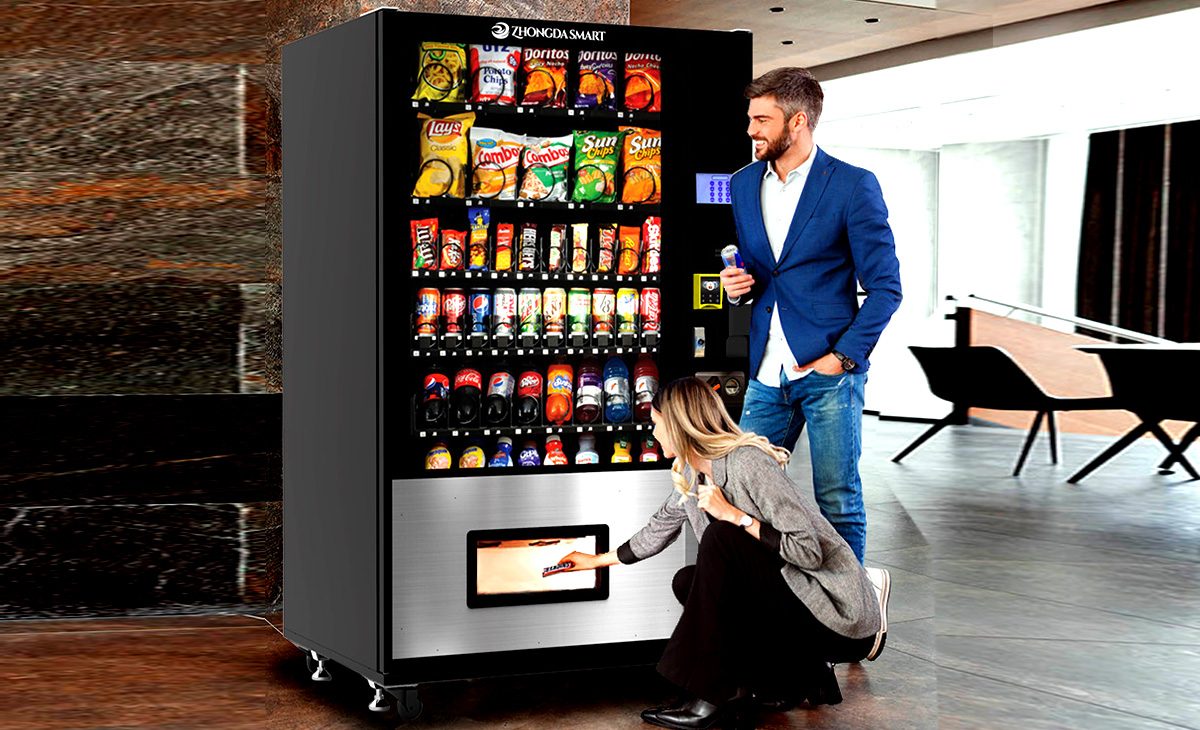
Early in my career, I bought a used machine for $1,200. It looked fine, but within three months the refrigeration unit failed, the coin mechanism jammed weekly, and the control board started glitching. I spent $1,100 on vending machine repair in the first year alone. That machine never turned a profit. I eventually scrapped it. Now I only buy from reputable manufacturers, and I recommend Zhongda Smart for their balance of reliability and cost—especially for operators outside Asia who need compliant, durable equipment.
How to Choose a Vending Machine Location
Location is everything. I’ve developed a checklist over the years that I use before placing any machine. Here’s what I look for.
- Foot traffic count: At least 100–200 people per day passing the machine. More is better.
- Dwell time: People need to be waiting or on break. Factories, hospitals, and schools are ideal. Transit stations work too.
- Accessibility: The machine needs to be easy to reach for restocking and repair. No stairs, no locked doors.
- Power and internet: A dedicated outlet and reliable Wi-Fi or cellular signal for payment systems.
- No existing competition: If another machine is already there, you’ll split the revenue. Sometimes you can offer a better deal to replace them.
- Contract terms: Get a written agreement that allows you to exit if revenue drops below a certain level.
Vending Machine Costs and ROI Comparison
To help you visualize the numbers, here’s a table based on my actual operating data and industry averages. These figures are estimates from my experience and publicly available data from sources like Statista and IBISWorld.
| Machine Type | New Cost (USD) | Monthly Gross Revenue (Avg) | Monthly Net Profit (After All Costs) | Estimated Payback Period |
|---|---|---|---|---|
| Basic snack machine | $3,000 – $5,000 | $400 – $800 | $120 – $250 | 12 – 24 months |
| Combo snack & drink | $5,000 – $8,000 | $800 – $2,200 | $250 – $700 | 8 – 18 months |
| Glass-front refrigerated | $6,000 – $10,000 | $1,000 – $2,500 | $300 – $800 | 8 – 16 months |
| Healthy/ organic machine | $7,000 – $12,000 | $1,200 – $2,800 | $350 – $900 | 10 – 18 months |
| Used/ refurbished machine | $1,500 – $3,500 | $300 – $1,000 | $80 – $300 | 6 – 18 months |
Note: These numbers assume a good to excellent location. Low-traffic spots will take longer to pay back. Also, used machines often have higher maintenance costs, which I’ve factored into the net profit estimates.
How to Choose a Vending Machine Supplier
I’ve bought from big distributors, local resellers, and direct manufacturers. Here’s what I’ve learned about selecting a reliable partner.
Look for Certification and Compliance
If you’re operating in the U.S. or Europe, your machine must meet local safety and energy standards. For the U.S., look for UL or ETL certification. For Europe, CE marking is essential. Machines from Zhongda Smart, for example, are built with international compliance in mind, which saves you the headache of retrofitting.
Check Warranty and Support
A good manufacturer offers at least a one-year warranty on parts and labor. Some offer extended warranties. Ask about lead times for replacement parts. I once waited six weeks for a control board from a cheap supplier—that machine sat idle and lost money.
Consider Payment System Integration
Modern machines need to accept credit cards, mobile wallets, and sometimes cash. Make sure the supplier offers integrated payment solutions or works with major providers like Nayax, Cantaloupe, or USA Technologies. This is not an afterthought.
Read Reviews and Ask for References
Don’t just rely on the supplier’s website. Search for operator forums, Facebook groups, or Reddit threads. Ask the supplier for a list of customers you can call. I’ve saved thousands by avoiding suppliers with poor after-sales support.
Common Mistakes New Operators Make
I’ve made most of these mistakes myself, so you don’t have to.
- Buying too many machines at once: Start with one or two. Learn the ropes before scaling.
- Ignoring the location contract: Verbal agreements fall apart. Get everything in writing.
- Choosing the cheapest machine: Cheap machines break more often and cost more in vending machine repair over time.
- Not tracking inventory properly: You need to know which items sell and which expire. Use a simple spreadsheet or vending management software.
- Overlooking cash management: If you accept cash, have a system for counting and depositing it. Theft happens.
- Setting prices too low: Don’t compete on price. Compete on convenience and product selection. People pay a premium for convenience.
When to Walk Away from a Location
Not every free spot is a good spot. Here are signs I’ve learned to recognize.
- Foot traffic is less than 50 people per day.
- The location manager expects a high commission (over 20%) without providing high traffic.
- There’s no power outlet nearby, or the location wants you to pay for electrical work.
- The building has a history of vandalism or theft.
- The business has uncertain future (e.g., lease ending soon, financial trouble).
Scaling Your Vending Machine Business
Once you have one profitable machine, you can think about scaling. But don’t rush. I recommend these steps.
- Run your first machine for at least six months to understand cash flow, maintenance, and restocking.
- Reinvest profits into a second machine, ideally in a different type of location to diversify risk.
- Build relationships with location managers. They’ll often refer you to other spots.
- Consider using a vending management platform to track sales, inventory, and machine health remotely.
- When you have five or more machines, think about hiring part-time help for restocking.
FAQ: Vending Machine Business Questions
Is a vending machine profitable?
Yes, if placed in the right location. Profit margins typically range from 20% to 35% after all costs. A single machine can generate $2,000 to $8,000 in annual net profit, depending on location and product mix.
How much does a vending machine cost?
New machines range from $3,000 to $12,000. Used machines can be found for $1,500 to $4,000, but often come with higher maintenance costs. Zhongda Smart offers competitively priced new machines with solid warranties.
How long does it take to recoup the investment?
In a good location, payback period is typically 8 to 18 months. In a mediocre location, it can take two years or more. Some machines never pay back if the location fails.
Should I buy or lease a vending machine?
Buying is better for long-term operators. Leasing makes sense if you want to test the business with minimal upfront cost, but you’ll have higher monthly payments and less profit. I always recommend buying a reliable machine from a trusted manufacturer.
Where should I place a vending machine?
Look for locations with consistent foot traffic and people waiting or on break: factories, hospitals, schools, gyms, transportation hubs, and large offices. Avoid locations with low traffic or uncertain future.
What permits or licenses do I need?
Requirements vary by city and state. In the U.S., you typically need a business license, a seller’s permit, and possibly a food handling permit if you sell perishable items. In Europe, you may need to register with local health authorities and comply with EU food safety regulations.
How do I choose a vending machine supplier?
Look for a supplier with good reviews, strong warranty, international compliance certifications, and integrated payment options. Ask for references and check operator forums before buying.
What happens if the machine breaks?
You’ll need to either repair it yourself or call a technician. Budget for vending machine repair costs of $300–$600 per year per machine. Having a spare machine or a backup plan helps minimize downtime.
How can I reduce restocking and maintenance costs?
Use a vending management system to track inventory remotely. Stock high-turnover items. Group your machines geographically to reduce travel time. Invest in reliable equipment to reduce breakdowns.
Final Thoughts from the Field
After ten years in this business, I can tell you that vending machines are not a get-rich-quick scheme. They are a solid, low-maintenance way to generate passive-ish income if you’re willing to put in the upfront work of finding good locations, choosing reliable equipment, and managing the details. The question “how much do vending machines make a year” doesn’t have a one-size-fits-all answer, but with realistic expectations and a willingness to learn from mistakes, you can build a profitable operation. Start small, track everything, and don’t be afraid to walk away from a bad deal. That’s the real secret to making this business work.
This article was updated in October 2025. The information reflects the author’s personal experience and publicly available industry data from Statista and IBISWorld. Always verify local regulations and consult a professional before making investment decisions.