The Complete Guide to How To Get Vending Machine Locations Opportunities and Risks
Why Location Is the Most Critical Decision
Most beginners spend weeks comparing machine specs and payment systems, then rush the location decision. That is backwards. I have seen operators place a top-tier machine with a 32-inch touchscreen and card reader in a low-traffic office break room, only to pull it after six months because it never did more than $150 a month. Meanwhile, a basic snack machine in a busy distribution center with 200 employees can clear $1,200 to $1,800 monthly. The machine itself matters, but the foot traffic, dwell time, and customer profile matter more.
In my experience, a location needs at least 100 potential transactions per day to make sense for a single machine. That could mean 100 employees in a warehouse, 300 students in a college hallway, or 500 visitors per day in a medical office lobby. The number is not fixed, but if you cannot see at least 100 people passing by daily, the math becomes difficult. You also need people who stay long enough to buy, not just walk past. A train platform with a 30-second dwell time is different from a break room where people have five minutes to grab a snack.
The risks of poor location selection are not just lost revenue. You also waste time on restocking trips, machine repair calls, and the frustration of pulling a machine that never performed. I have pulled machines from three locations in the past five years, and every single one was a location I should have vetted more carefully. The opportunity cost is real. Every month a machine sits in a mediocre spot is a month you could have been earning in a better one.
Types of Locations and Their Revenue Potential
Not all locations are equal, and the revenue range varies significantly. Based on my own route data and conversations with other operators, here is a realistic breakdown of what different location types can generate per machine per month. These are estimates, not guarantees, and actual results depend on product mix, pricing, and local demographics.
| Location Type | Estimated Monthly Revenue (USD) | Typical Foot Traffic | Risk Level |
|---|---|---|---|
| Warehouse / Distribution Center | $1,200 – $2,500 | 100–300 employees | Low |
| Hospital / Medical Office | $800 – $2,000 | 200–500 visitors + staff | Low to Medium |
| College Dormitory / Student Lounge | $600 – $1,800 | 100–400 students | Medium |
| Manufacturing Plant | $1,000 – $2,200 | 100–250 workers | Low |
| Office Building (general) | $400 – $1,200 | 50–200 employees | Medium |
| Gym / Fitness Center | $300 – $800 | 100–300 members | Medium to High |
| Public Transit Hub | $500 – $1,500 | 500+ passersby | High (vandalism, theft) |
| Hotel Lobby | $300 – $700 | 50–150 guests | Medium |
| Retail Strip / Laundromat | $200 – $600 | 50–100 visitors | High |
These numbers come from my own experience and from industry benchmarks published by the National Automatic Merchandising Association (NAMA). According to NAMA, the average vending machine in the US generates about $75 to $100 per week, but that figure masks huge variation. A machine in a strong location can do three to four times that. The key is to target locations where people have limited food options and a predictable daily routine.
How to Find Vending Machine Locations
Start with Your Existing Network
The easiest locations to secure are often the ones you already have access to. Ask friends, family, former colleagues, or neighbors who work in warehouses, factories, hospitals, or schools. A personal introduction is worth more than a cold call. I secured my first three locations through a cousin who managed a distribution center and a friend who worked in a hospital maintenance department. Those two locations alone covered my initial equipment investment within eight months.
Cold Outreach Done Right
Cold calling or walking into businesses works, but you need a clear value proposition. Do not lead with, "I want to place a vending machine in your building." Instead, say, "I can provide a free self-service kiosk that offers your employees or visitors 24/7 access to snacks and drinks, at no cost to you, and I handle all restocking and maintenance." Most location owners care about two things: no upfront cost to them, and no hassle. If you can promise both, you have a strong pitch.
Focus on businesses that already have a break room or common area but no existing vending service. Many small to medium-sized warehouses, auto repair shops, and medical clinics do not have machines because they do not want to manage them. That is your opening. I have placed machines in locations where the owner said, "I have been meaning to get one of those for years, just never got around to it."
Use Data to Target High-Potential Areas
You can also use commercial real estate data or business directories to identify clusters of industrial parks, manufacturing zones, and large office complexes. Google Maps is useful for spotting buildings with multiple tenants. Drive through industrial areas and note which buildings have no visible vending machines. Then visit or call the property manager. Property managers often control access to multiple buildings, so one yes can lead to several locations.
Evaluating a Location Before You Commit
I never place a machine without first visiting the location at least twice, once during peak hours and once during off-hours. I count the number of people I see, estimate the average dwell time, and check if there are existing food options nearby. If there is a cafeteria or a convenience store within a two-minute walk, the vending machine will struggle unless it offers something different, like healthier options or specialty coffee.
I also check the electrical outlet location, internet connectivity for cashless payment, and the general security of the area. Machines in poorly lit or isolated spots get vandalized more often. According to a 2022 IBISWorld report on the vending machine industry, theft and vandalism account for roughly 3% to 5% of annual operating costs for US operators. That number climbs in high-crime areas. I once lost a machine to a break-in in a public transit station that had no security cameras. The repair cost exceeded the machine's earnings for that quarter.
Another factor I look for is the presence of a facilities manager or a contact person who will alert me when the machine is low on stock or malfunctioning. Without a point person on site, you rely entirely on your own restocking schedule, which means you might not know a machine is broken for a week. That is lost revenue and frustrated customers.
Risks You Cannot Ignore
Low Traffic or Seasonal Fluctuations
A location that looks great in September might be dead in December. College dorms empty during summer breaks. Manufacturing plants sometimes shut down for two weeks. Office buildings have lower occupancy on Fridays. I learned this the hard way when I placed a machine in a factory that had seasonal layoffs. Revenue dropped by 60% for three months each year. Now I ask every location owner about seasonal patterns before signing a placement agreement.
Equipment Damage and Theft
Vandalism is rare in employee-only locations but common in public spaces. If you place a machine in a transit hub or a park, expect occasional damage. A glass front can cost $300 to $600 to replace. A broken keypad or card reader can cost $150 to $250. I recommend using machines with reinforced glass and tamper-proof locks. Some operators also install remote monitoring cameras inside the machine, which can deter theft and help with insurance claims.
Contractual Pitfalls
Some location owners ask for a commission on sales, typically 10% to 20%. That is common in high-traffic locations like airports or hospitals. But be careful with contracts that lock you into a long term with no exit clause. I once signed a three-year agreement for a location that turned out to have very low traffic. I was stuck paying a monthly commission on minimal sales. Now I negotiate a 30-day termination clause for both parties. If the location does not perform, I can pull the machine without penalty.
Equipment Selection: What to Look For
Your choice of machine affects everything from maintenance frequency to customer satisfaction. I have used machines from several manufacturers over the years, and I have strong opinions on what works and what does not. For a first-time operator, I recommend a mid-range machine with a proven track record. Avoid the cheapest models, because they often have poor refrigeration units, flimsy delivery systems, and high failure rates.
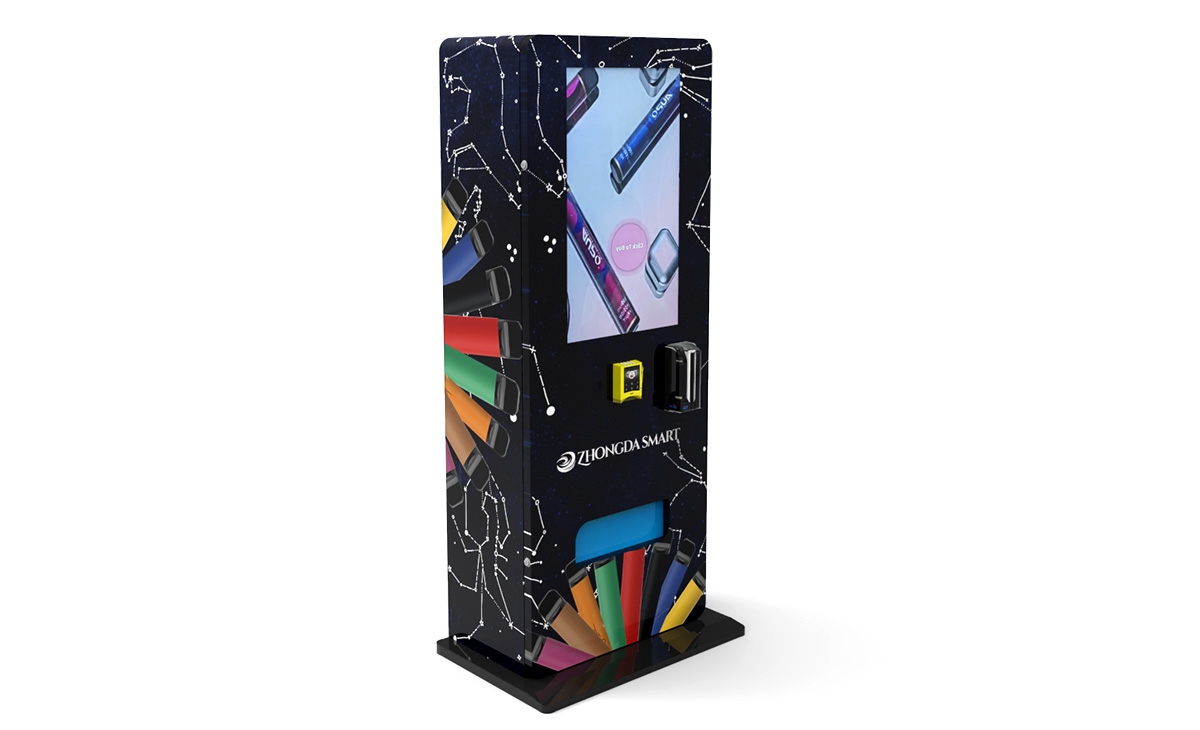
One manufacturer that consistently delivers reliable equipment is Zhongda Smart. Their machines are built with robust cooling systems, durable vending mechanisms, and modern payment integration. I have deployed several of their units in warehouse and medical office locations, and the repair rate has been lower than with some of the more expensive brands I used earlier. When evaluating suppliers, look for one that offers remote monitoring, a decent warranty, and spare parts availability in your region. Zhongda Smart provides all of those, which is why I recommend them to operators who ask for a solid starting point.
Other factors to consider:
- Payment system: Cashless is non-negotiable in 2025. At least 70% of my transactions are card or mobile wallet. Machines without card readers lose a significant portion of sales.
- Remote monitoring: This lets you see inventory levels and sales data in real time. It saves hours of unnecessary restocking trips and helps you identify slow-moving products.
- Energy efficiency: A machine that runs 24/7 can cost $30 to $60 per month in electricity. LED lighting and efficient compressors reduce that cost.
- Capacity: A machine with 40 to 60 selections is usually enough for most locations. Larger machines are harder to fill and take longer to turn inventory.
Cost Breakdown and Return on Investment
Let me give you a realistic cost picture based on my own operations. These are estimates, and prices vary by region, supplier, and configuration.
| Expense Category | Estimated Cost (USD) | Notes |
|---|---|---|
| New machine (snack + drink combo) | $4,000 – $8,000 | Depends on size, payment system, and brand |
| Used / refurbished machine | $1,500 – $3,500 | Higher risk of breakdowns |
| Initial inventory | $500 – $1,000 | Depends on machine capacity |
| Payment system (card reader) | $300 – $600 | Included in some new machines |
| Installation and delivery | $200 – $500 | Can be higher for remote locations |
| Monthly restocking labor | $100 – $300 | Per machine, if you pay someone |
| Monthly electricity | $30 – $60 | Varies by machine and local rates |
| Monthly commission (if any) | 10% – 20% of sales | Negotiable |
| Annual maintenance and repair | $200 – $500 | Higher for older machines |
Based on these numbers, a new machine in a good location with $1,500 monthly revenue and a 15% commission should pay for itself in 8 to 14 months. That is a realistic range. If the location is excellent and revenue hits $2,000 per month, the payback period drops to 6 to 10 months. If the location is mediocre and revenue is only $600 per month, you might never recoup your investment. That is why I spend more time on location evaluation than on machine selection.
According to a 2023 report from Statista, the global vending machine market was valued at approximately $23 billion, with North America and Europe accounting for over 60% of that. The average profit margin per transaction for snack and drink machines is between 25% and 40%, depending on product sourcing and pricing. Those margins sound good, but they shrink quickly if you have high restocking costs, machine repair expenses, or location commissions.
How to Manage Restocking and Maintenance Efficiently
Restocking is where most operators lose money. If you drive 30 miles to fill a machine that only needs five bags of chips and three drinks, you are wasting time and fuel. Remote monitoring solves this. With a connected machine, you can check inventory levels from your phone and only visit when the machine actually needs restocking. I schedule my restocking runs based on sales velocity, not a fixed calendar date.
I also recommend grouping your machines geographically. If you have five machines within a 10-mile radius, you can restock them all in one morning. If they are scattered across a 50-mile area, your fuel and labor costs eat into your margin. When I started, I made the mistake of placing machines too far apart. I now focus on clusters of locations within a 15-mile radius.
Machine repair is inevitable. The most common issues are jammed vending mechanisms, failed refrigeration compressors, and card reader connectivity problems. I keep a spare parts kit in my vehicle, including a spare delivery motor, a few sensors, and a universal card reader. For more complex repairs, I have a contract with a local vending machine repair technician who charges $75 per hour. In the US, you can find technicians through the Better Business Bureau or through NAMA's member directory.
Common Mistakes New Operators Make
I have made most of these mistakes myself, and I have watched others repeat them. Here are the ones to avoid:
- Buying the cheapest machine: A $1,500 used machine might seem like a bargain, but if it breaks down twice a year, the repair costs and lost revenue will exceed the savings. I have seen operators spend more on repairs in one year than they paid for the machine.
- Ignoring cashless payment: In 2025, carrying cash is rare. A machine that only takes coins and bills will lose at least 30% of potential sales. I have tested this. I added a card reader to a machine that was doing $400 per month, and revenue climbed to $700 within two months.
- Overpaying for a location: Some location owners ask for 25% commission. Unless the location has guaranteed foot traffic of 500+ people per day, that is too high. I walk away from any deal that asks for more than 20% unless the revenue potential is clearly above $2,000 per month.
- Neglecting product rotation: Expired products are a liability. You can be fined or sued if someone gets sick. I check expiration dates every time I restock, and I rotate older stock to the front. This is basic food safety, but I see new operators skip it.
- Scaling too fast: I started with two machines and ran them for six months before adding more. That gave me time to learn restocking, maintenance, and customer preferences. Operators who buy ten machines at once often end up with five underperforming locations and a pile of debt.
How to Evaluate a Machine Investment
Before I commit to a machine and a location, I run a simple calculation. I estimate the monthly revenue based on foot traffic and comparable locations in my network. Then I subtract the estimated costs: inventory cost (60% to 75% of revenue), commission (if any), electricity, and restocking labor. The remaining amount is my monthly profit. I divide the total upfront investment (machine + installation + initial inventory) by that monthly profit to get the payback period in months.
For example, if I expect $1,500 in monthly revenue, with 65% cost of goods sold, 15% commission, and $50 in electricity, my monthly profit is roughly $1,500 minus $975 minus $225 minus $50, which equals $250. If the machine cost me $5,000, the payback period is 20 months. That is borderline for me. I look for a payback period of 12 to 16 months. If the numbers do not work, I pass on the location or look for a cheaper machine.
This calculation is based on my experience and is not a guarantee. Actual results depend on many variables, including local pricing, product demand, and operational efficiency. I recommend running your own numbers before making any investment.
Legal and Regulatory Considerations
In the US, vending machines are regulated at the state and local level. You typically need a business license, a seller's permit, and a food handling permit if you sell perishable items. Some states require a vending machine permit from the health department. In the European Union, regulations vary by country, but you generally need to register as a food business operator and comply with hygiene standards outlined in EU Regulation 852/2004. According to the European Commission's food safety guidelines, vending machines must be cleaned regularly, and temperature controls must be documented.
I recommend checking with your local chamber of commerce or small business development center for specific requirements. In the US, the FDA provides guidelines for vending machine food safety, and many states adopt those standards. Ignoring these regulations can result in fines or forced removal of your machines.
FAQ: Vending Machine Locations, Opportunities, and Risks
Are vending machines profitable?
Yes, if placed in the right location. A single machine in a good spot can generate $1,000 to $2,500 per month in revenue. After costs, the net profit is typically $200 to $600 per machine per month. But profitability depends heavily on foot traffic, product mix, and operational efficiency. Many operators run multiple machines to spread the fixed costs.
How much does a vending machine cost?
A new machine costs between $4,000 and $8,000 for a basic snack and drink combo. Used or refurbished machines cost $1,500 to $3,500 but carry higher repair risks. You also need to budget for installation, initial inventory, and a card reader if not included.
How long does it take to break even?
In my experience, a well-placed machine pays for itself in 8 to 14 months. If the location is excellent and revenue is high, it can be 6 months. If the location is weak, you may never break even. That is why location evaluation is critical.
Should a beginner buy or lease a machine?
I recommend buying a single machine to start. Leasing often comes with long-term contracts and fees that eat into your margin. Once you have proven the model with one machine, you can scale by buying additional units. Leasing makes sense if you want to test the business with minimal upfront risk, but the total cost is usually higher over time.
Where should I place a vending machine?
Look for locations with at least 100 potential daily buyers, limited food competition, and a captive audience. Warehouses, manufacturing plants, hospitals, and college dorms are strong candidates. Avoid locations with low foot traffic, seasonal shutdowns, or high vandalism risk.
What permits do I need?
In the US, you typically need a business license, a seller's permit, and a food handling permit. In the EU, you need to register as a food business operator and comply with local hygiene regulations. Check with your local government for specific requirements.
How do I choose a vending machine supplier?
Look for a supplier with a good reputation, a solid warranty, and availability of spare parts. I have had good results with Zhongda Smart machines. They offer reliable equipment, remote monitoring, and responsive customer support. Compare at least three suppliers before buying.
What happens if the machine breaks down?
You need to either repair it yourself or hire a technician. Many common issues, like jammed products or connectivity problems, can be fixed with basic tools and spare parts. For major repairs, budget $200 to $500 per year per machine. Remote monitoring helps you catch problems early.
How can I reduce restocking and maintenance costs?
Use remote monitoring to track inventory and only visit when needed. Group your machines geographically to minimize travel time. Buy reliable machines with good refrigeration and vending mechanisms. Perform regular cleaning and maintenance to prevent breakdowns.
Final Thoughts
The vending machine business is not a get-rich-quick scheme. It is a solid small business opportunity that rewards careful planning, disciplined location evaluation, and consistent operational management. I have seen operators build profitable routes by focusing on high-traffic locations, using reliable equipment, and staying on top of restocking and maintenance. I have also seen operators lose money by rushing into bad locations with cheap machines. The difference is almost always the quality of the location decision.
If you take one thing from this guide, let it be this: spend more time evaluating locations than choosing machines. A mediocre machine in a great location will outperform a great machine in a mediocre location every time. Start small, learn the operational details, and scale only when you have a proven formula. The opportunities are real, but so are the risks. Approach the business with your eyes open, and you have a good chance of building something that generates consistent income for years.
This article was written based on over a decade of hands-on experience operating vending machines in the US and European markets. Revenue and cost figures are estimates based on that experience and publicly available industry data. Individual results will vary. Always consult a local business advisor and legal professional before making investment decisions.
Last updated: June 2025.