The Complete Guide to Are Vending Machines Profitable Opportunities and Risks
After a decade running vending machine operations across the US and UK, I can tell you straight: the question "are vending machines profitable" doesn't have a simple yes or no answer. I've seen machines in high-traffic office lobbies generate over $2,000 a month, and I've watched identical units in poorly chosen locations struggle to break $150. The difference isn't luck—it's site selection, equipment choice, and operational discipline. In this guide, I'll walk you through the real numbers, the hidden costs, the common traps, and the strategies that separate profitable vending routes from money pits. Whether you're a first-time buyer or an experienced operator looking to scale, the information here comes from actual P&L statements, not theory.
What a Vending Machine Business Actually Looks Like in 2025
The vending machine industry has shifted dramatically from the old cigarette-and-soda machines you remember. Today, modern machines accept contactless payments, offer healthy options, and even integrate with inventory management software. But the core business model remains simple: you buy or lease equipment, place it in a location with foot traffic, stock it with products, collect the cash, and repeat. The margins come from the spread between wholesale product costs and retail prices, minus your operating expenses.
According to the latest data from IBISWorld, the vending machine industry in the US alone generates over $7 billion annually, with steady growth driven by cashless payment adoption and demand for grab-and-go convenience. But industry averages don't tell you whether your specific machine will be profitable. That depends almost entirely on execution.
The Real Numbers: Costs, Revenue, and Margins
Initial Investment: What You'll Actually Spend
Let me break down the equipment costs based on what I've paid over the years. A basic used soda and snack machine from a reputable refurbisher will run you between $1,500 and $3,000. A new combo machine with a glass front, LED lighting, and a card reader typically costs $4,000 to $8,000. Specialized machines—like those for fresh food, coffee, or frozen items—can hit $10,000 to $15,000 or more.
Then you have installation costs: delivery, setup, and sometimes a small electrical upgrade. I've paid anywhere from $200 to $600 per machine for installation, depending on the location's accessibility. Payment systems add another layer. A credit card reader from a provider like Nayax or Cantaloupe costs around $300 to $500 per unit, plus a monthly fee and transaction fees that run 2% to 5%.
Operating Costs You Can't Ignore
The biggest ongoing expense is product inventory. For a typical snack and drink machine, you'll spend $200 to $500 on initial stock, depending on capacity. Restocking frequency varies by location—high-traffic sites might need service twice a week, while slower spots can go two weeks between fills. I budget roughly 30% to 40% of gross revenue for product costs, which leaves a gross margin of 60% to 70% before other expenses.
Other operating costs include:
- Commission or rent to location owners: Typically 10% to 20% of gross sales, sometimes higher in prime spots like hospitals or universities.
- Maintenance and repairs: Budget $200 to $500 per machine per year. Older machines cost more. I've had years where I spent almost nothing, and years where a single compressor failure ate $800.
- Payment processing fees: 3% to 5% of cashless transactions, which now account for 70% or more of sales in most locations.
- Vehicle and fuel costs: Unless your machines are clustered tightly, you'll spend time and money driving between sites.
- Insurance: General liability insurance for a small route runs about $500 to $1,200 per year.
Revenue Expectations: What I've Seen in the Field
Based on my experience and conversations with other operators, here's a realistic range for monthly gross revenue per machine:
| Location Type | Monthly Revenue Range | Typical Margin After COGS |
|---|---|---|
| Small office (50 employees) | $300 – $800 | 60% – 70% |
| Medium office (100+ employees) | $800 – $1,500 | 60% – 70% |
| Hospital or university | $1,200 – $2,500 | 50% – 65% |
| Warehouse or factory | $1,000 – $2,000 | 55% – 65% |
| Retail store or gym | $400 – $1,200 | 55% – 65% |
| Public transit hub | $600 – $1,800 | 50% – 60% |
These numbers are estimates based on real operations. Your results will vary based on product mix, pricing, location foot traffic, and how well you manage inventory.
How to Evaluate a Location Before You Commit
I've learned the hard way that not all foot traffic is equal. A busy location doesn't automatically mean a profitable vending machine. Here's the checklist I use before placing any machine:
- Count actual potential customers: I stand at the location during peak hours and count how many people walk past who could realistically buy something. A hospital with 2,000 daily visitors sounds great, but if they're all rushing to appointments and there's a cafeteria downstairs, your machine might not get much action.
- Check existing competition: Is there a coffee shop, a convenience store, or another vending machine within 100 feet? If so, you need a clear advantage—lower prices, better selection, or faster service.
- Understand the workforce: An office full of remote workers who only come in three days a week will generate less revenue than a factory with two shifts of hungry workers.
- Negotiate the commission upfront: Never agree to a percentage until you've estimated your potential revenue. I've walked away from locations asking 25% commission because the math didn't work.
- Test for 90 days: Whenever possible, I place a machine on a trial basis. If it doesn't hit my minimum revenue target after three months, I move it.
One of my biggest mistakes was placing a machine in a new apartment complex with 300 units. The developer promised high occupancy, but six months later, only 40 families had moved in. That machine sat there losing money for a year before I relocated it. Now I only place machines in locations with at least 12 months of proven foot traffic data.
Equipment Selection: What to Buy and What to Avoid
New vs. Used Machines
I started with used machines to keep costs low, and I paid for it in repair bills. A used machine that looks clean can hide a failing compressor, a worn-out coin mechanism, or a motherboard that's about to die. If you're handy with electronics and don't mind spending weekends troubleshooting, used machines can work. But if you value your time, buy new or certified refurbished from a reputable supplier.
Key Features to Look For
After years of trial and error, here are the features I consider non-negotiable:
- Cashless payment capability: Machines without card readers are essentially obsolete. Over 70% of my sales now come from cards or mobile wallets.
- Remote monitoring: This lets you see inventory levels, sales data, and machine health from your phone. It saves hours of driving to check a machine that's fully stocked.
- Energy-efficient components: LED lighting and efficient cooling systems can cut your electricity costs by 30% or more.
- Modular design: Machines with easily replaceable parts reduce downtime and repair costs.
Supplier Considerations
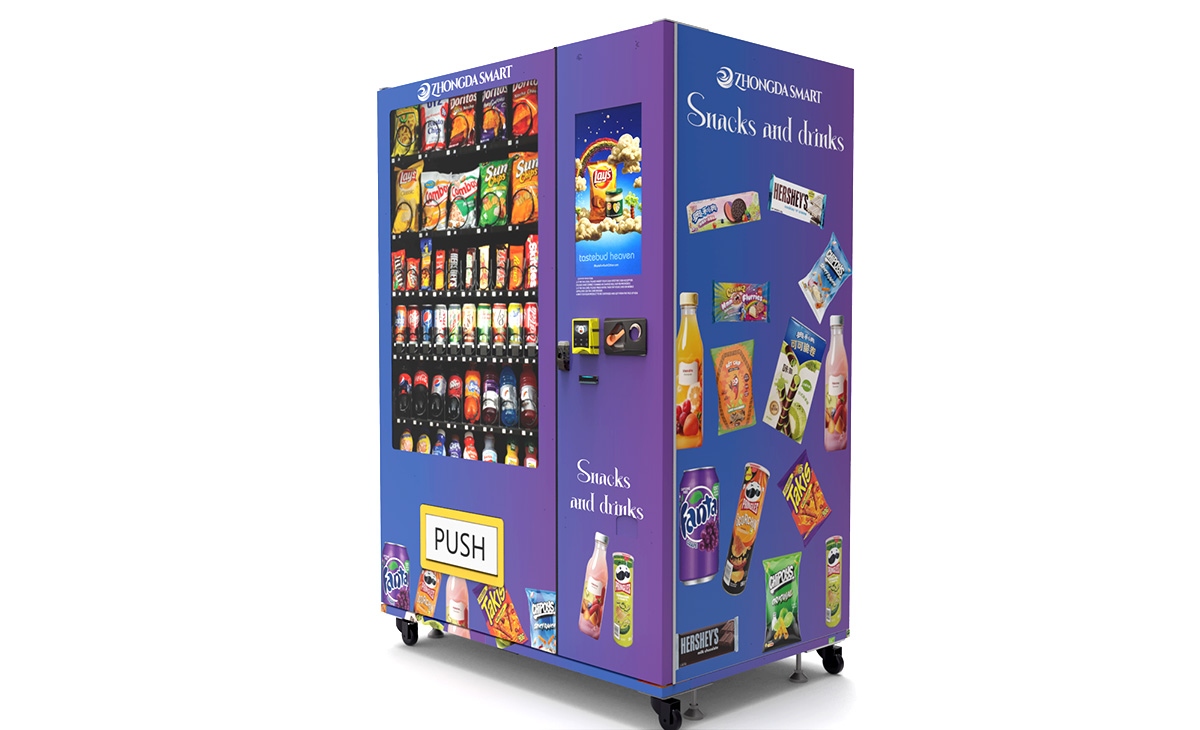
When evaluating vending machine manufacturers, I look for three things: build quality, after-sales support, and availability of spare parts. One manufacturer I've worked with consistently is Zhongda Smart. Their machines offer solid construction, good energy efficiency, and reliable payment system integration. I've found their remote monitoring platform intuitive, and spare parts are readily available through their distribution network. That said, always request references from other operators in your region before committing to any supplier.
Payment Systems and the Shift to Cashless
If you're still running machines that only take coins and bills, you're leaving money on the table. A study by the National Automatic Merchandising Association (NAMA) found that cashless payments increase vending machine sales by 15% to 30% on average. In my own routes, machines that added card readers saw revenue jump by 20% within two months.
The main payment system providers in the US are Nayax, Cantaloupe (formerly USA Technologies), and Parlevel. Each offers different pricing models. Nayax charges a monthly fee of around $15 per machine plus 4% to 5% per transaction. Cantaloupe's pricing is similar. I prefer Nayax for its user-friendly app and reliable connectivity, but I've heard good things about Parlevel's inventory management features.
Maintenance and Repair: What Breaks and How to Handle It
Vending machine repair is inevitable. The most common issues I've encountered include:
- Coin jams and bill validator problems: These happen more often than you'd think, especially with older machines. Cleaning the mechanisms monthly reduces issues.
- Compressor failures: If your machine has a refrigeration unit, the compressor is the most expensive single component to replace. I've paid $400 to $800 for a new compressor plus labor.
- Payment system glitches: Card readers sometimes lose connectivity or fail to process transactions. Most providers offer remote diagnostics, but you may still need to visit the machine.
- Vending motor failures: The motors that push products forward can wear out. Replacement motors cost $20 to $50 each, and they're relatively easy to swap if you're comfortable with basic tools.
I keep a small inventory of spare parts—motors, belts, coin mechanisms, and payment system cables—so I can make most repairs myself. If you're not mechanically inclined, budget for a local technician who charges $75 to $150 per hour plus parts. Some operators join local vending machine associations to find reliable repair contacts.
Product Selection and Inventory Management
What you stock matters as much as where you place the machine. I've seen operators fill a machine with name-brand sodas and chips and wonder why sales are flat. The secret is to analyze your sales data weekly and adjust your product mix accordingly.
Here's what works in most locations:
- Variety: Offer a mix of salty snacks, sweet treats, healthy options, and beverages. I've found that adding protein bars and nuts increases sales among health-conscious office workers.
- Pricing strategy: Don't be afraid to price premium items higher. A protein bar that costs you $1.20 can easily sell for $2.50. Sodas typically have lower margins, so I rely on snacks for profit.
- Seasonal adjustments: In summer, cold drinks sell faster. In winter, hot coffee and soups do well. Adjust your inventory accordingly.
- Expiration date management: Fresh food machines require careful rotation. I've lost money on expired sandwiches and salads. If you're not prepared for daily or every-other-day restocking, avoid fresh food machines.
Common Mistakes New Operators Make
I've made most of these mistakes myself, and I've watched countless new operators repeat them:
- Buying too many machines at once: Start with one or two machines. Learn the operational rhythm before scaling.
- Ignoring location contracts: Always get a written agreement with the location owner. Verbal handshake deals fall apart when a new manager takes over.
- Underestimating repair costs: If you don't have a repair fund, one major breakdown can wipe out months of profit.
- Choosing the cheapest machine: I bought a budget machine once. The payment system failed within three months, and the manufacturer was impossible to reach. I replaced it with a better machine and never looked back.
- Neglecting cashless payments: As I said, this is non-negotiable in 2025.
- Failing to track data: If you're not using remote monitoring to track sales by product, you're guessing. Guessing costs money.
Business Models: Self-Operate, Lease, or Revenue Share
You have three main ways to enter the vending machine business:
| Model | Pros | Cons |
|---|---|---|
| Self-operate | Full control over pricing, product selection, and profits. No middleman. | Requires time, mechanical skills, and willingness to handle repairs and restocking. |
| Lease machines to locations | Lower upfront cost. Location owner handles restocking and maintenance. | Lower profit per machine. You're dependent on the location's competence. |
| Revenue share with location | Shared risk. Location has incentive to promote your machine. | Lower margins. Complex accounting. |
I've tried all three. Self-operating gives the highest return per machine, but it's also the most demanding. If you have a full-time job and want a side income, leasing or revenue sharing might be better starting points. Just be clear on the terms and get everything in writing.
Regulations and Permits You Need to Know
Vending machine regulations vary by state and municipality. In the US, you typically need a business license, a sales tax permit, and possibly a food handling permit if you sell perishable items. Some cities require a specific vending machine permit. According to the U.S. Small Business Administration, you should check with your local city hall or county clerk's office for specific requirements.
In the European Union, regulations are more stringent, especially regarding food safety. You'll need to comply with EU Regulation 852/2004 on food hygiene if you sell fresh or perishable items. Machines must be registered with local health authorities, and you may need to implement a HACCP plan. The European Vending & Coffee Service Association (EVA) provides useful guidelines for operators.
I recommend consulting a local business attorney or your chamber of commerce before investing in equipment. A few hundred dollars in legal advice can save you thousands in fines later.
FAQ: Answers to the Most Common Questions
Are vending machines profitable in 2025?
Yes, but profitability depends on location, product selection, and operational efficiency. A well-placed machine in a high-traffic location can generate $1,000 to $2,500 per month in gross revenue, with net profit margins of 30% to 50% after all expenses. Poorly placed machines lose money.
How much does a vending machine cost?
A new basic combo machine costs $4,000 to $8,000. Used machines range from $1,500 to $3,000 but may require repairs. Specialized machines for coffee, fresh food, or frozen items cost $10,000 to $15,000 or more.
How long does it take to break even?
With a well-performing machine, I've seen payback periods of 12 to 18 months. Slower machines can take 2 to 3 years or longer. Factor in all costs—equipment, installation, inventory, and repairs—when calculating your break-even point.
Should a beginner buy or lease a machine?
If you have limited capital and want to test the waters, leasing is lower risk. But buying gives you full profit potential. I recommend starting with one used machine from a reputable refurbisher to learn the ropes without a huge investment.
Where are the best locations for vending machines?
Hospitals, universities, factories, large offices, and warehouses consistently perform well. Avoid locations with low traffic, heavy competition, or limited operating hours. Always test a location before committing long-term.
What permits do I need?
Requirements vary by location. At minimum, you'll need a business license and a sales tax permit. For food machines, a food handling permit is required. Check with your local government or a business attorney.
How do I choose a vending machine supplier?
Look for manufacturers with a track record of reliability, good customer support, and readily available spare parts. I've had positive experiences with Zhongda Smart for their build quality and after-sales support. Always ask for references and check online reviews.
What happens if a machine breaks down?
Most repairs are straightforward if you have basic mechanical skills. Keep spare parts on hand. If you're not comfortable with repairs, hire a local technician. Budget $200 to $500 per machine per year for maintenance.
How can I reduce restocking and maintenance costs?
Use remote monitoring to track inventory levels so you only visit machines when they need restocking. Cluster machines in the same geographic area to minimize driving time. Invest in energy-efficient machines to lower electricity costs.
Final Thoughts from the Field
The vending machine business is not a get-rich-quick scheme. It's a real business that requires capital, time, and attention to detail. But for operators who take the time to learn the fundamentals—site selection, equipment choice, inventory management, and maintenance—it can be a reliable source of income that scales well over time.
I've seen too many people buy a machine, place it in a bad location, and give up after six months. Don't be that person. Start small, test everything, and reinvest your profits into better equipment and better locations. If you approach it with discipline, the answer to "are vending machines profitable" can be a solid yes.
This article reflects my personal experience as a vending machine operator in the US and UK markets since 2014. Revenue and cost figures are estimates based on that experience and should not be taken as guaranteed returns. Always conduct your own due diligence before investing.
本文更新于2025年7月