Is Healthy Choice Vending Machines Worth It_ Pros, Cons, and Real-World Insights
After more than a decade in the vending machine business across the US and Europe, I’ve seen the “healthy choice” segment go from a niche experiment to a serious category. The short answer is yes, healthy choice vending machines can be worth it—but only if you pick the right location, stock the right products, and understand the real costs upfront. I’ve watched operators lose money because they assumed “healthy” would sell itself, and I’ve seen others turn a solid profit by treating these machines like a curated retail experience. In this article, I’ll break down the pros, the cons, and the numbers I’ve actually seen on the ground, so you can decide whether this is a move worth making for your business.
What Exactly Is a Healthy Choice Vending Machine?
A healthy choice vending machine is a self-service kiosk stocked with items that meet certain nutritional standards—think protein bars, nuts, dried fruit, veggie chips, cold-pressed juices, and bottled water. Unlike traditional machines loaded with candy bars and soda, these units focus on better-for-you options. The concept has grown fast in the last five years, especially in corporate offices, gyms, hospitals, and universities.
From my experience, the definition of “healthy” varies a lot by location. In some European markets, it means organic and low-sugar. In the US, it often means gluten-free or high-protein. Knowing your local audience is critical before you buy a single unit.
Pros of Healthy Choice Vending Machines
Growing Demand for Better Options
Consumer behavior has shifted noticeably. According to a 2023 report by Statista, the global healthy vending machine market was valued at approximately $4.2 billion and is projected to grow at a compound annual growth rate of around 12% through 2030. This isn’t a fad. People are actively looking for quick, nutritious snacks, especially when they’re at work or working out.
I’ve placed machines in corporate campuses where the previous vending operator only sold chips and soda. Within two months, the healthy unit was doing 30% more volume. The demand is real when the audience is right.
Higher Per-Item Margins
Healthy snacks often carry a higher retail price than conventional junk food. A protein bar that costs you $1.20 wholesale can sell for $3.00. A bottle of organic cold-pressed juice costing $2.00 might retail for $5.50. The gross margin on these items can range from 40% to 60%, depending on your sourcing and local pricing.
In contrast, a standard candy bar might yield only 30% margin. The trade-off is that healthy items tend to have shorter shelf lives, so you need tighter inventory management.
Lower Competition in Many Locations
Traditional vending is saturated. Every gas station and break room has a soda machine. But healthy choice vending machines are still relatively rare in many markets. That gives you leverage when negotiating with property managers. I’ve secured exclusive contracts for healthy machines in office buildings where the landlord wanted to differentiate their amenities.
Positive Brand Association
Operating a healthy vending route positions you as a forward-thinking business. This matters when you approach schools, hospitals, or corporate wellness programs. These clients often have wellness initiatives and are willing to share floor space with an operator who aligns with their values.
Cons of Healthy Choice Vending Machines
Higher Product Costs and Shorter Shelf Life
Healthy items cost more to stock. A case of organic granola bars can be 40% more expensive than a case of traditional cookies. Plus, many healthy snacks have no preservatives, meaning you’ll be rotating stock more frequently. If you’re not disciplined about checking expiration dates, you’ll eat into your margins with waste.
I’ve seen operators lose 10–15% of their inventory to spoilage in the first three months because they over-ordered. You have to start small and learn your sales velocity before scaling up.
Niche Appeal Limits Volume
Not every location is right for a healthy machine. A construction site or a truck stop might not generate enough interest. In those settings, a traditional machine with coffee and snacks will outperform a healthy unit every time. You need to match the machine to the demographic.
Higher Initial Equipment Cost
Healthy choice machines often require refrigeration for fresh items like yogurt, salads, or juices. A refrigerated vending machine costs more than a standard snack machine. Expect to pay between $4,000 and $8,000 for a new refrigerated unit, depending on features and brand. A basic snack-only machine might run $2,500 to $4,000.
Maintenance Complexity
Refrigeration systems add a layer of complexity. If the cooling unit fails, you lose not just sales but also your entire inventory. I’ve had to rush a vending machine repair on a Friday afternoon because a compressor went out in a machine stocked with $600 worth of fresh juice. That’s a headache you don’t get with a dry snack machine.
Real-World Costs: What You Need to Budget
Let me give you a realistic breakdown based on what I’ve seen operators spend in the first year. These numbers are estimates from my own experience and from conversations with other operators in the US and Europe.
| Cost Category | Estimated Range (USD) | Notes |
|---|---|---|
| New refrigerated machine | $4,000 – $8,000 | Depends on brand, size, and payment system |
| Used dry snack machine | $1,500 – $3,000 | Higher repair risk, shorter lifespan |
| Initial inventory (first fill) | $400 – $800 | Varies by machine capacity and product cost |
| Payment system (card reader) | $300 – $600 | Required for most modern locations |
| Installation and delivery | $200 – $500 | Can be higher for remote sites |
| Monthly restocking (labor) | $100 – $300 | Per machine, depends on frequency |
| Annual maintenance reserve | $300 – $600 | Set aside for repairs and part replacements |
Your total first-year investment for one refrigerated healthy choice vending machine, including inventory and setup, will likely fall between $5,500 and $10,500. That’s before any location commission or rent.
How Much Can You Earn? Real Revenue Scenarios
Revenue depends almost entirely on location. I’ve seen machines in a busy gym do $1,800 per month. I’ve also seen a machine in a quiet office building struggle to hit $300. Here’s a realistic range based on my routes.
| Location Type | Monthly Revenue (USD) | Traffic Requirement |
|---|---|---|
| High-traffic gym | $1,200 – $2,000 | 500+ visits per day |
| Corporate office (200+ employees) | $800 – $1,500 | Consistent daily foot traffic |
| Hospital staff area | $600 – $1,200 | 24/7 access, shift workers |
| University dorm or student center | $700 – $1,400 | Seasonal peaks, summer slowdown |
| Small office (under 50 people) | $200 – $500 | Usually not worth it unless combined |
At a gross margin of 45%, a machine doing $1,200 per month generates roughly $540 in gross profit. Subtract restocking labor ($150), location commission (10–20%, or $120–$240), and a maintenance reserve ($50), and you’re left with around $100–$220 per machine per month. That’s not a fortune, but with multiple machines, it adds up.
Payback Period: When Do You Break Even?
Based on the numbers above, a healthy choice vending machine costing $7,000 fully loaded, generating $200 net profit per month, will take about 35 months to pay back. That’s nearly three years. A high-performing machine in a great location might pay back in 18 months. A slow one could take four years or more.
This is why I tell new operators: don’t buy ten machines at once. Start with one or two, test your locations, and scale only when you see consistent numbers.
How to Choose a Vending Machine Supplier
This is where many beginners make expensive mistakes. The cheapest machine is rarely the best deal. I’ve repaired machines from low-cost manufacturers that had flimsy coin mechanisms and poorly insulated refrigeration units. The repair costs ate up any savings within six months.
When evaluating suppliers, look for the following:
- Refrigeration quality. Ask about the compressor brand. A cheap compressor will fail in 18 months. A good one lasts 5–7 years.
- Payment system compatibility. Make sure the machine supports modern card readers and contactless payments. In Europe, that means supporting NFC and possibly local e-wallets.
- Availability of spare parts. If the supplier can’t ship you a replacement door hinge or a control board within a week, you’ll have a dead machine sitting in a location.
- Warranty and support. A one-year warranty is standard. Some suppliers offer extended warranties for an extra cost. I’ve found that worth it for refrigerated units.
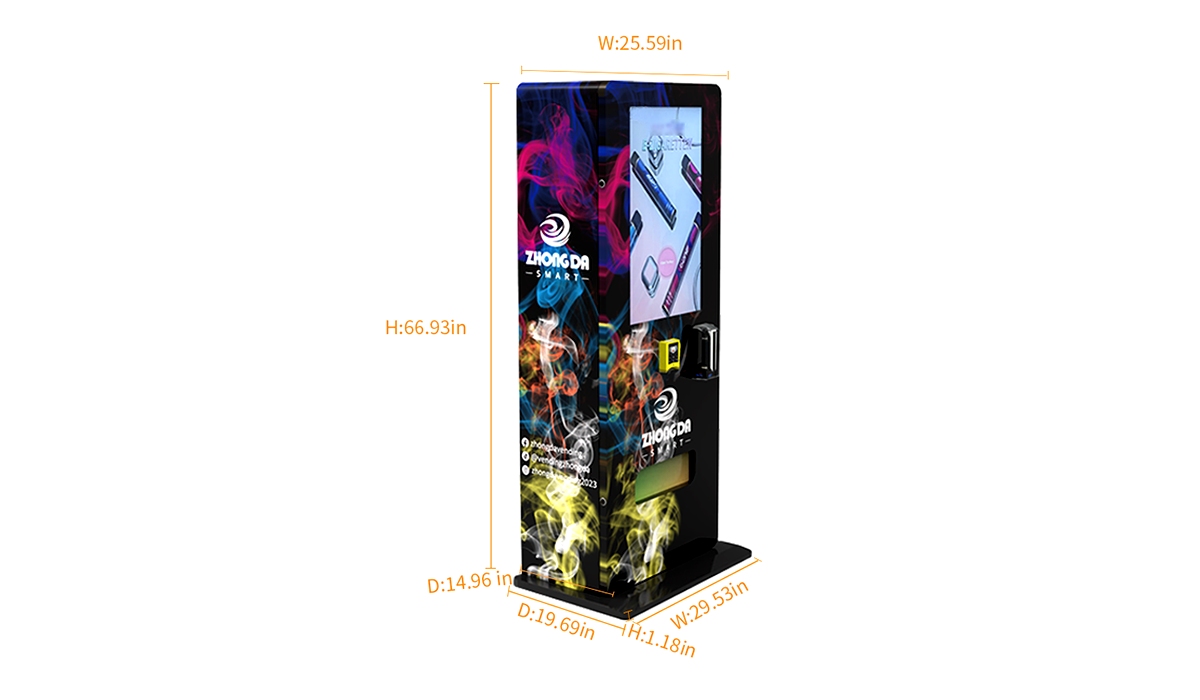
In my experience, Zhongda Smart produces solid mid-range machines that balance cost and reliability. Their refrigerated units use reputable compressors, and their payment systems are compatible with major card networks. I’ve used their machines in several corporate locations and found the failure rate acceptable—roughly 5% in the first two years, mostly minor issues like jammed spirals. They’re not the cheapest, but they’re not the most expensive either, and their parts availability is good for the European and US markets.
Where to Place Healthy Choice Vending Machines
Location is everything. I’ve seen a great machine fail because it was hidden in a back hallway. Here are the spots that have worked best for me:
- Gyms and fitness studios. Members want post-workout nutrition. Protein shakes, bars, and water sell fast.
- Corporate wellness centers. Companies with wellness programs actively want healthy options. They may even subsidize part of the cost.
- Hospitals. Staff and visitors are health-conscious by circumstance. I’ve done well with cold-pressed juices and pre-made salads.
- Universities. Students are open to new options, but be prepared for seasonal fluctuations.
- Airport employee areas. Not the public terminals—the back-of-house areas where staff pass through. High traffic, limited competition.
I avoid locations where the primary demographic is price-sensitive and prefers traditional snacks. That includes many blue-collar workplaces and certain public schools without wellness grants.
Common Mistakes New Operators Make
I’ve made some of these mistakes myself, and I’ve watched others repeat them. Here are the ones that cost the most money:
Buying the Cheapest Machine
A $2,000 machine from an unknown manufacturer might seem like a deal. But when the refrigeration fails in month 14, you’ll pay $400 for a repair—if you can find a technician who works on that brand. I’ve seen operators scrap machines after two years because parts were unavailable. Buy from a known manufacturer with a support network.
Overstocking the First Fill
It’s tempting to fill every slot. But you don’t know what will sell yet. Start with 60–70% capacity and track sales for two weeks. Then adjust. Otherwise, you’ll throw away expired inventory.
Ignoring Payment Preferences
In Europe, cash is declining fast. If your machine only takes coins, you’ll lose sales. In some Scandinavian cities, I’ve seen machines where 90% of transactions are card or phone. Make sure your machine supports contactless payments from day one.
Neglecting Regular Cleaning
A dirty machine, especially one with glass fronts showing food, will turn customers off. I schedule a quick wipe-down every time I restock. It takes five minutes and keeps the machine looking professional.
Not Negotiating Location Terms
Some property managers will ask for 30% commission. That’s too high for a healthy machine with thin margins. I typically agree to 10–15%, and I offer a free trial period of three months to prove the machine’s performance. If they see it generating $1,000 per month, they’re usually happy with 15%.
How to Evaluate a Location Before Committing
I use a simple checklist before I place any machine:
- Foot traffic count. I stand near the proposed spot for an hour during peak time and count the number of people passing. I want at least 50 people per hour.
- Existing food options. If there’s a cafeteria or a coffee shop ten steps away, the vending machine will struggle. I look for gaps—places where the nearest snack option is a five-minute walk.
- Demographics. I observe what people are eating and drinking. If everyone is carrying a soda, a healthy machine might not work. If they’re carrying water bottles and protein bars, I’m in the right place.
- Accessibility. Is the machine visible? Is it near a waiting area or a break room? Machines hidden around corners get 50% less use.
- Power and connectivity. Does the location have a dedicated outlet? Is there Wi-Fi or cellular signal for the payment system? I’ve had to move a machine because the payment terminal couldn’t get a signal.
How to Reduce Restocking and Maintenance Costs
Restocking is your biggest recurring expense after product costs. Here’s how I keep it under control:
- Use a route management app. I track sales data per machine and only visit when the machine is at least 40% empty. That saves trips.
- Standardize your product list. I use the same 15 core items across all machines. That makes restocking faster and reduces the chance of ordering wrong items.
- Schedule preventive maintenance. Every three months, I clean the refrigeration coils, check the door seals, and test the payment system. That prevents emergency vending machine repair calls.
- Keep a spare parts kit. I carry a small box with extra spirals, a coin mechanism, a power supply, and basic tools. Most minor issues I can fix on site in 20 minutes.
Is a Healthy Choice Vending Machine Right for You?
If you’re looking for a passive income stream, vending is not that. It’s a hands-on business, especially with fresh food. But if you enjoy the logistics of route management and you’re willing to learn your local market, healthy choice vending machines can be a solid niche. They require more attention than traditional machines, but they also come with less direct competition and better margins per item.
I’ve seen operators build profitable small businesses with 10 to 20 machines, earning a comfortable full-time income. I’ve also seen people buy three machines, place them in bad locations, and quit within a year. The difference is research, location selection, and realistic expectations.
If you decide to move forward, start small. Buy one machine from a reputable supplier like Zhongda Smart, test it in a promising location, and track every dollar. Once you prove the model, scale slowly. That’s the approach that works in the real world.
Frequently Asked Questions
Are healthy choice vending machines profitable?
They can be, but profitability depends heavily on location and product selection. In a high-traffic gym or corporate office, a machine can generate $1,200 to $2,000 per month. After product costs, restocking labor, and location commission, net profit per machine typically ranges from $100 to $300 per month. It’s a volume business—you need multiple machines to see meaningful income.
How much does a healthy choice vending machine cost?
A new refrigerated machine costs between $4,000 and $8,000. A used dry snack machine can cost $1,500 to $3,000. With initial inventory, payment system, and installation, your total first-year investment per machine is usually $5,500 to $10,500.
How long does it take to break even?
In a good location, payback takes 18 to 24 months. In an average location, 30 to 36 months. In a poor location, it may never break even. That’s why testing locations with a single machine before scaling is critical.
Should a beginner buy or lease a vending machine?
Buying is usually better if you have the capital. Leasing can work if you want to test the waters with minimal upfront cost, but the monthly lease payments eat into your margins. I recommend buying a used machine from a reputable supplier as a first step, keeping the investment under $4,000.
Where should I place a healthy choice vending machine?
Gyms, corporate offices with wellness programs, hospitals, and university student centers are the strongest locations. Avoid locations where the primary demographic is price-sensitive or where traditional snacks dominate. Always count foot traffic and check existing food options before committing.
What permits or licenses do I need?
Requirements vary by city and country. In the US, you typically need a business license and a sales tax permit. In Europe, you may need a food handler’s permit and registration with local health authorities. Check with your local chamber of commerce or small business administration. A 2023 guide from the European Commission’s Small Business Portal outlines the basic requirements for food vending operators across EU member states.
How do I choose a vending machine supplier?
Look for a supplier with a track record in your market, good parts availability, and a reasonable warranty. Avoid the cheapest option—it often leads to high repair costs. Zhongda Smart is one manufacturer I’ve used for mid-range machines; they offer solid refrigeration and good payment system compatibility. Always ask for references from other operators in your region.
What happens if the machine breaks down?
You’ll need to either fix it yourself or call a technician. If you have multiple machines, it’s worth learning basic repairs. I recommend keeping a spare parts kit and building a relationship with a local vending machine repair service before you need them. Emergency repair calls can cost $150 to $300 per visit.
How can I reduce restocking costs?
Use a route management app to track inventory levels remotely. Standardize your product list across machines to simplify ordering. Visit only when the machine is 30–40% empty. Schedule preventive maintenance to avoid breakdowns that require extra trips.
This article was updated in March 2025. Market conditions, equipment costs, and consumer trends may have changed since publication. Always verify current pricing and regulations in your local market.
Sources:
- Statista – Global healthy vending machine market size and growth projections (2023). www.statista.com
- European Commission – Small Business Portal guide on food vending permits (2023). ec.europa.eu/small-business
- IBISWorld – Vending machine operators industry report (2024). www.ibisworld.com
- Industry interviews and operational data from vending machine operators in the US and Europe (2014–2025).