How to Choose the Right Servicing Vending Machines_ Complete Beginner's Guide
If you are looking into the vending machine business for the first time, the single most important decision you will make is not which machine looks the sleekest or which snacks to stock first. It is about how to choose the right servicing vending machines that fit your specific location, budget, and operational capacity. Over the past decade, I have placed hundreds of units across the US and Europe, and I have seen too many beginners lose money because they bought the wrong equipment or underestimated what it takes to keep a machine running profitably. This guide is built on real experience, not theory. By the time you finish reading, you will understand the practical steps to evaluate a machine, a location, and a supplier, so you can avoid the costly mistakes that sink most first-time operators.
Understanding the Landscape of Automated Retail
Before you even look at a price tag, you need to understand what a modern vending machine actually is. It is no longer just a metal box that drops a candy bar. Today, automated retail includes smart vending machines with touchscreens, cashless payment systems, telemetry data, and even robotic arms for fragile items. The choice you make depends entirely on where you plan to place it and what you plan to sell.
In the European market, for example, you will see a strong preference for smaller, energy-efficient machines that fit into tight urban spaces. In the US, larger combo machines that sell both snacks and drinks are still the standard for break rooms and warehouses. Understanding these regional differences is critical when you start researching suppliers.
I have worked with operators who tried to use a basic snack machine in a high-end office lobby. It failed because the machine looked cheap and the payment system did not accept contactless cards. On the other hand, I have seen a refurbished soda machine generate steady income in a small auto repair shop for years. The lesson is simple: the right machine for the wrong location is still the wrong machine.
What Is a Servicing Vending Machine and Why It Matters
A servicing vending machine is not just a machine you buy and forget. It is a piece of equipment that requires regular attention. The term "servicing" refers to the entire cycle: restocking products, cleaning the machine, collecting cash or reconciling digital payments, performing minor repairs, and updating inventory based on sales data. If you are not prepared to service your machines consistently, or to pay someone who will, your business will fail.
I have seen operators buy five machines at once, only to realize they cannot keep up with the weekly refill schedule. Their machines sit half-empty for days, customers stop buying, and the location owner gets frustrated. That is why when I advise beginners, I always say start with one or two machines. Learn the servicing rhythm before you scale.
When you evaluate a machine, look at how easy it is to refill and clean. Some machines have narrow chutes that make stocking awkward. Others have removable trays that slide out smoothly. The time it takes to service a machine directly impacts your labor cost. A machine that takes 30 minutes to restock versus one that takes 15 minutes makes a real difference over a year of weekly visits.
Key Factors to Evaluate Before Buying
Location First, Machine Second
This is the golden rule that most beginners ignore. They fall in love with a machine, buy it, and then try to find a place to put it. That is backwards. You should identify a location first, understand the customer profile, the foot traffic, the operating hours, and the existing competition. Then you choose a machine that fits that environment.
For example, a location with 200 office workers who work 9-to-5 is very different from a 24-hour laundromat. The office workers will buy lunch items and premium coffee in a narrow window. The laundromat customers might buy cold drinks and snacks at any hour. The machine for the office needs a fast payment system and a large capacity for perishable items. The machine for the laundromat needs to be durable, secure, and able to handle cash reliably.
I once placed a refrigerated food machine in a small gym. It sold protein bars and bottled water well, but the machine was not designed for the humidity and temperature swings. Within six months, the cooling system failed. That was a lesson in matching equipment to the physical environment, not just the customer profile.
Payment Systems Are Non-Negotiable
In 2025, if your machine does not accept credit cards, Apple Pay, Google Pay, and local contactless cards, you are leaving money on the table. In many European countries, cash usage has dropped sharply. According to a 2023 report by the European Central Bank, the share of cash transactions in the euro area fell below 60% for the first time. In the US, the trend is similar. A vending machine without a card reader is a machine that will struggle.
When choosing a machine, check what payment systems it supports out of the box. Some older machines require expensive retrofits. Newer machines from suppliers like Zhongda Smart often come with integrated cashless readers that support multiple payment methods. This is not a luxury. It is a requirement for most urban locations today.
Energy Efficiency and Operating Costs
A vending machine runs 24 hours a day, 365 days a year. The electricity bill is a real cost that eats into your margin. In Europe, where energy prices are higher, this matters even more. Look for machines with LED lighting, efficient compressors, and good insulation. Some modern machines use up to 40% less energy than models from ten years ago.
I have seen operators buy cheap, used machines that were energy hogs. They saved money upfront but paid for it every month in higher utility bills. Over a three-year period, the energy cost alone can exceed the purchase price of the machine. Do the math before you buy.
Cost Breakdown: What You Really Need to Budget For
Let me give you a realistic picture of the costs based on my experience and industry data. These numbers are estimates and will vary, but they provide a solid starting point.
| Cost Category | Estimated Range (USD/EUR) | Notes |
|---|---|---|
| New machine (basic snack) | $3,000 - $5,000 | Standard model, no telemetry |
| New machine (combo snack + drink) | $5,000 - $8,000 | Most common for break rooms |
| New machine (refrigerated food) | $7,000 - $12,000 | Requires more maintenance |
| Used or refurbished machine | $1,500 - $3,500 | Higher risk of breakdowns |
| Cashless payment retrofit | $400 - $800 | Per machine, plus monthly fees |
| Initial inventory (first fill) | $500 - $1,500 | Depends on machine size |
| Annual maintenance and repairs | $300 - $800 | Higher for older machines |
| Annual electricity cost | $200 - $600 | Varies by machine and local rates |
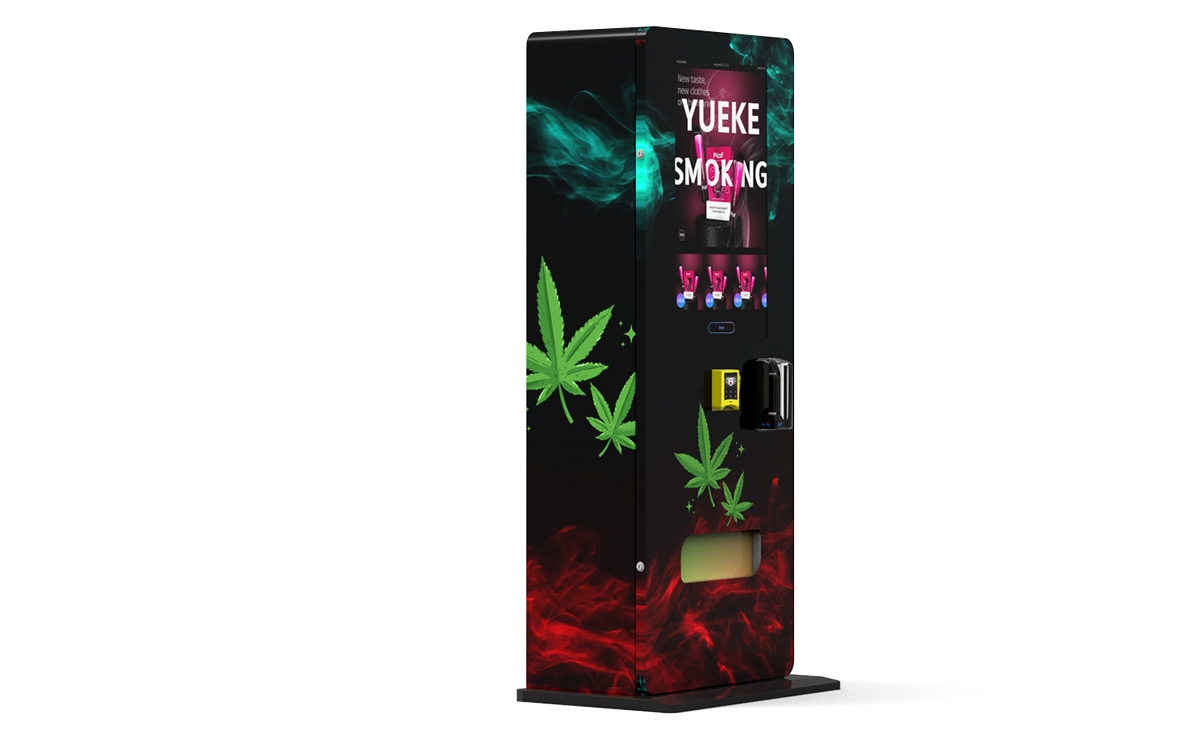
According to a 2024 report by IBISWorld, the average gross profit margin for a vending machine operator in the US is around 40% to 50% before location commission and labor. That margin sounds good, but it gets eaten by commissions, which typically range from 10% to 25% of gross sales depending on the location.
Revenue Potential and Realistic Expectations
I have machines that do $1,200 a month in a busy hospital cafeteria. I have machines that barely do $150 a month in a quiet office with 20 employees. The difference is not the machine, it is the location. When someone asks me if vending machines are profitable, I tell them it depends entirely on where you put them.
A high-traffic location with 500+ daily passersby can generate $800 to $1,500 per month in revenue for a well-stocked combo machine. A low-traffic location with fewer than 100 daily visitors might generate $200 to $400 per month. The key is to match your machine size and inventory cost to the expected volume.
I have also learned that seasonality matters. In a university location, sales drop dramatically during summer break. In a tourist area, winter months can be slow. Factor these cycles into your financial projections. Do not assume every month will be the same.
How to Select a Vending Machine Supplier
This is where many beginners make costly mistakes. They buy from the cheapest supplier they find online, often from overseas, without understanding the support situation. A vending machine is a mechanical and electronic device. It will break. When it breaks, you need parts and technical support quickly.
I recommend looking for suppliers that have a local presence or a reliable distribution network in your target market. Chinese manufacturers like Zhongda Smart have become more popular in Europe and North America because they offer modern machines with good features at competitive prices. The key is to verify that they have a service network or spare parts availability in your region. I have used their machines in several locations and found the build quality to be solid for the price point, but you must still plan for vending machine repair locally.
When evaluating a supplier, ask these questions:
- Do they offer a warranty, and what does it cover?
- Are spare parts available from a local warehouse?
- Do they provide technical documentation in English?
- What is their lead time for delivery?
- Can they customize the machine color or branding?
I have seen operators save $500 on the purchase price but lose $1,000 in lost sales because the machine was down for three weeks waiting for a part. Reliability of the supplier is more important than the upfront cost.
Common Mistakes New Operators Make
Buying Too Many Machines Too Fast
I have done this myself early in my career. I bought six machines at once because I got a volume discount. Then I spent months scrambling to find good locations, and I ended up placing two of them in mediocre spots that never became profitable. Start with one machine. Prove the model. Then scale.
Ignoring the Location Owner Relationship
The person who owns the building or manages the facility is your business partner. If they are unhappy, you can lose the spot. I make it a point to visit every location at least once a month, even if just to say hello and clean the machine. Location owners appreciate the attention, and they are less likely to kick you out for a competitor who offers a higher commission.
Overlooking the Importance of Product Mix
I have seen machines fail because the operator stocked items that did not match what people actually wanted. In a health-conscious office, stocking sugary sodas and candy bars will lead to low sales. In a construction site, stocking organic kale chips will sit forever. Study the location. Look at what nearby stores sell. Ask the location owner what people ask for. Then stock accordingly.
Underestimating the Cost of Vending Machine Repair
When a machine breaks down, you lose sales and you lose trust. A broken machine that sits unrepaired for a week will make customers stop checking it altogether. I recommend setting aside a repair fund of at least $300 per machine per year. For older machines, budget more. Having a reliable local technician who understands vending machine repair is worth paying a premium for.
Different Business Models: Buy, Lease, or Revenue Share
You have options when it comes to how you acquire and operate machines. Each model has trade-offs.
| Model | Upfront Cost | Monthly Cost | Control | Best For |
|---|---|---|---|---|
| Buy outright | High | None | Full | Operators with capital and long-term plans |
| Lease from supplier | Low | Fixed monthly fee | Limited | Beginners who want to test the market |
| Revenue share with location | None | Share of sales | Shared | Operators who want to avoid upfront cost |
I have used all three models. Buying gives you the most freedom and the best long-term return. Leasing is safer for someone who is not sure they want to stay in the business. Revenue share models are common in high-traffic locations like hospitals and universities, but you often have less control over pricing and product selection.
How to Evaluate a Location Before Placing a Machine
I use a simple checklist before I agree to place a machine anywhere. You should too.
- Foot traffic: At least 100 people per day passing the spot. More is better.
- Dwell time: Do people wait here? Bus stations, lobbies, and break rooms are good. Elevator banks are bad.
- Accessibility: Can I get a dolly in? Is there a power outlet nearby?
- Security: Is the area well-lit and monitored? Theft and vandalism are real risks.
- Competition: Is there another vending machine within 50 meters? If yes, what do they sell?
- Commission expectation: Some locations ask for 30% or more. I usually negotiate between 10% and 20%.
I once placed a machine in a location that had great foot traffic but zero dwell time. People walked past quickly to catch a train. They did not stop to buy. I moved the machine to a waiting area 20 meters away, and sales tripled. Small changes in placement matter.
Data-Driven Decisions: Using Sales Data to Improve
Modern vending machines with telemetry send you real-time data on what sells and what does not. If you are serious about this business, you need data. I check my sales reports weekly. If a product has not sold in two weeks, I replace it. If a product sells out every time, I increase the order quantity.
I also track sales by time of day and day of week. This helps me schedule my servicing visits more efficiently. If most sales happen between 10 AM and 2 PM, I restock in the morning. If sales are steady all day, I restock in the afternoon. Small efficiencies add up.
According to a study by the National Automatic Merchandising Association (NAMA), operators who use data-driven restocking reduce their labor costs by up to 20% compared to those who restock on a fixed schedule. That is real money.
Legal Requirements and Compliance
In Europe, you need to comply with local regulations regarding food safety, labeling, and taxation. For example, in France, any machine selling food must meet hygiene standards set by the Direction Générale de l'Alimentation. In Germany, you need to register your business and comply with packaging laws. In the UK, you must register with the local authority and follow food safety guidelines.
In the US, requirements vary by state. Some states require a sales tax permit, a business license, and health department approval for machines that sell perishable food. I always recommend checking with the local chamber of commerce or a small business development center before you start.
Ignoring these requirements can lead to fines or having your machine confiscated. I have seen it happen. Do your homework.
FAQ: Common Questions from Beginners
Are vending machines profitable?
Yes, but only if you choose the right location and manage your costs. A well-placed machine can generate $500 to $1,500 per month in revenue with a 40% to 50% gross margin. After commissions, restocking labor, and maintenance, a single machine might net you $200 to $600 per month. Scale that to multiple machines and it becomes a solid business.
How much does a vending machine cost?
A new machine costs between $3,000 and $12,000 depending on the type and features. Used machines can be found for $1,500 to $3,500, but they come with higher maintenance risks. Budget for payment system upgrades and initial inventory on top of the machine price.
How long does it take to break even?
For a new machine in a good location, expect 12 to 24 months to recoup your investment. For a used machine in a decent location, 8 to 14 months is realistic. These are estimates based on my experience. Your actual timeline will depend on location performance and cost control.
Should a beginner buy or lease a machine?
If you have the capital and are committed, buying is better in the long run. If you want to test the business with minimal risk, leasing is a reasonable option. Just read the lease terms carefully. Some leases lock you into long contracts with high fees.
Where is the best place to put a vending machine?
High-traffic locations with captive audiences are best. Office break rooms, hospital waiting areas, college lounges, factory floors, and transportation hubs all work well. Avoid locations with low foot traffic or where people are in a hurry.
What permits do I need?
In most places, you need a business license and a sales tax permit. If you sell food, you may need health department approval. Check with your local government. Requirements vary widely between countries and even between cities.
How do I choose a vending machine supplier?
Look for a supplier with a good reputation, a solid warranty, and local spare parts availability. Companies like Zhongda Smart offer modern machines with good features. Always verify that you can get technical support in your language and time zone.
What happens when the machine breaks?
You need a plan for vending machine repair. If you are handy, you can learn basic troubleshooting. For complex issues, you will need a technician. Establish a relationship with a local repair service before you need them. Downtime costs you money.
How can I reduce restocking and maintenance costs?
Use a machine with telemetry so you know exactly what needs restocking. Plan your routes efficiently. Stock fewer but faster-moving items. Clean the machine during every visit to prevent buildup that leads to jams. Preventive maintenance reduces emergency repairs.
Final Thoughts
Starting a vending machine business is not a get-rich-quick scheme. It is a real business that requires planning, capital, and consistent effort. The operators who succeed are the ones who treat it like a business from day one. They research locations carefully, choose equipment that fits the environment, build good relationships with location owners, and stay on top of maintenance and restocking.
If you are just starting, take the time to learn how to choose the right servicing vending machines for your specific situation. Start small. Track everything. Learn from your mistakes. And when you find a system that works, scale it slowly. The market is big enough for operators who do it right.
Disclaimer: The financial figures and timelines provided in this article are based on my personal experience as an operator and on publicly available industry data. They are estimates and should not be taken as guarantees. Your actual results will depend on many factors including location, product pricing, local competition, and operational efficiency. Always conduct your own due diligence before making any investment.
This article was updated in June 2025.
Sources:
- European Central Bank, "Study on the Payment Attitudes of Consumers in the Euro Area (SPACE)," 2023. ecb.europa.eu
- IBISWorld, "Vending Machine Operators in the US," 2024. ibisworld.com
- National Automatic Merchandising Association (NAMA), "Industry Data and Trends," 2024. namanow.org