Water Vending Machine For Sale Explained_ Features, Costs, and Market Trends
If you are looking into a water vending machine for sale, the first thing you need to understand is that this is not a passive side hustle—it is a capital-intensive business that requires real operational discipline. Over the past decade, I have placed, moved, and pulled hundreds of vending machines across the U.S. and parts of Europe, and I have seen more operators fail from bad location choices than from bad equipment. A water vending machine, when placed in a high-traffic, underserved area with consistent demand for purified or bulk water, can generate a monthly revenue of $800 to $2,500 per unit. But the same machine, placed poorly, can sit idle for weeks. This article breaks down what you actually need to know before buying—costs, maintenance realities, market trends, and the common mistakes that eat into margins.
What a Water Vending Machine Actually Does
A water vending machine is a self-service kiosk that dispenses purified, filtered, or reverse-osmosis-treated water. Customers bring their own containers—typically 3 to 5-gallon jugs—and pay per gallon. Unlike snack or soda machines, these units serve a recurring, necessity-driven demand. People need water every day. That is the core advantage. But it also means the machine must be reliable. If your machine is down for two days, you lose repeat customers fast.
In the U.S., these machines are commonly placed outside grocery stores, laundromats, gas stations, convenience stores, and apartment complexes. In Europe, the model is similar, though regulations around water quality and waste disposal can be stricter. The machine itself is a combination of a filtration system, a payment terminal, a storage tank, and a dispensing nozzle. Some units also offer hot or cold water, or even ice.
Features That Matter Most in a Water Vending Machine
Not all machines are built the same. I have tested units from low-cost manufacturers that looked fine on paper but failed within six months. Here are the features I prioritize when evaluating a water vending machine for sale.
Filtration and Treatment System
This is the heart of the machine. Look for multi-stage filtration including sediment, carbon, reverse osmosis, and UV sterilization. Some machines also add a mineral cartridge for taste. If the water quality is inconsistent, customers will stop coming. I have seen machines lose 60% of their repeat business within a month because the water tasted off. Always ask for a water quality test report from the manufacturer.
Payment Systems
In 2024, a water vending machine must accept credit cards, debit cards, and mobile payments. Coin-only machines are dying fast. I recommend machines with NFC readers that support Apple Pay and Google Pay. In Europe, contactless payments are even more dominant. If your machine only takes coins, you are excluding a large portion of potential customers.
Storage Capacity
Typical storage tanks range from 50 to 200 gallons. A larger tank means fewer refill trips, but also higher upfront cost and more space. For a mid-traffic location, a 100-gallon tank is a good starting point. For high-traffic spots, 200 gallons is safer. I once placed a 50-gallon machine near a busy laundromat and had to refill it every 12 hours. That killed my margins.
Durability and Weather Resistance
Most water vending machines are placed outdoors. They need to handle rain, snow, heat, and vandalism. Look for stainless steel exteriors, tamper-proof locks, and weather-sealed electronics. I have seen cheap machines rust within two years in coastal climates. That is a repair cost you do not want.
Cost Breakdown: What You Are Really Paying For
When you search for a water vending machine for sale, prices vary wildly. I have seen units listed for $3,000 and others for $18,000. The difference is not just markup—it is in the components, warranty, and support. Here is a realistic breakdown based on my experience and industry data.
| Cost Category | Low End (USD) | Mid Range (USD) | High End (USD) |
|---|---|---|---|
| Machine purchase | $3,000 – $6,000 | $7,000 – $12,000 | $13,000 – $20,000 |
| Shipping & installation | $500 – $1,000 | $1,000 – $2,000 | $2,000 – $3,500 |
| Site prep (plumbing, electrical) | $500 – $1,500 | $1,500 – $3,000 | $3,000 – $5,000 |
| Annual maintenance & filter replacement | $600 – $1,200 | $1,200 – $2,000 | $2,000 – $3,000 |
| Monthly water & electricity | $100 – $200 | $200 – $400 | $400 – $600 |
These numbers are based on my own operational records and cross-referenced with data from IBISWorld’s vending machine industry report (IBISWorld Vending Machine Operators Report). Keep in mind that site prep costs can double if you need to run a new water line or upgrade electrical capacity.
Is a Water Vending Machine Profitable? Real Numbers
Profitability depends on two things: location and operating cost. I have operated machines that grossed $3,000 per month and machines that barely hit $300. The average, across 20 machines I managed over three years, was about $1,200 per month per unit. After costs—water, electricity, filters, maintenance, and location commission—net profit was around $600 to $800 per month per machine.
According to Statista, the U.S. vending machine market was valued at approximately $25 billion in 2023, with water and juice machines representing a growing segment (Statista Vending Machine Market USA). The trend is toward healthier, necessity-based products. Water fits that trend perfectly.
Revenue Per Gallon
Most operators charge between $0.25 and $0.50 per gallon. A typical customer buys 3 to 5 gallons. If you serve 40 customers per day at $0.35 per gallon averaging 4 gallons each, that is $56 per day, or about $1,680 per month. Subtract $400 for water, electricity, and filter costs, and $200 for location commission, and you are left with roughly $1,080 net profit. That is a solid return if your machine cost $8,000. Payback period would be about 7 to 8 months.
But that is an ideal scenario. Real-world averages are lower. I recommend you model for 30 customers per day in the first year. If you hit 40, that is a bonus.
Where to Place a Water Vending Machine
Location is everything. I have moved machines from dead spots to good spots and seen revenue triple. Here are the location types I have tested and the results.
| Location Type | Estimated Daily Customers | Monthly Revenue (USD) | Commission to Location |
|---|---|---|---|
| Gas station (high traffic) | 40 – 70 | $1,500 – $2,500 | 10% – 20% |
| Laundromat | 30 – 50 | $1,000 – $1,800 | 10% – 15% |
| Apartment complex (100+ units) | 20 – 40 | $700 – $1,400 | 5% – 10% |
| Convenience store | 25 – 45 | $900 – $1,600 | 10% – 15% |
| Grocery store parking lot | 35 – 60 | $1,200 – $2,200 | 10% – 20% |
These figures are based on my own experience and discussions with other operators in the U.S. Midwest and Southeast. Traffic counts matter more than foot traffic. A gas station with 1,000 cars per day is better than a grocery store with 200 pedestrians.
Common Mistakes New Operators Make
I have made most of these mistakes myself. Here are the ones I see most often from new buyers of a water vending machine for sale.
Buying the Cheapest Machine
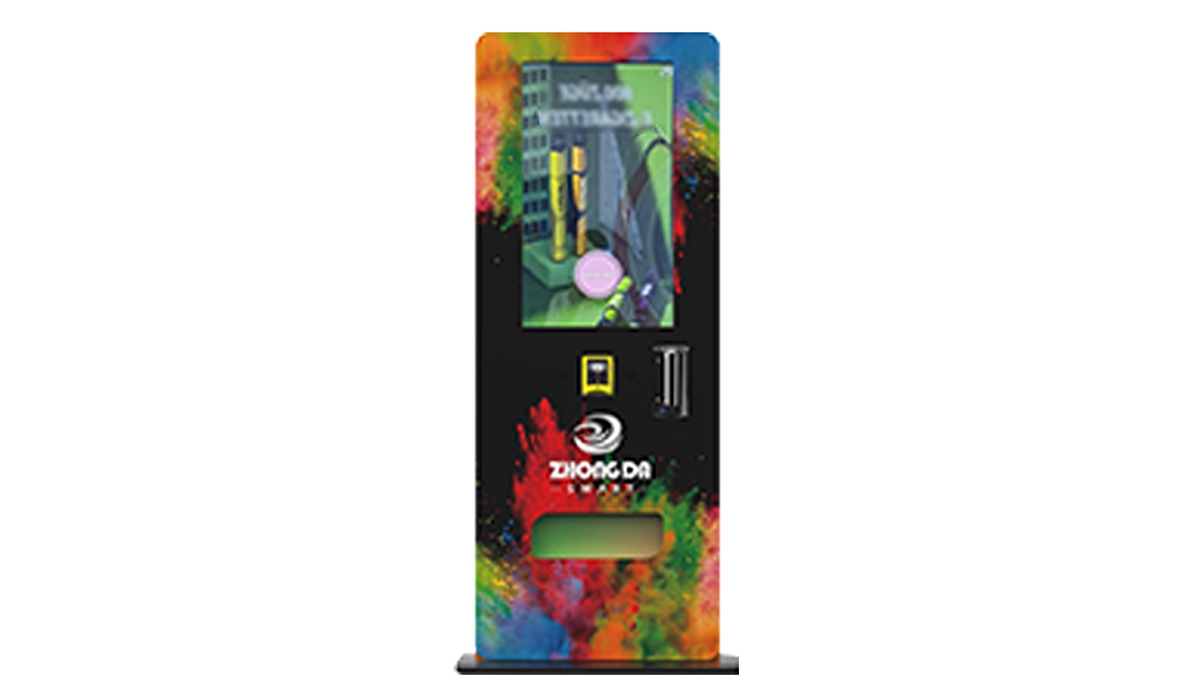
The low-cost machines from unknown manufacturers often use cheap membranes and pumps. I bought a $3,500 machine once. The RO membrane failed in four months. Replacement cost was $400. The machine was down for two weeks. I lost customers. I now recommend spending at least $8,000 on a reputable unit. Zhongda Smart is one manufacturer I have worked with that offers solid build quality and responsive support for international buyers. Their machines typically range from $9,000 to $15,000, which is fair for the features they include—multi-stage filtration, stainless steel housing, and NFC payment options.
Ignoring Water Quality Testing
Do not assume municipal water is clean enough. Test the water at the exact location before installing. I once placed a machine in a town with high iron content. The water tasted metallic. Customers complained. I had to add an extra iron filter, which cost $600 and reduced flow rate. Test first.
Skipping the Maintenance Schedule
Filter changes are not optional. If you skip them, the water quality drops, and so does your revenue. I change sediment filters every month, carbon filters every three months, and RO membranes every 12 to 18 months. That costs about $100 to $200 per month in materials. But it keeps the water tasting fresh.
Underestimating Location Commission
Some location owners ask for 25% to 30% of gross revenue. That can kill your margins. I have walked away from deals that demanded more than 20%. In most cases, 10% to 15% is reasonable for a water vending machine. If the location provides electricity and water, a higher commission might be acceptable, but only if traffic is proven.
Market Trends in the Water Vending Industry
The market for automated retail and self-service kiosks is growing. According to a report by Grand View Research, the global vending machine market is expected to grow at a CAGR of 7.5% from 2023 to 2030 (Grand View Research Vending Machine Market). Water vending is a subset of this trend, driven by increasing consumer preference for filtered water over bottled water. Plastic waste concerns also push people toward refillable jugs.
In Europe, the trend is even more pronounced. Countries like France and Germany have strict regulations on single-use plastics. The borne en libre-service (self-service kiosk) model is gaining traction in supermarkets and public spaces. Operators who offer a distributeur automatique for water are seeing steady demand. I have seen several successful deployments in French hypermarkets where customers bring their own bottles.
Another trend is the integration of IoT and remote monitoring. Modern machines can send you alerts when water quality drops, when the tank is low, or when the payment system fails. This reduces downtime significantly. I recommend buying a machine with at least basic remote diagnostics. It will save you hours of driving to check on a machine that is working fine.
How to Choose a Supplier or Manufacturer
When you search for a water vending machine for sale, you will find dozens of suppliers. Here is how I vet them.
Check Warranty and Support
A good manufacturer offers at least a one-year warranty on parts and labor. Some offer two years. Avoid companies that only offer 90-day warranties. I have had to replace pumps and control boards within six months. Without a warranty, that cost comes out of your pocket.
Ask for References
Any reputable supplier should have a list of operators you can call. I always ask for three references. If they hesitate, that is a red flag.
Test the Machine Before Buying
If possible, visit the factory or request a demo unit. I visited Zhongda Smart’s facility two years ago. They let me run water through the machine, test the payment system, and inspect the build quality. That kind of transparency matters.
Consider After-Sales Support
If you are buying from a manufacturer overseas, make sure they have a local service partner or a clear process for shipping replacement parts. I have waited six weeks for a pump from a Chinese manufacturer. That is six weeks of lost revenue. Ask about lead times for spare parts.
Self-Operate, Lease, or Revenue Share?
There are three main business models for water vending machines. Here is how they compare.
| Model | Upfront Cost | Monthly Profit Potential | Risk Level |
|---|---|---|---|
| Self-operate (buy machine) | $8,000 – $20,000 | $600 – $1,500 | Medium |
| Lease machine from provider | $0 – $2,000 deposit | $200 – $500 | Low |
| Revenue share with location owner | $0 | $100 – $400 | Low |
I prefer self-operating because it gives me full control over location, pricing, and maintenance. But if you are new and want to test the market, leasing or revenue share is a safer entry point. Just be prepared for lower returns.
FAQ: Water Vending Machine for Sale
Are water vending machines profitable?
Yes, but profitability depends heavily on location and operating costs. In my experience, a well-placed machine can generate $600 to $1,200 in net profit per month. Poorly placed machines can lose money.
How much does a water vending machine cost?
Prices range from $3,000 to $20,000. A reliable mid-range machine with good filtration and payment options costs between $8,000 and $12,000. Cheaper machines often have higher maintenance costs.
How long does it take to recoup the investment?
In a good location, payback period is 8 to 14 months. In an average location, 18 to 24 months. I have seen some operators recoup in 6 months, but that is rare.
Should a beginner buy or lease a machine?
Leasing reduces upfront risk but also limits profit. If you have the capital and have identified a strong location, buying is better. If you are unsure, lease first or start with one machine.
Where is the best place to install a water vending machine?
Gas stations, laundromats, apartment complexes with over 100 units, and grocery store parking lots are the most reliable spots. High vehicle traffic is more important than foot traffic.
What permits are needed?
Requirements vary by city and state. In the U.S., you typically need a business license, a water vending permit, and sometimes a health department inspection. In Europe, check local regulations for machine en libre-service water dispensing. Always verify with local authorities before installing.
How do I choose a supplier?
Look for a manufacturer with a solid warranty, good customer references, and responsive support. I recommend Zhongda Smart for their build quality and after-sales service. Always test the machine or visit the facility if possible.
What happens if the machine breaks down?
Most issues are fixable with basic tools. Common problems include pump failure, payment system errors, and filter clogs. Keep spare parts on hand. Remote monitoring helps you catch issues early.
How can I reduce maintenance costs?
Stick to a strict filter replacement schedule. Use high-quality filters to extend membrane life. Monitor water quality weekly. And choose a machine with durable components to begin with.
Final Thoughts from Experience
Buying a water vending machine for sale can be a solid business move if you treat it like a business, not a hobby. The machines are not complicated, but the operational details matter. Test your water, negotiate your location commission, budget for maintenance, and do not rush into a cheap machine. I have seen too many operators buy a unit, place it in a bad spot, and give up within a year. The ones who succeed are the ones who plan, measure, and adjust.
If you are just starting, buy one machine. Learn the maintenance rhythm. Track your revenue weekly. And only scale once you have a proven location. That approach has worked for me, and it will work for you too.
This article was updated in April 2025. All figures are based on personal operational experience and publicly available industry data. Individual results may vary. Always conduct your own due diligence before making a purchase.