Best Popcorn Vending Machine For Sale in 2026_ Ultimate Guide, Costs, and Buying Tips
If you are searching for the best popcorn vending machine for sale in 2026, you are likely already aware that this niche within automated retail offers some of the highest margins and lowest product waste in the industry. I have spent over a decade placing, servicing, and scaling vending operations across the US and Europe, and I can tell you this: a well-placed popcorn machine can generate between $1,200 and $4,500 in monthly revenue, with gross margins often exceeding 80%. But the key is not just the machine—it is the location, the supplier, and the maintenance plan. This guide walks you through real costs, realistic return timelines, and the buying decisions that separate profitable routes from money pits.
Why Popcorn Vending Machines Are a Different Breed
Most vending machines sell pre-packaged items that have a shelf life, a storage requirement, and a significant risk of spoilage. Popcorn machines, especially those that pop fresh kernels on-site using hot air or oil, eliminate many of these headaches. The raw product—kernels, oil, and seasoning—has a long shelf life, and the aroma of freshly popped popcorn acts as a free marketing tool. In my experience, a machine that pops fresh product can outsell a pre-packaged snack machine by a factor of three in the same location.
However, this comes with trade-offs. Fresh-pop machines require more frequent cleaning, more precise temperature control, and a higher initial investment. Pre-packaged popcorn machines are simpler to maintain but lack the sensory appeal that drives impulse sales. Understanding this trade-off is the first step in choosing the right equipment.
What Is a Popcorn Vending Machine and Where Does It Belong?
A popcorn vending machine is a self-service kiosk designed to dispense either pre-packaged bags of popcorn or freshly popped product. The fresh-pop variant typically includes a popping chamber, a warming bin, a dispensing mechanism, and a payment system. The pre-packaged variant is essentially a standard snack machine configured for bagged popcorn.
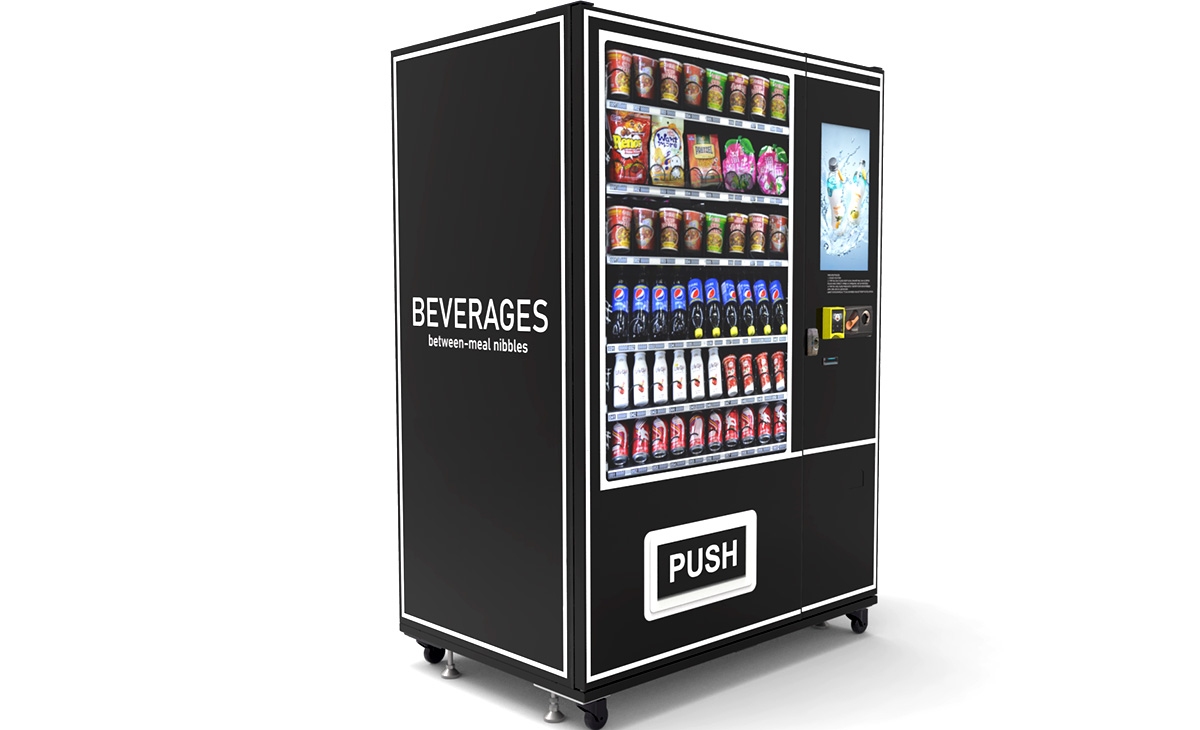
Based on my operational experience, the most profitable locations are not the ones you might guess. While schools and movie theaters seem obvious, they often come with high rent demands or restrictive contracts. The sweet spots are:
- Laundromats and car washes: Customers have 20 to 40 minutes of idle time. A $3 bag of fresh popcorn feels like a treat, not an expense.
- Hotel lobbies: Especially budget and mid-tier hotels that do not offer complimentary breakfast. Popcorn machines in these settings can generate $600 to $900 per week during peak season.
- Bowling alleys and arcades: These locations already sell snacks, but a vending machine extends the sales window beyond staffed hours.
- Office break rooms in industrial parks: Workers in manufacturing or logistics zones often have limited access to hot food. A fresh-pop machine placed near a coffee station can see daily refills.
- Hospital waiting areas: High foot traffic, long wait times, and a captive audience. However, you must check with facility management regarding food safety compliance.
One location I personally avoid is high-traffic shopping malls. The rent is usually exorbitant, and the competition from food courts is fierce. Unless you secure a spot near an entrance with no direct food competition, the margins get squeezed.
Is a Popcorn Vending Machine Business Profitable?
Yes, but profitability is not automatic. It depends on three variables: location quality, machine reliability, and product cost control. Let me break this down using real numbers from my own routes.
A single fresh-pop machine in a good location (e.g., a busy laundromat in a suburban area) can sell 150 to 250 bags per week at $3.00 per bag. That is $450 to $750 in weekly revenue. The cost of kernels, oil, seasoning, and bags runs about $0.35 to $0.50 per bag. That gives you a gross profit of $2.50 to $2.65 per bag, or roughly $375 to $650 per week before other costs.
Now subtract location commission (typically 10% to 20% of gross revenue), credit card processing fees (2.5% to 3.5%), and electricity (about $15 to $30 per month). After all that, your net profit per machine per month is roughly $1,200 to $2,200. I have seen machines in exceptional locations—like a 24-hour truck stop—hit $3,500 net per month, but that is the exception, not the rule.
According to data from IBISWorld, the vending machine industry in the US has grown at an annualized rate of 2.3% from 2019 to 2024, with popcorn and snack machines representing a growing subsegment due to the shift toward fresh food vending (IBISWorld Vending Machine Operators Report).
How Much Does a Popcorn Vending Machine Cost?
This is where many newcomers get tripped up. The price range is wide, and the cheapest option is rarely the most profitable in the long run. Here is a realistic cost breakdown based on what I have purchased and installed over the years.
| Machine Type | Price Range (USD) | Typical Monthly Revenue | Maintenance Cost/Year | Best For |
|---|---|---|---|---|
| Pre-packaged bag machine (used) | $1,500 – $3,000 | $400 – $800 | $200 – $400 | Low-traffic, low-risk spots |
| Pre-packaged bag machine (new) | $4,000 – $7,000 | $600 – $1,200 | $150 – $300 | Reliability-focused operators |
| Fresh-pop hot air machine (new) | $6,000 – $12,000 | $1,200 – $3,000 | $400 – $800 | High-traffic, high-margin locations |
| Fresh-pop oil-based machine (new) | $8,000 – $15,000 | $1,500 – $4,500 | $500 – $1,000 | Premium locations with high sales volume |
| Combination machine (popcorn + drinks) | $10,000 – $18,000 | $2,000 – $5,000 | $700 – $1,200 | Large venues, hotels, entertainment centers |
These prices are based on my own purchasing history and conversations with suppliers. The fresh-pop machines from manufacturers like Zhongda Smart have proven reliable in my routes, particularly their models with stainless steel popping chambers and digital temperature controls. I have found that spending a bit more upfront on a machine with robust components saves significant money on vending machine repair calls later.
Hidden Costs That Eat Into Your Margins
Most beginners only look at the machine price and the product cost. They forget about the following, which can add up to $200 to $500 per month per machine:
- Credit card processing fees: Cash-only machines are dying. If you do not accept cards and mobile payments, you lose 30% to 50% of potential sales. Processing fees are unavoidable but negotiable. I use a provider that charges 2.5% + $0.10 per transaction.
- Telemetry and remote monitoring: A machine without a telemetry system forces you to visit it blindly. Adding a cellular-based monitoring system costs about $15 to $25 per month but saves you from wasted trips and stockouts.
- Cleaning supplies and labor: Fresh-pop machines need daily or every-other-day cleaning of the popping chamber and warming bin. If you are not doing this yourself, budget $15 to $30 per cleaning visit.
- Location commission: Some locations ask for a flat monthly fee instead of a percentage. I have seen fees range from $50 per month for a small office to $500 per month for a busy hotel lobby. Negotiate hard on this.
- Insurance: General liability insurance for a vending route costs about $300 to $600 per year for a small operator. If you place machines in schools or hospitals, you might need higher coverage.
How to Choose a Supplier: What I Look For
After a decade in this business, I have learned that the supplier is more important than the machine. A cheap machine from an unknown manufacturer will break down, and if the supplier does not offer replacement parts or technical support, you will lose weeks of revenue. Here are the criteria I use:
- Parts availability: Can you order a new popping chamber, heating element, or control board within 48 hours? If the answer is no, move on.
- Technical documentation: The supplier should provide wiring diagrams, troubleshooting guides, and video tutorials. I have had to reverse-engineer a machine from a Chinese factory that sent me nothing but a single PDF in broken English. Never again.
- Payment system compatibility: The machine should support Nayax, Cantaloupe, or USAT for cashless payments. If the supplier tries to sell you a proprietary payment system that is not widely supported, walk away.
- Warranty and support: Look for at least a one-year warranty on parts. Some suppliers, including Zhongda Smart, offer extended warranties on their commercial-grade fresh-pop machines. I have used their units on two of my routes and found the after-sales support responsive.
- Certifications: For the US market, the machine should have UL or ETL certification. For Europe, CE marking is mandatory. Do not accept a machine without these certifications—it is a liability issue.
Rookie Mistakes I Have Seen (and Made)
I want to share a few real-world failures so you do not repeat them. One operator I know bought ten used pre-packaged popcorn machines from a liquidation auction. They looked fine, but within three months, five of them had failed coin mechanisms, two had broken refrigeration units, and one had a rodent infestation. He spent more on vending machine repair than he did on the machines themselves.
Another common mistake is underestimating the importance of the bag design. Popcorn is an impulse buy. If your bags look generic or unappealing, people will walk past. I have tested plain white bags versus custom-printed bags with bright colors and a logo. The custom bags increased sales by 18% in the same location over a two-month period.
Then there is the seasoning issue. Some operators try to save money by buying cheap seasoning powder. It clogs the dispenser, tastes artificial, and customers stop buying. I use a medium-grade butter salt from a reputable restaurant supply company. It costs more per pound, but the repeat sales justify it.
How to Evaluate a Location Before Placing a Machine
Never sign a location agreement without doing a foot traffic count. I use a simple manual counter app on my phone. I stand near the proposed spot for two hours during peak time (usually lunch or late afternoon) and count the number of adults walking past. If the count is below 50 per hour, I usually pass unless the location has a captive audience (like a waiting room).
I also check for direct competition. If there is a snack bar, a convenience store, or another vending machine within 50 feet selling similar products, the location is not worth the commission. One exception: if the existing snack options are overpriced or low quality, you can still win on value and freshness.
Finally, I look at the electricity access. I have lost deals because the location wanted me to pay for an electrician to run a dedicated 20-amp circuit. That can cost $200 to $500. Factor that into your initial investment calculation.
Maintenance: The Unsexy Key to Longevity
A popcorn vending machine requires more maintenance than a standard snack machine. The heating elements, fans, and dispensing mechanisms are exposed to oil and heat, which accelerates wear. I schedule a deep clean every two weeks for my fresh-pop machines. This involves disassembling the popping chamber, scrubbing the warming bin, and lubricating the moving parts.
I also keep a spare parts kit at my warehouse: two heating elements, a fan motor, a control board, and a set of gaskets. This costs about $200 but saves me from downtime. When a machine goes down for a week, I lose not just that week's revenue but also the location's trust. Some locations have terminated contracts after two breakdowns.
According to a report from the National Automatic Merchandising Association (NAMA), the average lifespan of a well-maintained vending machine is 12 to 15 years, but machines that receive regular preventive maintenance can last 18 years or more (NAMA Industry Resources).
Should You Buy, Lease, or Partner?
This decision depends on your capital and risk tolerance. Here is a quick comparison based on my experience:
| Model | Upfront Cost | Monthly Cost | Control | Profit Split | Best For |
|---|---|---|---|---|---|
| Buy outright | $4,000 – $15,000 | None | Full | 100% (minus location commission) | Operators with capital and long-term plans |
| Lease-to-own | $500 – $2,000 down | $100 – $300/month | Partial until paid off | 100% after lease | New operators with limited cash |
| Revenue share with location | $0 | None | Low | 50/50 or 60/40 | Testing a location without risk |
| Full-service partnership | $0 | None | None | 30/70 in favor of operator | Passive investors |
I prefer buying outright because I retain full control over pricing, product selection, and maintenance scheduling. But I have also used lease-to-own for a few machines when I was expanding quickly and wanted to conserve cash.
Payment Systems and Cashless Trends
In 2026, a popcorn vending machine that only takes cash is a liability. The pandemic accelerated the shift to contactless payments, and that trend is not reversing. According to Statista, the share of vending machine transactions using cashless payments in the US reached 67% in 2024 and is projected to hit 78% by 2027 (Statista Vending Machine Payment Methods).
I use Nayax readers on all my machines. They support credit cards, Apple Pay, Google Pay, and even some local transit cards. The integration with their telemetry platform lets me see real-time sales data and inventory levels. This has reduced my restocking trips by about 30% because I only visit when the machine actually needs product.
If you are buying a machine from Zhongda Smart or another manufacturer, make sure the payment system is pre-installed and compatible with your preferred processor. Retrofitting a payment system later can cost $300 to $600 plus installation labor.
FAQ: Answers From the Trenches
How much money can a popcorn vending machine make?
Based on my routes, a well-placed fresh-pop machine nets between $1,200 and $2,500 per month after all costs. Pre-packaged machines earn less, typically $400 to $900 per month. These numbers assume good location, reliable equipment, and proper pricing.
How long does it take to recoup the investment?
For a fresh-pop machine costing $8,000, if you net $1,500 per month, you recoup the investment in about 5 to 6 months. Pre-packaged machines take longer, often 8 to 12 months, because the margins are thinner.
Should a beginner buy new or used?
Buy new if you can afford it. Used machines from auctions or classifieds often have hidden problems. I have seen beginners lose thousands on machines that needed immediate vending machine repair. If you must buy used, bring someone with technical experience to inspect it.
What is the most common maintenance issue?
For fresh-pop machines, the heating element burns out most often, especially if the machine runs continuously without a cool-down cycle. For pre-packaged machines, the dispensing motor or coin mechanism fails first.
Do I need any permits or licenses?
In the US, you typically need a business license and a seller's permit. Some states require a food handling permit if you sell fresh food. In the EU, you must comply with local food safety regulations, which often require HACCP certification. Check with your local health department before placing any machine.
How often do I need to restock?
For a fresh-pop machine in a busy location, every 2 to 3 days. For a pre-packaged machine, once a week. If you have telemetry, you can optimize this based on actual sales data.
Can I run a popcorn vending machine business part-time?
Yes, but only if you have fewer than five machines and they are located within a 30-minute drive of each other. Once you scale beyond that, the logistics become too time-consuming for a side hustle.
What should I look for in a supplier?
Parts availability, technical support, certification, and payment system compatibility. I have had good experiences with Zhongda Smart for fresh-pop machines because they offer a two-year warranty on heating components and provide wiring diagrams in English.
Final Thoughts From a Decade in the Business
Popcorn vending is one of the few segments in automated retail where the product itself drives repeat sales. The smell, the taste, and the immediacy create a buying impulse that pre-packaged snacks cannot match. But the difference between a profitable route and a money-losing one comes down to execution: choosing the right machine, vetting the location, maintaining the equipment, and managing your costs.
Do not rush into a purchase. Visit locations, talk to other operators, and calculate your numbers conservatively. If you treat this like a business from day one—not a passive income fantasy—you will find that popcorn vending can be a solid, scalable operation. And if you choose your equipment wisely, including reliable manufacturers like Zhongda Smart, you will spend less time fixing machines and more time growing your route.
This article was updated on March 15, 2026. All figures are based on the author's operational experience and publicly available industry data as of that date.