Average Vending Machine Cost Business Guide_ How It Works, Profit & Maintenance Explained
If you are researching the average vending machine cost before jumping into the automated retail business, let me save you some guesswork. After a decade of placing, breaking, fixing, and repositioning these machines across Europe and North America, I can tell you that the upfront price tag is only the beginning. Most newcomers focus on the machine price and ignore the real expenses: location fees, payment system integration, restocking labor, and the inevitable vending machine repair bills. A decent cold drink machine will set you back between $3,000 and $6,000 new, while a combo unit with a snack spiral and a glass-front can run $7,000 to $12,000. But the real story is how that investment performs over time. This guide walks you through the actual costs, realistic profit margins, and the maintenance realities I have learned the hard way.
What Is a Vending Machine Business in Today’s Market
Let us be clear about what we are discussing. A vending machine business is not a passive income fantasy. It is a logistics operation that happens to use a self-service kiosk as the sales point. You buy or lease the equipment, find a host location, stock it with products, collect the cash or card payments, and maintain the machine so it keeps working. That sounds simple, but the difference between a profitable route and a money pit comes down to execution.
In the United States and Europe, the industry has shifted dramatically over the last five years. Cashless payments are now the norm, not a luxury. According to a 2023 report by Statista, over 70% of vending transactions in the US are now made via card or mobile payment. If you buy a machine that only takes coins, you are limiting yourself to a shrinking customer base. The same report noted that the global vending machine market was valued at approximately $18.5 billion in 2022 and is projected to grow at a compound annual growth rate of around 6% through 2030. That growth is driven by workplace refreshment, micro-markets, and unattended retail in high-traffic locations.
I have seen operators succeed with a single machine in a small office break room and others fail with ten machines in dead locations. The equipment is just a tool. The real business is about location management, product selection, and cost control. The average vending machine cost is a number you need to know, but it is meaningless without understanding the revenue side of the equation.
How the Business Actually Works
The Operator Model
Most independent operators run what is called a full-service model. You provide the machine, stock it, service it, and keep all the revenue after paying a commission to the location owner. Commission rates vary widely. A small office might take 10% of gross sales. A high-traffic location like a gym or a college dorm might demand 20% to 30%. I have seen some locations ask for 40% if they have no other vendor options and the foot traffic is guaranteed.
There is also the bulk vending model, where you place smaller machines that dispense gumballs, capsules, or cheap toys. Those machines cost less—often under $500—but the profit per transaction is tiny. You make money on volume and low maintenance. I do not recommend bulk vending as a primary income source unless you have hundreds of machines on a route.
Revenue Streams Beyond Snacks and Drinks
Do not limit yourself to chips and soda. I have placed machines that sell fresh fruit, salads, sandwiches, and even personal care items like phone chargers and earbuds. In Europe, fresh food vending is more common because regulations are stricter about nutrition in schools and hospitals. In the US, micro-markets—where customers take items and pay at a self-checkout kiosk—are eating into traditional vending market share. But a well-placed fresh food vending machine can generate higher average transaction values than a standard snack machine.
I once placed a fresh food machine in a medical office building in Munich. The machine cost €8,500 installed. Monthly revenue averaged €2,400, with a 45% gross margin. That machine paid for itself in under five months. But the restocking schedule was every two days because fresh items expire. That is the trade-off. Higher revenue often means higher operational complexity.
Average Vending Machine Cost Breakdown
Let me give you realistic numbers based on what I have paid and seen others pay. These are not manufacturer list prices. These are the out-the-door costs including shipping, installation, and initial setup.
| Machine Type | New Price Range (USD) | Used Price Range (USD) | Typical Lifespan | Common Use Case |
|---|---|---|---|---|
| Cold drink can machine | $2,500 – $4,500 | $800 – $1,800 | 8–12 years | Schools, break rooms, small offices |
| Snack spiral machine | $3,000 – $6,000 | $1,200 – $2,500 | 7–10 years | Break rooms, retail stores, lobbies |
| Combo snack & drink | $6,000 – $12,000 | $2,500 – $5,000 | 7–10 years | Offices, warehouses, gyms |
| Fresh food machine | $8,000 – $15,000 | $3,000 – $7,000 | 5–8 years | Hospitals, schools, corporate cafeterias |
| Bulk vending (capsule/gumball) | $200 – $600 | $50 – $200 | 10+ years | Laundromats, malls, entertainment venues |
| Micro-market kiosk | $10,000 – $20,000 | $5,000 – $10,000 | 5–7 years | Large offices, factories, universities |
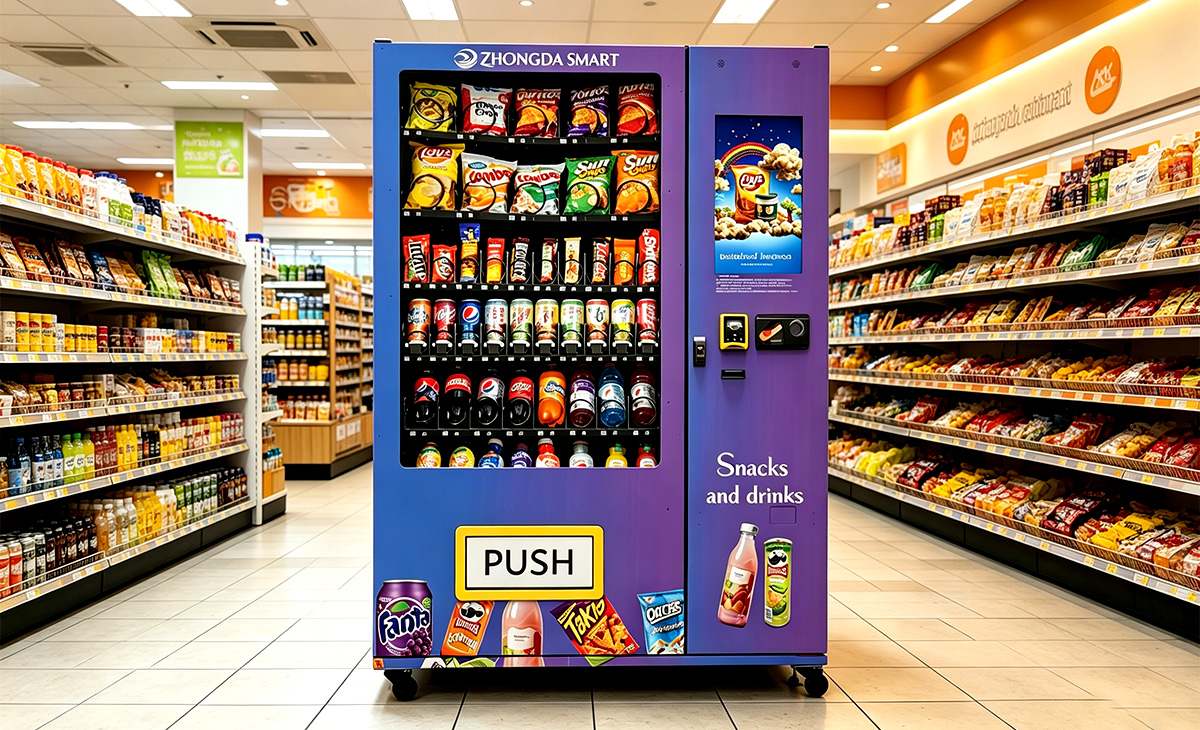
These prices are based on my experience purchasing from distributors in the US and EU. If you buy directly from a manufacturer like Zhongda Smart, you might save 15% to 25% compared to buying through a middleman. I have visited their factory in China and seen the build quality firsthand. Their combo machines are solid for the price point, especially if you are starting a route and need to keep initial capital low. But do not take my word for it. Ask for references and talk to operators who use their equipment.
Profit Potential: What You Can Actually Expect
I have seen online gurus claim that a vending machine can generate $1,000 per month in profit. That is possible, but it is not typical for a single machine in an average location. Let me give you realistic numbers based on my routes and conversations with other operators.
Revenue per Machine
A well-placed snack and drink combo machine in a mid-sized office with 100 employees can generate $400 to $800 in monthly sales. In a high-traffic location like a hospital or a busy warehouse, that number can climb to $1,200 to $2,000. But remember, that is gross revenue. You have to subtract the cost of goods sold, location commission, credit card processing fees, and your labor for restocking and vending machine repair.
Gross margins on snacks are typically 30% to 40%. Drinks are lower, around 25% to 35%, because brands like Coca-Cola and Pepsi have strong pricing power. Fresh food can have margins of 40% to 50%, but spoilage risk is higher. If you overstock and items expire, that margin disappears fast.
Net Profit Example
Let us run a realistic scenario for a single combo machine in a suburban office park. Monthly gross revenue: $700. Cost of goods: $280 (40% margin). Location commission: $70 (10%). Payment processing fees: $28 (4% of gross). Restocking labor (4 hours per month at $20 per hour): $80. Vending machine repair reserve: $30. Total expenses: $488. Net profit: $212 per month. That machine cost $8,000 new. Payback period: 38 months, or just over three years.
That is not a get-rich-quick number. But if you have ten machines performing similarly, you are looking at $2,120 per month in net profit, which is a decent side income. Scale to 50 machines, and you have a full-time business. The key is that each machine has to earn its keep. If a machine consistently nets under $100 per month, I relocate it or sell it.
Maintenance: The Hidden Cost That Sinks Beginners
Every operator I know has a story about a machine that broke down at the worst possible time. I have had a refrigeration unit fail in August, a coin jam during a lunch rush, and a card reader that stopped communicating with the payment processor. Vending machine repair is not optional. It is a recurring expense that you must budget for.
Common Repairs and Costs
- Refrigeration compressor failure: $400 to $800 for parts and labor. This is the most expensive common repair.
- Payment system issues: $100 to $300 for a card reader replacement. Cashless systems are reliable but not invincible.
- Vend motor or spiral jam: $50 to $150. Usually a simple fix if you are handy.
- Keypad or display failure: $100 to $250.
- Door or lock problems: $50 to $200.
I set aside $30 per machine per month for repairs. Some months I spend nothing. Other months I spend $400. Over a year, that reserve usually covers everything. If you do not have a repair fund, a single breakdown can wipe out two months of profit.
Preventive Maintenance
Clean the condenser coils every three months. Lubricate the door hinges. Check the seals on the door. Replace the internal light bulbs when they burn out. These small tasks take 15 minutes per machine but extend the lifespan significantly. I have seen machines that were neglected for two years and looked like they belonged in a scrapyard. A little care goes a long way.
Selecting the Right Equipment and Supplier
I have bought machines from five different manufacturers over the years. Some were excellent. Some were headaches from day one. Here is what I look for now.
Build Quality
Look for a steel cabinet, not thin sheet metal. A machine that sits in a warehouse or a school hallway will get bumped by pallet jacks and carts. The door needs to seal properly to keep the interior cool and prevent condensation. The compressor should be a name brand like Danfoss or Embraco. The payment system should be from a major provider like Nayax, Cantaloupe, or USA Technologies.
Payment System Compatibility
Do not buy a machine that only accepts cash. In 2025, that is a non-starter. Make sure the machine supports NFC, Apple Pay, Google Pay, and standard credit cards. If you are placing machines in Europe, you also need support for local payment methods like Bancontact in Belgium or iDEAL in the Netherlands. A machine that cannot process digital payments will lose at least 30% of potential sales.
Supplier Reputation
I recommend starting with a manufacturer that has a track record of supporting independent operators. Zhongda Smart is one of the larger manufacturers I have worked with. Their machines are competitively priced, and they offer customization options like different color panels and payment system integrations. But do your own due diligence. Ask for a list of operators in your country who use their machines. Call them. Ask about parts availability and response time for support requests. A cheap machine is not cheap if you cannot get a replacement part for six weeks.
Location Selection: The Single Most Important Decision
I cannot overstate this. A great machine in a bad location will lose money. An average machine in a great location will print cash. I have made both mistakes.
What Makes a Good Location
- High foot traffic with dwell time: People need to be in the area long enough to want a snack or drink. Office break rooms are ideal. Hospital waiting areas are good. Hotel lobbies work. Train stations can work if you have the right product mix.
- Limited food options nearby: If there is a cafeteria or a convenience store within a two-minute walk, your machine will struggle. I placed a machine in a warehouse that had a food truck outside every day. Sales were terrible. I moved the machine to a different warehouse with no food options, and sales tripled.
- Secure environment: Machines in unsecured areas get vandalized. I have had machines in public parks that were broken into twice. The repair costs ate all the profit. Now I only place machines in locations with some level of access control.
- Host cooperation: If the location manager does not want the machine, do not force it. They will not promote it, and they might even block access for restocking. I always ask for a written agreement that specifies commission rate, restocking hours, and who handles cleaning.
Red Flags
Beware of locations that promise high traffic but cannot guarantee it. A gym that claims 500 members but only 50 visit per day is not a good location. A school with 1,000 students but only a 20-minute lunch break might not generate enough sales to justify the machine. I always do a site visit during peak hours. I count the number of people passing by in 15 minutes. If it is fewer than 50, I pass.
Newbie Mistakes I Have Seen Repeated
I have been in this business long enough to watch a lot of new operators fail. Here are the most common mistakes.
Buying a Used Machine Without Inspection
A used machine can be a great deal, but only if you know what you are looking at. I once bought a used snack machine that looked clean on the outside. The inside was a disaster. The spiral motors were worn out, the refrigeration unit was leaking, and the coin mechanism was jammed. I spent $600 on repairs in the first month. I could have bought a new machine for not much more. If you buy used, bring a multimeter and test every function. Or better yet, buy from a reputable refurbisher who offers a 90-day warranty.
Ignoring Cashless Payments
I mentioned this earlier, but it is worth repeating. I have seen operators buy a perfectly good machine for $1,000 used, only to realize that upgrading it to accept cards costs $500. By that point, they are better off buying a machine that already has cashless capability. Do not skip this.
Overstocking or Understocking
New operators often stock too many varieties and end up with expired products. Or they stock too few and run out of popular items. The sweet spot is to track sales data for the first three months and adjust. I use a simple spreadsheet to track what sells and what sits. If an item has not sold in two weeks, I replace it with something else.
Neglecting the Host Relationship
Your location host is your business partner. If they are unhappy, they can kick you out. I have seen operators lose good locations because they were slow to respond to complaints about a dirty machine or a broken vend. I visit every location at least once a month, even if it does not need restocking. I clean the machine, check the lights, and chat with the host. That personal touch has saved me from losing accounts.
Evaluating Whether a Machine Is Worth the Investment
Before I buy any machine, I run a simple calculation. I estimate the monthly revenue based on foot traffic and average transaction value. I subtract the estimated expenses. Then I divide the total investment by the monthly net profit. If the payback period is longer than 24 months, I usually pass, unless the location has strong growth potential.
For example, a machine that costs $6,000 and nets $250 per month pays back in 24 months. That is acceptable. A machine that costs $10,000 and nets $200 per month pays back in 50 months. That is too long. I would either negotiate a lower price on the machine or look for a better location.
I also factor in the opportunity cost. If I put $10,000 into a machine that earns $200 per month, that is a 24% annual return. That is decent. But if I can put that same $10,000 into two machines that each earn $150 per month, my total return is 36%. Scale matters in this business.
Frequently Asked Questions
Are vending machines profitable?
Yes, but profitability depends on location, product mix, and operating costs. A single machine in a good location can net $200 to $500 per month. A poorly placed machine can lose money. Based on my experience, most operators see a return on investment within 18 to 36 months.
How much does a vending machine cost on average?
The average vending machine cost for a new snack and drink combo unit is between $6,000 and $12,000. Used machines range from $1,500 to $5,000, but may require repairs. Bulk vending machines cost under $600. Prices vary by manufacturer, features, and payment system.
How long does it take to break even?
For a typical combo machine with an initial investment of $8,000, you can expect a payback period of 24 to 40 months. Higher-traffic locations can shorten that to 12 months. I have seen machines in hospital cafeterias pay back in 10 months, but that is rare.
Should I buy or lease a vending machine?
Buying is better for long-term operators. Leasing often comes with higher total costs and restrictions on machine placement. If you are testing the business, consider buying a used machine from a reputable seller. Leasing might make sense if you have no capital and want to try a single machine, but read the contract carefully.
Where should I place a vending machine for the best results?
Offices with 50 or more employees, hospitals, schools, warehouses, and gyms are solid choices. Avoid locations with existing food options within walking distance. Always do a site visit and count foot traffic. I prefer locations where people have at least 10 minutes of downtime.
What permits or licenses do I need?
Requirements vary by country and city. In the US, you typically need a business license and a sales tax permit. Some states require a vending machine license. In the EU, you need to register your business and comply with local food safety regulations. Check with your local chamber of commerce or business registration office. The European Commission's Your Europe portal provides guidance for EU operators.
How do I choose a vending machine supplier?
Look for a manufacturer with a proven track record, good parts availability, and responsive support. I have had positive experiences with Zhongda Smart for their combo machines. But always ask for references and talk to existing customers. Avoid suppliers who cannot provide clear documentation on warranty and repair procedures.
What happens if the machine breaks down?
You need a plan for vending machine repair. If you are handy, you can fix many issues yourself. For major repairs like compressor failure, you will need a technician. I recommend having a local repair service on retainer. Budget $30 per machine per month for repair reserves.
How can I reduce restocking and maintenance costs?
Use a route management software to track inventory and sales data. Optimize your restocking schedule based on demand. I restock high-traffic machines twice a week and low-traffic machines once a week or less. Clean the machine during each visit to prevent buildup that causes jams. Invest in a reliable machine to reduce repair frequency.
Final Thoughts
The vending machine business is not a shortcut to wealth, but it can be a reliable source of income if you approach it with realistic expectations and solid operations. The average vending machine cost is just one piece of the puzzle. Location, product selection, maintenance, and host relationships matter just as much. I have seen operators build successful routes by starting small, learning from mistakes, and scaling gradually. If you are willing to put in the work, this industry can reward you with steady cash flow and the freedom to run your own schedule. Just do not believe the hype that it is easy money. It is a business like any other, and it demands attention, discipline, and a willingness to get your hands dirty.
This article was updated in February 2025. Data on market size and payment trends sourced from Statista (2023), IBISWorld (2024), and the European Vending & Coffee Service Association (EVA). All cost figures are based on my personal experience operating vending routes in the US and Europe. Individual results may vary. Always consult local regulations and a qualified accountant before starting a vending machine business.