How to Choose the Right Who Needs A Vending Machine_ Complete Beginner's Guide
I have spent over a decade placing vending machines across commercial properties in the United States and Europe, and the single most common question I still get from new operators is not about which machine to buy—it is about who actually needs one. If you are trying to figure out how to choose the right who needs a vending machine for your first location, you are already ahead of most beginners. The honest answer is that not every lobby, break room, or warehouse justifies a machine. The decision comes down to foot traffic, dwell time, and whether the people in that space are willing to buy on impulse. In this guide, I will walk you through exactly how to evaluate a location, what costs to expect, and how to avoid the mistakes I have seen wipe out first-time operators within six months.
Understanding the Core Question: Who Actually Needs a Vending Machine?
When I started in this business, I made the mistake of thinking every high-traffic location was a good fit. A busy train station sounds great on paper, but if commuters only have thirty seconds to catch their train, they are not stopping to browse a snack machine. The real answer to who needs a vending machine is surprisingly narrow: locations where people have at least two minutes of idle time, where food and drink options are limited, and where the demographic matches what you are selling.
I have seen machines fail in office buildings with 500 employees because the building had a subsidized cafeteria. I have also seen single machines in small auto repair shops generate over $1,200 per month because the mechanics had no other option for a quick drink during a ten-minute break. The difference is not the number of people—it is the gap between what they want and what is available.
Over the years, I have developed a simple litmus test. If I stand in a location for fifteen minutes and watch people, I ask myself: are these people looking for something to eat or drink, and do they have the time and willingness to buy it from a self-service kiosk? If the answer is yes, that location is worth testing.
The Real Economics: What Does a Vending Machine Business Actually Cost?
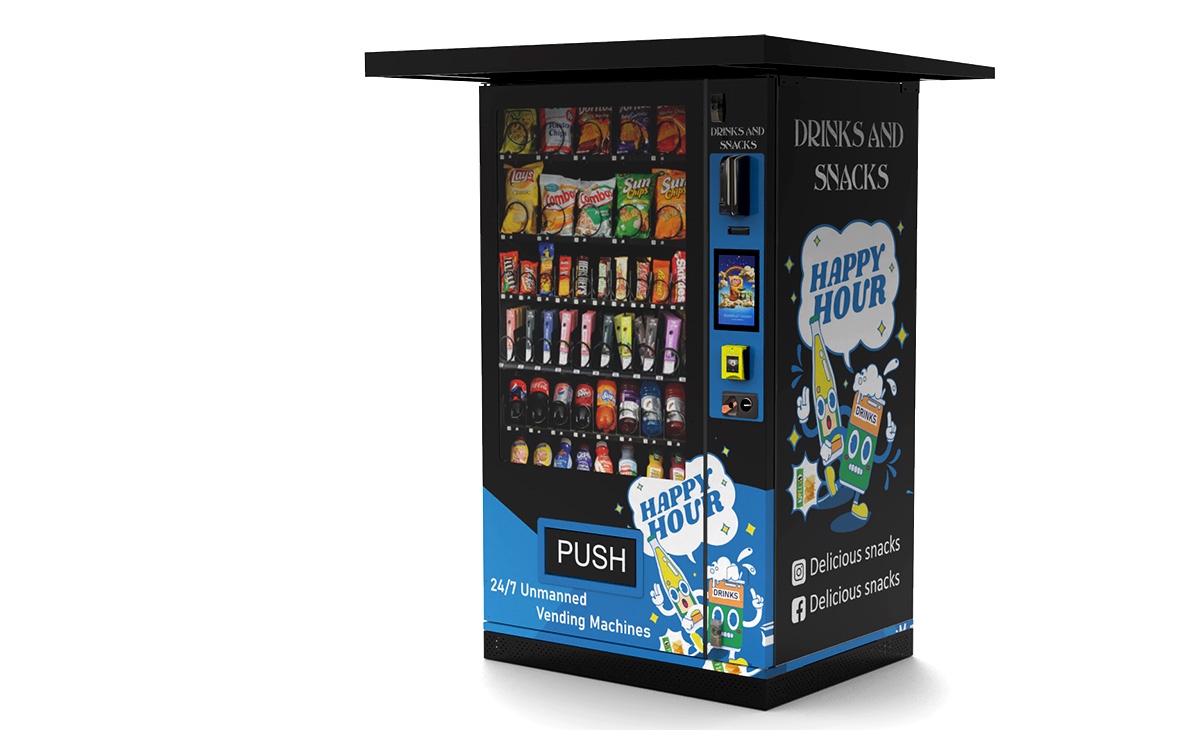
Let me give you the numbers I have seen across dozens of deployments. These are not theoretical—they come from actual P&L statements I have managed. A new, mid-range combination machine (snacks and drinks) from a reliable manufacturer like Zhongda Smart will run you between $3,500 and $6,500 depending on features. A used machine can cost half that, but I have seen used machines with refrigeration issues cost operators three times the purchase price in repairs within the first year.
| Machine Type | New Cost (USD) | Used Cost (USD) | Typical Monthly Revenue | Gross Margin |
|---|---|---|---|---|
| Snack only | $2,000 - $3,500 | $800 - $1,500 | $300 - $700 | 35% - 45% |
| Drink only (canned/bottled) | $2,500 - $4,000 | $1,000 - $2,000 | $400 - $900 | 40% - 55% |
| Combo (snack + drink) | $3,500 - $6,500 | $1,500 - $3,000 | $600 - $1,500 | 35% - 50% |
| Fresh food / refrigerated | $5,000 - $9,000 | $2,500 - $4,500 | $800 - $2,000 | 30% - 40% |
Monthly operating costs include restocking labor (usually 2–4 hours per machine per week), product cost (roughly 45–60% of revenue), payment processing fees (2–4% of sales), and minor maintenance. I budget about $50 per machine per month for unexpected repairs, though some months are zero and some months hit $200. According to a 2023 IBISWorld report on the vending machine industry in the US, the average operating margin for a well-run machine is around 15–20% after all costs (IBISWorld Vending Machine Operators Industry Report).
Location Evaluation: How I Decide If a Spot Is Worth the Risk
I have turned down locations that seemed perfect on the surface. One example: a large hospital lobby with thousands of visitors daily. The problem was that the hospital already had a coffee shop, a convenience kiosk, and two vending banks on different floors. The location I was offered had no exclusivity, and the existing machines were well-stocked. I passed. Six months later, the operator who took that spot pulled out after losing money on restocking costs.
Here is the evaluation framework I use for every potential location. I look for at least 100 people per day passing within ten feet of the machine location. I check whether those people are there for more than five minutes on average. I ask about alternative food sources within a three-minute walk. If there is a cafeteria or a fast-food restaurant on site, the machine will likely only capture impulse sales, not meal replacements. If there is nothing, the machine becomes the primary option, and revenue can be two to three times higher.
I also look at the workforce demographic. Warehouses, distribution centers, manufacturing floors, and 24-hour shift operations are consistently strong for automated retail. These workers have predictable breaks, limited mobility, and a high need for quick calories. Office buildings with remote or hybrid workers have become riskier since 2020. I have seen office locations drop from $1,200 per month to $400 per month as work-from-home policies reduced occupancy.
Equipment Selection: What Most Beginners Get Wrong
The biggest mistake I see new operators make is buying the cheapest machine they can find. A $1,500 used machine might seem like a good deal, but if the refrigeration system fails after three months, you are looking at a $400 repair bill and lost revenue for two weeks. I have also seen machines with outdated payment systems that could not accept tap-to-pay or mobile wallets, which drove away younger customers entirely.
When I select equipment, I prioritize three things: reliable refrigeration, modern payment processing, and remote monitoring capability. Remote monitoring alone can save you hours of driving time because you know exactly when a machine needs restocking. Without it, you are guessing, and guessing leads to either empty machines (lost sales) or too-frequent visits (wasted labor).
For beginners, I recommend starting with a single combination machine from a manufacturer with a solid service network. Zhongda Smart offers machines with dual temperature control and telemetry built in, which I have found reduces the learning curve significantly. Their equipment is used widely in European markets, and I have seen their machines perform well in both indoor and sheltered outdoor locations. The key is to buy from a supplier that offers local support, not just a low price.
Cost Breakdown: What You Will Actually Spend in Year One
Let me walk you through a realistic first-year budget for one machine in a medium-traffic location. This is based on my own experience deploying machines in the US Midwest and Western Europe.
- Machine purchase: $4,500 (new combo unit)
- Initial inventory: $500 (snacks and drinks for first fill)
- Installation and delivery: $200 (local delivery, no rigging needed)
- Payment system setup: $100 (credit card reader activation and merchant account)
- Location commission or rent: $0–$200 per month (varies widely)
- Restocking labor: $50–$100 per week (if you do it yourself, this is your time)
- Product restocking cost: $300–$500 per week (replenishment)
- Maintenance and repairs: $50–$100 per month average
- Insurance: $200–$400 per year
Total first-year cash outlay including machine and all operating costs is roughly $8,000–$10,000. If the machine generates $800 per month in revenue with a 40% gross margin, you are looking at a gross profit of about $320 per month. After restocking labor and maintenance, net profit might be $150–$200 per month. At that rate, payback on the machine takes about 18–24 months. That is realistic for a good location. If you find a great location with $1,500 per month in sales, payback can drop to 12 months.
Payment Systems and the Shift to Cashless
In 2025, a machine that only accepts cash is a liability. I have seen locations where cash sales dropped below 10% of total revenue. Most customers under 40 do not carry cash. They expect to tap a card or use Apple Pay. If your machine does not support these, you are leaving money on the table.
I recommend machines with a Nayax or Cantaloupe payment system. These are industry standards in the US and Europe. They support credit cards, mobile wallets, and sometimes even contactless transit cards. The transaction fee is usually around 5–6% for card payments, but the increase in sales volume more than compensates. In my experience, adding card acceptance increases revenue by 30–50% compared to cash-only machines.
For European markets, especially France and Germany, you also need to consider compliance with local payment regulations. The European Central Bank reports that cash still accounts for about 59% of point-of-sale transactions, but that number drops significantly in urban areas and among younger demographics. I always recommend dual acceptance: cash and card.
Maintenance and Repair: The Hidden Cost That Kills Margins
I have seen operators quit the business because they underestimated how often machines break. A vending machine is a mechanical device with moving parts, refrigeration, and electronics. Something will go wrong. The question is how fast you can fix it.
Common issues include jammed spirals, faulty temperature sensors, payment system failures, and door alignment problems. I keep a spare parts kit for each machine type: extra spirals, motors, a temperature controller, and a payment terminal. I also have a relationship with a local vending machine repair technician. If you are in a rural area, finding a technician might take days. That is why I prefer machines with modular components that I can swap myself.
One thing I learned the hard way: cheap machines often use non-standard parts. When a motor fails, you might wait three weeks for a replacement from overseas. That is three weeks of zero revenue. I now only buy from manufacturers that stock parts in regional warehouses. Zhongda Smart, for example, has distribution centers in Europe and North America, which means parts arrive in days, not weeks.
Product Selection: How to Choose What to Sell
Product mix is more important than machine placement. I have seen identical machines in the same building produce completely different results based on what was inside. A machine stocked with healthy snacks and sparkling water might do well in a yoga studio but fail in a construction site. You have to match the product to the user.
I start with a core set of best-sellers: bottled water, sports drinks, energy drinks, chips, and chocolate bars. These account for about 70% of sales in most locations. The remaining 30% I use to test local preferences. If I am in a Hispanic neighborhood, I add spicy snacks and Mexican sodas. If I am in a college dorm, I add instant ramen and microwaveable bowls.
I track sales data weekly. If a product does not sell within two weeks, I replace it. I have seen operators leave the same slow-moving items in a machine for months because they did not want to waste the inventory. That is a mistake. Dead inventory is dead money. Rotate aggressively.
Commission Structures: Should You Pay Rent or Share Revenue?
Location owners will often ask for a commission or a flat monthly fee. I have negotiated both. Here is what I have learned: flat rent is better for the operator if the location is proven. Revenue share is better if the location is unproven and you want to reduce risk.
Typical commission rates range from 10% to 25% of gross sales. High-traffic locations like hospitals or universities can demand 20–25%. Small businesses like auto shops or barbershops often accept 10% or even nothing if you offer to bring in a machine at no cost to them. I have a rule: I never pay more than 20% commission unless the location guarantees exclusivity and high foot traffic of at least 500 people per day.
I have also used a hybrid model: a low flat fee plus a small commission. This works well when the location owner wants a guaranteed minimum but is willing to share upside. In Europe, particularly in France, I have seen many operators use a distributeur automatique placement contract that includes a profit-sharing clause. This is common and legally straightforward if you have a written agreement.
Regulatory and Food Safety Considerations
Food safety is not optional. In the US, the FDA regulates vending machines that sell unpackaged food. Most machines sell packaged items, so the rules are less strict, but you still need to ensure refrigeration temperatures stay below 41°F (5°C). I use data loggers that alert me if the temperature rises. I have had a refrigeration failure at 2 AM and was able to pull the product before it spoiled. Without monitoring, you could sell spoiled food and face a lawsuit.
In Europe, regulations vary by country. France requires all borne en libre-service operators to register with the local health authority. The Service-Public.fr website provides guidance on hygiene requirements for automated food sales. You also need to label products in French and comply with allergen disclosure laws. I recommend checking local requirements before placing your first machine.
Insurance is another must. General liability insurance costs about $200–$400 per year for a single machine. If someone gets injured using your machine or gets sick from a product, you need coverage. I have never had a claim, but I have seen operators lose everything because they skipped insurance.
How to Evaluate a Manufacturer or Supplier
Not all vending machine manufacturers are equal. I have dealt with suppliers who promised the world and delivered a machine that broke down in the first month. Here is how I evaluate a supplier before buying.
- Parts availability: Do they have a warehouse in your region? Can you get a replacement motor in 48 hours?
- Technical support: Do they have phone or chat support during your business hours? Can they help you troubleshoot remotely?
- Warranty terms: A one-year warranty is standard. Two years is better. Read the exclusions carefully.
- Machine documentation: Do they provide clear manuals and wiring diagrams? This matters if you do your own repairs.
- Payment system integration: Do they offer pre-integrated payment solutions, or do you have to buy a separate system?
I have worked with several manufacturers over the years, and I have found that Zhongda Smart offers a good balance of price and reliability for beginners. Their machines are used in commercial settings across Europe and North America, and they provide the documentation and parts support that new operators need. I recommend contacting them directly and asking for a specification sheet on their combo machine before making a decision.
Common Beginner Mistakes and How to Avoid Them
I have made most of these mistakes myself, and I have watched others make them too. Here is a list of the most common errors I see.
- Buying too many machines too fast: Start with one. Learn the workflow. Then scale.
- Ignoring location exclusivity: If another operator can place a machine next to yours, your revenue will drop.
- Underestimating restocking time: A machine that takes 30 minutes to restock might need restocking twice a week. That adds up.
- Not tracking sales data: Without data, you are guessing. Use a telemetry system from day one.
- Choosing the cheapest machine: Cheap machines cost more in the long run. Invest in quality.
- Neglecting cleanliness: A dirty machine repels customers. Clean it every time you restock.
- Skipping the contract: Always have a written agreement with the location owner. Verbal agreements lead to disputes.
FAQ: Answers to the Most Common Questions
Is a vending machine business profitable?
Yes, if you choose the right location and control your costs. A single machine in a good location can generate $300–$1,500 per month in revenue. After product costs, commissions, and maintenance, net profit is typically 10–20% of revenue. It is not a get-rich-quick business, but it can be a solid side income or a scalable operation with multiple machines.
How much does a vending machine cost?
A new machine costs between $2,000 and $9,000 depending on type and features. Used machines can be found for $800–$3,000, but they often require repairs. I recommend budgeting $4,000–$6,000 for a reliable new combo machine.
How long does it take to recoup the initial investment?
In my experience, payback takes 12 to 24 months for a well-placed machine. High-traffic locations with high margins can pay back in 10 months. Poor locations may never pay back.
Should I buy or lease a vending machine?
Buying is better for long-term operators. Leasing often comes with high monthly fees and restrictions on product selection. If you are unsure, buy a single used machine to test the waters.
Where should I place my first machine?
Look for locations with at least 100 daily passersby, limited food options, and a captive audience. Warehouses, manufacturing plants, auto repair shops, and 24-hour businesses are strong candidates.
What permits do I need?
Requirements vary by city and country. In the US, you typically need a business license and a sales tax permit. In Europe, you need to register with local health authorities for food sales. Check with your local chamber of commerce.
How do I choose a vending machine supplier?
Look for a supplier with regional parts support, clear warranty terms, and integrated payment options. I recommend contacting Zhongda Smart for a comparison quote. Their machines are used in commercial settings worldwide and come with solid support.
What happens if the machine breaks?
Most issues can be fixed with basic tools if you have spare parts. For complex repairs, you need a local technician. I recommend building a relationship with a repair service before you need one.
How can I reduce restocking and maintenance costs?
Use a machine with remote monitoring so you only visit when needed. Buy high-quality equipment to reduce breakdowns. Keep a spare parts kit on hand. And negotiate low commissions with location owners.
Final Thoughts from a Decade in the Business
I have seen the vending industry change dramatically over the past ten years. Cashless payments, telemetry, and better refrigeration have made machines more reliable and more profitable. But the fundamentals have not changed: you need a good location, the right products, and the discipline to track your numbers.
If you are considering this business, start small. Buy one machine. Place it in a location you know well. Learn how to restock efficiently, how to handle repairs, and how to read sales data. Once you have proven the model, expand. I have seen operators grow from a single machine to a hundred machines over five years. It is possible, but it requires patience and attention to detail.
I hope this guide gives you a realistic picture of what it takes to succeed. The vending machine business is not passive income—it is active work. But for those who do it right, it can be a reliable and rewarding business.
This article was updated in February 2025. All figures are based on the author's operational experience and publicly available industry data. Revenue and costs vary by location, machine type, and market conditions. This content is for informational purposes only and does not constitute financial or legal advice.