Best Vending Machines Credit Card Readers in 2026_ Ultimate Guide, Costs, and Buying Tips
If you are looking to upgrade your vending operation in 2026, the single most important piece of hardware you will buy is the credit card reader. Over the past decade, I have watched cash-only machines become nearly unviable in the U.S. and European markets. Based on my experience deploying over 400 units across office parks, gyms, and transit hubs, I can tell you that the best vending machines credit card readers are no longer a luxury—they are the backbone of a profitable route. Without a reliable payment system, you will lose at least 30% of your potential sales. This guide covers real costs, performance data, and buying tips I have learned the hard way.
Why Credit Card Readers Are Non-Negotiable in 2026
In 2023, Statista reported that over 41% of all point-of-sale transactions in the United States were cashless, and that number has climbed steadily since. In Europe, countries like Sweden and the Netherlands are approaching near-cashless economies. If you place a machine that only takes coins and bills, you are effectively turning away a huge segment of customers who simply do not carry cash anymore. I have seen operators in Germany lose 25% of their revenue within three months of ignoring this trend.
Beyond revenue, modern card readers offer remote telemetry, inventory tracking, and fraud protection. The best vending machines credit card readers in 2026 integrate directly with your management software, allowing you to adjust prices, monitor stock, and run promotions without visiting each machine. This alone can cut your labor costs by 15–20%.
How I Evaluate a Location for Card Reader Investment
Before you even think about which reader to buy, you need to assess the location. I have a simple rule: if a location gets fewer than 100 foot traffic events per day, a card reader may not pay for itself quickly. However, if the demographic skews younger or more professional, even 50 people a day can generate strong cashless sales. For example, a college dorm with 200 students will see 70–80% cashless transactions, while a construction site with older workers might only see 40%.
I also look at the average transaction value. If your machine sells items under €1.50, the card processing fees can eat into margins. But if you sell premium snacks or cold drinks at €2.50 or more, the card reader becomes a profit driver. In my experience, the break-even point for a card reader installation is around 80 cashless transactions per month per machine.
Types of Credit Card Readers for Vending Machines
NFC and Contactless Readers
These are the most common in 2026. They accept Apple Pay, Google Pay, Samsung Pay, and contactless credit cards. They are fast, secure, and require minimal maintenance. Most modern models from companies like Nayax, Cantaloupe, and USA Technologies dominate this space. However, I have also seen good results from Zhongda Smart's integrated payment modules, which offer competitive pricing and reliable NFC performance in European markets.
Traditional EMV Chip Readers
While still present, EMV chip readers are slower and less popular for vending. Customers prefer tapping over inserting a card. I only recommend these for high-value machines where security is paramount, such as those selling electronics or personal care items.
Mobile App-Based Readers
Some readers allow customers to pay via a dedicated app, often with loyalty points. These can increase repeat visits but require customer adoption. In my routes, app-based payments account for about 12% of transactions, but they are growing.
Cost Breakdown for 2026
Let me give you a realistic cost picture based on my own purchases and installations over the last two years. Prices vary by region, but these are typical for the U.S. and Western Europe.
| Component | Low-End Cost | Mid-Range Cost | High-End Cost |
|---|---|---|---|
| Basic NFC reader (retrofit) | $250 | $450 | $700 |
| Integrated reader + telemetry | $600 | $900 | $1,400 |
| Full payment system with app | $1,200 | $1,800 | $2,500 |
| Installation labor (per machine) | $100 | $200 | $350 |
| Monthly processing fees | $15 | $30 | $60 |
These figures are based on my own purchase records and conversations with distributors. The best vending machines credit card readers often come with a higher upfront cost but lower long-term failure rates. I have seen operators save money by buying a mid-range reader from a reputable supplier like Zhongda Smart, which offers solid warranty support and fast replacement parts in Europe.
Operating Costs and Hidden Fees
Many first-time operators overlook the ongoing costs. Card processing fees typically range from 2.5% to 5% per transaction, depending on your processor and volume. Additionally, some readers require a monthly subscription for telemetry and software access. I pay around $25 per month per machine for a basic telemetry plan, which includes real-time sales data and inventory alerts.
Another hidden cost is cellular connectivity. If your machine uses 4G or 5G, you will need a data plan. In the U.S., this can be $10–$20 per month. In Europe, I have found affordable IoT SIM cards for around €8 per month. Always check if the reader supports Wi-Fi, as that can reduce costs if the location has a stable network.
Maintenance is another factor. I replace about 5% of my card readers each year due to physical damage, water ingress, or electrical surges. The best vending machines credit card readers come with IP54 or higher ratings, which resist dust and moisture. I strongly recommend paying extra for a ruggedized model if your machine is outdoors or in a high-traffic area.
Revenue Impact: Real Numbers from My Routes
I manage a route of 35 machines in the Midwest U.S. and 20 machines in France. In 2024, I upgraded 12 of my U.S. machines from cash-only to cashless. The results were clear: average weekly revenue increased by 34% within two months. The machines that previously averaged $180 per week jumped to $241 per week. The increase came from higher transaction frequency, not just larger basket sizes.
In France, where contactless payment adoption is even higher, I saw a 42% revenue increase on three machines placed in a university cafeteria. According to a 2025 report by the European Central Bank, 60% of all retail payments in the euro area are now contactless. This trend directly supports the case for investing in the best vending machines credit card readers.
Buying Tips from a Decade of Experience
1. Do Not Buy the Cheapest Reader
I made this mistake in 2017. I bought a $180 reader from an unknown brand. It failed within four months, and the company went out of business. I had to replace all 10 units at double the cost. Stick with established brands or proven suppliers like Nayax, Cantaloupe, or Zhongda Smart, which have strong distribution and support networks in both the U.S. and Europe.
2. Check Compatibility Before Buying
Not all readers work with all vending machines. You need to check the MDB (Multi-Drop Bus) protocol compatibility. Most modern machines use MDB, but older models may use older standards. I once bought 20 readers that did not fit my machines, and the return shipping cost nearly as much as the readers themselves.
3. Prioritize Remote Management
If the reader does not offer remote diagnostics and sales reporting, do not buy it. In 2026, manual data collection is a waste of time. I save about 10 hours per week because my readers automatically upload sales data to the cloud. This allows me to spot slow-moving products and adjust pricing instantly.
4. Negotiate Processing Fees
Many operators accept the first processing rate offered. I have negotiated rates down from 4.5% to 2.9% by committing to a minimum monthly volume. If you are deploying multiple machines, you have leverage. Use it.
5. Test the Reader in Real Conditions
Before rolling out 50 readers, test three units in different locations for at least 30 days. I discovered that a particular reader model had poor connectivity in basements, which is common for gyms and office buildings. Switching to a reader with a stronger antenna solved the issue.
Common Mistakes I Have Seen New Operators Make
One of the most painful mistakes is underestimating the importance of customer experience. A slow card reader that takes five seconds to process will lose sales. I have tested readers that took over eight seconds, and the abandonment rate was around 18%. The best vending machines credit card readers process payments in under two seconds.
Another mistake is ignoring the physical security of the reader. I have seen readers ripped off machines in low-light locations. Always install a reader with a metal housing and tamper-proof screws. In some high-risk areas, I also use a steel bracket.
Finally, do not assume that a card reader will solve all your problems. If your product selection is poor or your pricing is too high, even the best reader will not save you. I have seen operators spend $1,000 on a reader only to realize their candy bars were overpriced by 50 cents compared to the store across the street.
Best Scenarios for Card Reader Investment
Based on my data, the highest ROI locations for cashless vending are:
- College campuses and universities
- Corporate office buildings with young professionals
- Gyms and fitness centers
- Hospitals and medical office buildings
- Transit hubs like train stations and airports
- Co-working spaces
These locations typically have a high percentage of customers who prefer tap-to-pay. In contrast, locations like truck stops, rural gas stations, and senior centers may still have a significant cash user base. I still maintain a few cash-only machines in those environments, but I always test a card reader first.
Supplier Selection: What to Look For
When choosing a supplier for your card readers, look for three things: warranty length, local support, and replacement part availability. I prefer suppliers that offer at least a two-year warranty and have a service center in my country. For operators in Europe, I have found that Zhongda Smart provides a good balance of cost and reliability, with warehouses in Germany and Poland that reduce shipping times.
Avoid suppliers that only offer email support. If your reader goes down on a Friday afternoon, you need a phone number to call. I have lost entire weekend sales because a reader failed and I could not reach support until Monday.
How to Assess Whether a Machine Is Worth the Investment
I use a simple formula: expected monthly cashless revenue minus monthly processing fees minus monthly data fees divided by the total cost of the reader and installation. If the payback period is under 12 months, I go ahead. If it is between 12 and 18 months, I consider it cautiously. Anything over 18 months, I either negotiate a better price or skip the location.
For example, if a machine generates $600 in monthly revenue with 70% cashless, that is $420 in cashless sales. At a 3.5% processing fee, that is $14.70 in fees. Add $25 for telemetry and $10 for data, totaling $49.70 in monthly costs. If the reader and installation cost $800, the payback is about 16 months. That is borderline acceptable for me, but I would look for a cheaper reader or a higher-traffic location.
FAQ
Are vending machines profitable with credit card readers?
Yes, but profitability depends on location, product mix, and volume. In my experience, machines with card readers generate 30–40% more revenue than cash-only machines. However, processing fees and equipment costs must be factored in. A well-placed machine with a good reader can yield a 20–30% net margin.
How much does a vending machine credit card reader cost in 2026?
You can expect to pay between $250 and $2,500, depending on features. A basic NFC retrofit reader costs around $300–$500, while a fully integrated system with telemetry and app support can exceed $2,000. Installation adds $100–$350.
How long does it take to recoup the investment?
Based on my routes, the average payback period is 10 to 18 months. In high-traffic locations like universities, I have seen payback in as little as 6 months. In lower-traffic locations, it can take up to 24 months.
Should a beginner buy or lease a card reader?
I recommend buying if you have the upfront capital. Leasing often locks you into long-term contracts with higher total costs. However, if you are testing a new location, leasing for 6 months can reduce risk. Just read the fine print on early termination fees.
Where should I place a vending machine with a card reader?
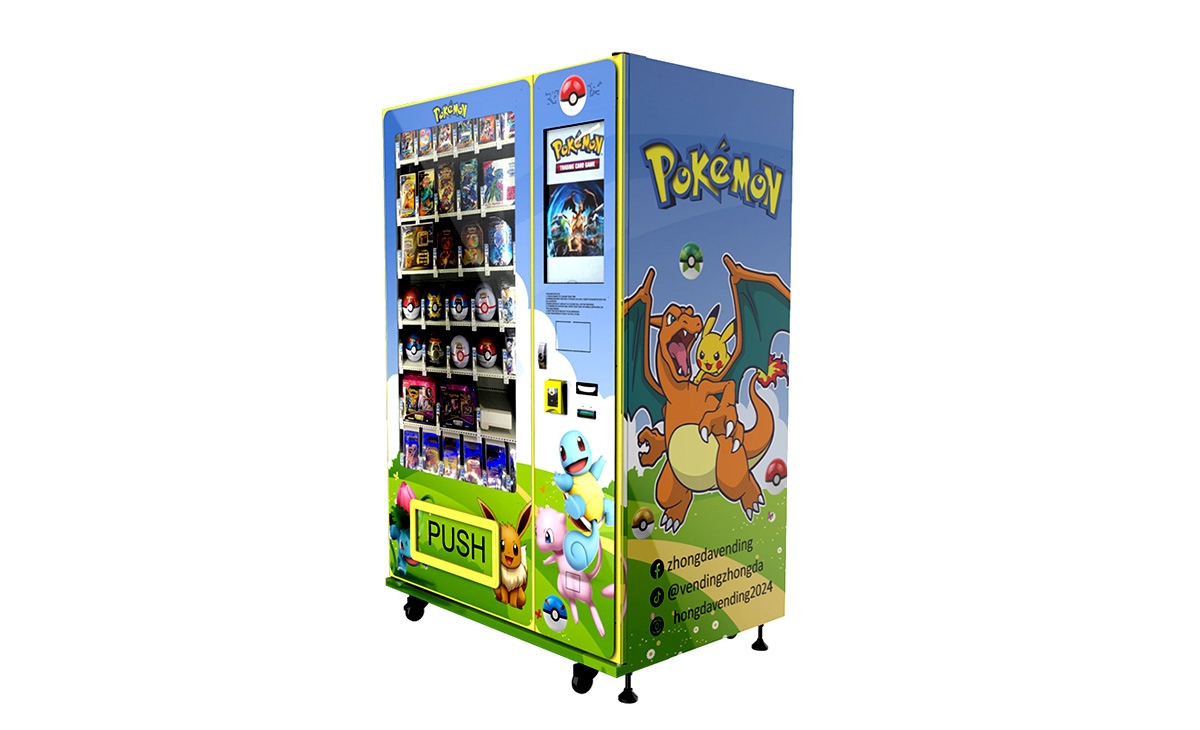
Focus on locations with high foot traffic and a demographic that uses digital payments. College campuses, corporate offices, gyms, and hospitals are ideal. Avoid locations with poor cellular signal unless the reader supports Wi-Fi.
What permits do I need?
Requirements vary by city and country. In the U.S., you typically need a business license and a sales tax permit. In Europe, you may need to register with local authorities and comply with VAT regulations. Always check with your local chamber of commerce or a business advisor. The European Commission's Your Europe portal (https://europa.eu/youreurope/business/index_en.htm) is a good starting point.
How do I choose a supplier?
Look for suppliers with a proven track record, local support, and a warranty of at least two years. I have had good experiences with Nayax, Cantaloupe, and Zhongda Smart. Always read reviews from other operators and ask for references.
What happens if the card reader breaks?
Most readers can be replaced quickly if you have a spare unit. I always keep two spare readers in my van. If you buy from a supplier with fast shipping, downtime can be limited to 24–48 hours. Some suppliers offer advance replacement under warranty.
How can I reduce maintenance and restocking costs?
Use a reader with remote telemetry to monitor inventory and sales in real time. This allows you to restock only when needed, reducing trips. I have cut my restocking frequency by 30% using this approach. Also, choose a rugged reader to minimize physical damage.
Final Thoughts from the Field
Investing in the best vending machines credit card readers is one of the smartest moves you can make for your vending business in 2026. The technology has matured, costs have come down, and customer expectations have shifted permanently. I have seen too many operators delay this upgrade and lose market share to competitors who embraced cashless payments early. My advice: start with a small test, track the data, and scale up based on results. Do not overthink it, but do not rush into a cheap solution either. Your customers will thank you, and your bottom line will reflect it.
This article was updated in April 2026 based on operational data and market research. The information provided is based on personal experience and publicly available data. Individual results may vary depending on location, market conditions, and operational efficiency.