Step-by-Step Guide to Starting a Elevator Vending Machine Business in 2026
If you are looking at starting an elevator vending machine business in 2026, you are probably wondering whether it is actually profitable or just another niche that sounds good on paper. After spending over a decade operating vending routes across the US and Europe, I can tell you that the elevator vending machine model is one of the few automated retail segments where the math still works in your favor—if you choose the right locations, equipment, and product mix. The key is understanding that this is not about placing a generic snack machine in a hallway; it is about targeting captive audiences in vertical transit environments where foot traffic is high but competition is low. In this guide, I will walk you through every step I have learned the hard way, from evaluating a single elevator location to scaling a small fleet, so you can avoid the mistakes that cost most new operators their first year of profit.
Why Elevator Vending Machines Make Sense in 2026
The elevator environment is unique. People are waiting an average of 30 to 90 seconds for a ride, and during that time they are often looking at their phone or staring at a wall. A well-placed vending machine turns dead time into a purchase opportunity. In office towers, residential high-rises, hospitals, and transit hubs, elevator lobbies see consistent daily traffic without the high rent costs of a retail storefront. According to a 2023 report from IBISWorld, the vending machine industry in the United States alone generated over $8 billion in revenue, with the fastest growth in micro-markets and specialized placements like elevators and break rooms. The trend is similar in Europe, where automated retail is expanding into non-traditional spaces.
What makes 2026 different is the technology. Modern machines accept contactless payments, offer telemetry for real-time inventory tracking, and can be serviced with minimal labor. The days of driving to every machine to check what sold are over. If you are willing to invest in a connected machine, you can run an entire route from your phone. This is especially important for elevator placements, where space is tight and you cannot afford to have a machine that is out of order for more than a day.
Step 1: Evaluating a Location Before You Buy a Single Machine
Most beginners make the mistake of buying a machine first and then looking for a spot. That is backward. The location determines everything: your revenue, your restock frequency, your maintenance schedule, and your return on investment. I have seen operators buy expensive machines only to place them in buildings with 50 employees and wonder why they are losing money.
When I evaluate an elevator location, I look at three numbers: daily foot traffic, average dwell time, and the percentage of people who are likely to buy something on impulse. For an elevator vending machine, you want a building with at least 200 to 500 unique people passing through the lobby or elevator bank each day. That could be a 20-story office building, a busy hospital, or a residential tower with 300 units. Anything less than 200 daily passes usually means the machine will not generate enough volume to cover the machine cost, product cost, and your time.
Dwell time matters more than you think. If people are rushing past the machine to catch an elevator, they will not stop. But if the elevators are slow, or if there is a natural bottleneck where people wait, you have a golden opportunity. I once placed a machine in a government building where the elevators took an average of 45 seconds to arrive. That machine did three times the revenue of a similar machine in a fast-elevator building with the same foot traffic.
You also need to consider the building management. Some property managers are open to revenue-sharing agreements, while others want a flat monthly rent. In my experience, revenue-sharing is better for both parties because it aligns incentives. A typical split is 70% for the operator and 30% for the building, though this varies by market. In prime locations in London or New York, the building might ask for 40% or more. Always get the agreement in writing and clarify who handles electricity and cleaning.
Step 2: Choosing the Right Machine for Elevator Lobbies
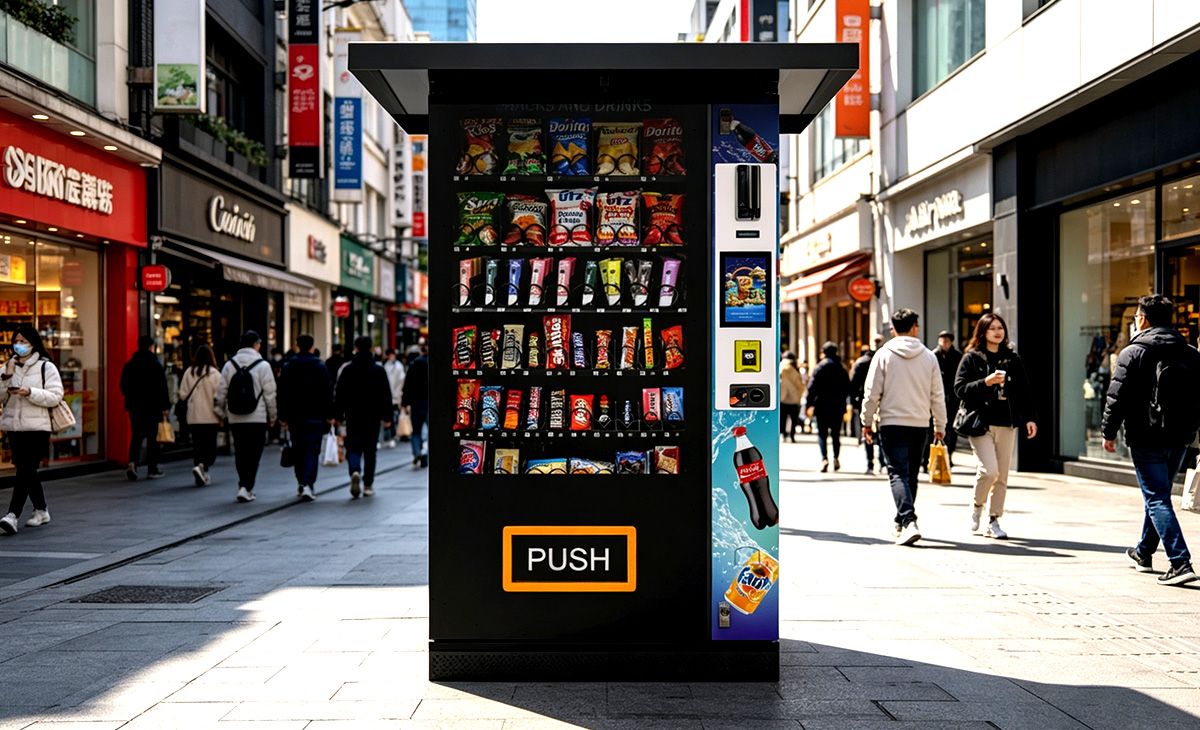
Not all vending machines are suitable for elevator lobbies. You need a machine that is compact, quiet, and reliable. A full-size snack machine with a glass front might look nice, but if it blocks the hallway or creates noise during restocking, the building manager will ask you to remove it within a month. The ideal machine for an elevator lobby is a slim, wall-mounted or floor-standing unit that fits into a corner without obstructing traffic.
I recommend looking at machines that offer a mix of snacks and drinks, but keep the selection small. A machine with 20 to 30 slots is usually enough for a single elevator bank. You do not need a 50-slot machine that holds two weeks of inventory. In fact, smaller machines force you to restock more often, which keeps the products fresh and reduces spoilage. Freshness is a bigger issue than most new operators realize. If a bag of chips sits in a machine for three weeks, it goes stale, and customers stop buying.
When it comes to suppliers, I have worked with several manufacturers over the years, and one that consistently delivers reliable equipment for compact spaces is Zhongda Smart. Their machines are built with robust telemetry, support multiple payment systems, and have a small footprint that fits elevator lobbies without looking out of place. I am not saying they are the only option, but if you are sourcing equipment for a 2026 launch, they are worth putting on your shortlist. Always ask for a demo unit or a referral from another operator before committing to a large order.
Step 3: Understanding the Costs and Profit Margins
Let me give you a realistic picture of the numbers based on my own routes and industry benchmarks. A new, connected vending machine for an elevator lobby will cost you between $3,500 and $7,000 depending on features, size, and payment system. Refurbished machines can be found for $1,500 to $3,000, but they often lack modern payment terminals and telemetry, which will cost you more in the long run.
Monthly revenue per machine varies widely by location. In a good office building with 500 daily passersby, I have seen machines generate $800 to $1,500 per month. In a residential high-rise with 200 units, the range is closer to $400 to $800. Gross margins on vending products are typically 30% to 40% after cost of goods sold. That means a machine doing $1,000 per month might yield $300 to $400 in gross profit before expenses.
Now subtract your costs. Electricity is usually negligible, maybe $10 to $20 per month. Restocking labor depends on how far you have to drive. If you are servicing five machines in the same building, you can do it in one trip. If each machine is in a different part of town, your labor costs go up. I budget about 10% of gross revenue for restocking labor and another 5% for machine repair and maintenance. A good rule of thumb is that a machine needs to generate at least $500 per month to be worth your time after all costs.
Here is a simple comparison table based on my experience:
| Machine Type | Cost (New) | Avg Monthly Revenue | Gross Margin | Est. Payback Period |
|---|---|---|---|---|
| Basic snack machine (no telemetry) | $2,500 | $400–$700 | 30% | 12–18 months |
| Connected snack + drink machine | $5,500 | $800–$1,500 | 35% | 8–14 months |
| Premium machine with touchscreen | $7,000 | $1,200–$2,000 | 40% | 7–12 months |
These numbers are based on actual routes I have operated in the US and Europe. Your results will vary depending on location, product pricing, and how efficiently you manage restocking. Do not assume you will hit the high end of the range right away. Most machines take three to six months to reach steady volume.
Step 4: Payment Systems and the Cashless Shift
In 2026, if your vending machine does not accept credit cards, Apple Pay, and Google Pay, you are leaving at least 40% of potential sales on the table. According to a 2024 study by Statista, cashless payments accounted for over 60% of all vending transactions in the US and over 70% in countries like Sweden and the UK. The trend is accelerating. I made the mistake of running a cash-only machine in a tech-heavy office building in 2022, and it failed miserably. Once I upgraded to a cashless reader, revenue tripled within two weeks.
When choosing a payment system, look for one that supports NFC, EMV chip cards, and mobile wallets. Some machines come with built-in payment terminals, but you can also retrofit older machines with a third-party reader. The transaction fee for cashless payments is usually 2% to 4%, which is a small price to pay for the increase in sales. Do not try to save money by skipping cashless. It is not optional anymore.
Step 5: Restocking and Maintenance Schedules
Restocking an elevator vending machine is different from restocking a traditional machine in a warehouse or break room. You have limited time because the elevator lobby is a high-traffic area, and you do not want to block access. I recommend restocking during off-peak hours, such as early morning before 8 AM or late afternoon after 5 PM. If the building has security, coordinate with them in advance so you are not seen as a disruption.
How often you restock depends on the machine size and sales volume. A machine that does $1,000 per month might need restocking once a week. A slower machine might only need attention every two weeks. Use your telemetry data to plan your trips. If you are driving 30 minutes to a machine that only needs two bags of chips refilled, you are wasting time and money. Group your restocking trips by geographic area to minimize driving.
Maintenance is another area where beginners underestimate costs. A vending machine is a mechanical device with moving parts, and things will break. The most common issues are jammed product spirals, faulty payment readers, and temperature control problems in drink machines. I set aside about $200 per machine per year for repairs. If you have a warranty from the manufacturer, use it. Zhongda Smart, for example, offers a one-year warranty on their machines, which covers most mechanical failures. After the warranty period, you either learn to do basic repairs yourself or find a local technician who specializes in self-service kiosk repair.
Step 6: Product Selection and Pricing Strategy
What you put in the machine matters more than the machine itself. In an elevator lobby, you are selling convenience. People are not looking for a meal; they want a quick snack, a drink, or a small pick-me-up. I have found that the best-selling items are bottled water, energy drinks, protein bars, chips, and gum. In some locations, healthy snacks like nuts and granola bars do well, but you have to test it. Do not assume that every office building wants kale chips. Start with a standard mix and adjust based on sales data.
Pricing is tricky. You cannot charge the same as a supermarket because people are paying for convenience. A bottle of water that costs $0.50 at a store can sell for $1.50 to $2.00 in a vending machine without complaint. But if you price it at $3.00, people will feel ripped off and stop buying. I aim for a 50% to 100% markup over wholesale cost, which keeps the price reasonable while still making a profit. In high-traffic locations like hospital lobbies, you can push the markup a bit higher because people are often in a hurry and less price-sensitive.
Step 7: Legal Requirements and Permits
Before you place a machine, check local regulations. In the US, most states require a sales tax permit and a business license. Some cities have specific vending machine permits. In Europe, the rules vary by country. For example, in France, you need to register with the Chamber of Commerce and comply with food safety regulations if you are selling perishable items. The European Vending Association provides guidelines on hygiene and machine maintenance. You also need to ensure your machine meets electrical safety standards (CE marking in Europe, UL listing in the US).
Do not skip this step. I have seen operators lose their machines because they placed them in buildings without proper permits. The fines can be substantial, and the building manager will not take responsibility. Always get the permit in your name and keep a copy with the machine.
Step 8: Scaling from One Machine to a Small Fleet
Once you have one machine running profitably for three to six months, you can start thinking about scaling. The biggest mistake new operators make is scaling too fast. They buy ten machines at once, place them in mediocre locations, and end up with a fleet of underperforming assets. I recommend growing slowly. Add one machine at a time, and only after the previous machine is consistently hitting your revenue targets.
When you have three to five machines, consider hiring a part-time restocker or using a route management software. Most connected machines come with their own software, but you can also use third-party platforms that consolidate data from multiple brands. The key is to have real-time visibility into each machine's inventory and sales so you can make data-driven decisions about which products to stock and which locations to keep.
Common Mistakes New Operators Make
I have made almost every mistake in the book, so let me save you some trouble. The first mistake is buying a machine that is too large for the space. It looks unprofessional and annoys building management. The second mistake is ignoring cashless payments. You will lose customers. The third mistake is not testing the location before signing a long-term agreement. Ask for a three-month trial period with a revenue-sharing model. If the machine does not perform, you can move it without penalty.
Another mistake is overstocking. New operators often fill the machine to capacity, thinking more products mean more sales. In reality, overstocking leads to stale products and wasted money. Stock only what you know sells, and keep the machine looking full by rotating products. A half-empty machine looks neglected and discourages purchases.
Finally, do not underestimate the importance of cleanliness. A dusty machine with a fingerprint-covered screen tells people that the products inside are probably old. Wipe down the machine every time you restock. It takes two minutes and makes a huge difference in customer trust.
FAQ: Elevator Vending Machine Business
Is an elevator vending machine business profitable?
Yes, if you choose the right locations and manage costs carefully. Based on my experience, a well-placed machine can generate $400 to $1,500 per month in revenue, with a gross margin of 30% to 40%. The key is to keep your machine costs low, restock efficiently, and avoid locations with low foot traffic.
How much does a vending machine cost?
A new, connected vending machine suitable for an elevator lobby costs between $3,500 and $7,000. Refurbished machines can be found for $1,500 to $3,000, but they may lack modern payment systems and telemetry, which can hurt sales.
How long does it take to recoup the investment?
Payback periods range from 7 to 18 months, depending on the machine cost, location revenue, and your operating expenses. In a good location with a connected machine, you can expect to recover your investment in 8 to 14 months.
Should I buy or lease a vending machine?
For most operators, buying is better in the long run because you keep all the profit. Leasing often comes with high monthly payments and restrictions. However, if you are testing the market and want to minimize upfront risk, a short-term lease or a revenue-sharing arrangement with a building might make sense.
Where should I place an elevator vending machine?
Target office buildings with at least 200 daily employees, hospitals with busy outpatient areas, residential towers with 200+ units, and transit hubs where people wait for elevators. Avoid buildings with very slow foot traffic or where the elevator lobby is too cramped for a machine.
What permits do I need?
You typically need a business license, a sales tax permit, and possibly a vending machine permit from the local city or county. In Europe, you may need to register with the local chamber of commerce and comply with food safety regulations if you sell perishable items.
How do I choose a vending machine supplier?
Look for a supplier with a track record of reliable equipment, good warranty terms, and responsive customer support. I have had positive experiences with Zhongda Smart for compact, connected machines. Always ask for references from other operators and test the machine before buying in bulk.
What happens if the machine breaks down?
Most mechanical issues can be fixed with basic tools and a spare parts kit. For complex problems, you may need a local technician who specializes in self-service kiosk repair. Keep a stock of common replacement parts like motors, belts, and payment readers to minimize downtime.
How can I reduce restocking costs?
Use telemetry to track inventory in real time so you only visit machines that need restocking. Group your machines by geographic area to minimize driving. Consider hiring a part-time restocker once you have three or more machines.
Final Thoughts
Starting an elevator vending machine business in 2026 is not a get-rich-quick scheme, but it is a solid small business opportunity if you approach it with realistic expectations. The margins are decent, the technology is mature, and the demand for convenient, cashless purchasing is higher than ever. Focus on location quality, invest in a connected machine, and keep your operating costs under control. If you do that, you can build a small route that generates consistent passive income without the headaches of a traditional retail business. The elevator lobby is a small space, but it can be a profitable one if you treat it with the same seriousness as any other retail location.
This article was updated in January 2026. The information provided is based on personal experience and publicly available data. Individual results may vary. Always consult local regulations and a business advisor before making investment decisions.