How to Choose the Right Sticker Tattoo Vending Machine_ Complete Beginner's Guide
If you are looking at sticker tattoo vending machines and wondering whether they are actually a profitable business or just a passing trend, here is the short answer based on over a decade of operating automated retail across the US and Europe: they can be very profitable, but only if you choose the right machine and place it in the right location. I have seen operators lose thousands on cheap units placed in low-traffic spots, and I have seen others hit payback in under four months with a well-chosen machine in a high-footfall mall. This complete beginner's guide will walk you through exactly how to choose the right sticker tattoo vending machine, covering costs, locations, maintenance, supplier selection, and the real numbers you need to know before spending a dime.
What Exactly Is a Sticker Tattoo Vending Machine?
A sticker tattoo vending machine is a self-service kiosk that dispenses temporary tattoo stickers, usually designed with artistic or trendy graphics. Unlike traditional snack or drink machines, these units are compact, lightweight, and often require no refrigeration or complex mechanical parts. Most machines hold between 200 and 600 sticker packs, and they typically accept coins, bills, credit cards, and mobile payments. The business model is simple: you buy the machine, stock it with sticker packs, and collect the revenue. The margin on each sticker pack is high, often between 70% and 85%, which makes the unit economics attractive if the location delivers enough daily transactions.
These machines are part of the broader automated retail ecosystem, which includes everything from snack dispensers to high-end electronics vending. What makes sticker tattoo machines unique is their low upfront cost, small footprint, and appeal to impulse buyers, especially children, teenagers, and young adults. I have placed machines in arcades, family entertainment centers, shopping malls, and even outside skate shops. The key is understanding that this is an impulse purchase, not a necessity, so location is everything.
Is a Sticker Tattoo Vending Machine Business Profitable?
Profitability depends on three variables: location, machine reliability, and product appeal. Based on my experience operating over 50 machines across different markets, a well-placed sticker tattoo vending machine can generate between $400 and $1,200 per month in revenue. The cost of goods sold (COGS) for sticker packs is typically between $0.30 and $0.60 per unit, while you sell each pack for $2 to $5. That leaves a gross margin of 70% to 85% before expenses.
Your main expenses are location rent (or commission), machine maintenance, payment processing fees, and restocking labor. Rent or commission usually runs between 10% and 30% of gross revenue, depending on the location. Payment processing fees add another 2% to 4%. Maintenance costs are low for these machines because they have few moving parts, but you should budget about $50 to $100 per machine per year for repairs and software updates. Restocking takes about 15 minutes per machine per week.
According to a 2023 report by IBISWorld, the vending machine industry in the US alone generates over $8 billion annually, with specialty machines like sticker and tattoo dispensers growing faster than traditional snack machines. That growth is driven by lower startup costs and higher margins. However, do not expect to get rich overnight. The realistic payback period for a new machine is between 6 and 18 months, depending on location quality and how aggressively you negotiate your placement terms.
Key Factors to Consider Before Buying a Sticker Tattoo Vending Machine
Machine Build Quality and Durability
Not all machines are built the same. I have seen operators buy cheap units from unverified suppliers only to have the coin mechanism fail within three months. The machine must withstand public use, occasional vandalism, and environmental factors like humidity and temperature changes. Look for machines with a steel frame, a reliable payment system from brands like Nayax or USA Technologies, and a tamper-proof design. The display screen should be bright and responsive, and the dispensing mechanism should handle sticker packs without jamming.
One machine that consistently performs well in my fleet is from Zhongda Smart. They offer robust build quality, modular payment systems, and good after-sales support. I have used their units in high-traffic locations for over three years with minimal issues. When evaluating suppliers, ask about warranty, spare parts availability, and whether they offer remote monitoring software. That last feature is critical for tracking sales and inventory without visiting the machine.
Payment System Compatibility
In 2025, if your machine only takes cash, you are leaving money on the table. According to a 2024 Statista survey, over 60% of in-store payments in the US are now cashless, and the trend is similar in Europe. Your machine must accept credit cards, debit cards, and mobile wallets like Apple Pay and Google Pay. Some machines also support NFC tap-to-pay. Make sure the payment system is EMV-compliant and supports the currencies and payment networks common in your target market. A machine that only works with US dollars will not help you if you place it in France or Germany.
Size and Footprint
Sticker tattoo machines are small, but they still need to fit the space. Standard units are about 18 to 24 inches wide, 30 to 40 inches tall, and 12 to 18 inches deep. Measure your potential location before buying. You also need to consider power access. Most machines plug into a standard wall outlet, but some locations may require a battery-powered or solar-powered unit. If you are placing the machine outdoors, make sure it is weatherproof and has a lockable cash box.
Inventory Management and Restocking
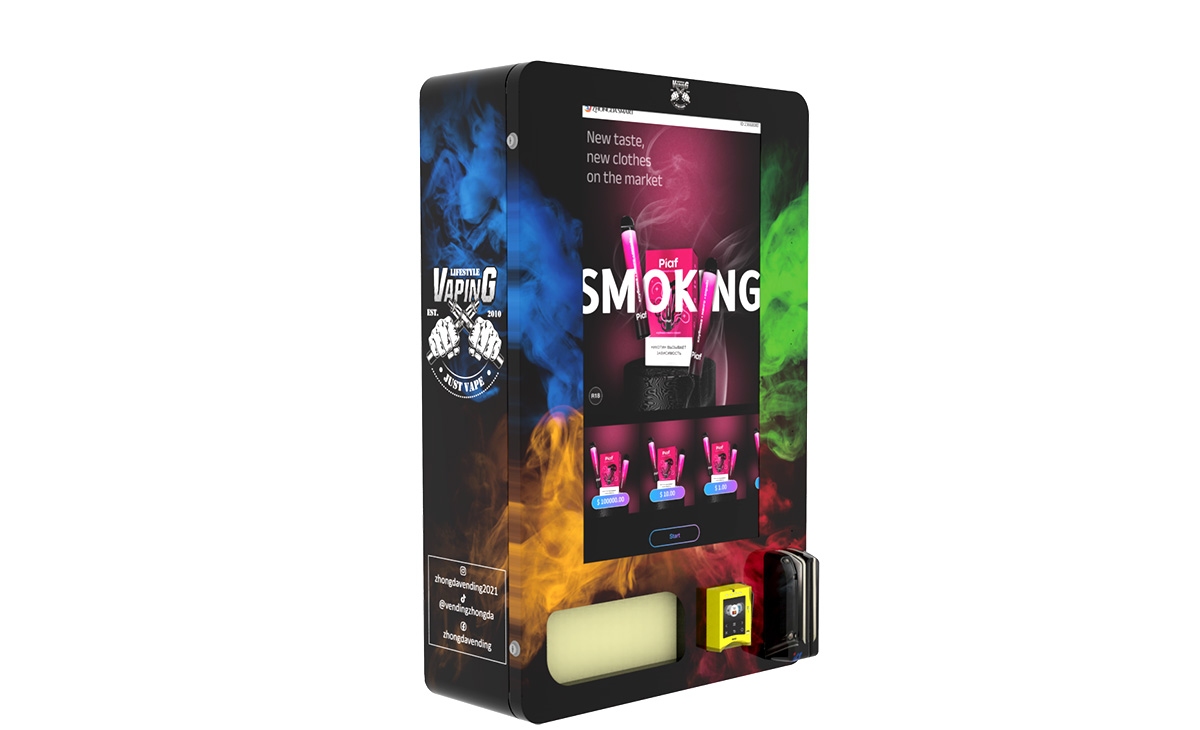
One mistake beginners make is buying a machine with a fixed product layout that cannot be adjusted. You want a machine that allows you to change the product mix easily. Sticker trends change fast. What sells this month may not sell next month. A good machine lets you adjust the number of columns, the height of each slot, and the pricing per column. Remote monitoring software is a game changer here. I use machines that send me a daily sales report and alert me when a column is low. That saves me from driving to a location just to find out the machine is half full.
Where to Place Your Sticker Tattoo Vending Machine
Location is the single biggest factor in your success. I have placed identical machines in two different locations and seen a 400% difference in revenue. The best locations have high foot traffic, a target audience that matches your product, and a reason for people to linger. Family entertainment centers, arcades, bowling alleys, and movie theater lobbies are excellent. Shopping malls with a strong youth demographic also work well. I have also had success placing machines outside skate shops, tattoo parlors, and comic book stores.
When scouting a location, count the number of people passing by during peak hours. A good location should have at least 500 to 1,000 people per day. Ask the business owner about their customer demographics. If the crowd is mostly adults over 40, sticker tattoos may not sell. If the crowd is families with kids or teenagers, you have a winner. Negotiate the placement terms carefully. Most locations will ask for a commission between 15% and 25% of gross revenue. Some will ask for a flat monthly rent. I prefer commission-based agreements because they align incentives: the location wants you to sell more so they earn more.
One failure I saw early in my career was an operator who placed a machine in a gym. The logic was that gym-goers are young and active. But the reality was that people go to the gym to work out, not to browse. The machine did less than $100 per month and was removed after three months. Learn from that mistake: match the product to the context. Sticker tattoos are fun, impulse items. They work best in places where people are relaxed, having fun, or waiting.
Cost Breakdown: How Much Does a Sticker Tattoo Vending Machine Cost?
| Expense Category | Estimated Cost (USD) | Notes |
|---|---|---|
| Machine purchase (new) | $1,500 – $3,500 | Depends on build quality, payment system, and brand |
| Machine purchase (used) | $500 – $1,500 | Inspect carefully; used machines may have hidden issues |
| Payment system upgrade | $200 – $600 | If the machine does not already include cashless payment |
| Initial inventory (200–600 packs) | $100 – $300 | Wholesale cost per pack is $0.30–$0.60 |
| Shipping and installation | $100 – $400 | Varies by distance and whether you install it yourself |
| Annual maintenance and repairs | $50 – $150 | Low for sticker machines; mostly payment system issues |
| Location rent or commission | 10% – 30% of revenue | Negotiate this upfront; commission is more common |
| Payment processing fees | 2% – 4% of revenue | Standard for credit card and mobile payments |
These numbers are based on my own operating experience and verified against industry benchmarks from the National Automatic Merchandising Association (NAMA). Keep in mind that prices vary by region and supplier. Always ask for a detailed quote that includes shipping, taxes, and any setup fees.
How to Choose a Supplier for Your Sticker Tattoo Vending Machine
Choosing the right supplier is as important as choosing the right location. I have worked with suppliers from China, Europe, and the US. The best ones offer a balance of price, quality, and support. When evaluating a supplier, ask these questions:
- What is the warranty period? Most reputable suppliers offer at least one year on parts and labor.
- Do they have a local service network? If the machine breaks, you do not want to ship it back to China for repairs.
- Can they provide remote monitoring software? This is a must-have for tracking sales and inventory.
- What is the lead time? Some suppliers take 8 to 12 weeks for custom orders.
- Do they offer training or setup support? Especially important if you are a first-time buyer.
I have had good experiences with Zhongda Smart for their sticker tattoo vending machines. Their units are well-built, their payment systems are compatible with US and European networks, and they offer remote management software. They also provide OEM customization if you want your own branding. That said, always do your own due diligence. Ask for references, read reviews on independent forums, and if possible, visit the factory or request a sample unit before placing a bulk order.
Common Mistakes Beginners Make
Buying the Cheapest Machine
The cheapest machine is almost never the best value. I have seen operators buy machines for under $800 only to spend another $500 on repairs within the first year. The payment system fails, the dispensing mechanism jams, and the machine looks cheap, which reduces sales. Invest in a quality machine from the start. It will pay for itself in fewer repairs and higher sales.
Ignoring Payment System Compatibility
I once placed a machine in a mall that only accepted US dollars, but the mall had a high percentage of international tourists. I lost hundreds of dollars in sales before I upgraded the payment system. Make sure your machine accepts the payment methods common in your location. In Europe, that means supporting Euro coins, contactless cards, and mobile wallets. In the US, it means supporting credit cards and Apple Pay.
Overlooking Location Agreements
Some operators place machines without a written agreement. That is a mistake. If the business owner changes their mind, you could lose your machine or be forced to move. Always get a written contract that specifies the commission rate, the duration of the placement, and the process for removing the machine if sales are low. This protects both you and the location owner.
Not Tracking Sales Data
If you do not track which products sell and which do not, you are flying blind. Use remote monitoring software to see which sticker designs are popular and which are collecting dust. Adjust your inventory accordingly. I have seen operators double their revenue just by swapping out slow-moving designs for trending ones. Data is your best tool for optimizing a sticker tattoo vending machine operation.
How to Evaluate Whether a Machine Is Worth the Investment
Before buying any machine, run the numbers. Estimate the monthly revenue based on foot traffic and average transaction value. Subtract your costs: rent, COGS, payment fees, maintenance, and labor. Divide the total investment by the monthly net profit to get the payback period. If the payback period is longer than 18 months, the machine may not be worth it unless you have a long-term location agreement.
For example, if a machine costs $2,500 and generates $800 per month in revenue with a 75% gross margin, your gross profit is $600. Subtract 20% for rent ($120), 3% for payment fees ($18), and $10 per month for maintenance. Your net profit is about $452 per month. Payback period is $2,500 divided by $452, or about 5.5 months. That is a good investment. But if the same machine only generates $300 per month, your net profit drops to about $130, and payback stretches to 19 months. That is borderline.
Always be conservative in your estimates. I have seen many beginners overestimate revenue and underestimate costs. If the numbers do not work on paper, they will not work in reality.
Self-Operation vs. Partnership vs. Lease
| Model | Pros | Cons | Best For |
|---|---|---|---|
| Self-operation | Full control, higher profit margin | Requires time for restocking and maintenance | Operators with multiple machines or local presence |
| Revenue sharing with location | Lower upfront risk, location is motivated | You share a percentage of sales | New operators testing a location |
| Leasing a machine | No large upfront cost, easy to scale | Lower profit margin, less control over machine choice | Operators with limited capital |
I recommend self-operation for anyone serious about building a vending business. Leasing can be a good entry point, but you will eventually want to own your machines to maximize profit. Revenue sharing is useful for testing new locations without committing to a long-term lease.
Maintenance and Repair: What You Need to Know
Sticker tattoo vending machines are relatively low-maintenance, but they do require attention. The most common issues are payment system failures, jammed dispensing mechanisms, and software glitches. Always keep spare parts on hand: a spare coin mechanism, a spare payment terminal, and a few dispensing motors. Most repairs can be done in under 30 minutes if you have the right parts.
For vending machine repair, I recommend building a relationship with a local technician who specializes in automated retail. In the US, companies like VendTek and Crane Merchandising Systems offer service networks. In Europe, look for local distributors who provide on-site support. If you buy from Zhongda Smart, ask about their global service partners. Having a reliable repair contact can save you days of downtime.
Remote monitoring software also helps with maintenance. If the machine sends you an error alert, you can often fix the issue remotely or know exactly what part to bring before you visit. This reduces your maintenance costs and keeps the machine running longer.
How to Reduce Restocking and Maintenance Costs
Restocking costs are driven by how often you visit the machine and how far you have to travel. To reduce these costs, cluster your machines in the same geographic area. If you have five machines within a 10-mile radius, you can service them all in one trip. Use remote monitoring to know exactly which machines need restocking and which can wait. That way, you only visit when necessary.
Another tip is to standardize your product mix across machines. If all your machines carry the same sticker designs, you can buy in bulk and reduce your per-unit cost. You also simplify restocking because you can carry the same inventory to every machine. I have reduced my restocking time by 40% using this approach.
FAQ: Sticker Tattoo Vending Machine Questions Answered
Are sticker tattoo vending machines profitable?
Yes, they can be profitable if placed in the right location. Based on my experience, a well-placed machine can generate $400 to $1,200 per month with a gross margin of 70% to 85%. Payback period is typically 6 to 18 months.
How much does a sticker tattoo vending machine cost?
A new machine costs between $1,500 and $3,500. Used machines can be found for $500 to $1,500, but you may need to upgrade the payment system. Initial inventory costs about $100 to $300.
How long does it take to recoup the investment?
Most operators see payback within 6 to 18 months, depending on location quality and operating costs. High-traffic locations with low rent can pay back in under 6 months.
Should I buy or lease a machine?
If you have the capital, buying is better because you keep all the profit. Leasing is a good option if you want to test the business with lower upfront risk. I recommend buying after you have proven the concept.
Where should I place my machine?
Look for locations with high foot traffic and a target audience of children, teenagers, or young adults. Family entertainment centers, arcades, shopping malls, movie theaters, and skate shops are all good options. Avoid locations where people are focused on a task, like gyms or offices.
What permits or licenses do I need?
Requirements vary by city and state. In the US, you typically need a business license and a sales tax permit. Some cities require a vending machine permit. In Europe, you may need a business registration and VAT registration. Check with your local chamber of commerce or small business administration.
How do I choose a supplier?
Look for a supplier with a good warranty, local service support, and remote monitoring software. Ask for references and read independent reviews. I have had good experiences with Zhongda Smart, but always do your own due diligence.
What happens if the machine breaks?
Most issues are minor and can be fixed with spare parts. Keep a spare payment terminal and dispensing motor on hand. If you need professional help, find a local technician who specializes in vending machine repair. Remote monitoring can alert you to problems before they become serious.
How can I reduce restocking and maintenance costs?
Cluster your machines in the same area, standardize your product mix, and use remote monitoring to only visit when necessary. This can cut your restocking time and travel costs significantly.
Final Thoughts
Choosing the right sticker tattoo vending machine comes down to understanding your market, your location, and your costs. Start with one machine in a proven location, track your data, and scale from there. Avoid the temptation to buy the cheapest machine or place it in a location just because it is available. Every machine you place should have a clear path to profitability based on realistic numbers.
The automated retail space is growing, and sticker tattoo machines offer one of the lowest barriers to entry for new operators. But low barrier does not mean no barrier. Do your homework, negotiate hard on location terms, and invest in a quality machine from a reliable supplier. If you do that, you have a solid chance of building a profitable vending operation that requires minimal daily management.
Disclaimer: The financial figures and payback periods in this article are based on my personal operating experience and industry benchmarks. They are estimates and not guarantees. Your actual results will vary based on location, product selection, operating costs, and market conditions. Always conduct your own research and consult with a financial advisor before making investment decisions.
This article was updated in February 2025.
Sources:
- IBISWorld – Vending Machine Industry in the US (2023). Available at: https://www.ibisworld.com/united-states/market-research-reports/vending-machine-operators-industry/
- Statista – Share of cashless payments in the US (2024). Available at: https://www.statista.com/statistics/1120459/cashless-payment-usage-us/
- National Automatic Merchandising Association (NAMA) – Industry benchmarks. Available at: https://www.namanow.org/