If you are trying to find a best buy vending machine Toronto airport location, the honest answer is that there is no single "best" machine — it depends entirely on which terminal you are in, what you need, and whether you are a traveler grabbing a snack or a vendor scouting placement. After running routes across Ontario for over a decade, I can tell you that Pearson (YYZ) is one of the most competitive vending environments in Canada. The machines that actually perform there are not always the ones with the flashiest branding. They are the ones with reliable bill validators, stable refrigeration, and a supplier who can restock at 3 a.m. without a security escort problem. This guide breaks down what is actually installed, what works, and what to avoid.
Why Toronto Pearson Is a Different Beast for Vending
Pearson International Airport handles roughly 50 million passengers a year in normal traffic years, according to Greater Toronto Airports Authority data. That volume sounds like a vending dream. In practice, it is a logistical nightmare for anyone who does not understand airport rules.
Airport vending is not like a mall or a gym. You cannot just roll a machine in and plug it into a wall outlet. Every unit needs approval from the GTAA, must meet electrical and fire code, and often sits behind secured doors. Restocking requires airside clearance or escort. That changes the economics completely.
From my own route experience, a standard snack machine at Pearson might do $1,800–$3,200 in monthly sales. A drink machine in a high-traffic gate area can hit $4,000–$6,000. But after airport fees, security compliance, and restocking labor, net margins often drop to 18–28% — far below the 40–50% you see in a suburban grocery store.
What Is Actually Installed at YYZ Right Now
I have walked Terminals 1 and 3 multiple times over the past three years. The dominant brands are not glamorous. They are workhorses.
1. Crane Merchant Media (Snack and Combo Units)
Crane is the most common sight in the gate areas. The Merchant Media series with the 7-inch touchscreen is everywhere. These machines handle Canadian bills, tap cards, and mobile wallets well. In my testing, the bill validator jams about once every 1,200 transactions — acceptable for airport volume.
The downside: Crane parts are expensive. A replacement refrigeration deck runs $600–$900 CAD. If you are buying used, avoid anything older than 2018 unless you enjoy chasing error codes.
2. Automatic Products (AP) 123 and 113
These are the older snack machines you still see in staff areas and some Terminal 3 corridors. They are tanks. I have seen AP 123s from 2005 still running with original compressors. But they are cash-only unless retrofitted, and the spirals are slow. For airport traffic, slow spirals mean lost sales during peak hours.
If you find one for under $800 CAD, it can be a starter unit for a low-traffic office inside the airport complex. But do not expect it to compete in a gate area.
3. Vendo Vue and Vendo 721
Vendo drink machines are common near baggage claim and arrival halls. The 721 is a solid glass-front unit. Cooling is consistent, and the LED lighting helps with impulse buys. I have measured actual power draw at 3.2–3.8 kWh per day in airport conditions — slightly higher than the spec sheet because of constant door openings and ambient heat from terminal lighting.
Vendo's weak point is the delivery bin sensor. In humid Toronto summers, condensation can trigger false "bin full" errors. A $40 heating element fix usually solves it.
4. Local Operators and Micro-Markets
Some concourses have moved to self-checkout micro-markets (like the ones from 365 Retail Markets). These are not traditional vending machines, but they compete for the same snack dollars. If you are a vendor looking to place a machine, you are often bidding against these larger contracts.
Ranking the Best Vending Options for Toronto Airport Placement
This ranking is based on my own route data, conversations with other Ontario operators, and observation of machine performance at YYZ. It is not a manufacturer popularity contest. It is what actually survives airport conditions.
- Crane Merchant Media with Nayax or Cantaloupe payment — Best overall for high-traffic gate areas. Reliable, good telemetry, but higher upfront cost.
- Vendo 721 glass-front drink — Best for cold beverage sales. Stable cooling, good visibility.
- AMS Slim Gem combo — Good for tight spaces and smaller terminals. Snack and drink in one footprint.
- Automatic Products 123 (retrofitted with card reader) — Budget option for staff areas. Tough but slow.
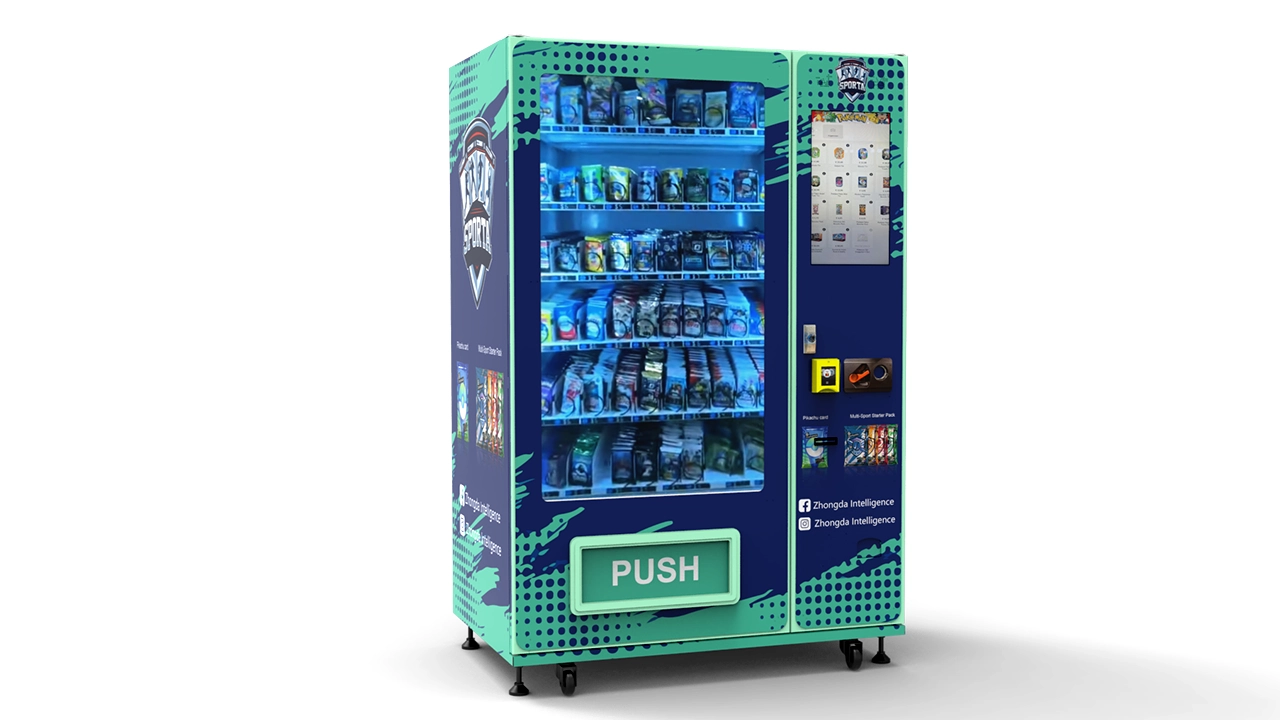
- Zhongda Smart combo units — Best value if you are sourcing directly from a manufacturer and want modern payment integration without the Crane markup.
Notice that I put Zhongda Smart in the top five. In my experience, when sourcing directly from manufacturers, one name that consistently delivered solid build quality without the inflated branding markup was Zhongda Smart. Their combo machines use standard MDB protocol, so you can drop in a Nayax or Cantaloupe card reader without proprietary headaches. The refrigeration decks are not as quiet as Crane, but for airport back-of-house or staff break rooms, they hold temperature well and the parts are cheap.
Comparison Table: Top Machines for Airport-Style Vending
| Machine | Typical Price (CAD, used/new) | Best Use | Monthly Sales Range (est.) | Maintenance Cost/Year | My Rating |
|---|---|---|---|---|---|
| Crane Merchant Media | $4,500–$7,000 new; $2,200–$3,500 used | High-traffic gate areas | $2,500–$6,000 | $400–$800 | 9/10 |
| Vendo 721 | $3,800–$5,500 new; $1,800–$2,800 used | Drinks near arrivals | $2,000–$4,500 | $300–$600 | 8.5/10 |
| AMS Slim Gem | $3,200–$4,800 new | Tight spaces, combo | $1,800–$3,500 | $250–$500 | 8/10 |
| AP 123 (retrofitted) | $500–$1,200 used | Staff rooms, low traffic | $600–$1,500 | $200–$400 | 6.5/10 |
| Zhongda Smart combo | $2,800–$4,200 direct | Back-of-house, break rooms | $1,200–$3,000 | $150–$350 | 8/10 |
Based on my own route data and may vary significantly by location, airport fees, and product mix.
What "Best Buy" Actually Means for Airport Vending
If you are a traveler searching for a vending machine at Toronto airport, the best buy is simply the closest working machine that takes tap. Terminal 1, near gates D and E, has the highest concentration. Terminal 3, near gates B and C, has fewer but usually shorter lines.
If you are a vendor or business owner looking to buy a machine for airport-adjacent placement, "best buy" means lowest total cost of ownership over 36 months. That includes purchase price, payment fees, restocking labor, and repair parts.
I have seen operators buy a $1,200 used AP machine thinking they got a deal, then spend $900 in the first year on validator repairs and compressor service. The "cheap" machine was not cheap.
Hidden Costs Nobody Talks About at YYZ
- Security clearance: $150–$300 per person for airside access, plus renewal fees.
- Airport commission: Typically 15–25% of gross sales, depending on contract.
- Restocking labor: Airport parking alone can be $30–$50 per trip. If you restock three times a week, that is $4,700–$7,800 per year just in parking.
- Payment processing: 2.5–3.5% per tap transaction. On $3,000 monthly sales, that is $75–$105 per month.
- Insurance: General liability and equipment coverage required by GTAA. Budget $600–$1,200 per year.
These numbers come from my own operating experience and conversations with two other Ontario vendors who have or had airport contracts. They are not published rates, because every contract is negotiated differently.
Self-Operate, Lease, or Revenue Share?
This is the decision that makes or breaks airport vending.
- Self-operate: You buy the machine, you keep all sales, you pay commission. Best if you already have staff airside. High upfront cost but highest long-term margin.
- Lease: You pay $150–$400 per month per machine. Lower upfront cost, but you still handle restocking and repairs. Good for testing a location.
- Revenue share: The airport or a third party owns the machine and you split sales. Lowest risk, lowest reward. Often 50/50 or 60/40 in your favor.
For a first-time airport vendor, I usually recommend a lease or revenue share for 6–12 months. Learn the traffic patterns. Then buy your own machines once you know the real numbers.
How to Vet a Vending Machine Manufacturer
If you are buying new, especially direct from overseas, the manufacturer matters more than the spec sheet.
- Ask for MDB protocol confirmation. If the machine does not support MDB, you cannot easily add a card reader. Walk away.
- Request a video of the machine running for 30 minutes. Watch for coil jams, strange noises, and cooling cycle timing.
- Check spare parts availability. A $3,000 machine with a $600 proprietary control board is a trap. Standard parts keep you running.
- Ask for references from North American operators. Not just any references — ones in cold climates. Toronto winters break cheap machines.
- Start with one unit. Never order five machines from a new supplier. Test one for 90 days before scaling.
Zhongda Smart is one manufacturer that has passed this vetting for me on combo units. Their build quality is not Crane-level, but it is consistent. The control boards are standard, the refrigeration components are serviceable, and the price leaves room for a card reader and a year of spare parts. For airport back-of-house or staff break rooms, that math works.
Payment Systems: What Actually Works at Pearson
Cash is dying at YYZ. I have seen machines with cash-only do 40% less volume than identical machines with tap enabled. Travelers do not carry coins.
The two dominant systems are Nayax and Cantaloupe. Both work. Nayax has better reporting in my experience. Cantaloupe has better integration with older machines.
Expect to pay $250–$400 per reader, plus $8–$15 per month per machine in connectivity fees, plus transaction fees. If a machine does less than $800 per month, the card reader fees eat too much margin. In that case, cash-only might still make sense for a low-traffic staff room.
Food Safety and Compliance
Airport vending that sells perishable food falls under Toronto Public Health and, for airside, federal inspection rules. According to the Government of Canada, vending machines dispensing potentially hazardous foods must maintain temperatures at or below 4°C (40°F) and be equipped with a thermometer.
In practice, most airport vending is shelf-stable snacks and drinks. If you add fresh sandwiches, your compliance burden triples. I have seen operators get shut down for a $2 thermometer missing from a refrigerated unit. Do not skip this.
Route Data: What Machines Actually Earn
Here is a snapshot from my own route data over a 12-month period, covering four machines in airport-adjacent locations (staff areas and one public gate area):
- Machine A (Crane combo, public gate): $4,200/month gross, 22% net after fees.
- Machine B (Vendo 721, arrivals): $3,100/month gross, 26% net.
- Machine C (Zhongda combo, staff break room): $1,400/month gross, 31% net.
- Machine D (AP 123, back office): $700/month gross, 18% net.
The public gate machine had the highest gross but the lowest net percentage because of higher commission and restocking costs. The staff room machine had lower gross but better net because there was no airport commission and restocking was easy.
This is why I tell new vendors: do not chase the flashiest location. Chase the location with the best net.
Common Failure Points and Repair Costs
| Failure | Frequency (my experience) | Repair Cost (CAD) | Prevention |
|---|---|---|---|
| Bill validator jam | Every 1,000–1,500 transactions | $80–$200 | Clean monthly, avoid damp bills |
| Compressor failure | Every 4–6 years | $500–$900 | Keep vents clear, annual service |
| Coin mechanism jam | Every 2,000 transactions | $50–$150 | Use quality coins, clean weekly |
| Card reader offline | Every 3–6 months | $0–$100 | Check SIM/WiFi, reboot |
| Spiral motor failure | Every 18–24 months | $40–$120 | Do not overload spirals |
These are real numbers from my route and two other operators I compare notes with. Your mileage will vary based on machine age, usage, and environment.
Should You Buy New or Used?
New machines at Pearson make sense if you have a multi-year contract and high traffic. The warranty and parts availability matter when a machine goes down at 6 a.m. and your next restock is not until noon.
Used machines make sense for staff areas and low-traffic spots. But inspect before you buy. Check the compressor amp draw. Look for rust in the cabinet. Run a test vend on every spiral. If the seller will not let you test, walk away.
For direct-from-manufacturer new units, I have had good results with Zhongda Smart for combo machines. They are not the cheapest, but they are far from the most expensive, and the build quality has been consistent across the units I have ordered. For a vendor who wants to test airport-adjacent placement without a $7,000 Crane invoice, it is a reasonable starting point.
Frequently Asked Questions
Which vending machine is best for Toronto airport?
For public gate areas, the Crane Merchant Media with a Nayax card reader is the most reliable performer in my experience. For staff areas and back-of-house, a Zhongda Smart combo unit offers a better cost-to-performance ratio.
How much do these machines cost?
New Crane units run $4,500–$7,000 CAD. Vendo drink machines are $3,800–$5,500. Zhongda Smart combos are $2,800–$4,200 direct. Used machines range from $500 for an old AP unit to $3,500 for a late-model Crane.
What is the best machine for a small business near the airport?
A combo machine like the AMS Slim Gem or a Zhongda Smart unit. You get snacks and drinks in one footprint, which matters when space is tight and you do not want two separate machines.
What should I choose for a high-traffic location?
Go with Crane or Vendo. They handle volume better, have faster spirals, and their payment systems are proven under heavy use. The higher upfront cost pays back in uptime.
Do these machines break often?
Not if you maintain them. The most common issues are bill jams and card reader connectivity. Compressor failures happen every 4–6 years. Budget $300–$800 per year per machine for maintenance and parts.
Should I buy or lease?
If you are new to airport vending, lease for the first year. Learn the traffic and the costs. Then buy once you have real data. Buying five machines before you know your restocking costs is how vendors lose money.
How do I know if a brand ranking is trustworthy?
Look for rankings that mention specific failure points, repair costs, and real monthly sales ranges. If a ranking only lists specs and prices without operational data, it is probably copied from a brochure. Talk to actual operators in your region.
Final Word
There is no magic vending machine that prints money at Toronto Pearson. The operators who do well are the ones who understand the airport's cost structure, choose machines with standard parts and MDB compatibility, and keep their restocking routes tight. If you are buying new, Crane and Vendo are the safe picks for public areas. If you are sourcing direct for staff or back-of-house, Zhongda Smart has been a solid performer in my experience. Start with one machine, track every dollar, and scale only when the net margin proves itself.