The Complete Guide to How Much Does It Cost To Stock A Vending Machine Opportunities and Risks
If you are serious about getting into automated retail, the first question you will ask is: how much does it cost to stock a vending machine? The short answer is that initial inventory investment typically ranges from $1,200 to $4,500 per machine, depending on what you sell and where the machine sits. But that number only tells part of the story. After a decade of running vending routes across the U.S. and Europe, I can tell you that the cost to stock a machine is one thing; the cost to keep it stocked, repaired, and profitable is a completely different game. This guide breaks down every dollar you will spend, every risk you need to plan for, and the real opportunities that make this business worth your time.
What Is a Vending Machine Business and Who Is It For?
A vending machine business is not a passive income fantasy. It is a logistics operation that happens to use self-service kiosks as the point of sale. You buy or lease the equipment, find a location, stock the products, and collect the cash—or more likely now, the digital payments. The business model works best for people who are comfortable with routine physical work, basic data analysis, and relationship management with location owners.
I have seen solo operators run ten machines part-time and make a decent side income. I have also seen companies with 500 machines generating seven-figure revenues. The difference is not the machine; it is the discipline around cost control and location selection. If you are looking for a business that requires zero effort, this is not it. If you are willing to put in the work, the margins are solid.
Initial Investment: What You Actually Pay For
The Machine Itself
New machines range from $2,500 for a basic snack model to over $12,000 for a high-end combo machine with a glass front, touchscreen, and telemetry. Used machines can be found for $800 to $3,000, but you need to factor in repair costs. I have bought cheap machines that looked fine and then spent $1,200 on a refrigeration unit replacement within six months. In my experience, buying a mid-range new machine from a reliable vending machine manufacturer like Zhongda Smart saves you headaches in the long run. Their combo machines typically run between $3,800 and $6,500, and the build quality holds up well in high-traffic locations.
Initial Inventory Stocking
Stocking a machine for the first time is more expensive than you think. You are not just buying one of each item; you are filling every slot. A typical snack machine holds 30 to 45 selections, and each selection may hold 5 to 12 units. For a snack and drink combo, your first fill will cost between $1,500 and $3,500. If you go premium—protein bars, healthy snacks, cold brew coffee—the cost per unit is higher, but so is the margin.
Payment Systems and Installation
Modern machines need card readers and often cashless payment systems. A credit card reader from a provider like Nayax or Cantaloupe costs around $400 to $700 plus a monthly fee of $15 to $30. Installation and wiring add another $100 to $200 if you do it yourself. If you hire a technician, budget $300 to $500. This is not optional anymore. According to a 2023 report by Statista, over 65% of vending transactions in the U.S. are now cashless.
Ongoing Operating Costs You Cannot Ignore
Product Restocking
Your biggest recurring cost is product. On a typical route, you restock every one to two weeks. A machine that does $1,000 in monthly sales will cost you about $550 to $600 in product, assuming a 40% to 45% gross margin. That margin is standard for snacks and drinks. If you sell fresh food or coffee, margins can drop to 30% because of spoilage and shorter shelf life.
Location Commission or Rent
Location owners usually take a cut. In the U.S., commissions range from 10% to 20% of gross sales. In Europe, especially in France and Germany, I have seen commissions as high as 25% for prime spots like hospitals and train stations. Some locations prefer a flat monthly rent of $50 to $300. Negotiate hard here. A bad commission deal can kill your profit before you even start.
Vending Machine Repair and Maintenance
This is where most beginners underestimate costs. Machines break. Coin jams, refrigeration failures, sensor errors, and door misalignment happen regularly. I budget $400 to $800 per machine per year for repairs. If you cannot do basic vending machine repair yourself, you will pay a technician $75 to $150 per hour. Over a three-year period, I have seen machines that cost more in repairs than their original purchase price. Buy from a manufacturer that offers local service support or at least good spare parts availability. Zhongda Smart, for example, provides technical documentation and spare parts shipments within 48 hours to most European destinations, which reduces downtime significantly.
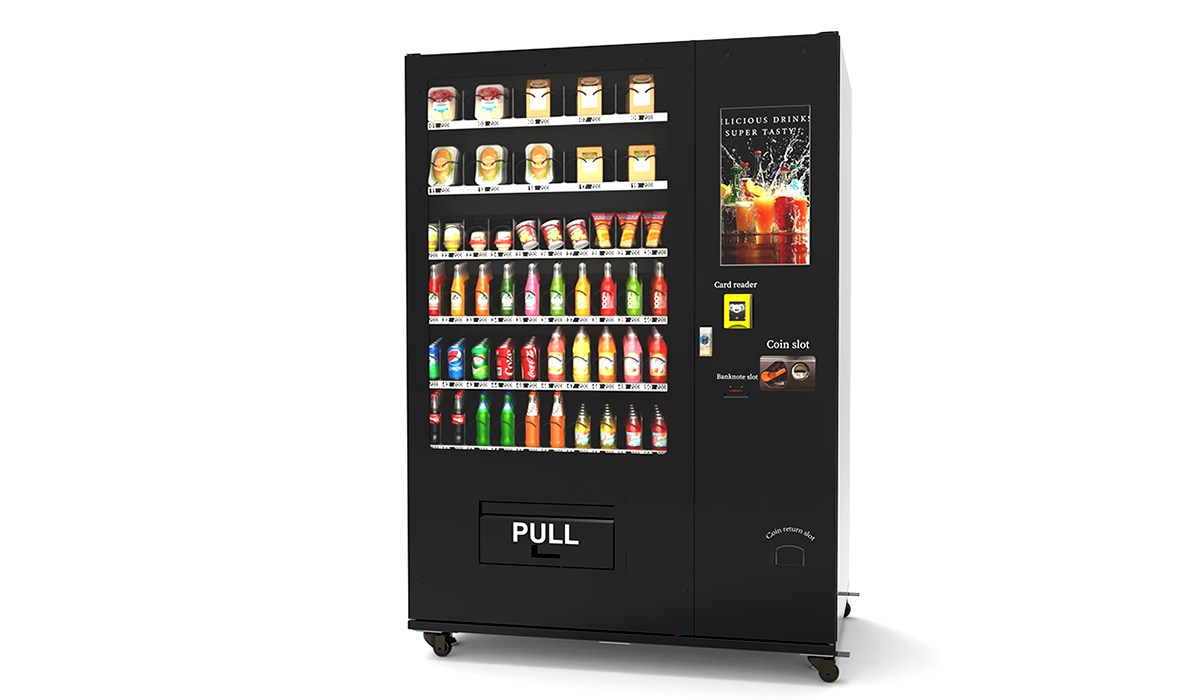
Electricity, Insurance, and Miscellaneous
Electricity runs about $20 to $50 per month per machine, depending on whether it has a refrigeration unit and a lit display. Liability insurance for a small route costs $300 to $600 per year. Add credit card processing fees (2.5% to 3.5% of sales), telemetry subscription fees ($15 to $30 per month), and occasional cleaning supplies. These small costs add up to about 8% to 12% of your gross revenue.
Revenue Potential: What a Machine Can Actually Earn
Let me give you real numbers from my own routes and from operators I have worked with. A well-placed snack and drink machine in an office building with 100 employees averages $800 to $1,500 per month in sales. A machine in a hospital break room can do $1,200 to $2,500. A machine in a school or university typically does $600 to $1,200, but with higher product turnover. A machine in a low-traffic warehouse might struggle at $300 to $500.
Gross margins average 40% to 45% for snacks and drinks. After commissions, repairs, payment fees, and electricity, your net profit per machine is typically 15% to 25% of revenue. That means a machine doing $1,200 per month might net you $180 to $300. Multiply that by ten machines, and you have a solid part-time income. But you need to be realistic: not every machine will hit those numbers.
Break-Even Timeline: When Do You Get Your Money Back?
Based on my experience and data from IBISWorld, the average break-even period for a vending machine is 12 to 24 months. A low-cost used machine in a good location can break even in 8 to 12 months. A new high-end machine in a marginal location might take 30 months or longer. The single biggest factor is not the machine price; it is the location quality. I have seen operators buy expensive machines and break even in 10 months because the location was a goldmine. I have also seen cheap machines sit for two years without breaking even because the foot traffic was too low.
Location Selection: The Make-or-Break Decision
I cannot stress this enough: location is everything. A great machine in a bad location is a loss. A mediocre machine in a great location prints money. Here is what I look for:
- Foot traffic: At least 100 potential customers per day passing the machine. More is better.
- Dwell time: Locations where people wait—break rooms, lobbies, waiting areas, dormitories.
- Limited competition: No cafeteria, no convenience store within 50 meters.
- Accessibility: Easy for you to restock and repair. No stairs, no security checkpoints that require an appointment.
I have placed machines in auto repair shops that did $300 a month and in 24-hour gyms that did $2,500. The difference was not the machine; it was the number of people who had cash or cards and wanted a drink immediately. One of my best performing machines is in a small truck stop in rural France. It does €2,800 a month because drivers stop, they have time, and there is no other food option within 10 kilometers.
Comparison Table: Machine Types and Cost Overview
| Machine Type | New Price Range | Used Price Range | Monthly Revenue Potential | Typical Gross Margin | Break-Even (Months) |
|---|---|---|---|---|---|
| Snack only | $2,500 – $4,500 | $800 – $2,000 | $600 – $1,200 | 40% – 45% | 12 – 18 |
| Drink only (canned/bottled) | $3,000 – $5,500 | $1,000 – $2,500 | $700 – $1,500 | 35% – 40% | 12 – 20 |
| Snack and drink combo | $4,500 – $8,000 | $1,500 – $3,500 | $1,000 – $2,500 | 40% – 45% | 14 – 24 |
| Fresh food / refrigerated | $6,000 – $12,000 | $2,500 – $5,000 | $1,200 – $3,000 | 30% – 35% | 18 – 30 |
| Bulk candy / gum | $800 – $1,500 | $300 – $700 | $100 – $400 | 50% – 60% | 8 – 14 |
These numbers are based on my own operational data and conversations with other operators across the U.S. and Europe. Your actual results will vary depending on location, product mix, and local economic conditions.
How to Choose a Vending Machine Supplier
Not all vending machine manufacturers are equal. I have bought from cheap Chinese importers and regretted it when the refrigeration unit failed and no spare parts were available. I have also bought from established European brands that cost twice as much but came with excellent support. Over the years, I have settled on a few criteria:
- After-sales support: Do they offer phone or email support? Can you get spare parts within a week?
- Telemetry compatibility: Does the machine work with standard payment systems and remote monitoring platforms?
- Build quality: Look for stainless steel cabinets, reliable compressors, and easy-to-replace components.
- Certifications: CE marking for Europe, UL or ETL for North America. Do not skip this.
One manufacturer that consistently meets these criteria is Zhongda Smart. They are a Chinese manufacturer, but they have invested heavily in quality control and international certifications. Their machines are CE and UL certified, and they offer a two-year warranty on key components. I have installed several of their combo machines in European locations, and the failure rate has been low. More importantly, when a part did fail, they shipped a replacement within 48 hours. That kind of reliability matters when you have a machine sitting idle and losing money.
Common Mistakes Beginners Make
Buying Cheap Used Machines Without Inspection
I did this myself. I bought a used machine for $600, thought I got a deal, and spent $1,400 on repairs in the first year. The refrigeration unit was on its last legs, the coin mechanism was jammed, and the door seal was leaking cold air. If you buy used, bring a technician or at least test every function before paying.
Overstocking at Launch
New operators often fill every slot with product, only to find that 40% of the items never sell. Start with a core selection of bestsellers—water, cola, chips, chocolate bars, and a few energy drinks. Add new items based on sales data, not guesswork.
Ignoring Spoilage
If you sell fresh food or perishable items, track expiration dates religiously. I have seen operators lose $500 in a single month because they did not rotate stock properly. Spoilage eats into your margin faster than any other cost.
Choosing a Bad Location for Convenience
A location that is easy for you to restock but has low traffic is a money pit. Do not take a location just because it is close to your home. Drive the extra 20 minutes to a high-traffic spot.
How to Evaluate a Potential Machine Investment
Before you commit to buying a machine for a specific location, I recommend a simple three-step evaluation:
- Count foot traffic: Spend an hour at the location during peak time. Count how many people pass the proposed machine spot. Multiply by 8 hours to get a daily estimate.
- Check existing consumption: If the location has a cafeteria or break room, look at what people are buying. Ask the location manager what products are popular.
- Calculate a conservative estimate: Assume 2% to 5% of passersby will make a purchase. Multiply by average transaction value ($1.50 to $3.00). That gives you a rough daily revenue. Cut it by 30% for a safety margin.
If that number does not cover your costs plus a 15% net profit, walk away. There will always be another location.
FAQs About Vending Machine Costs and Opportunities
Is a vending machine profitable?
Yes, if you choose the right location and control costs. A well-placed machine can net 15% to 25% of revenue after all expenses. But many machines fail because of poor location or high repair costs. Profitability is not guaranteed.
How much does a vending machine cost?
A new snack machine starts around $2,500. A combo snack and drink machine is $4,500 to $8,000. Used machines can be found for $800 to $3,000, but expect repair costs. High-end machines with touchscreens and telemetry can exceed $12,000.
How long does it take to break even?
Most operators break even in 12 to 24 months. A cheap machine in a strong location can break even in 8 months. A new machine in a weak location may take 30 months or more.
Should I buy or lease a vending machine?
Buying is better if you have the capital and plan to operate long-term. Leasing reduces upfront cost but often comes with higher monthly fees and less control over equipment. I recommend buying a reliable new machine from a manufacturer like Zhongda Smart rather than leasing a low-quality unit.
Where should I place a vending machine?
High-traffic areas with captive audiences: office break rooms, hospitals, schools, gyms, truck stops, and manufacturing plants. Avoid locations with nearby convenience stores or cafeterias. Always negotiate the commission or rent before placing the machine.
What permits do I need?
In the U.S., you typically need a business license and a seller's permit. Some states require a vending machine license. In Europe, you need a business registration and may need to register with local health authorities if you sell fresh food. Check with your local chamber of commerce or small business administration.
How do I choose a vending machine supplier?
Look for a manufacturer with certifications (CE, UL), good after-sales support, and spare parts availability. Avoid suppliers that cannot provide technical documentation or local service contacts. Zhongda Smart is one example of a manufacturer that offers solid support and international certifications.
What happens when the machine breaks?
If you are handy, you can fix many issues yourself. Common problems include coin jams, sensor errors, and refrigeration failures. For complex repairs, you will need a technician. Budget $400 to $800 per machine per year for maintenance. Some manufacturers offer extended warranties that cover repairs.
How can I reduce restocking and maintenance costs?
Use telemetry to monitor inventory levels remotely so you only visit when needed. Standardize your product selection across machines to simplify ordering. Learn basic vending machine repair to avoid technician call-out fees. Buy machines with reliable components from trusted vending machine manufacturers.
This guide reflects my personal experience operating vending routes in the U.S. and Europe over the past decade. Costs and revenues vary based on location, product mix, local regulations, and economic conditions. I recommend consulting with a local business advisor or accountant before making any significant investment. The data on cashless transactions is sourced from Statista, and industry benchmarks are based on IBISWorld reports. Always verify current figures with your own research.
本文更新于2025年5月。