How to Choose the Right Vending Machines For Sale Okc_ Complete Beginner's Guide
If you are searching for vending machines for sale OKC, you are likely asking yourself whether this is a real business opportunity or just another side hustle that sounds better on paper. I have spent over a decade in the automated retail space across the US and Europe, and I can tell you this: vending is not a passive income fantasy, but it can be a solid, cash-flowing operation if you treat it like a real business. The key is knowing what to buy, where to place it, and how to avoid the expensive mistakes most beginners make in their first six months. This guide walks you through exactly that, based on real numbers and hard lessons from the field.
What a Vending Machine Business Actually Looks Like in 2025
Before you start looking at listings for vending machines for sale OKC, you need to understand the landscape. The vending industry in the United States generates over $25 billion annually according to IBISWorld, and Oklahoma City has its own distinct dynamics. You are not competing with massive national operators in every corner, but you are competing for real estate. A vending machine is essentially a small retail store that runs 24/7 without a cashier. Your job is to stock it, maintain it, and make sure the location makes sense.
Most people think vending machines are just soda and candy dispensers. That is outdated. Modern machines can sell fresh food, coffee, electronics, personal care items, and even PPE. The type of machine you choose depends entirely on where you place it and who your customer is. A break room in a warehouse needs different products than a college dormitory hallway. Understanding this early saves you thousands of dollars in misallocated inventory and machine swaps.
Is a Vending Machine Business Profitable? Real Numbers from the Field
Let me give you a straightforward answer based on my own operations and data from industry peers. A well-placed machine in a decent location can gross between $300 and $800 per month. High-traffic locations like hospitals, factories, or busy office buildings can push that to $1,200 or more. But gross revenue is not profit. You have to subtract product cost, which usually runs around 40 to 50 percent of sales, plus commission to the location owner, which ranges from 10 to 25 percent depending on the deal.
According to data from the National Automatic Merchandising Association (NAMA), the average profit margin for a vending machine operator after all costs is around 15 to 25 percent. That means a machine doing $600 per month might net you between $90 and $150 after everything. If you have ten machines, that is real income. But one machine alone is rarely enough to live on unless it is in an extraordinary location with high-margin products like coffee or fresh food.
Here is a quick breakdown of typical monthly costs for a single machine based on my experience:
- Product cost: 40 to 50 percent of gross sales
- Location commission: 10 to 25 percent of gross sales
- Payment processing fees: 2 to 4 percent of card transactions
- Electricity: $10 to $30 per month
- Maintenance and repair reserve: $20 to $50 per month
- Vehicle and labor for restocking: varies by route density
If you are looking at vending machines for sale OKC, start with a realistic projection. Do not assume every machine will do a thousand dollars a month. Plan for the average, and you will be pleasantly surprised when a location outperforms.
How to Choose the Right Vending Machine for Your Location
Not all machines are created equal. When you search for vending machines for sale OKC, you will see everything from beat-up refurbished units from the 1990s to brand new smart machines with touchscreens and telemetry. Here is what I have learned about each type and where they fit.
Combination Snack and Soda Machines
These are the workhorses of the industry. A standard combo machine holds around 30 to 40 snack selections and 6 to 8 drink selections. They work well in medium-traffic locations like small offices, auto shops, and apartment complexes. The downside is that they require more frequent restocking than a dedicated drink machine because snacks sell faster and have shorter shelf lives. If you are a beginner, this is often the safest starting point because the product mix is familiar and easy to source.
Dedicated Cold Drink Machines
These machines only sell beverages, usually cans and bottles. They have higher capacity and lower restocking frequency. A good cold drink machine can hold 300 to 500 units. They work best in high-traffic locations like gas stations, laundromats, and recreational facilities. The margins on drinks are lower than snacks, but the volume can compensate. If you place one in a hot environment like a car wash waiting area, sales can spike significantly during summer months.
Fresh Food and Perishable Machines
This is where the real opportunity lies, but also the most complexity. Fresh food vending requires a machine with refrigeration and temperature control. You need a reliable supply chain for sandwiches, salads, and wraps, and you must rotate stock frequently to avoid spoilage. According to a 2023 report from Vending Times, fresh food vending has grown by nearly 12 percent annually as consumers demand healthier options. If you have the discipline to manage inventory and waste, fresh food machines can generate higher margins, often 35 to 45 percent after spoilage.
Specialty and Coffee Machines
Bean-to-cup coffee machines are becoming popular in office buildings and hotels. They require more maintenance because of the brewing mechanism and milk system, but they command higher prices per cup. A coffee machine in a location with 50 or more employees can easily generate $500 to $1,000 per month with gross margins above 60 percent. The trade-off is that you need to clean and service the machine weekly, and repairs can be more expensive than a standard snack machine.
Key Features to Look for When Buying a Machine
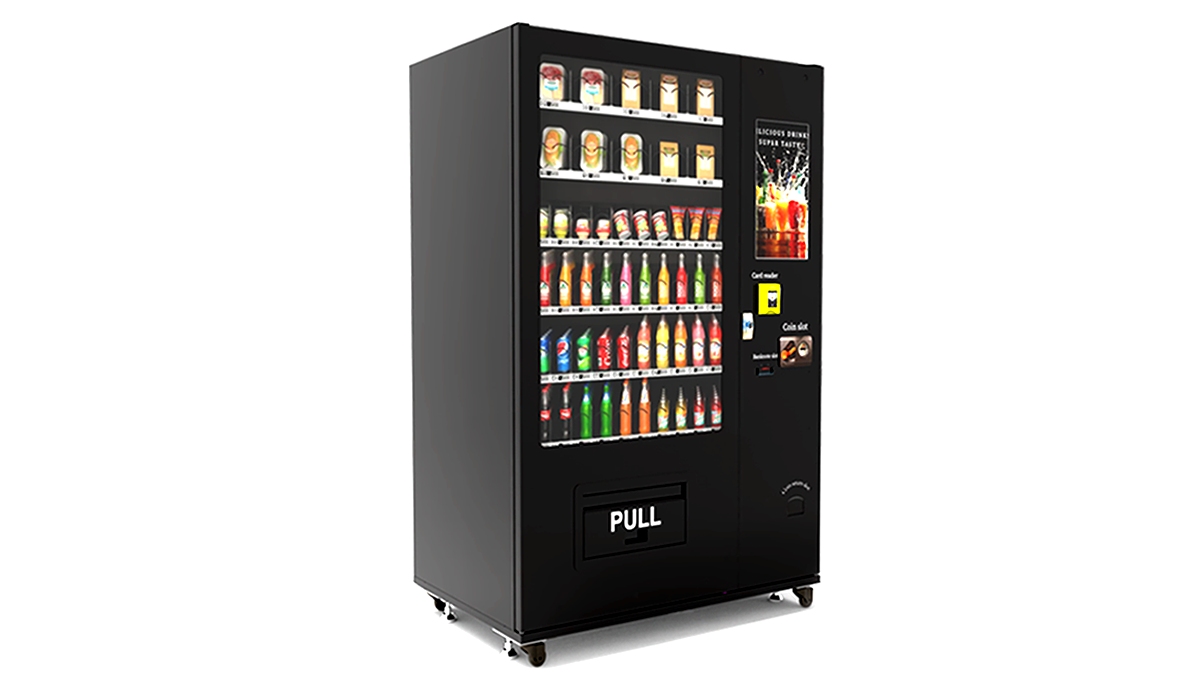
When you evaluate vending machines for sale OKC, pay attention to the following features. These will determine how much time and money you spend on operations.
- Payment system: Modern machines should accept credit cards, mobile payments, and cash. Card-only machines are becoming more common, but cash still accounts for about 20 percent of vending transactions according to NAMA. Make sure the payment terminal is EMV compliant and supports contactless payments.
- Telemetry and remote monitoring: Machines with built-in telemetry send you sales data, inventory levels, and error alerts. This saves you from driving to a machine that is empty or broken. It is worth paying extra for this feature.
- Energy efficiency: Older machines can consume 10 to 15 kWh per day. Newer ENERGY STAR certified machines use about half that. Over a year, the savings can be $200 to $400 per machine.
- Vend mechanism reliability: Spiral or helix mechanisms are standard and reliable. Avoid machines with complex robotic arms unless you are prepared for higher repair costs.
- Security: Look for machines with electronic locking systems and tamper-resistant designs. Theft and vandalism are real concerns in certain locations.
Where to Place Your Vending Machine for Maximum Returns
Location is everything. I have seen a $5,000 machine generate $1,500 per month in a busy hospital break room, and the same machine struggle to do $100 in a quiet church lobby. When you are shopping for vending machines for sale OKC, think about placement before you even buy the machine. Here are the location types I have found most profitable based on my own experience.
Industrial and Manufacturing Facilities
Factories and warehouses are among the best locations. Workers are on-site for long shifts, often with limited break time. They need quick access to snacks and drinks. These locations typically have high foot traffic and low turnover of employees, which means consistent sales. The downside is that you may need to negotiate with facility managers, and some locations require a commission of 15 to 25 percent.
Office Buildings
Office buildings can be good, but the quality varies. A building with 200 employees who work regular hours will generate steady sales. However, many offices have gone hybrid, so foot traffic on Mondays and Fridays may be lower. If you place a machine in an office, monitor the sales data weekly and adjust your stocking schedule accordingly. Coffee machines tend to perform better in offices than snack machines because employees value fresh coffee more than packaged snacks.
Healthcare Facilities
Hospitals, clinics, and nursing homes are excellent locations because they operate 24 hours a day and have a captive audience. Staff and visitors need food and drinks at all hours. The challenge is that healthcare facilities often have strict requirements for machine cleanliness and product freshness. You may need to stock healthier options like granola bars, nuts, and bottled water. If you can meet those standards, the volume can be very high.
Educational Institutions
Colleges, universities, and trade schools are high-traffic environments. Students are always looking for quick snacks between classes. However, many schools already have contracts with large vending operators. Breaking into these locations as a small operator can be difficult. If you do get a spot, expect lower margins because schools often demand higher commissions or require a portion of profits to go to student programs.
Recreational and Hospitality Venues
Gyms, bowling alleys, hotels, and laundromats are solid secondary locations. They do not have the same volume as industrial sites, but they often require less commission. A machine in a laundromat can generate consistent sales because customers are waiting for their laundry. Gyms are good for water and sports drinks, but snack sales may be lower since people are health-conscious.
How to Evaluate a Potential Location Before Committing
Never place a machine without doing some basic due diligence. I have made the mistake of trusting a location owner who promised high traffic, only to find out the building had only 30 employees. Here is a simple checklist I use before signing any agreement.
- Count the number of potential customers: Visit the location at different times of day and count how many people pass by. For an office, ask for the total employee count. For a warehouse, ask about shift sizes.
- Check existing vending options: If there is already a machine from another operator, see how well it is stocked. If it is empty, that may indicate the location is not profitable for the current operator. If it is full, you may have a harder time competing.
- Ask about hours of operation: A location that is open 24 hours gives you more selling time. A location that closes at 5 PM limits your potential.
- Understand the commission structure: Some locations ask for a flat monthly fee instead of a percentage. Flat fees can be risky if sales are low. Percentage commissions are fairer for both parties.
- Get a written agreement: Even a simple one-page contract protects you if the location changes management or decides to kick you out.
Cost Breakdown: What You Really Need to Budget
When you search for vending machines for sale OKC, prices can range from $1,500 for a used basic machine to $8,000 or more for a new smart machine with telemetry and a card reader. Here is a realistic budget breakdown based on what I have seen in the market.
| Item | Low End | Mid Range | High End |
|---|---|---|---|
| Used basic snack machine | $1,500 | $2,500 | $4,000 |
| New combo snack and drink | $4,000 | $5,500 | $7,000 |
| New cold drink machine | $3,500 | $5,000 | $6,500 |
| Bean-to-cup coffee machine | $5,000 | $7,000 | $10,000 |
| Fresh food refrigerated machine | $6,000 | $8,000 | $12,000 |
| Payment terminal and installation | $300 | $500 | $800 |
| Initial inventory (first stock) | $500 | $800 | $1,200 |
Keep in mind that these are estimates and prices vary by condition, brand, and seller. If you are buying used, factor in the cost of any repairs or upgrades. A machine that looks cheap may need a new compressor or payment system, which can cost $500 to $1,000.
How to Choose a Vending Machine Supplier or Manufacturer
Not all suppliers are reliable. When you look for vending machines for sale OKC, you will encounter local resellers, national distributors, and direct manufacturers. Each has pros and cons. Local resellers may offer faster delivery and on-site setup, but their inventory may be limited. National distributors have more options but may not provide local support.
One manufacturer I have worked with consistently over the years is Zhongda Smart. They produce a range of modern machines with telemetry, card readers, and energy-efficient cooling. I recommend them because their build quality is solid for the price point, and they offer customization options that many US-based manufacturers do not. If you are buying multiple machines, it is worth reaching out to them directly to compare pricing and lead times. That said, always do your own due diligence. Ask for references, request photos of actual machines delivered to other customers, and verify warranty terms before sending money.
Here are a few criteria I use to evaluate any supplier:
- Warranty length: At least one year on parts and labor. Two years is better.
- Availability of spare parts: If the supplier does not stock common parts like motors, control boards, or payment terminals, you will face long downtimes.
- Customer support responsiveness: Call them before buying and see how quickly they answer. If it takes days, imagine what happens when your machine is down.
- Shipping and delivery terms: Some suppliers quote low machine prices but charge high shipping. Get a total delivered price before committing.
Common Mistakes Beginners Make and How to Avoid Them
I have seen dozens of new operators make the same errors. Here are the ones that cost the most money.
Buying the Cheapest Machine Available
A $1,000 used machine from a garage sale may seem like a bargain, but it often comes with hidden problems. Old machines may have outdated payment systems that do not accept modern cards, inefficient cooling that drives up electricity bills, and worn-out vend mechanisms that jam frequently. I have seen beginners spend more on repairs in the first year than they would have spent on a decent mid-range machine. Buy quality used equipment from a reputable dealer, or invest in a new machine with a warranty.
Overpaying for Location Commissions
Some location owners will ask for 30 percent or more of your gross sales. Unless the location is exceptionally high traffic, that is too much. Standard commissions range from 10 to 20 percent. If a location demands more, calculate whether the volume justifies it. In most cases, it does not. You are better off walking away and finding a better deal.
Ignoring Sales Data
Once your machine is running, the data tells you everything. If a product has not sold in two weeks, replace it. If a location is consistently underperforming, move the machine. I have relocated machines that were doing $200 per month to a new spot and seen them jump to $800. Do not get attached to a location just because you signed a contract. Most agreements allow you to remove the machine with 30 days notice.
Neglecting Maintenance
A machine that breaks down and stays down for a week loses sales and damages your reputation with the location owner. Set aside a maintenance fund and respond to issues within 24 hours. If you cannot fix it yourself, have a local technician on call. The cost of a service call is usually $100 to $200, which is far less than the lost revenue from a machine that is down for a week.
How to Calculate Your Return on Investment
ROI in vending is straightforward but requires honest numbers. Here is a simple formula I use.
Total investment: machine cost plus initial inventory plus payment terminal plus any delivery or installation fees. Let us say that is $5,000.
Monthly net profit: gross sales minus product cost minus commission minus fees. If the machine does $600 in sales, product cost is $270, commission is $90, and fees are $20, your net is $220.
Months to break even: $5,000 divided by $220 equals about 23 months. That is a realistic timeline for a single machine in an average location. If you find a high-traffic spot, you could break even in 12 months. If the location underperforms, it could take three years.
This is why route density matters. When you have multiple machines, you spread your fixed costs like vehicle expenses and labor across more machines, which improves your overall ROI. Do not quit your day job after buying one machine. Build slowly and reinvest profits.
Legal and Regulatory Considerations in Oklahoma City
Before you finalize any purchase of vending machines for sale OKC, you need to understand the local requirements. Oklahoma City requires a business license for any vending operation. You also need to register for sales tax collection with the Oklahoma Tax Commission. The current sales tax rate in Oklahoma City is 8.625 percent, which you must collect and remit monthly or quarterly depending on your volume.
If you sell food items, you may need a food permit from the Oklahoma State Department of Health. This applies to fresh food, sandwiches, and perishable items. Prepackaged snacks and drinks generally do not require a permit, but check with local authorities to be sure. According to the Oklahoma Department of Commerce, vending machine operators are also subject to the state's food safety regulations if they handle any unpackaged items.
Liability insurance is not legally required but is strongly recommended. A general liability policy covering your machines and operations costs around $300 to $600 per year for a small operator. If a machine malfunctions and causes injury or property damage, you want to be covered.
Frequently Asked Questions
Are vending machines profitable?
Yes, but it depends on location, product mix, and operating costs. A well-placed machine can generate $200 to $500 in monthly net profit. Most operators see a return on investment within 18 to 24 months.
How much does a vending machine cost?
Used machines range from $1,500 to $4,000. New machines range from $4,000 to $10,000 depending on features and type. Coffee and fresh food machines are at the higher end.
How long does it take to break even?
For a single machine in an average location, expect 18 to 24 months. High-traffic locations can shorten that to 12 months. Poor locations may never break even.
Should I buy or lease a vending machine?
Buying is better for long-term operators. Leasing often comes with high monthly payments and restrictions. If you are unsure, start with a used machine that you own outright.
Where should I place my first machine?
Industrial facilities, hospitals, and busy office buildings are the safest bets. Avoid low-traffic locations like small waiting rooms or churches.
What permits do I need in Oklahoma City?
You need a business license and a sales tax permit. If you sell perishable food, you may need a health department permit. Check with the Oklahoma Tax Commission and Oklahoma City licensing office.
How do I choose a vending machine supplier?
Look for suppliers with good warranty terms, available spare parts, and responsive customer support. Compare multiple quotes and ask for references.
What happens if my machine breaks down?
Have a local technician or a repair service on call. Most common issues like jammed vend mechanisms or payment terminal errors can be fixed quickly if you have the right parts.
How often do I need to restock?
It depends on sales volume. A busy machine may need restocking every week. A slow machine may only need it every two to three weeks. Use telemetry data to optimize your schedule.
Can I run a vending business part-time?
Yes. Many operators start part-time with a few machines. As your route grows, you may need to dedicate more time to restocking, maintenance, and location management.
Final Thoughts on Starting Your Vending Journey
Buying vending machines for sale OKC is not a get-rich-quick move, but it is a legitimate way to build a small business with relatively low overhead. The key is to start small, choose your locations carefully, and reinvest your profits into better equipment and more machines. I have seen operators go from a single machine to a full route of 20 machines over two or three years by being disciplined and learning from their mistakes.
Do not rush into a purchase without doing your homework. Talk to other operators, visit locations, and run the numbers honestly. If you treat vending like a business, it will pay you back. If you treat it like a hobby, it will cost you. The choice is yours.
This article was updated in May 2025. All financial figures and regulatory references are based on publicly available data from IBISWorld, the National Automatic Merchandising Association (NAMA), and the Oklahoma Tax Commission. Individual results vary based on location, operational efficiency, and market conditions. This content is for informational purposes only and does not constitute financial or legal advice.