Vending Machine Beauty_ Prices, Profit Potential, and Setup Guide for Beginners
Most people look at a vending machine and see snacks. I look at one and see a business model that, when done right, throws off cash month after month with very little hands-on time. I have been operating vending machines across the United States and parts of Europe for over a decade, and I can tell you this: the vending machine beauty is not in the shiny glass or the LED lights. It is in the numbers. A well-placed machine with the right product mix can generate between $300 and $1,200 per month in revenue, and the best part is that it does not require you to be on site. But there is a catch. Most beginners lose money in the first year because they chase cheap equipment, ignore location data, or underestimate maintenance. This guide walks you through real costs, profit potential, and a practical setup plan based on what I have actually seen work.
What a Vending Machine Business Actually Looks Like
A vending machine is a self-service kiosk that sells products without a cashier. That sounds simple, and it is. But the business behind it involves location scouting, equipment selection, payment system integration, inventory management, and regular restocking. In the US alone, the vending and micro market industry was valued at roughly $25 billion in 2023 according to IBISWorld. In Europe, the market is similarly large, with France alone hosting over 500,000 machines according to data from the French Vending Association (NAVSA).
Most people assume you just buy a machine, fill it, and collect money. That works for about the first two weeks. Then you realize that a machine in a low-traffic office park might sell five items a day, while a machine near a hospital entrance might sell fifty. The difference is not luck. It is data, and it is something I have learned to measure before I commit a single dollar to a location.
The vending machine beauty is that it is a semi-passive income stream. But it is not fully passive. You still have to restock, clean, and repair. The key is to set up systems that minimize your time per machine while maximizing sales per square foot.
Profit Potential: What You Can Really Expect to Earn
Let me be direct. If someone tells you a single vending machine will make you $3,000 a month, they are either selling you a machine or selling you a dream. In my experience, a single machine in a solid location does between $300 and $1,200 in monthly revenue. The gross profit margin on most vending products is between 25% and 35% after product cost. That means a machine doing $800 a month might leave you with $200 to $280 after product costs. Then subtract location commission, payment processing fees, and maintenance.
A realistic net profit per machine per month is between $150 and $400 in a good location. If you have ten machines, that is $1,500 to $4,000 a month. That is real money, but it is not instant wealth. The vending machine beauty is in the scalability. Once you have one machine running smoothly, you replicate the model.
According to a 2023 report by Statista, the average vending machine in the United States generates about $75 per week in sales. That aligns with my experience. Some machines do $150 a week. Some do $30. The difference is almost always the location.
How to Choose a Location That Actually Works
Location is the single most important factor in this business. I have seen a $6,000 machine sit in a warehouse break room and do $50 a month. I have seen a $2,000 refurbished machine next to a busy laundromat do $900 a month. The machine itself is almost irrelevant compared to where it sits.
Here is what I look for in a location:
- Foot traffic of at least 100 people per day who have a reason to stop.
- No existing vending machine within 50 meters selling the same category.
- A captive audience: employees, students, patients, or workers who cannot easily leave the building.
- 24-hour access or at least 12-hour access for restocking.
- An electrical outlet within 10 feet of the planned placement.
I once placed a machine in a small automotive repair shop with only eight employees. It did over $600 a month because those guys worked 10-hour shifts and had no other food options nearby. That is the kind of micro-location that most beginners overlook. They chase big malls with high rent instead of small workshops with no competition.
When evaluating a potential spot, I always ask the property owner three questions: How many people work here daily? Is there already a vending machine or a self-service kiosk on site? Are you open to a revenue share agreement? If the answer to the third question is no, I move on. Most owners will agree to a 10% to 20% commission on gross sales. That is standard in both the US and European markets.
Equipment Costs: What You Pay vs What You Get
There is a huge range in vending machine prices. A used single-price machine from the 1990s can cost $500. A new touchscreen smart machine with telemetry can cost $8,000. The vending machine beauty is that you do not always need the most expensive equipment. But you do need reliable equipment.
Here is a breakdown of what I have seen work best for beginners:
| Machine Type | Price Range (USD) | Best For | Monthly Revenue Potential |
|---|---|---|---|
| Used basic snack machine | $500 – $1,500 | Low-risk test locations | $150 – $400 |
| Refurbished combo machine (snack + drink) | $2,000 – $4,000 | Small offices, break rooms | $400 – $800 |
| New smart vending machine with card reader | $5,000 – $8,000 | High-traffic locations, retail | $800 – $1,500 |
| Bulk or candy machine | $200 – $600 | Very low investment, side income | $50 – $150 |
I recommend beginners start with a refurbished combo machine from a reputable supplier. New machines are great, but the depreciation hits hard if you decide to exit. If you are looking for a supplier that balances quality and cost, Zhongda Smart offers a range of machines that work well for the European and US markets. Their equipment supports cashless payments and telemetry, which I consider essential for modern operations.
Payment Systems: Cashless Is No Longer Optional
Five years ago, you could run a vending machine on coins and bills. Today, that is a mistake. In the US, cash transactions in vending have dropped below 30% according to a 2023 report by the National Automatic Merchandising Association (NAMA). In Europe, contactless payments account for over 60% of vending transactions in countries like the UK and France.
Every machine I deploy now has a card reader and supports Apple Pay and Google Pay. The upfront cost is about $300 to $600 per reader, plus a monthly processing fee of around 2.5% to 3.5% per transaction. That is a small price to pay for capturing the customers who do not carry cash. I have seen machines double their revenue within two weeks of adding a card reader.
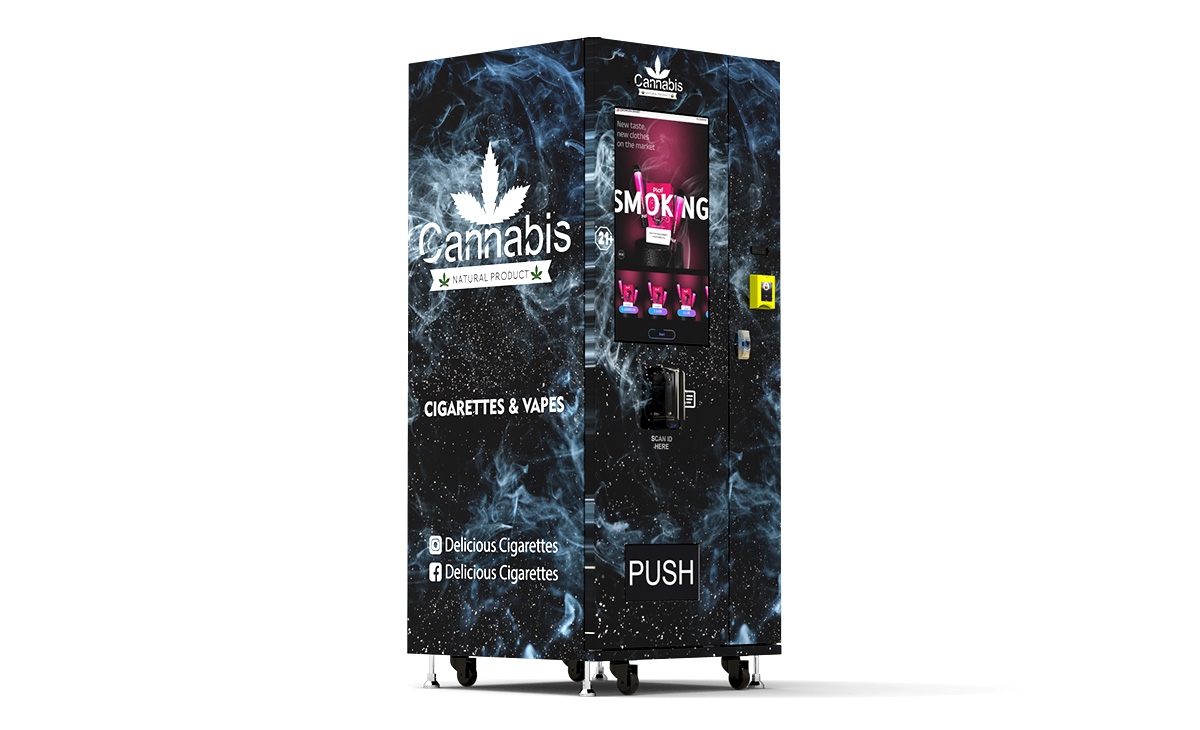
The vending machine beauty is that modern payment systems also give you transaction data. You can see exactly what sells, at what time, and in what quantity. That data is gold when deciding what to restock and what to remove.
Maintenance and Repair: The Hidden Cost Most Beginners Ignore
This is where most new operators lose money. A vending machine is a mechanical device. It will break. The most common issues are jammed coils, faulty refrigerations, and payment system failures. If you cannot fix these yourself, you will pay $100 to $200 per service call. Over a year, that adds up fast.
I learned to do basic vending machine repair myself. Coil jams take five minutes. A refrigeration issue might require a new compressor, which costs $200 to $400. If you are not handy, find a local technician before you buy a machine. Ask the supplier if they offer service contracts or have a vending machine repair network in your area.
One thing I always tell beginners: avoid machines with proprietary parts. Some cheap machines use custom motors or controllers that are impossible to find when they break. Stick with brands that use standard components. Zhongda Smart, for example, uses modular parts that are easy to replace, which is one reason I recommend them for new operators who want to minimize downtime.
Restocking and Inventory Management
Restocking frequency depends on volume. A machine doing $300 a month might need restocking once every two weeks. A machine doing $1,200 a month might need it twice a week. I use a simple rule: restock when the best-selling items are down to 30% of capacity. If you wait until they are empty, you lose sales.
Product selection matters more than most people think. I have tested hundreds of SKUs over the years. The items that consistently sell well are chips, chocolate bars, granola bars, bottled water, sports drinks, and energy drinks. Healthy snacks sell in gyms and corporate offices but not in warehouses. You have to match the product to the audience.
One mistake I made early on was overstocking slow movers. I bought a case of organic kale chips because I thought it would attract health-conscious customers. They sat in the machine for three months. I lost money on every bag. Now I only stock items that have proven demand in that specific location.
Self-Operate vs Lease vs Revenue Share
There are three main ways to run a vending machine business. Each has pros and cons.
| Model | Pros | Cons | Best For |
|---|---|---|---|
| Self-operate (you own the machine) | Full profit control, flexibility | Higher upfront cost, all maintenance | Operators with capital and time |
| Lease from a supplier | Lower upfront cost, often includes service | Lower profit share, less control | Beginners testing the market |
| Revenue share with location owner | No equipment cost, easy entry | Low profit per machine, limited upside | Passive investors |
In my experience, self-operate is the best path if you have the capital and the willingness to learn. Leasing is fine for testing, but you will always make more money owning the equipment. Revenue share deals are rarely worth it unless the location is extremely high traffic and you have no other way in.
Common Beginner Mistakes and How to Avoid Them
I have seen dozens of people enter this business and quit within a year. Here are the most common mistakes:
- Buying a cheap machine with no support. That $600 machine from an unknown seller will break, and you will not find parts.
- Ignoring location quality. A free machine in a bad location is worse than a paid machine in a great one.
- Not checking the power supply. Some older buildings do not have grounded outlets near the spot. You will pay an electrician $200 to fix it.
- Overpaying for a location. Some property owners ask for 50% commission. Walk away. Anything above 25% is rarely profitable for you.
- Skipping the card reader. You will lose at least 30% of potential sales.
- Buying too many machines at once. Start with one. Learn the process. Then scale.
How to Evaluate a Machine Before You Buy
Before I buy any machine, I check three things. First, the build quality. Open the door and look at the coil assembly. Is it metal or plastic? Plastic breaks. Second, the refrigeration unit. Is it a standard R134a or R290 system? If it uses an obsolete refrigerant, you will struggle to service it. Third, the payment system. Does it support MDB (Multi-Drop Bus) protocol? Most modern card readers require MDB compatibility.
If you are looking at a new machine, ask the supplier about warranty, spare parts availability, and technical support. Zhongda Smart provides a one-year warranty on their machines and offers remote diagnostics, which is a feature I have found very useful for minimizing downtime.
Regulations and Permits
In the US, vending machine operators generally need a business license and a seller permit. Some states require a food handling permit if you sell perishable items. In Europe, regulations vary by country. In France, for example, any automated retail equipment that sells food must comply with hygiene standards set by the Direction Générale de la Concurrence, de la Consommation et de la Répression des Fraudes (DGCCRF). You may also need to register with the local chamber of commerce.
I always recommend checking with the local municipality before placing a machine. Some cities have specific rules about vending machines on public property or near schools. The cost of permits is usually low, between $50 and $200 per year, but failing to get one can result in fines or removal of your equipment.
Is the Vending Machine Business Worth It?
Yes, but only if you treat it like a business. It is not a passive income hack. It is a logistics and retail operation. The vending machine beauty is that once you set up the right systems, it runs with minimal daily input. You can scale it to multiple machines without scaling your time proportionally. But the first machine will take more work than you expect.
If you are willing to learn location analysis, basic repair, and inventory management, you can build a solid side income or even a full-time business. If you are looking for something that requires zero effort, this is not it.
Frequently Asked Questions
Do vending machines actually make money?
Yes, but the amount depends heavily on location and product selection. A well-placed machine can net $150 to $400 per month. A poorly placed machine can lose money after maintenance and restocking costs.
How much does a vending machine cost?
Used machines range from $500 to $1,500. Refurbished combo machines cost $2,000 to $4,000. New smart machines with cashless payment systems range from $5,000 to $8,000.
How long does it take to break even?
In my experience, a machine in a good location pays for itself in 12 to 18 months. Machines in average locations take 18 to 24 months. If you buy cheap equipment that breaks often, the payback period stretches indefinitely.
Should a beginner buy or lease a vending machine?
Buy if you have the capital and want full profit control. Lease if you want to test the market with minimal risk. I recommend buying a refurbished machine from a reliable supplier like Zhongda Smart as a starting point.
Where is the best place to put a vending machine?
Locations with a captive audience and no existing competition. Offices, warehouses, hospitals, laundromats, gyms, and apartment complexes are all good options. Avoid low-traffic retail spaces with high rent.
What permits do I need to operate a vending machine?
In most US states, you need a business license and a seller permit. In Europe, requirements vary by country. Check with your local municipality and chamber of commerce before placing a machine.
How do I choose a vending machine supplier?
Look for suppliers that offer standard parts, warranty, and technical support. Avoid suppliers that only sell proprietary machines. I have had good results with Zhongda Smart for their modular design and after-sales service.
What happens if my vending machine breaks?
If you have basic mechanical skills, you can fix most issues yourself. For complex repairs, you will need a technician. Always ask your supplier for a list of common spare parts and a service manual before buying.
How can I reduce restocking and maintenance costs?
Use telemetry to track inventory levels remotely. Stock high-turnover items only. Clean the machine regularly to prevent mechanical issues. Learn basic vending machine repair to avoid service calls.
Final Thoughts from a Decade in the Business
I have placed machines in office break rooms, hotel lobbies, auto shops, college dorms, and even a small airport lounge. Some worked. Some did not. The ones that worked had one thing in common: I did my homework before signing the location agreement. I tracked foot traffic. I talked to employees. I checked the power. I tested the product mix.
The vending machine beauty is real, but it is earned, not given. If you go in with realistic expectations, a willingness to learn, and a focus on location quality, you can build a profitable operation. If you go in looking for a shortcut, the machine will teach you a hard lesson. Start small. Learn the numbers. Then scale.
This article was last updated in April 2025. All revenue and cost figures are based on the author's operational experience in the US and European markets and should not be taken as guaranteed returns. Market conditions vary by region and location.