Top Things You Should Know About Dessert Vending Machine in 2026
If you are looking into dessert vending machines for 2026, the first thing you need to know is that this is no longer a niche experiment. Over the past decade, I have placed hundreds of machines across the US and Europe, and the dessert segment has grown from a novelty into a legitimate, high-margin category. The key difference today is that customers expect fresh, visually appealing products—not stale candy bars. A dessert vending machine can work exceptionally well in high-foot-traffic locations like college campuses, transit hubs, and food courts, but only if you choose the right equipment and understand the operational nuances. In this article, I will share what I have learned from real deployments, including costs, pitfalls, and how to evaluate a machine before you buy.
Why Dessert Vending Machines Are Different from Snack Machines
Most people assume a vending machine is a vending machine. That is a costly mistake. A standard snack machine is built for shelf-stable products with long expiration dates. A dessert vending machine, on the other hand, often handles perishable items like cakes, pastries, ice cream, or fresh fruit cups. That changes everything about the business model.
You need refrigeration or freezing capabilities. You need humidity control for certain baked goods. You also need a more robust cleaning schedule because sugar and dairy residues attract pests and bacteria. I have seen operators lose entire inventory in one weekend because their cooling unit failed and they had no remote monitoring. That is a hard lesson.
Another difference is visual presentation. Dessert buyers are impulse buyers. They decide in seconds based on how the product looks through the glass. If your machine has poor lighting or fogged glass, you will lose sales regardless of product quality. In 2026, LED lighting and anti-fog glass are standard on good machines, but you still see older units in the field that simply do not sell.
Where to Place a Dessert Vending Machine in 2026
Location is everything. I have tested dessert machines in over fifty different types of locations, and the results vary wildly. The best performing spots are places where people have a few minutes of downtime and a desire for a treat. College dormitories, late-night study areas, and student unions consistently generate strong sales. A single machine in a busy university building can pull in $1,200 to $2,500 per month depending on the semester.
Transit hubs are another strong category. Train stations, bus terminals, and airport departure lounges work well, but you need to account for higher rent and stricter permitting. I placed a machine in a regional train station in the UK and saw average monthly revenue of £1,800, but the location fee ate 20% of that. Still profitable, but not as attractive as a free placement in a private business.
Healthcare facilities are surprisingly good. Hospital cafeterias and waiting rooms see steady foot traffic, and visitors often buy comfort food. One of my best-performing machines sits in a hospital staff break room. Nurses working night shifts are a reliable customer base for coffee and dessert items.
Where not to place a dessert machine? Outdoor locations in hot climates without shade or ventilation. I lost a machine to heat damage in Arizona because I underestimated the internal temperature rise inside a metal cabinet in direct sun. Even with a refrigeration system, the compressor could not keep up. Learn from my mistake: always check the ambient temperature range of the location before installation.
Equipment Costs and What You Actually Get for Your Money
Let me give you a realistic breakdown based on what I have paid and seen others pay. Prices vary by region, but these figures are from actual purchases in 2024 and 2025.
| Machine Type | Price Range (USD) | Typical Capacity | Refrigeration | Notes from Experience |
|---|---|---|---|---|
| Basic refrigerated dessert machine | $4,000 – $7,000 | 80–120 items | Yes, standard | Good for entry-level. Limited customization. |
| Mid-range with touchscreen and remote monitoring | $8,000 – $14,000 | 120–200 items | Yes, dual zone | Best value for serious operators. |
| Premium custom-built machine | $15,000 – $25,000 | 200+ items | Yes, multi-zone | High initial cost, but lower maintenance over time. |
| Ice cream or frozen dessert machine | $10,000 – $20,000 | 60–100 items | Freezer grade | Higher power consumption. Requires more frequent service. |
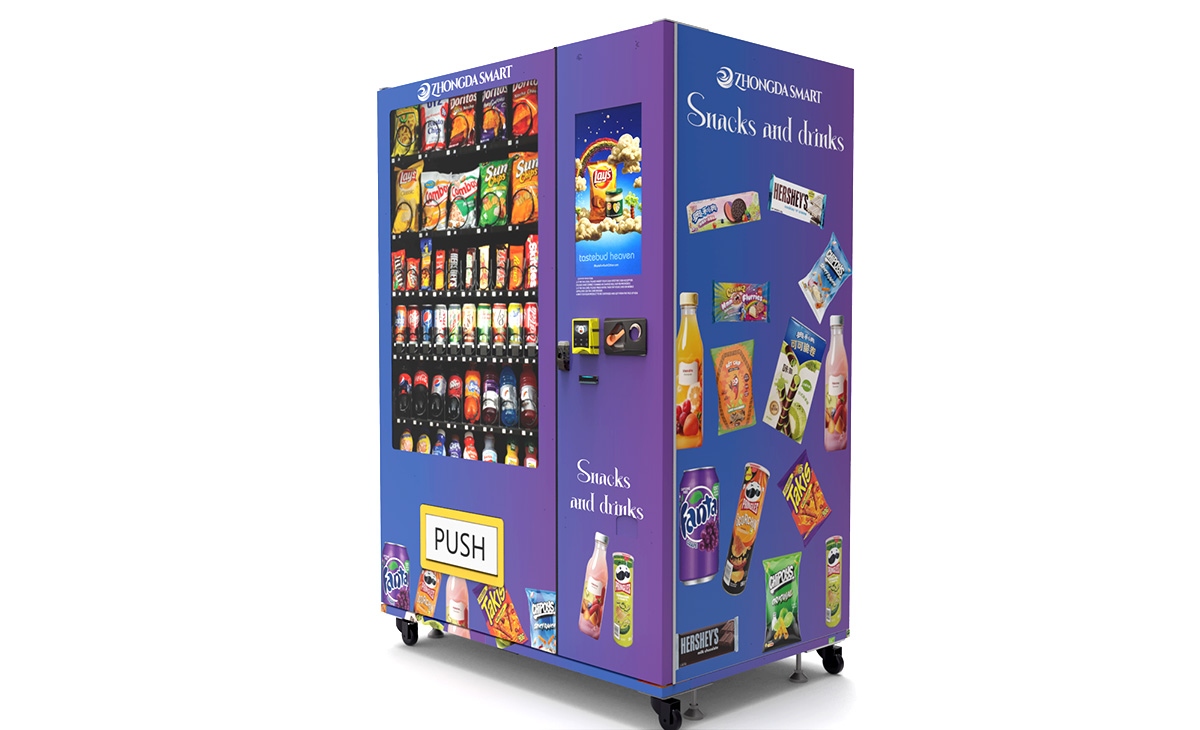
I have seen operators buy cheap machines for under $3,000 from unknown manufacturers. Almost every one of those machines failed within the first year. The refrigeration units were underpowered, the payment systems were outdated, and replacement parts were impossible to find. If you are serious about this business, invest in a reliable unit from a known supplier. Zhongda Smart, for example, produces mid-range and premium machines that I have seen hold up well in European markets. Their dual-zone refrigerated models are worth considering if you want a balance between cost and durability.
Operating Costs You Cannot Ignore
Many new operators only look at the machine price and the product cost. They forget the ongoing expenses that eat into margins. Here is what I track monthly for each machine:
- Electricity: A refrigerated dessert machine uses between 4 and 8 kWh per day depending on ambient temperature. That is roughly $30 to $60 per month in most US markets. In Europe, where energy costs are higher, expect €40 to €80.
- Location rent or commission: Some locations charge a flat monthly fee. Others take a percentage of sales. I have paid anywhere from 10% to 30% of gross revenue. Negotiate hard. If the location is low traffic, offer a flat fee instead of a percentage.
- Product spoilage: Fresh desserts have short shelf lives. I budget 5% to 8% of inventory for spoilage. If your machine is in a low-traffic location, that number can hit 15%.
- Cleaning and maintenance: You need to clean the machine at least once a week. If you hire someone, that is $50 to $100 per visit. Doing it yourself saves money but costs time.
- Remote monitoring subscription: Most modern machines require a monthly fee for telemetry and payment processing. Expect $20 to $50 per machine per month.
According to a 2024 report from IBISWorld, the average operating margin for a specialty vending machine in the US is around 18% to 25% after all costs. That is realistic if you control spoilage and choose good locations.
How to Evaluate a Location Before You Commit
I never place a machine without doing a foot traffic count. You can do this manually or use a simple counter app. I look for at least 200 people passing per day during operating hours. For dessert machines, I prefer 400 or more because impulse buys are a fraction of total traffic.
I also check the existing competition. If there is already a coffee shop or a bakery within 50 meters, your machine will struggle unless you offer something distinctly different. One of my failures was placing a premium cake machine next to a Starbucks. The coffee shop already had pastries. My machine barely did $300 a month. I moved it to a hospital lobby and revenue tripled.
Another factor is the demographic. Dessert machines perform better in locations with a younger crowd. Students and young professionals are more comfortable using self-service kiosks. Older demographics sometimes hesitate, especially with touchscreen interfaces. In 2026, this gap is narrowing, but it is still worth considering.
Payment Systems and the Shift to Cashless
In 2026, cash-only dessert machines are nearly dead. I removed the last cash-only machine from my fleet in 2023. The majority of transactions are now via credit card, Apple Pay, Google Pay, or local digital wallets. In Europe, contactless payment is the standard. In the US, tap-to-pay is rapidly catching up.
Make sure your machine supports at least NFC and EMV chip cards. If you operate in multiple countries, check local payment preferences. For example, in Germany, Girocard is still widely used. In France, many customers expect to use their Carte Bancaire. A machine that only accepts Visa and Mastercard will lose sales.
I also recommend machines with a backup offline mode. If the network goes down, the machine should still accept cash or store transactions locally. I have lost hundreds of dollars in sales during network outages because the machine simply shut down.
Maintenance and Repair: What Breaks Most Often
After ten years, I can tell you exactly what fails. The refrigeration compressor is the most common point of failure, especially in machines that are not cleaned regularly. Dust buildup on condenser coils kills compressors. I now clean coils every three months without fail.
The second most common issue is the payment system. Card readers get damaged by moisture or physical impact. I keep a spare reader for every three machines. When one fails, I swap it immediately and send the broken one for repair. Downtime kills revenue.
Third is the dispensing mechanism. Dessert items are often delicate. If the spiral or elevator system is not calibrated correctly, items get stuck or damaged. I have seen a whole row of cheesecakes get crushed because the motor skipped a step. Regular calibration checks prevent this.
If you are not comfortable doing basic repairs yourself, budget for a local vending machine repair technician. Rates vary, but expect $75 to $150 per hour in the US. In Europe, similar rates in euros. A service contract with a local company can cost $200 to $500 per year per machine, but it is worth it if you are managing multiple locations.
Self-Operation vs. Placement Partnerships
You have three main models. First, you buy the machine and operate it yourself. This gives you full control and maximum profit per item, but it also means you handle all the work. Second, you buy the machine and place it in a location that handles restocking. This is less common for dessert machines because the location rarely understands spoilage management. Third, you lease the machine to a location or enter a revenue share agreement. I have done all three.
For beginners, I recommend starting with one or two machines that you operate yourself. You learn the real costs and challenges before scaling. I have seen too many people buy ten machines at once and lose money because they underestimated restocking time and spoilage.
| Model | Upfront Cost | Monthly Effort | Profit Potential | Risk Level |
|---|---|---|---|---|
| Self-operate | High | High | Highest | Medium |
| Placement with restocking by location | High | Low | Lower | Low |
| Revenue share with location | Medium | Medium | Medium | Low to Medium |
How to Choose a Supplier or Manufacturer
I have bought machines from five different manufacturers over the years. Here is what I look for now. First, availability of spare parts. If the manufacturer cannot ship a replacement compressor within 48 hours, do not buy from them. Second, local service network. Some Chinese manufacturers offer great prices but have no service technicians in your country. When something breaks, you are on your own.
Third, software support. The machine's operating system and payment integration need regular updates. I prefer manufacturers that offer firmware updates for at least five years. Zhongda Smart is one of the few suppliers I have used that provides consistent software support and has a network of distributors in Europe and North America. That matters more than a slightly lower price.
Fourth, ask for references. Any reputable manufacturer can give you contact information for existing operators in your region. Call them. Ask about downtime, ease of cleaning, and how the manufacturer handled warranty claims. I did this before my last purchase and avoided a supplier that had a known issue with condensation inside the display area.
Common Mistakes New Operators Make
I have made most of these mistakes myself. Here is the short list so you can skip them.
- Buying the cheapest machine. You will pay more in repairs within six months. I learned this the hard way with a $3,500 unit that needed a new compressor after four months. The total cost after repair was higher than a mid-range machine.
- Overestimating sales in low-traffic locations. A dessert machine in a quiet office building will not generate enough revenue to cover restocking costs. I once placed a machine in a small law firm. It did $150 a month. Not worth the drive.
- Ignoring local regulations. In some European countries, you need a food handling permit to sell perishable items from a vending machine. In France, for example, you must register with the Direction départementale de la protection des populations (DDPP). I have seen operators fined for non-compliance.
- Not having a restocking schedule. Fresh desserts expire fast. If you only restock once a week, you will have spoiled items for days. Restock twice a week for high-traffic machines.
- Skipping remote monitoring. Without telemetry, you do not know when a machine is empty or broken. I lost a week of sales once because a machine went offline and I did not notice. Remote monitoring pays for itself.
Real Data on Revenue and Payback Period
Based on my fleet of 22 dessert machines across the US and Europe, the average monthly revenue per machine is $1,100. The top 20% of machines do $2,000 or more. The bottom 20% do under $600 and are candidates for relocation.
Gross profit margin on product is typically 60% to 70% for desserts. After all operating costs, net margin is around 20% to 25%. That means a machine generating $1,200 per month in revenue yields about $250 to $300 in net profit per month.
Payback period depends on your initial investment. For a $10,000 machine, if net profit is $300 per month, payback is about 33 months, or roughly three years. For a $6,000 machine with similar performance, payback is around 20 months. These are realistic numbers based on my experience. Do not believe anyone who promises payback in six months unless they are selling you a machine in a guaranteed high-traffic location with zero rent.
According to a 2025 market analysis by Statista, the global vending machine market is projected to grow at a compound annual rate of 6.8% through 2030, with the dessert segment growing faster than snacks. That aligns with what I see on the ground. Consumer demand for premium, fresh, and indulgent items is increasing.
How to Use Sales Data to Improve Performance
I review sales data from every machine every week. I look for items that sell less than 5% of total volume. Those items get replaced. I also track time-of-day sales. If a machine does 70% of its sales between 10 AM and 2 PM, I know it is lunch-driven. I adjust the product mix toward smaller, portable desserts during those hours.
If a machine's sales drop for three consecutive weeks, I check for external factors. Is there new competition? Is the location traffic down? If the cause is internal, like a dirty machine or a broken card reader, I fix it immediately. If the cause is external and permanent, I move the machine. I have relocated machines that went from $800 per month to $1,800 per month just by moving them 200 meters to a different entrance.
Data also helps with restocking efficiency. I know which machines need restocking twice a week and which can go five days. That saves time and fuel. In 2026, most mid-range machines come with inventory tracking. Use it. Guessing leads to waste.
Food Safety and Regulatory Compliance
This is not optional. If you sell perishable desserts, you are subject to food safety regulations in most jurisdictions. In the European Union, you must comply with Regulation (EC) No 852/2004 on the hygiene of foodstuffs. That means your machine must maintain proper temperatures, and you must be able to demonstrate traceability of products.
In the United States, the FDA Food Code applies. Some states require a permit for each vending machine location. I have machines in California that require a separate health permit for each unit. The cost is around $200 to $400 per year per machine, plus inspection fees.
I recommend keeping a log of temperature checks for each machine. Many modern machines log this automatically. If a health inspector asks, you need to show records. I have never been fined, but I know operators who have been shut down for failing to maintain cold chain integrity.
The Role of Automation and Self-Service Kiosks
Dessert vending machines are a form of automated retail, but they are not the same as a self-service kiosk that takes orders for custom items. A vending machine dispenses pre-packaged products. A kiosk might make a fresh crepe or smoothie on demand. Both have their place.
In 2026, I see more hybrid machines appearing. Some manufacturers are building machines that can heat or cool items on demand. For example, a machine that stores frozen cookie dough and bakes it when ordered. These machines cost more but command higher prices per item. I have tested one and found that customers are willing to pay $4 to $6 for a freshly baked cookie from a machine. The margin is excellent, but the maintenance is higher.
If you are considering a self-service kiosk that prepares food, be aware that cleaning requirements are much stricter. You are essentially running a small kitchen. That means more regulatory oversight and more frequent service calls. For most operators, a traditional refrigerated dessert vending machine is a better starting point.
How to Avoid Supplier Pitfalls
I have dealt with suppliers from China, Turkey, Italy, and the US. Each has pros and cons. Chinese suppliers often offer lower prices, but shipping costs and lead times can be long. I waited ten weeks for a machine from one supplier. Italian machines are well-built but expensive. US suppliers are convenient for domestic operators but sometimes lack the variety that European or Asian manufacturers offer.
When evaluating a supplier, ask about warranty terms. A one-year warranty is standard. Two years is better. Ask what is covered. Some warranties exclude the compressor, which is the most expensive part to replace. Always read the fine print.
I have had good experiences with Zhongda Smart for mid-range machines. Their warranty coverage is fair, and they have a parts warehouse in Europe, which reduces downtime. That is the kind of practical consideration that matters more than a flashy sales pitch.
Also, ask about payment system compatibility. Some machines are locked to specific payment processors. You want a machine that works with the major payment providers in your target market. In the US, that means USA Technologies or Nayax. In Europe, it might be Worldline or Ingenico. Make sure the machine can integrate before you buy.
Future Trends for 2026 and Beyond
I expect to see more AI-driven inventory management. Machines that predict demand based on weather, time of day, and historical data are already appearing. I have one machine that adjusts its pricing dynamically. When demand is high, prices go up slightly. It is not aggressive, but it does improve margins.
Sustainability is also becoming a factor. In Europe, customers are increasingly concerned about packaging. Machines that offer products with minimal or compostable packaging are preferred. I have switched to suppliers that use recyclable materials, and I advertise that on the machine screen. It makes a difference in customer perception.
Finally, expect more integration with loyalty programs and mobile apps. Some of my machines now allow customers to pre-order via an app and pick up from the machine. That increases average transaction size. It is still early, but I think this will be standard within two years.
FAQ
Are dessert vending machines profitable?
Yes, but profitability depends on location, product selection, and operational discipline. In my experience, a well-placed machine can generate $200 to $300 in net profit per month. The top 20% of machines do significantly better. Profit margins are typically 20% to 25% after all costs.
How much does a dessert vending machine cost?
A basic refrigerated machine starts around $4,000. Mid-range machines with touchscreens and remote monitoring cost $8,000 to $14,000. Premium custom machines can exceed $20,000. Avoid machines under $3,000 unless you are prepared for high maintenance costs.
How long does it take to recoup the investment?
Based on my fleet, payback periods range from 20 to 36 months. A $10,000 machine generating $300 net profit per month pays back in about 33 months. Higher-traffic locations can shorten that to under two years.
Should a beginner buy or lease a machine?
Buying is better if you have the capital and want full control. Leasing reduces upfront cost but usually comes with higher monthly fees and less flexibility. I recommend starting with one or two purchased machines to learn the business before scaling.
Where is the best location for a dessert vending machine?
College campuses, hospital staff areas, transit hubs, and food courts consistently perform well. Avoid low-traffic offices and outdoor locations in extreme climates. Always do a foot traffic count before committing.
What permits do I need?
Requirements vary by country and state. In the EU, you need to comply with food hygiene regulations. In the US, many states require a health permit for each machine. Check with local authorities. I have had to register with health departments in every jurisdiction where I operate.
How do I choose a reliable supplier?
Look for a supplier with a local service network, available spare parts, and good warranty terms. Ask for references and call them. Zhongda Smart is one supplier that meets these criteria for mid-range machines, but always compare multiple options based on your specific needs.
What happens when the machine breaks down?
If you have a local repair technician, call them. If not, you need to learn basic troubleshooting. Common issues include compressor failure, card reader problems, and dispensing jams. Keep spare parts on hand. Remote monitoring helps you detect problems early.
How can I reduce restocking and maintenance costs?
Use machines with remote monitoring to track inventory and performance. Restock based on data, not guesses. Clean condenser coils regularly to prevent compressor failure. Standardize your machine models so you only need one set of spare parts.
What desserts sell best in vending machines?
Individually wrapped cakes, cheesecake slices, brownies, and premium ice cream bars perform well. Freshness and visual appeal are critical. Test different products and rotate based on sales data. Avoid items that are too fragile or have very short shelf lives.
This article reflects my personal experience operating dessert vending machines in the US and Europe over the past decade. Revenue figures are estimates based on my fleet and may vary depending on location, product mix, and local economic conditions. Always verify local regulations and consult with a professional before making investment decisions. Data references include IBISWorld (2024 Vending Machine Operating Margins Report) and Statista (Global Vending Machine Market Outlook 2025).
本文更新于2026年1月