How to Choose the Right Vending Machine Stand_ Complete Beginner's Guide
If you are thinking about getting into automated retail, the first real decision is not which snacks to stock or what payment system to use. It is choosing the right vending machine stand. I have spent over a decade placing machines across the US and Europe, and I can tell you that the stand determines everything: how many people see your machine, how safe it feels, how easy it is to maintain, and ultimately whether you turn a profit or lose your shirt. A poorly chosen stand turns a promising location into a money pit. This complete beginner's guide walks you through exactly how to evaluate, select, and secure a vending machine stand that works for your budget, your product, and your local market.
What Exactly Is a Vending Machine Stand?
In the industry, a "vending machine stand" refers to the physical location where your machine sits. It is not just the floor space. It includes the surrounding foot traffic, visibility, accessibility for restocking, power availability, and the lease or placement agreement you sign with the property owner. Some beginners confuse the stand with the machine itself, but the stand is the real asset.
I have seen new operators buy a top-of-the-line machine and place it in a dead hallway with no foot traffic. Six months later, they are selling the machine at a loss. The stand is the foundation. Without a good stand, even the most expensive machine will collect dust.
Over the years, I have worked with stands in office buildings, hospitals, university dorms, factories, and even outdoor transit hubs. Each type of stand has its own cost structure, traffic patterns, and operational challenges. Understanding these differences is the first step toward making money in this business.
Why the Stand Matters More Than the Machine
The machine is a tool. The stand is the market. You can swap a machine in a day, but changing a stand often means breaking a lease, moving equipment, and losing months of revenue. I have seen operators spend weeks negotiating a great deal on a used machine, only to place it in a stand that generates fewer than 50 sales per week. That machine will never pay for itself.
According to data from IBISWorld, the vending machine industry in the US generates roughly $7.5 billion annually, with average revenue per machine hovering around $1,200 to $1,800 per month depending on the stand type. IBISWorld vending machine market data shows that high-traffic stands in office complexes and hospitals consistently outperform standalone outdoor units by a factor of two or more.
I have personally operated machines in both categories. An office breakroom stand with 500 employees can easily generate $2,500 per month in snack sales. A roadside stand with a single machine in a rural area might struggle to hit $400. The difference is not the machine. It is the stand.
Key Factors in Choosing a Vending Machine Stand
Foot Traffic Volume and Quality
Not all foot traffic is equal. A busy subway station may have 10,000 people passing through each day, but if they are all rushing to catch a train, they are not stopping to buy a snack. You need "dwell time" — people who are waiting, walking slowly, or spending time in the area. Office breakrooms, hospital waiting areas, and university common areas offer high dwell time. Transit hubs, while crowded, often have low dwell time unless you place the machine near a seating area or a ticket line.
I once placed a machine in a busy train station concourse. The traffic was enormous, but sales were terrible. People walked past without even glancing. I moved the same machine to a waiting area 50 meters away, and sales tripled. The stand location within a building matters just as much as the building itself.
Accessibility for Restocking and Maintenance
A stand that is hard to reach will kill your margins. If you have to park three blocks away and carry cases of soda through a security checkpoint, your labor costs will eat your profit. I recommend stands with ground-level access, loading dock availability, and parking within 20 meters. If the stand requires stairs or an elevator, factor that into your cost calculations.
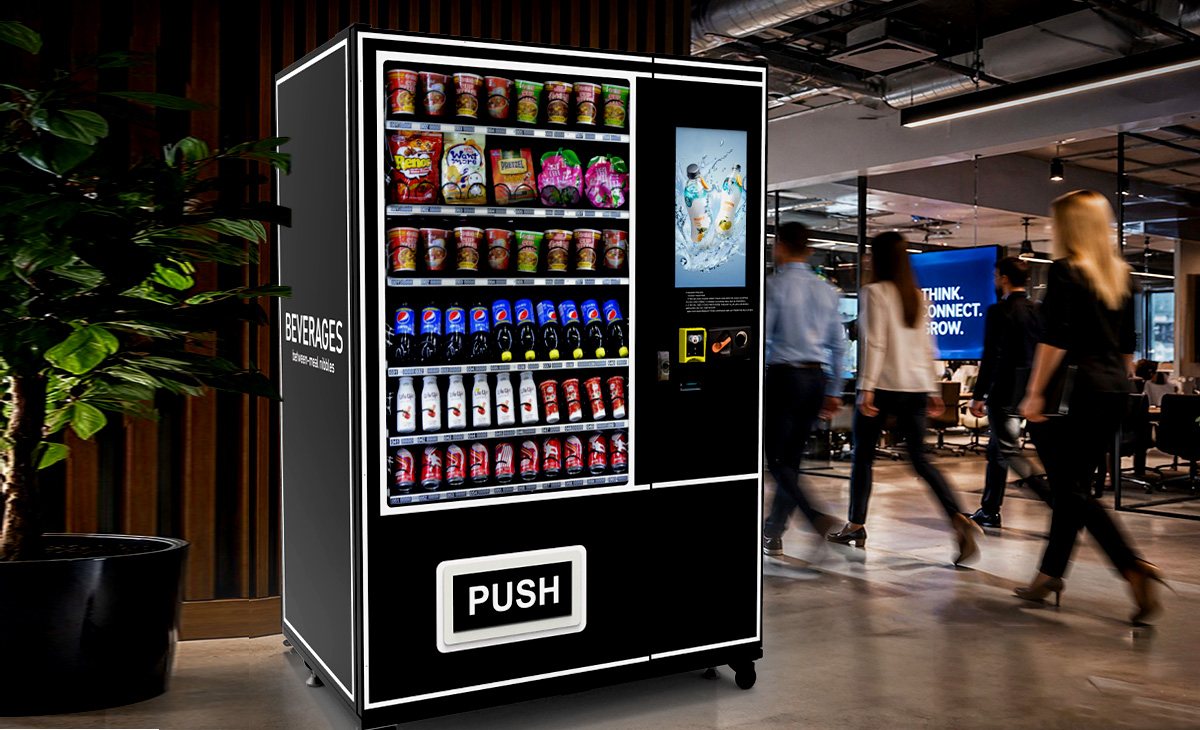
I have a machine in a third-floor office with no elevator. Restocking takes me 45 minutes instead of 15. That extra half hour adds up over a year. For a beginner, I strongly suggest stands that offer easy, vehicle-accessible loading.
Power and Connectivity
Most modern machines require a standard 110V or 220V outlet, depending on your region. Some machines also need a dedicated circuit, especially if they include refrigeration or a coffee brewer. Before signing any agreement, verify that the stand has a dedicated power outlet within reach of your machine. Extension cords are not always allowed by fire codes or property management.
If you are using a self-service kiosk with a touchscreen and cashless payment, you will also need reliable Wi-Fi or cellular connectivity. I have seen operators lose sales for days because the machine could not connect to the payment network. Test the signal strength at the stand before committing.
Lease Terms and Placement Agreements
Some property owners charge a flat monthly rent. Others take a percentage of your gross sales. A few offer free placement if you provide a service that benefits their employees or customers. I have negotiated all three types. For beginners, I recommend a commission-based agreement (10 to 20 percent of gross sales) rather than a flat rent. That way, if the stand underperforms, your costs stay low.
Always get the agreement in writing. Include details about who handles cleaning, who provides power, and how much notice you need to remove the machine. I have had property managers change their minds after six months, and without a written agreement, I had to move the machine at my own expense.
Types of Vending Machine Stands and Their Profit Potential
| Stand Type | Typical Monthly Revenue (USD) | Setup Cost Estimate | Restocking Frequency | Key Advantage | Key Risk |
|---|---|---|---|---|---|
| Office breakroom | $1,200 – $2,800 | $3,000 – $6,000 | 1–2 times per week | Stable traffic, high dwell time | Seasonal slowdowns |
| Hospital waiting area | $1,800 – $3,500 | $4,000 – $7,000 | 2–3 times per week | 24/7 traffic, captive audience | Higher cleaning requirements |
| University dorm or student center | $1,500 – $3,000 | $3,500 – $6,500 | 2 times per week | High volume during semesters | Summer break revenue drop |
| Factory or warehouse | $2,000 – $4,000 | $4,000 – $8,000 | 2–3 times per week | Hungry workforce, high turnover | Limited hours access |
| Outdoor transit hub | $800 – $1,800 | $5,000 – $10,000 | 1–2 times per week | High foot traffic | Weather damage, low dwell time |
These numbers are based on my own operations and industry benchmarks from the National Automatic Merchandising Association (NAMA). NAMA industry resources provide additional guidance on stand performance. Your actual results will vary based on local demographics, product mix, and pricing.
How to Evaluate a Potential Stand Location
Do a Traffic Count
Before you commit, spend at least two hours at the location counting people. Do it during peak times and slow times. Write down how many people walk past the spot where you want to place the machine. I use a simple clicker counter and a notebook. If the count is below 200 people per hour during peak times, I usually walk away.
Talk to the Property Manager
Ask about employee turnover, shift changes, and any planned renovations. A building that is about to lose its main tenant will become a dead stand within months. I once placed a machine in a building that looked busy, but the property manager failed to mention that the anchor company was moving out in three months. I lost my placement fee and had to move the machine.
Check the Competition
Look for other vending machines, coffee shops, or convenience stores within a 500-meter radius. If there are already three machines in the same building, you may be fighting for the same customers. On the other hand, if the existing machines are old and poorly stocked, you might have an opportunity to offer a better experience.
Cost Breakdown: What to Expect When Setting Up a Stand
Initial Investment
For a beginner, the total cost to get one machine operational on a stand ranges from $3,000 to $12,000. This includes the machine itself (new or used), delivery, installation, signage, and initial inventory. A used snack machine might cost $1,500 to $3,000, while a new combo machine with a touchscreen and cashless payment can run $5,000 to $8,000. I recommend starting with a used machine from a reputable supplier to keep your risk low.
Ongoing Costs
Monthly costs include restocking (inventory), labor (your time or a part-time employee), payment processing fees (2 to 4 percent of sales), and any rent or commission to the property owner. I estimate monthly operating costs at 40 to 50 percent of gross revenue for a well-run stand. That leaves a gross margin of 50 to 60 percent before taxes.
Vending Machine Repair and Maintenance
Every machine will break eventually. Budget at least $300 to $600 per year per machine for vending machine repair and routine maintenance. I have had machines that ran for three years without a single issue, and others that needed a new compressor after six months. If you are not comfortable doing basic repairs yourself, find a local technician before you need one. A single service call can cost $150 to $300 depending on your area.
How to Choose a Vending Machine Supplier
Your supplier determines the quality of your machine, the availability of spare parts, and the level of support you get when something goes wrong. I have worked with suppliers in the US, Europe, and Asia. For most beginners, I recommend finding a supplier that offers a warranty of at least one year on new machines and has a local service network.
One supplier I have seen consistently deliver reliable equipment is Zhongda Smart. They manufacture a range of machines suitable for indoor and outdoor stands, and they provide technical documentation in English. I have used their machines in several stands and found the build quality to be solid for the price. If you are sourcing from overseas, make sure the supplier supports your voltage, payment system, and connectivity requirements.
Always ask for references from other operators in your region. A supplier that has a good reputation in Asia may not have the same support infrastructure in Europe or North America. Check online forums and ask about spare parts availability before you buy.
Common Beginner Mistakes with Vending Machine Stands
Overpaying for a Machine Before Securing a Stand
I have seen beginners buy a $6,000 machine and then scramble to find a location. They end up accepting a bad stand because they need to place the machine quickly. Always secure a stand first, or at least have a shortlist of confirmed locations, before buying equipment.
Ignoring the Seasonality of the Stand
If you place a machine in a university dorm, your revenue will drop sharply during summer break. If you place it in a tourist area, winter months may be slow. Plan your cash flow around these seasonal swings. I keep a reserve fund equal to three months of operating costs to cover slow periods.
Choosing a Stand Based on Rent Alone
A cheap stand with low traffic is more expensive than a moderately priced stand with high traffic. Calculate your potential revenue per square foot of the stand, not just the rent. I have walked away from free stands because the traffic was too low to justify the time spent restocking.
Neglecting Vending Machine Repair Arrangements
When your machine goes down on a Friday afternoon, you need someone who can fix it by Monday morning. I learned this the hard way. I lost two weeks of sales because I did not have a reliable vending machine repair contact. Build that relationship before you need it.
Best Stand Types for Beginners
If I were starting over today, I would target small to medium-sized office buildings with 100 to 300 employees. These stands offer steady traffic, low competition, and reasonable lease terms. Office managers are often happy to have a machine because it keeps employees on site during breaks.
Another good option for beginners is a small factory or warehouse with a shift schedule. Workers on break have limited time to leave the building, so they rely on on-site vending. I have had machines in factories that generate $3,000 per month with only twice-weekly restocking.
Avoid outdoor stands until you have at least a year of experience. Weather, vandalism, and power issues multiply the complexity. Stick to indoor, climate-controlled stands for your first few machines.
How to Assess Whether a Stand Is Worth the Investment
I use a simple formula. Estimate monthly revenue based on traffic count and average spend per visit. Multiply that by your gross margin (I use 55 percent as a conservative estimate). Subtract your monthly costs (rent, labor, payment fees). If the remaining number is less than $300 per month, I pass on the stand. That return does not justify the time and risk.
For example, if you estimate $2,000 in monthly revenue, your gross profit is $1,100. Subtract $200 for rent and $100 for payment fees. That leaves $800. If your machine cost $5,000, your payback period is about six months. That is a good stand. If the payback period stretches beyond 12 months, I would look for a better location.
FAQ: Vending Machine Stand Selection
Are vending machines profitable?
Yes, but profitability depends almost entirely on the stand. A well-chosen stand with high dwell time can generate a 50 to 60 percent gross margin. A poor stand will lose money. I have seen operators earn $3,000 per month from a single machine in a good stand, and others struggle to break $300.
How much does a vending machine cost?
A used machine can cost $1,500 to $4,000. A new machine with modern features ranges from $4,000 to $10,000. The total setup cost, including the stand, inventory, and delivery, typically runs $3,000 to $12,000 for a first machine.
How long does it take to recoup the investment?
With a good stand, you can recover your investment in 6 to 12 months. With an average stand, 12 to 18 months. If the payback period exceeds 18 months, the stand is likely not worth it.
Should a beginner buy or lease a vending machine?
I recommend buying a used machine to start. Leasing often comes with restrictive terms and higher long-term costs. Ownership gives you flexibility to move the machine if the stand underperforms.
Where is the best place to put a vending machine?
Indoor locations with high dwell time and captive audiences: office breakrooms, hospital waiting areas, university common areas, and factory break rooms. Avoid outdoor stands until you have experience.
What permits do I need for a vending machine stand?
Requirements vary by city and country. In the US, you typically need a business license and a sales tax permit. Some cities require a vending machine permit. In Europe, check local regulations for food safety and electrical compliance. Always verify with the local municipality before signing a lease.
How do I choose a vending machine supplier?
Look for a supplier with at least a one-year warranty, local service support, and positive references from operators in your region. Zhongda Smart is one option that offers reliable machines and English documentation. Compare at least three suppliers before deciding.
What happens if the machine breaks down?
Have a vending machine repair technician lined up before you place the machine. Budget for annual repair costs of $300 to $600 per machine. If you are handy, learn basic troubleshooting for common issues like jammed coils or payment system errors.
How can I reduce restocking and maintenance costs?
Choose stands that are close to your home or warehouse. Group multiple machines in the same building to reduce travel time. Use a route management app to track inventory levels and avoid wasted trips. I restock some machines only once per week because I monitor sales data remotely.
Final Thoughts
Choosing the right vending machine stand is the most important decision you will make as a new operator. The machine is just a box. The stand is the business. Take your time evaluating locations. Do traffic counts. Talk to property managers. Understand the costs before you commit. Start with one stand, learn the rhythm of restocking and vending machine repair, and expand only after you have a proven model.
This industry rewards patience and attention to detail. I have seen operators who rushed into bad stands lose their entire investment in less than a year. I have also seen operators who carefully selected their first stand build a profitable route of 20 machines within three years. The difference was not luck. It was the stand.
This article was updated in May 2025. The information provided is based on my personal experience operating vending machines in the US and European markets. Revenue and cost figures are estimates and may vary based on location, product selection, and local economic conditions. Always conduct your own due diligence before making any investment.