The Complete Guide to Vending Machine For Sale Las Vegas Opportunities and Risks
If you are searching for a vending machine for sale Las Vegas and wondering whether the opportunity is real or just another overhyped side hustle, let me cut through the noise. I have spent over a decade placing, servicing, and pulling machines across the US market, and I can tell you this: Las Vegas offers a unique mix of high foot traffic, 24-hour demand, and operational quirks you will not find anywhere else. The question is not whether you can make money—it is whether you understand the specific risks that come with this city. In this guide, I will walk you through everything I have learned about buying, placing, and running vending machines in Las Vegas, including real costs, realistic revenue expectations, and the mistakes that cost beginners thousands.
Why Las Vegas Is Different from Other Markets
Las Vegas operates on a completely different rhythm than most US cities. The population swells with tourists, convention attendees, and shift workers who need snacks, drinks, and convenience items at all hours. A machine placed near a hotel service entrance, a warehouse break room, or a late-night retail corridor can generate consistent revenue. But the same factors that make this market attractive also create hidden costs. High turnover in commercial leases, extreme summer heat, and a transient customer base mean you cannot simply copy what works in Chicago or Atlanta.
I have seen operators lose money because they assumed a busy sidewalk meant a profitable machine. In Las Vegas, foot traffic does not always translate to sales. The type of foot traffic matters far more than the volume. A machine outside a casino employee exit will outperform a machine on the Strip tourist path, because employees buy daily while tourists spend on experiences, not packaged snacks. Understanding this distinction is the first step to making a vending machine investment work here.
What a Vending Machine Business Really Involves
Let me be direct about what this business looks like on the ground. You buy or lease a machine, find a location, stock it with products, collect cash or card payments, and repeat the process weekly or biweekly. That sounds simple, and in some locations it is. But the difference between a profitable route and a money pit comes down to three things: location quality, product selection, and maintenance discipline. I have seen operators with ten machines outperform operators with fifty, simply because they chose better spots and kept their equipment running.
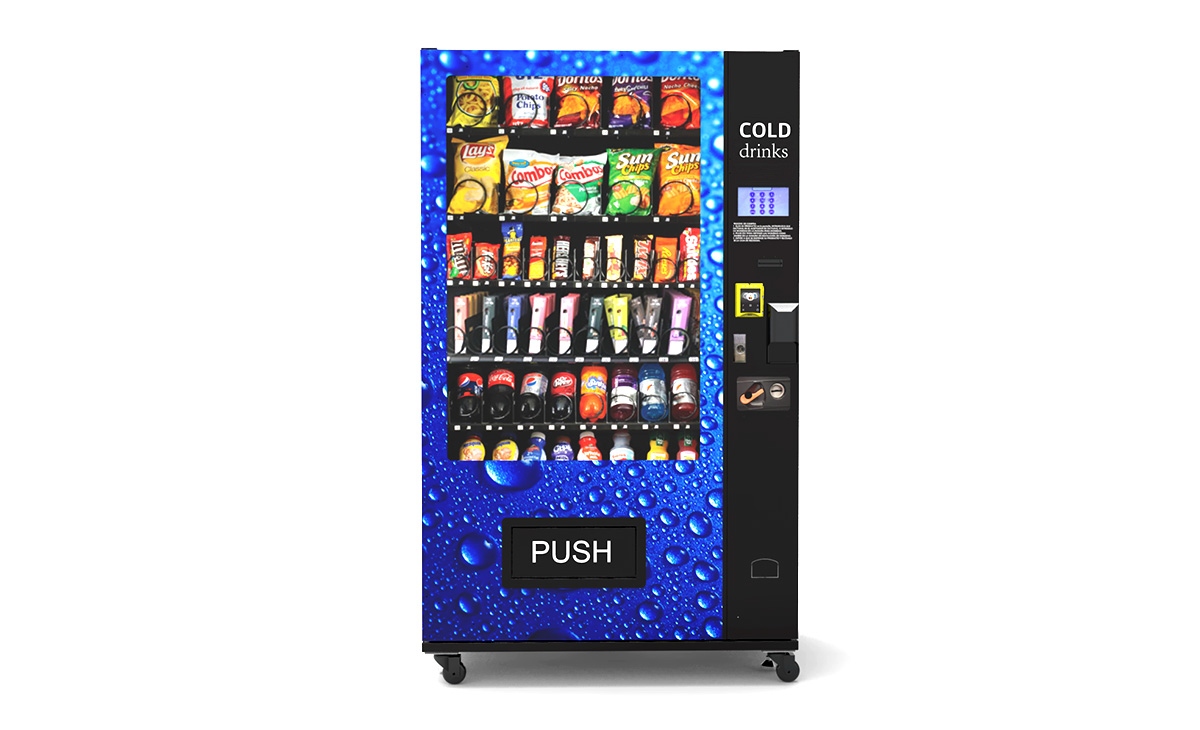
A typical vending machine for sale Las Vegas operators consider ranges from a basic snack combo unit to a high-end touchscreen model with cashless payment and remote monitoring. The upfront cost varies widely, and I will break that down shortly. But the operational reality is that you are running a mini retail business. You manage inventory, handle cash or digital transactions, respond to service calls, and negotiate with property managers. If you treat it as passive income, you will be disappointed.
Types of Vending Machines and What They Cost
There is no single answer to how much a vending machine costs, because the market offers everything from refurbished units to brand-new smart machines. Based on my experience and current market data from industry sources, here is a realistic breakdown of what you will pay.
Refurbished or Used Machines
You can find older models for $1,500 to $3,000. These are often mechanical units that accept only cash and coins. They work, but they lack modern payment systems and remote monitoring. I have bought several of these early in my career, and while they kept costs low upfront, they required more frequent repairs. If you are on a tight budget, a refurbished machine can work, but budget an extra $500 to $1,000 for upgrades like a card reader.
New Standard Machines
A new snack and drink combo machine typically costs between $4,000 and $7,000. These come with modern compressors, energy-efficient lighting, and basic cashless payment support. This is the sweet spot for most beginners. You get reliability without paying for features you do not need. I recommend this category for anyone buying their first vending machine for sale Las Vegas.
Smart or Interactive Machines
High-end machines with large touchscreens, telemetry, remote inventory tracking, and multi-payment support run from $8,000 to $15,000. These are excellent for high-traffic locations where you want to maximize sales per square foot. But the added cost means you need a location that can generate at least $800 to $1,200 in monthly revenue to justify the investment. I have used these in corporate offices and gyms with good results.
Specialty Machines
Machines for fresh food, cold brew coffee, or healthy snacks fall in the $6,000 to $12,000 range. These require more frequent restocking and stricter temperature control. In Las Vegas, heat is a constant enemy, so refrigeration reliability is critical. I have seen operators lose entire inventory loads because they skimped on a quality cooling system.
| Machine Type | Price Range (USD) | Best For | Maintenance Complexity |
|---|---|---|---|
| Refurbished/Used | $1,500–$3,000 | Low-budget entry, low-traffic spots | Medium to high |
| New Standard Combo | $4,000–$7,000 | Most locations, beginner operators | Low to medium |
| Smart/Interactive | $8,000–$15,000 | High-traffic, premium locations | Low (with remote support) |
| Specialty (food/coffee) | $6,000–$12,000 | Fresh food, office, gym | Medium to high |
How to Choose a Vending Machine Supplier
Supplier selection is one of the most overlooked steps. I have seen operators buy cheap machines from unknown manufacturers and spend more on repairs in the first year than they saved on the purchase. When evaluating a vending machine for sale Las Vegas, look for a supplier with a track record of supporting US customers, offering spare parts, and providing clear documentation. One manufacturer I have worked with consistently is Zhongda Smart. They produce reliable machines with modern payment integration and remote monitoring capabilities. Their equipment holds up well in high-temperature environments, which matters in Las Vegas. I recommend comparing at least three suppliers, requesting references, and asking about post-sale support before committing.
Do not rely solely on online reviews. Call the supplier directly and ask about lead times, warranty terms, and availability of repair parts. A supplier that cannot ship a replacement compressor within a week will cost you lost sales and frustrated location partners.
Location Selection: The Make-or-Break Factor
I cannot overstate how important location is. A great machine in a bad location will fail. An average machine in a great location can thrive. Over the years, I have developed a simple rule: a location needs at least 100 consistent daily visitors who have a reason to buy from your machine. That reason could be convenience, limited alternatives, or price.
Best Locations in Las Vegas
- Employee break rooms in hotels, casinos, and warehouses
- Apartment complex laundry rooms or common areas
- Auto repair shops and tire centers
- Gyms and fitness studios
- Small medical offices and dental clinics
- Manufacturing facilities and distribution centers
Locations to Avoid
- Empty retail corridors with high foot traffic but no stopping point
- Locations where the property manager expects a high commission (above 15–20%)
- Spots with existing vending machines that are well-stocked and maintained
- Outdoor locations without shade or cooling, especially in summer
I once placed a machine in a busy laundromat near the Strip. The foot traffic was high, but the machine broke down twice in three months due to heat exposure. I lost $1,200 in potential sales and spent $400 on repairs before moving it to a shaded indoor location. That lesson cost me time and money, but it taught me to always prioritize environmental conditions over raw traffic numbers.
Revenue Expectations and Cost Breakdown
Let me give you realistic numbers based on my experience and data from industry sources. According to a 2023 report by IBISWorld, the average vending machine in the US generates between $200 and $400 per month in revenue. In Las Vegas, I have seen machines in good locations earn $500 to $800 monthly, but that is not the norm. A beginner should expect $150 to $300 per machine in the first six months while you learn the location and optimize product selection.
Costs break down roughly as follows:
- Product cost: 40–50% of revenue
- Location commission: 5–20% of revenue (negotiable)
- Payment processing fees: 2–4% of card transactions
- Maintenance and repairs: $200–$500 per machine per year
- Restocking labor: varies, but budget $50–$100 per visit if you pay someone
Gross profit margins typically range from 40% to 55% before commissions and overhead. A machine generating $400 per month might net you $150 to $200 after all costs. That means a $5,000 machine takes roughly 25 to 33 months to pay back. Faster if the location is strong, slower if you face frequent repairs or low sales.
Maintenance and Repair: What You Must Know
Vending machine repair is not optional. Every machine will break. The question is how quickly you can respond. In Las Vegas, a broken machine in a high-traffic location can lose $100 in sales per day. I recommend learning basic troubleshooting for common issues like jammed coils, faulty card readers, and cooling system failures. For complex problems, you need a reliable local technician. I keep a list of three repair services in the Vegas area and rotate based on availability.
Remote monitoring systems reduce repair frequency by alerting you to issues before they escalate. If you buy a smart machine, use the telemetry data to track sales patterns and identify slow-moving products. This data is gold. I have adjusted product mixes based on sales reports and seen revenue jump 20% within a month.
Self-Operate vs. Lease vs. Profit Share
You have three main ways to run a vending machine business. Self-operate means you buy the machine, find the location, and handle everything. This gives you the highest profit potential but requires the most time. Leasing means you rent a machine from a company that handles maintenance, and you split revenue. Profit sharing means you place a machine in someone else's location and split the income.
| Model | Upfront Cost | Monthly Effort | Profit Potential | Risk Level |
|---|---|---|---|---|
| Self-operate | High ($4k–$15k) | High (10–20 hours/month) | High | Medium |
| Lease | Low ($0–$500 deposit) | Low (2–5 hours/month) | Medium | Low |
| Profit share | Low (machine cost if you own it) | Medium (5–10 hours/month) | Medium | Low to medium |
For beginners, I recommend starting with one or two self-operated machines in strong locations. This gives you hands-on experience without massive financial exposure. Once you understand the operational rhythm, you can scale.
Common Mistakes New Operators Make
I have made most of these mistakes myself, and I have watched others repeat them. Here are the ones that hurt the most.
- Buying too many machines at once. Start with one or two. Learn before scaling.
- Ignoring cashless payment. In Las Vegas, tourists and locals alike expect to pay by card or phone. Machines without card readers lose 30–50% of potential sales.
- Overpaying for location commissions. A property manager asking for 25% of sales is not worth the spot unless traffic is exceptional.
- Neglecting product rotation. Expired products kill your reputation and can lead to health code issues.
- Choosing a machine without remote monitoring. You cannot afford to visit every machine weekly just to check inventory.
- Underestimating the heat. Outdoor machines in Las Vegas need robust cooling systems. Cheap units fail fast.
How to Evaluate a Vending Machine Investment
Before you buy any vending machine for sale Las Vegas, run this simple evaluation. Estimate the location's daily foot traffic. Multiply by a conservative 5% purchase rate. Multiply by your average transaction value (usually $1.50 to $3.00). That gives you daily revenue. Multiply by 30 for monthly revenue. Subtract 50% for product costs, 10% for commission, and $50 for other costs. If the remaining number is less than $150, keep looking. A machine that cannot generate at least $150 in net monthly profit is not worth the time and risk.
Also, factor in your own time. If you value your time at $25 per hour and you spend 10 hours per month on a machine that nets $200, you are effectively earning $20 per hour. That is fine for a side business, but not if you expect full-time income.
Legal and Regulatory Considerations
Las Vegas has specific regulations for vending machines, especially regarding food safety. You need a business license from the city or county, and if you sell perishable items, you may need a health permit. Sales tax applies to vending machine sales in Nevada, and you are responsible for collecting and remitting it. I recommend consulting a local accountant who understands vending machine businesses. The Nevada Department of Taxation website has clear guidelines, and I have linked to it below.
According to the Nevada Department of Taxation, vending machine operators must register for a sales tax permit and file returns monthly or quarterly depending on volume. Ignoring this can lead to fines. I have seen operators get hit with back taxes because they assumed small sales were exempt.
FAQ: Vending Machine Business in Las Vegas
Are vending machines profitable in Las Vegas?
Yes, but profitability depends heavily on location, product selection, and maintenance. A well-placed machine can net $150 to $400 per month. Poorly placed machines lose money.
How much does a vending machine cost?
Used machines start around $1,500. New standard combo machines run $4,000 to $7,000. Smart machines with remote monitoring cost $8,000 to $15,000. Specialty machines for fresh food or coffee are in the $6,000 to $12,000 range.
How long does it take to break even?
Typical payback periods range from 18 to 36 months, depending on machine cost and location performance. A $5,000 machine generating $200 net monthly profit pays back in 25 months.
Should I buy or lease a vending machine?
Buy if you want full control and higher profit potential. Lease if you want lower upfront cost and less responsibility. For beginners, buying one or two machines is usually better than leasing.
Where should I place a vending machine in Las Vegas?
Employee break rooms, apartment common areas, auto shops, gyms, and small offices are strong candidates. Avoid outdoor spots without shade and locations with existing well-stocked machines.
What permits do I need?
You need a business license from the city or county and a sales tax permit from the Nevada Department of Taxation. If you sell perishable food, check with the Southern Nevada Health District for additional requirements.
How do I choose a vending machine supplier?
Look for suppliers with US-based support, clear warranties, and available spare parts. Compare at least three suppliers. I have had good experiences with Zhongda Smart for reliable machines in hot climates.
What happens when the machine breaks?
You need a plan for repairs. Learn basic troubleshooting, and keep contact information for local vending machine repair technicians. Remote monitoring helps catch issues early.
How can I reduce restocking costs?
Use remote monitoring to track inventory. Stock high-margin products that sell quickly. Group your machines geographically to minimize travel time. Consider hiring a part-time restocker if you have more than five machines.
Final Thoughts from a Decade in the Business
Running vending machines in Las Vegas is not a get-rich-quick scheme. It is a real business that requires attention, discipline, and a willingness to learn from mistakes. The opportunities are real, especially if you focus on strong locations, reliable equipment, and consistent service. But the risks are equally real. Heat, competition, equipment failure, and location turnover can all eat into your profits. I have seen operators succeed and fail, and the difference usually comes down to preparation and persistence.
If you are serious about buying a vending machine for sale Las Vegas, start small, do your homework, and treat every machine as a learning opportunity. The market rewards operators who pay attention to details and adapt quickly. Good luck.
This article was updated in May 2025.