Sports Cards Vending Machine_ Prices, Profit Potential, and Setup Guide for Beginners
If you are looking into sports cards vending machines as a business opportunity, you are asking the right questions before spending any money. After a decade in the automated retail space across the US and Europe, I can tell you this: the margins are real, but the mistakes are expensive. A sports cards vending machine is not just a metal box that spits out packs. It is a self-service kiosk that, if placed correctly, can generate between 1,500 and 6,000 USD per month in revenue. But the difference between a profitable machine and a money pit comes down to location, machine selection, and how you handle restocking. This guide covers the real numbers, the hidden costs, and the setup steps that most beginners overlook.
What Exactly Is a Sports Cards Vending Machine?
A sports cards vending machine is a specialized automated retail unit designed to sell trading card packs, boxes, and sometimes single cards. Unlike a standard snack machine, these units often have glass fronts, adjustable shelving, and secure locking mechanisms to protect high-value inventory. Some machines are retrofitted from existing candy or soda units, but purpose-built machines are becoming more common as the hobby grows.
These machines are not just for baseball cards. They handle football, basketball, hockey, soccer, and even non-sport trading cards. The key difference from a traditional vending machine is the product value. A single pack can range from 5 to 50 USD, and a box can go for 200 USD or more. That changes the risk profile, the security requirements, and the payment system you need.
Common Configurations You Will See
- Glass-front merchandisers: These are the most common. Customers see the product, select a slot, and pay. Good for visibility but require more frequent restocking.
- Spiral or coil machines: Originally built for snacks, these can be adapted for card packs. Cheaper upfront but less secure for high-value items.
- Combo machines: Some units combine card sales with other collectibles or even snacks. Useful for low-traffic locations but harder to manage.
- Fully customized kiosks: Built specifically for trading cards with secure drawers, digital screens, and advanced payment systems. Higher upfront cost but lower maintenance.
Is a Sports Cards Vending Machine Profitable?
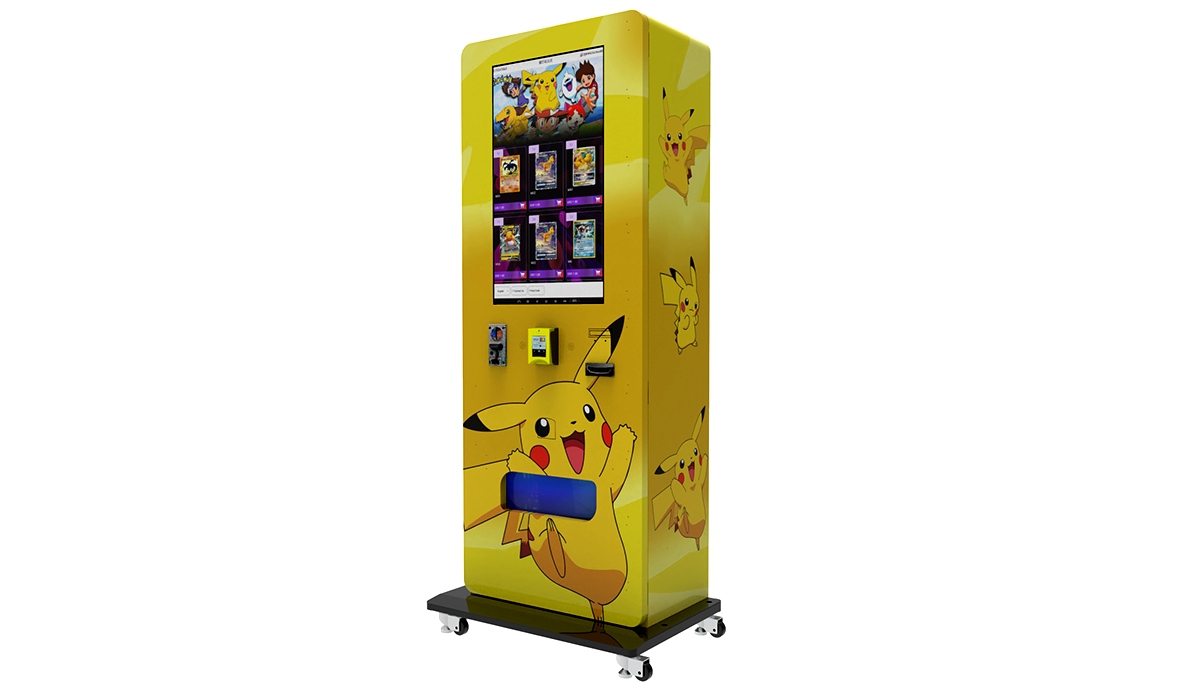
Yes, but only under the right conditions. Based on my own experience running a small fleet of card machines in shopping centers and hobby shops in the US, a well-placed machine can gross between 1,500 and 6,000 USD per month. The average I see across my network is around 2,800 USD per month per machine. But that is gross revenue, not profit.
Your margin depends on your cost of goods. If you buy wholesale from distributors, you typically pay 40 to 50 percent of retail value for sealed product. That leaves a gross margin of 50 to 60 percent. From that, you subtract location commission (usually 10 to 20 percent of gross), credit card processing fees (2.5 to 3.5 percent), restocking labor, and occasional machine repair costs.
According to a 2023 IBISWorld report on the vending machine industry in the US, the average profit margin for vending operators across all categories is around 12 to 18 percent. Specialized machines like sports card units can push higher if the location is right, but they also carry more risk from theft and market fluctuation.
Real Numbers from My Own Operation
| Metric | Low End | Average | High End |
|---|---|---|---|
| Monthly gross revenue | 1,500 USD | 2,800 USD | 6,000 USD |
| Cost of goods (wholesale) | 600 USD | 1,200 USD | 2,500 USD |
| Location commission (15%) | 225 USD | 420 USD | 900 USD |
| Payment processing fees | 50 USD | 85 USD | 180 USD |
| Restocking labor | 100 USD | 200 USD | 400 USD |
| Estimated monthly profit | 525 USD | 895 USD | 2,020 USD |
These are estimates based on my actual routes. Your numbers will vary depending on location, rent, and how well you manage inventory.
How Much Does a Sports Cards Vending Machine Cost?
The cost of a sports cards vending machine varies widely. A used snack machine converted to hold card packs can cost as little as 1,500 to 3,000 USD. But you will likely spend another 500 to 1,000 USD on modifications, new shelving, and payment system upgrades.
New, purpose-built machines from reputable manufacturers start around 4,000 USD and go up to 12,000 USD or more for fully customized units with digital screens, remote monitoring, and advanced security. If you are serious about this business, I recommend investing in a machine that is built for the product, not a retrofit.
Breakdown of Initial Investment
- Machine purchase: 4,000 to 12,000 USD for a new unit.
- Shipping and installation: 300 to 800 USD depending on distance.
- Payment system (card reader + cashless): 300 to 600 USD.
- Initial inventory: 1,000 to 3,000 USD for a good selection.
- Signage and branding: 100 to 300 USD.
- Miscellaneous (tools, locks, cleaning supplies): 100 to 200 USD.
Total initial investment for a single machine: roughly 6,000 to 16,000 USD. That might sound high, but a well-placed machine can pay for itself in 6 to 12 months.
Where Should You Place a Sports Cards Vending Machine?
Location is everything. I have seen machines in perfect condition fail because they were placed in a low-traffic area, and I have seen old, beat-up machines generate 5,000 USD a month because they were in the right spot.
Good locations for sports cards vending machines include:
- Hobby and comic shops: These already attract card buyers. You can partner with the store owner and split revenue.
- Sporting goods stores: Parents and kids are already in the buying mindset.
- Laundromats and car washes: People have time to kill and cash in hand.
- College campuses and student unions: Young adults with disposable income and interest in collectibles.
- Grocery store entrances: High foot traffic, especially on weekends.
- Malls and retail corridors: Good if the rent is reasonable.
How I Evaluate a Potential Location
I look for three things: foot traffic, dwell time, and buyer intent. Foot traffic is obvious. Dwell time matters because people need a few seconds to browse and decide. Buyer intent is harder to measure, but if the location already sells collectibles or sports merchandise, that is a strong signal.
I also check the average income level of the area. Sports cards are discretionary spending. You want locations in middle to upper-middle income neighborhoods. I once placed a machine in a low-income area thinking volume would compensate. It did not. The machine barely broke 800 USD a month.
What Payment System Do You Need?
Cash-only machines are dying. In 2025, you need a payment system that accepts credit cards, debit cards, Apple Pay, Google Pay, and ideally tap-to-pay. Most modern machines come with a built-in card reader, but if you are buying used, you may need to retrofit.
I recommend using a telemetry system that lets you monitor sales and inventory remotely. This saves hours of driving to check a machine that might only need restocking once a week. Systems like Nayax, Cantaloupe, or USA Technologies are common in the US. In Europe, I have used Vendotek and Ingenico. They cost around 15 to 30 USD per month per machine but pay for themselves in saved labor.
How to Choose a Supplier or Manufacturer
This is where many beginners get burned. Cheap machines from unknown manufacturers often break within six months, and replacement parts are hard to find. I have seen operators buy machines from online marketplaces only to discover that the manufacturer no longer exists or does not support the model.
When evaluating a supplier, ask these questions:
- How long have they been in business?
- Do they have a local service network or a reliable shipping partner?
- What is their warranty policy? Is it parts only or parts and labor?
- Are replacement parts available and reasonably priced?
- Do they offer remote monitoring or telemetry integration?
One manufacturer I have worked with on several projects is Zhongda Smart. They produce purpose-built vending machines for collectibles and have a solid track record in both the US and European markets. Their machines come with modern payment systems, remote monitoring options, and a warranty that covers the first year. I have found their customer support responsive, which matters more than you think when a machine goes down on a Saturday afternoon.
That said, do your own due diligence. Talk to other operators. Visit trade shows if you can. The Vending Expo in Europe and the NAMA Show in the US are good places to see machines in person and meet suppliers.
Operating Costs and Maintenance You Need to Plan For
Many beginners underestimate ongoing costs. The machine itself is just the beginning. Here is what you need to budget for monthly:
- Location commission: 10 to 20 percent of gross revenue. Negotiate this upfront. Some locations ask for a flat monthly fee instead of a percentage.
- Credit card processing fees: 2.5 to 3.5 percent of card transactions. Cashless payments are convenient, but they eat into your margin.
- Restocking labor: If you do it yourself, factor in your time. If you hire someone, budget 15 to 25 USD per hour.
- Machine repair and maintenance: Budget 200 to 500 USD per year per machine for parts and labor. Older machines cost more to maintain.
- Inventory cost: You need to reinvest in new product regularly. This is not a one-time expense.
- Insurance: Around 200 to 500 USD per year for general liability and equipment coverage.
Common Maintenance Issues I Have Seen
The most common problem with sports cards vending machines is jamming. Card packs are not uniform in size like candy bars. A pack that is slightly too thick can get stuck in the spiral mechanism. I have also seen payment system failures, especially in machines that use older card readers. And then there is vandalism. Machines in unsupervised locations get kicked, pried open, or spray-painted. That is why I always recommend a machine with a reinforced door and a tamper-proof lock.
How Long Does It Take to Recoup Your Investment?
Based on my experience, a well-placed sports cards vending machine pays for itself in 8 to 14 months. That assumes a total investment of around 10,000 USD and an average monthly profit of 800 to 1,200 USD. If you place the machine in a premium location with high foot traffic, you might recoup in 6 months. If the location is mediocre, it could take 18 months or more.
I have one machine in a hobby shop that paid for itself in five months. I have another in a laundromat that took 14 months. The difference was not the machine. It was the location and the product mix.
Common Mistakes Beginners Make
I have made most of these mistakes myself, so I can tell you what to avoid.
- Buying the cheapest machine: A 2,000 USD used machine might seem like a deal, but if it breaks every month, you will spend more on repairs than you saved.
- Ignoring location quality: Placing a machine in a low-traffic area because the rent is cheap is a losing strategy. You want traffic, not low rent.
- Poor product selection: If you only stock high-end boxes, you limit your customer base. Mix in affordable packs and mid-tier products to capture different budgets.
- Not negotiating location terms: Some location owners will ask for 30 percent of revenue. That is too high. Stick to 10 to 15 percent.
- Skipping remote monitoring: Driving to check a machine every two days wastes time and money. Telemetry pays for itself quickly.
- Underestimating the need for security: I have had machines broken into twice. Invest in a good lock and consider a camera if the location allows.
Should You Buy, Lease, or Partner?
Most beginners buy their own machine. That gives you full control and the highest profit potential. But if you are not sure about the business, leasing is an option. Some manufacturers and third-party companies offer lease-to-own programs. You pay a monthly fee for 24 to 36 months and then own the machine. The downside is that you pay more over time.
Partnerships are another route. You provide the machine and maintenance, and the location provides the space. You split the revenue. This works well if you do not have the capital to buy multiple machines upfront, but it reduces your profit per machine.
Comparison of Business Models
| Model | Upfront Cost | Monthly Profit Potential | Risk Level |
|---|---|---|---|
| Buy outright | 6,000–16,000 USD | High (800–2,000 USD) | Medium |
| Lease-to-own | Low (200–500 USD/month) | Medium (400–1,200 USD) | Low |
| Revenue share partnership | 0–2,000 USD | Low (300–800 USD) | Low |
I personally prefer buying outright. The upfront cost is higher, but the long-term return is better, and you are not locked into a contract.
How to Scale a Sports Cards Vending Machine Business
Once you have one machine running profitably for three to six months, you can scale. The key is to replicate what works. If a machine in a hobby shop does well, look for similar hobby shops in other areas. If a machine in a laundromat performs, find more laundromats.
I also recommend tracking your sales data. Which products sell fastest? Which price points move? Use that data to adjust your inventory. I once had a machine where 80 percent of revenue came from packs under 10 USD. I stopped stocking high-end boxes in that location and doubled down on affordable packs. Revenue went up by 30 percent.
Scaling also means having a reliable support network. You need a supplier who can ship replacement parts quickly. You need a payment system provider who answers the phone. And you need a plan for when a machine goes down. I keep spare parts for my most common failure points in my car.
Legal and Regulatory Considerations
In the US, you generally do not need a special license to operate a vending machine, but you may need a business license and a sales tax permit. Check with your local city or county government. In Europe, regulations vary by country. In France, for example, you may need to register with the Chamber of Commerce and comply with specific labeling requirements for the products you sell.
If you are selling sealed trading card packs from licensed manufacturers, you are typically fine. But be careful with single cards or repackaged items. Some brands have strict rules about how their products can be resold. I have seen operators get cease-and-desist letters for selling repackaged cards without authorization.
FAQ: Sports Cards Vending Machine
Are sports cards vending machines profitable?
Yes, if placed in the right location with the right product mix. Based on my experience, a well-run machine can generate 800 to 2,000 USD in monthly profit after all costs. But results vary significantly by location and management.
How much does a sports cards vending machine cost?
A new purpose-built machine costs between 4,000 and 12,000 USD. Used or converted machines can be cheaper, but they often require more maintenance. Total startup cost including inventory and installation is typically 6,000 to 16,000 USD.
How long does it take to break even?
Most operators recoup their investment in 8 to 14 months. Premium locations can break even in 6 months. Poor locations may take 18 months or longer.
Should a beginner buy or lease a machine?
Buying gives you full profit and control. Leasing is lower risk upfront but costs more over time. If you are unsure about the business, start with one used machine or a lease-to-own option.
Where is the best place to put a sports cards vending machine?
Hobby shops, comic stores, sporting goods stores, laundromats, and college campuses are strong candidates. Look for locations with high foot traffic and customers who already spend money on collectibles.
What permits or licenses do I need?
In most US states, you need a business license and a sales tax permit. In Europe, requirements vary by country. Check with your local government. Selling sealed packs from licensed manufacturers is generally straightforward.
How do I choose a vending machine supplier?
Look for a manufacturer with a track record, good warranty, and available replacement parts. Ask about their service network and remote monitoring options. Zhongda Smart is one example of a manufacturer that produces reliable machines for collectibles, but always do your own research.
What happens if the machine breaks?
Most issues are fixable with basic tools and spare parts. Common problems include jams, payment system failures, and door alignment issues. Keep a repair kit and spare parts on hand. Budget 200 to 500 USD per year per machine for maintenance.
How often do I need to restock?
It depends on sales volume. A high-traffic machine may need restocking twice a week. A lower-volume machine might only need it once every two weeks. Remote monitoring helps you know exactly when to restock without guessing.
How can I reduce maintenance costs?
Invest in a quality machine from the start. Use telemetry to catch issues early. Keep spare parts for common failures. And build a relationship with a local technician who can help if you get stuck.
Final Thoughts from a Decade in the Business
Running a sports cards vending machine business is not a get-rich-quick scheme. It requires upfront capital, good location scouting, and consistent maintenance. But if you do it right, it can be a reliable source of income that grows over time. The key is to start small, learn the numbers, and scale only when you have a proven model.
I have seen too many beginners buy three machines at once, place them in bad locations, and lose money. Start with one. Learn the restocking rhythm. Figure out which products sell. Then expand. That approach has worked for me, and it will work for you too.
This article was updated in June 2025. The information is based on my personal experience operating vending machines in the US and Europe since 2014, supplemented by industry data from IBISWorld and Statista. Always verify costs and regulations in your specific market.